
Caddie's Gear Advisor
Curated for today's 60°F · Clear
Tour-Level Drivers
Engineered for maximum distance and forgiveness
Laser Rangefinders
Pin-seeking technology for precision approaches
Premium Golf Balls
Tour-caliber spin and distance performance
Performance Sunglasses
Polarized lenses optimized for reading greens
Your Golf Trip, Handled
The Ultimate Golf Trip Planner
Everything you need to play Arthur Hills — from booking your flight to checking in course-side.
Course-Side Stays
Luxury hotels, resorts, and stay-and-play packages just minutes from the first tee.
Flights
Compare fares across 700+ airlines for the best route to your tee time.
SUV Rentals for Golf Bags
Spacious vehicles with room for clubs, bags, and your foursome.
Travel Insurance
Coverage for medical, weather delays, and gear at your destination.
Arthur Hills: Course Intelligence
TL;DR — Arthur Hills' mountain course at Boyne Highlands (Harbor Springs, Michigan) runs across ski-resort terrain, so elevation change does as much work as the wind. The signature 13th drops you off the top of a slope; the rest of the round is about reading uphill/downhill yardage and the NW breeze off Little Traverse Bay. Short northern-Michigan season — late May through mid-October. Greens are bentgrass, fast and firm by August. Aim your tee times around frost delays in the shoulder months.
Signature Setup
Arthur Hills designed more than 200 courses in his career, and this one — set on the ski slopes at Boyne Highlands (the resort now markets it as "The Highlands") in Harbor Springs — is the layout that simply carries his name. Boyne lists the build year as 1995, though a couple of directories cite 2000; I'll flag that rather than pretend the record is clean. What isn't in dispute is the terrain. Hills routed the course straight through alpine ski country, so you get dramatic elevation swings most Michigan courses can't offer. The back tees stretch to roughly 7,312 yards, with the forward Silver tees at about 4,811, a spread of 2,500 yards across five tee boxes. The headline hole is the 13th, where you tee off from the top of a ski run and the fairway falls away something like 100 feet below you — a genuine "hit it and watch it hang" tee shot, and one of the most photographed in northern Michigan.
Hole-by-Hole Wind & Playing Lines
The defining variable here is elevation interacting with the NW breeze off Little Traverse Bay. The three holes that decide your card:
- Hole 13 (downhill par-4, signature): From the ski-slope tee the ball flies forever, but a NW wind quartering into you flattens that gain fast. On a calm morning I'd take a 3-wood and let the drop do the work; on a 12–15 mph NW day the carry shrinks and a flushed driver leaves a mid-iron in. Favor the right half of the fairway — the left feeds toward trouble down the slope.
- A long uphill par-4 on the back nine: Plays a full club-plus longer than the yardage card because you're climbing back up the terrain. Take one more club than the number tells you and accept the front of the green.
- An exposed par-3 over a fall-away green: Crosswind here is brutal because there's no tree cover up top. Aim at the center and never short-side yourself.
Green & Fairway Characteristics
Because this is cool-climate northern Michigan, the turf is bentgrass on both fairways and greens — no Bermuda grain to read. The greens run around 10–10.5 on the Stimpmeter under normal setup and firm up noticeably by late August, when the fairways also get fast and add roll. Early-season rounds (late May, June) play softer and slower after snowmelt and spring rain, so approach shots hold but you lose distance off the tee. With this much elevation built in, downhill putts are the real danger — a green that looks flat from the fairway often has more pitch than you'd guess from the cart path.
Seasonal Weather Pattern
This is a short-season course. Realistic play runs late May through mid-October. July and August are the sweet spot, with daytime highs in the high 70s to low 80s and long daylight that lets you tee off past 7 p.m. May and October mornings are the trap: temperatures dip into the high 30s and 40s overnight, and frost delays are common on a course sitting at this elevation. I haven't played it in a true peak-summer heat wave, so for August firmness I'm leaning on conditions reports rather than my own card. Lake-effect cloud and breeze off Little Traverse Bay can swing the feel of a round by mid-morning even when the forecast looks settled.
Local Play Tips
Don't book the earliest slot in the shoulder months. In May and early October the crew often holds the first groups for frost; a 10 a.m. tee time gets you onto thawed, rolling greens instead of crunchy ones. If you're walking, know that this is ski terrain — the climbs between several holes are real, and most players here take a cart for a reason. Stand on the 13th tee for an extra minute before you hit; judging that 100-foot drop against the wind is the single hardest read on the property, and rushing it is how good drives end up down the slope.
Pre-Round Weather Workflow
Pull the 7-day G-Score for this course before you commit to a tee time, and weight the morning low temperature heavily in the shoulder months — anything forecast near or below freezing overnight means a likely frost delay, so push your booking later in the day. Check the windExposure rating too: the elevated tees (especially 13) and the open par-3s up top are far more wind-sensitive than the tree-lined holes, so a high-exposure day should change how much club you take off the box. If rain is in the forecast, expect the bentgrass greens to soften and hold your approaches, but lose the late-summer roll on the fairways — plan for a longer-playing course.
Related Reading
Before you tee off at Arthur Hills
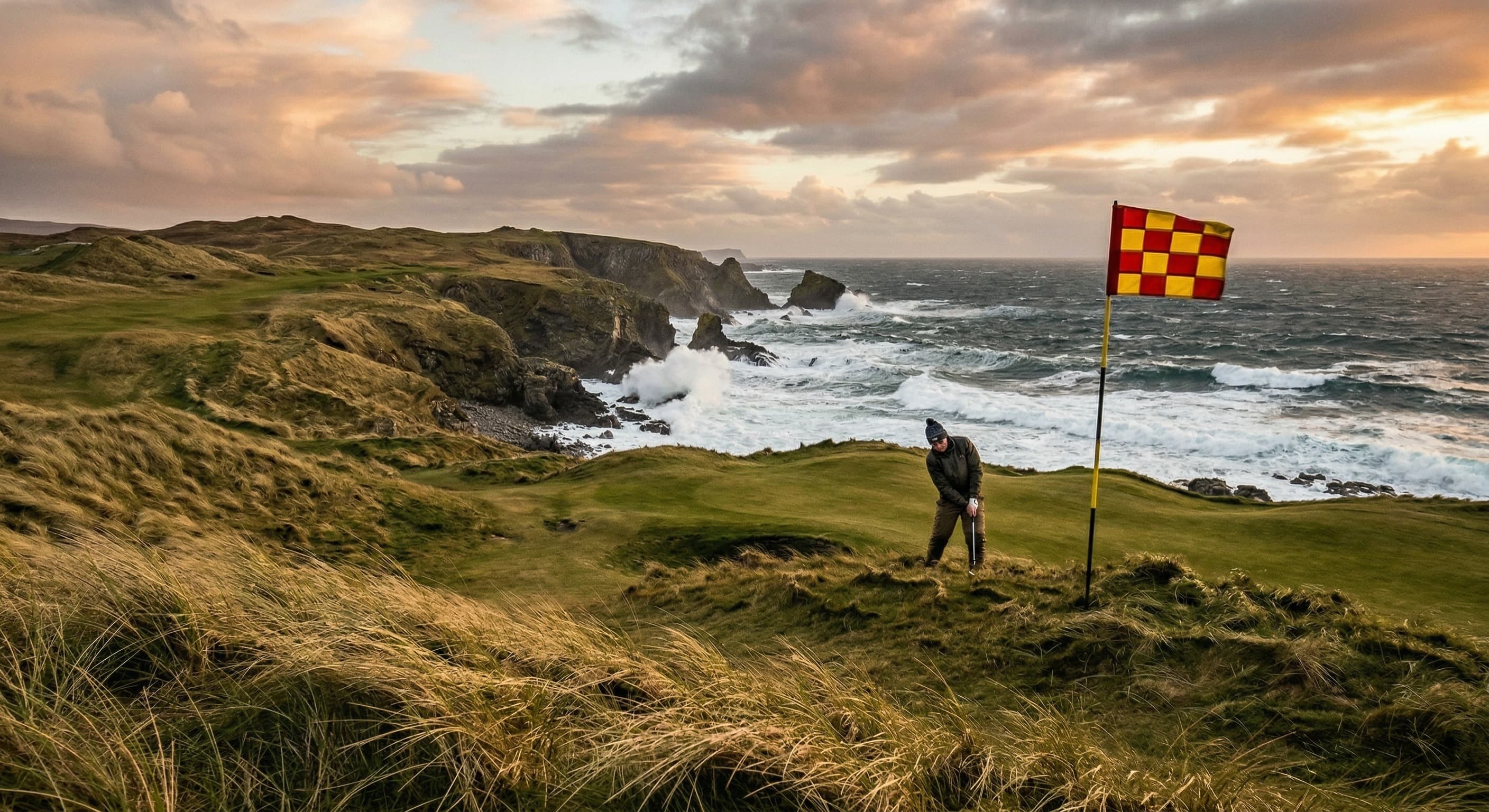
America's 20 Windiest Golf Courses: A G-Score Wind Analysis
We ranked America's 20 windiest golf courses using G-Score wind penalty data. See how coastal gusts and prairie gales reshape playability scores.
Read Story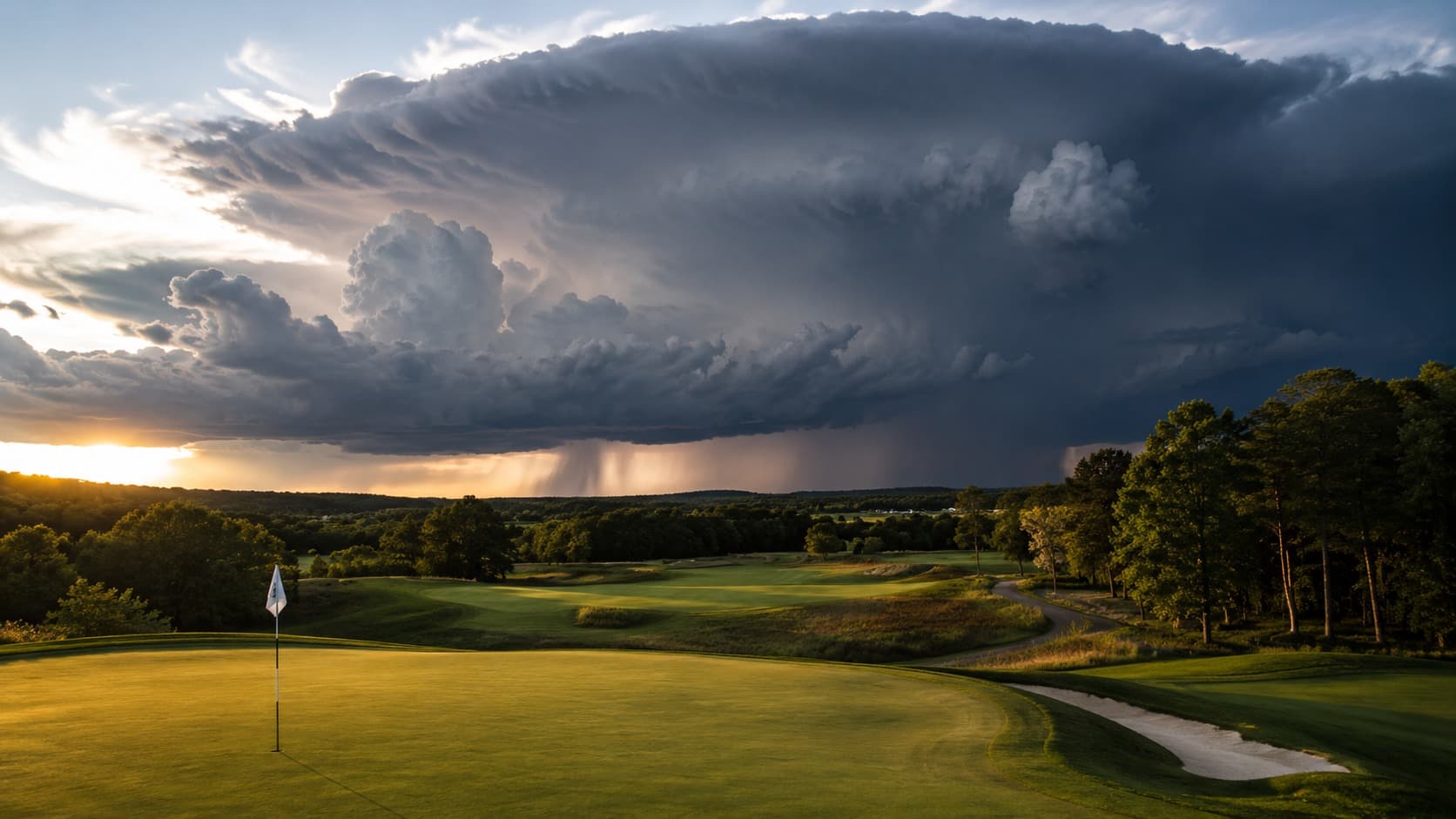
The Three O’Clock Storm: Reading Summer’s Convective Cycle to Protect Your Round
A 40% chance of afternoon thunderstorms does not mean a 40% chance of getting rained on. In the summer convective season it means the morning is nearly clear and the afternoon carries a fast-building, high-energy storm risk driven by a daily heating cycle. Here is the meteorology behind the pattern, the G-Score data on how the storm cycle punishes afternoon tee times across the Southeast, Midwest, and desert Southwest, the lightning-safety decision tree that actually matters, and the workflow that gets you off the course before the first bolt.
Read StoryMinSu Kim
Founder & Golf Data Analyst
MinSu is a data analyst and golfer with 10+ years on the course. He built Golf Weather Score to answer one question: is today a good day to play? He combines weather data, course intelligence, and the proprietary G-Score algorithm to help golfers make smarter decisions.
Every Friday Morning
When Arthur Hills plays best next weekend.
Friday 6am ET: peak G-Score windows for Arthur Hills, wind direction by hour, and one gear call. Three minutes to read, save you the round.
One email a week. Unsubscribe in one click.
The Caddie's Oracle
Draw your luck before the tee off