
Caddie's Gear Advisor
Curated for today's 50°F · Clear
Cold-Weather Performance Layers
Thermal mid-layers that move with your swing
Tour Hand Warmers
Rechargeable warmers trusted by caddies
Thermal Base Layers
Lightweight compression that traps heat
Winter Golf Headwear
Beanies and ear warmers built for the links
Your Golf Trip, Handled
The Ultimate Golf Trip Planner
Everything you need to play Aspen Acres Golf Course — from booking your flight to checking in course-side.
Course-Side Stays
Luxury hotels, resorts, and stay-and-play packages just minutes from the first tee.
Flights
Compare fares across 700+ airlines for the best route to your tee time.
SUV Rentals for Golf Bags
Spacious vehicles with room for clubs, bags, and your foursome.
Travel Insurance
Coverage for medical, weather delays, and gear at your destination.
Aspen Acres Golf Course: Course Intelligence
Signature Setup
Aspen Acres doesn't look like the resort courses an hour south. It sits in Ashton, Idaho, in the high Henry's Fork country at roughly 5,200 feet, and what sets it apart isn't a famous architect — it's the trees. The course is family-built and family-run, opened in the 1970s, and its calling card is that nearly every hole is framed by a different species, with stands of aspen giving the place its name. It's a shorter, walkable layout rather than a championship test; the slope sits in the low-110s and the par-3s are genuinely reachable. I want to be honest here: I have not played Aspen Acres myself, so I'm writing the playing notes from elevation and regional-weather logic rather than a personal scorecard — the tree corridors and the altitude are the two facts that should change how you club this round.
Hole-by-Hole Wind & Playing Lines
The trees, not length, are what protect this course, so the wind interacts with the corridors more than with open exposure.
- The longest par-4 (plays as the #1 handicap): On a typical morning, cold air drains down-canyon from the Henry's Fork basin. Into that breeze the tee shot stalls, but the thin 5,200-ft air gives roughly 8–10% more carry than sea level, so the two roughly cancel — club for the stated yardage and flight it low to stay under the tree-line gusts.
- The aspen-lined par-3s: In still morning air these play about one club shorter than the card because of elevation. The danger is a crosswind funneling between the tree stands — a high ball gets shoved into the timber, so a knockdown to the fat of the green is the percentage shot.
- Any dogleg through the conifers: Don't cut the corner over tall trees in the morning; cold dense air and a headwind kill the carry you'd trust later in the day.
Green & Fairway Characteristics
The corridors are tight and tree-defined rather than bunker-heavy, so accuracy off the tee matters far more than power. Fairways are mountain turf that stays softer and slower in cold morning conditions, then firms as the high-desert sun climbs. The greens are on the smaller side and, in the cool morning air, hold a high approach well — useful, because the elevation already adds carry. Expect modest break; this is not a fast, severely tilted surface, and putts hold their line. Front and back both ask the same question: can you keep the ball in the short grass between the trees?
Seasonal Weather Pattern
This is the detail most golfers underestimate. At 5,200 feet in eastern Idaho the season is short — realistically late spring through early fall, with the heart of it in July and August when daytime highs sit in the 75–85°F range. Mornings, even in summer, can start near 40–50°F, and shoulder-season rounds in May or September can begin around or below freezing with frost delays. This is a markedly cooler, shorter window than the lower-elevation Idaho and Utah courses, so don't pattern your expectations on them.
Local Play Tips
Layer for a 30-degree swing inside a single round — a 42°F tee time can reach the mid-70s by the turn, and that temperature change alone shifts your carry. Because the holes are tree-defined, leave the driver in the bag where a fairway wood or long iron keeps you in the corridor; position beats power here. And give yourself extra club faith in the cold early holes: dense morning air costs you distance that the altitude will hand back once the day warms.
Pre-Round Weather Workflow
Check the 7-day G-Score for Ashton, Idaho two or three days out, then again the night before. The numbers that matter most at this elevation are the morning low and windExposure: a sub-40°F start means a possible frost delay and slower, softer turf, while the down-canyon wind tends to build through the afternoon. If you can choose your tee time, take the first window after the frost clears — the air is calmest, the greens are firmest, and the G-Score typically runs 8–12 points higher than a gusty afternoon. Pair the G-Score with the temperature curve: plan your club selection around a cold, dense-air front nine and a warmer, longer-flying back nine.
Related Reading
Before you tee off at Aspen Acres Golf Course

America's 20 Windiest Golf Courses: A G-Score Wind Analysis
We ranked America's 20 windiest golf courses using G-Score wind penalty data. See how coastal gusts and prairie gales reshape playability scores.
Read Story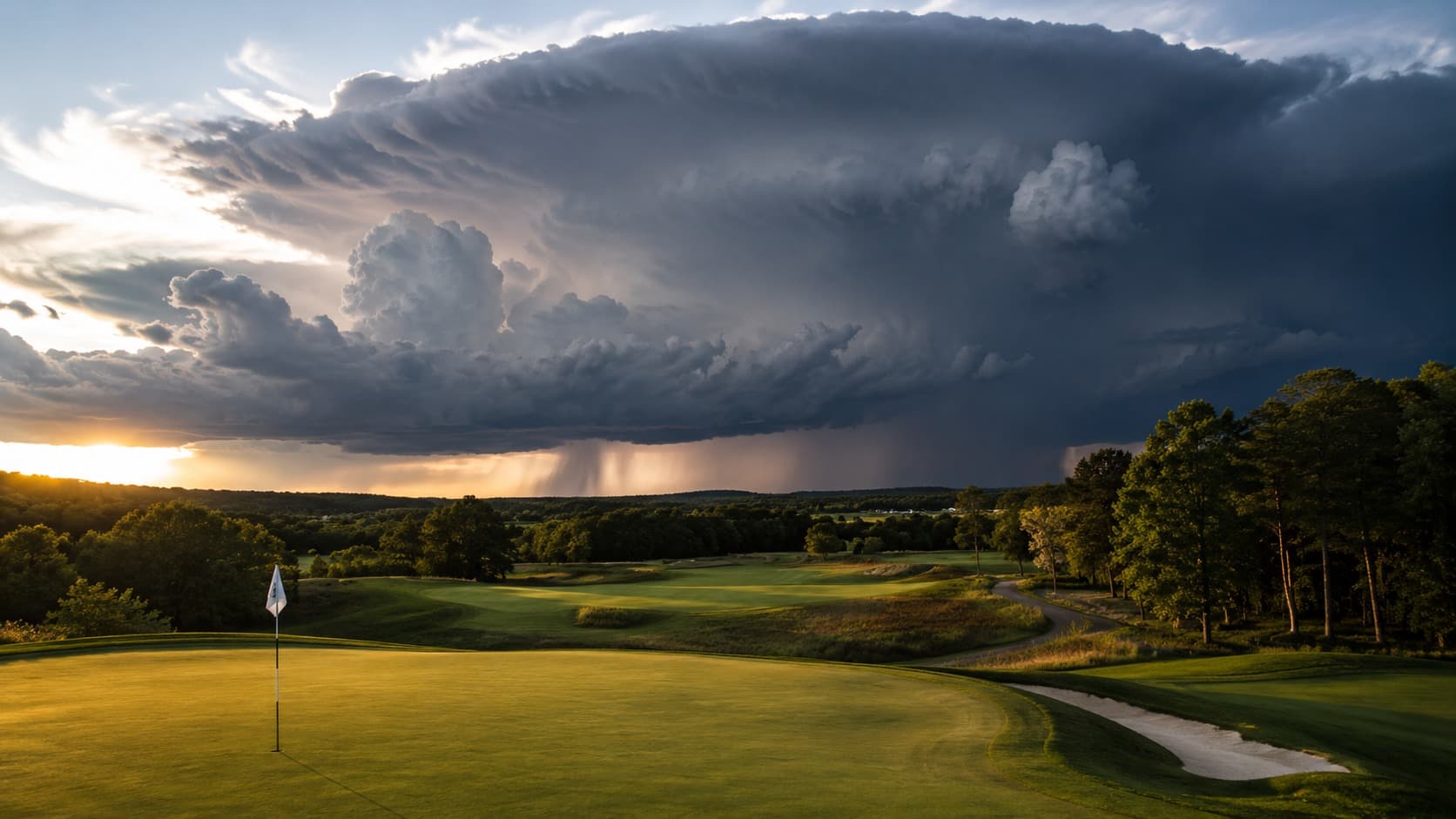
The Three O’Clock Storm: Reading Summer’s Convective Cycle to Protect Your Round
A 40% chance of afternoon thunderstorms does not mean a 40% chance of getting rained on. In the summer convective season it means the morning is nearly clear and the afternoon carries a fast-building, high-energy storm risk driven by a daily heating cycle. Here is the meteorology behind the pattern, the G-Score data on how the storm cycle punishes afternoon tee times across the Southeast, Midwest, and desert Southwest, the lightning-safety decision tree that actually matters, and the workflow that gets you off the course before the first bolt.
Read StoryMinSu Kim
Founder & Golf Data Analyst
MinSu is a data analyst and golfer with 10+ years on the course. He built Golf Weather Score to answer one question: is today a good day to play? He combines weather data, course intelligence, and the proprietary G-Score algorithm to help golfers make smarter decisions.
Every Friday Morning
When Aspen Acres Golf Course plays best next weekend.
Friday 6am ET: peak G-Score windows for Aspen Acres Golf Course, wind direction by hour, and one gear call. Three minutes to read, save you the round.
One email a week. Unsubscribe in one click.
The Caddie's Oracle
Draw your luck before the tee off