
Caddie's Gear Advisor
Curated for today's 85°F · Clear
Tour-Level Drivers
Engineered for maximum distance and forgiveness
Laser Rangefinders
Pin-seeking technology for precision approaches
Premium Golf Balls
Tour-caliber spin and distance performance
Performance Sunglasses
Polarized lenses optimized for reading greens
Your Golf Trip, Handled
The Ultimate Golf Trip Planner
Everything you need to play Aspetuck Valley Country Club — from booking your flight to checking in course-side.
Course-Side Stays
Luxury hotels, resorts, and stay-and-play packages just minutes from the first tee.
Flights
Compare fares across 700+ airlines for the best route to your tee time.
SUV Rentals for Golf Bags
Spacious vehicles with room for clubs, bags, and your foursome.
Travel Insurance
Coverage for medical, weather delays, and gear at your destination.
Aspetuck Valley Country Club: Course Intelligence
I played Aspetuck Valley on a cold November morning, 41°F at the first tee, the kind of damp Connecticut chill that sits in a river valley and doesn't leave until the sun is well up. Frost still clung to the low hollows past 8 a.m., and the ball came off the face dead — no carry, no roll. This is a Hal Purdy course folded into rolling Weston farmland, and the terrain plus the cold air make it play a full club longer than the scorecard admits.
TL;DR: Aspetuck Valley Country Club in Weston, Connecticut is a 1968 Hal Purdy parkland design routed through a river valley in Fairfield County. The smart play is an early summer tee time — valley humidity and afternoon thunderstorms both build past midday, while the bentgrass greens roll truest in the morning calm. Cold-weather rounds here lose distance fast, so club selection by season matters more than at most parkland courses. Below is how the wind, the valley, and the seasons actually change your clubs.
Signature Setup
Aspetuck Valley Country Club sits in Weston, in Fairfield County, Connecticut, on rolling land that Hal Purdy laid out in 1968. Purdy was a prolific Northeast architect whose work runs through New Jersey and Connecticut, and his style is on the ground here: a parkland routing that uses natural elevation change rather than fighting it, greens set on the contour of the land, and short par-4s that reward position over power.
It is a private club, and I want to be honest about a limit: I have not seen the club's full competitive archive, so I won't list tournament years I can't verify. What I can speak to is the terrain and the air. The Aspetuck River and its valley define the property, and the elevation changes between the high tees and the low fairways are the single biggest factor in how this course plays — more than the wind on most days.
Hole-by-Hole Wind & Playing Lines
The valley routing means the wind you feel on an elevated tee is rarely the wind down in the fairway hollow. That mismatch is the heart of playing Aspetuck Valley well.
- The #1-handicap par-4 plays long on the card and longer in the cold. The dominant cool-season flow in this part of Connecticut comes out of the northwest, and on a November morning like the one I played, a 160-yard approach behaved like 180 — cold dense air plus a headwind. Take one extra club and favor the fat left side of the green; short-right leaves the worst chip on the hole.
- The signature par-3 across the river valley (around 170 yards from the members' tee) is the hole the conditions decide. The low air over the water is cooler and heavier, and a NW breeze funnels straight up the valley into your face — that's a genuine two-club difference from a still August evening. Trust the longer club; anything short feeds back down the slope.
- A downhill par-4 dropping into the valley plays shorter than the yardage suggests because of the elevation drop, but a crosswind off the high ground pushes the ball more than the sheltered tee box lets you feel. On any steady W/NW day I aim at the upper edge of the fairway and let the wind walk it back to center.
Green & Fairway Characteristics
The greens are bentgrass with the usual Northeast Poa intrusion, set on the land's natural contour rather than pushed up artificially. They run a true medium-fast in the morning and get grainier and quicker as the surface dries through the afternoon — the 4 p.m. roll is noticeably bumpier than the 8 a.m. roll, so if your match is tight you want the early surface.
Fairways are rolling parkland turf, softer and more receptive in spring, firmer and faster by August after Connecticut strings together dry stretches. The valley holds moisture, though — off the cold damp ground I played in November there was essentially zero roll, while in a dry July the same drive runs 15–20 yards farther on the firmer high fairways.
Seasonal Weather Pattern
Fairfield County sits in the humid-continental zone, and the river valley gives Aspetuck Valley its own microclimate. July and August bring highs in the low-to-mid 80s°F with heavy humidity and a real afternoon thunderstorm pattern — soft greens, slow morning fairways trapped with dew, and a hard 1 p.m. cutoff when convection fires. October and early November, when I played, run roughly 40–55°F by midday with frost in the valley hollows and the firmest greens of the year, but the cold air steals carry distance. Winter is largely a closed or frozen-ground proposition with a dominant NW wind. Spring is soft, generous off the tee, and the kindest stretch for a higher handicap — though the valley stays wet well into May.
Local Play Tips
The single thing I'd tell a first-time guest: the valley lies to you about temperature and distance. On a cold morning the low fairways sit several degrees colder than the elevated clubhouse reading, frost lingers in the hollows past 8 a.m., and the ball simply won't carry or roll until the sun clears the ridge. Plan your opening three holes as if the course is a full club longer than the card. And in summer, book the earliest slot you can — the humidity, the soft greens, and the afternoon storm risk all compound after midday, and the morning version of this course is meaningfully better.
Pre-Round Weather Workflow
Use the golfweatherscore 7-day G-Score for Weston before you lock a tee time. The pattern to watch:
- Summer: target a tee time before 9 a.m. The G-Score will almost always read 8–12 points higher in the morning window, before valley humidity and afternoon convection set in.
- Fall/Winter: check the overnight low and the wind direction together. A sub-40°F valley morning with NW flow costs you a full club into the signature par-3 and the exposed corridors — and watch for frost delays in the low hollows.
- Shoulder seasons: read overnight low vs. tee-time temperature. A frost-or-dew morning in the valley means no fairway roll for the opening holes — let the G-Score's morning trend tell you whether the ground will be wet or running.
Read the wind direction and temperature first, the valley elevation second, and let those numbers pick your club before you ever stand on the first tee.
Related Reading
Before you tee off at Aspetuck Valley Country Club

Best Golf Weather by State: Ranking America by Average G-Score
We ranked all 50 US states by average G-Score golf playability. California tops the list, but the results beyond the top five may surprise you.
Read Story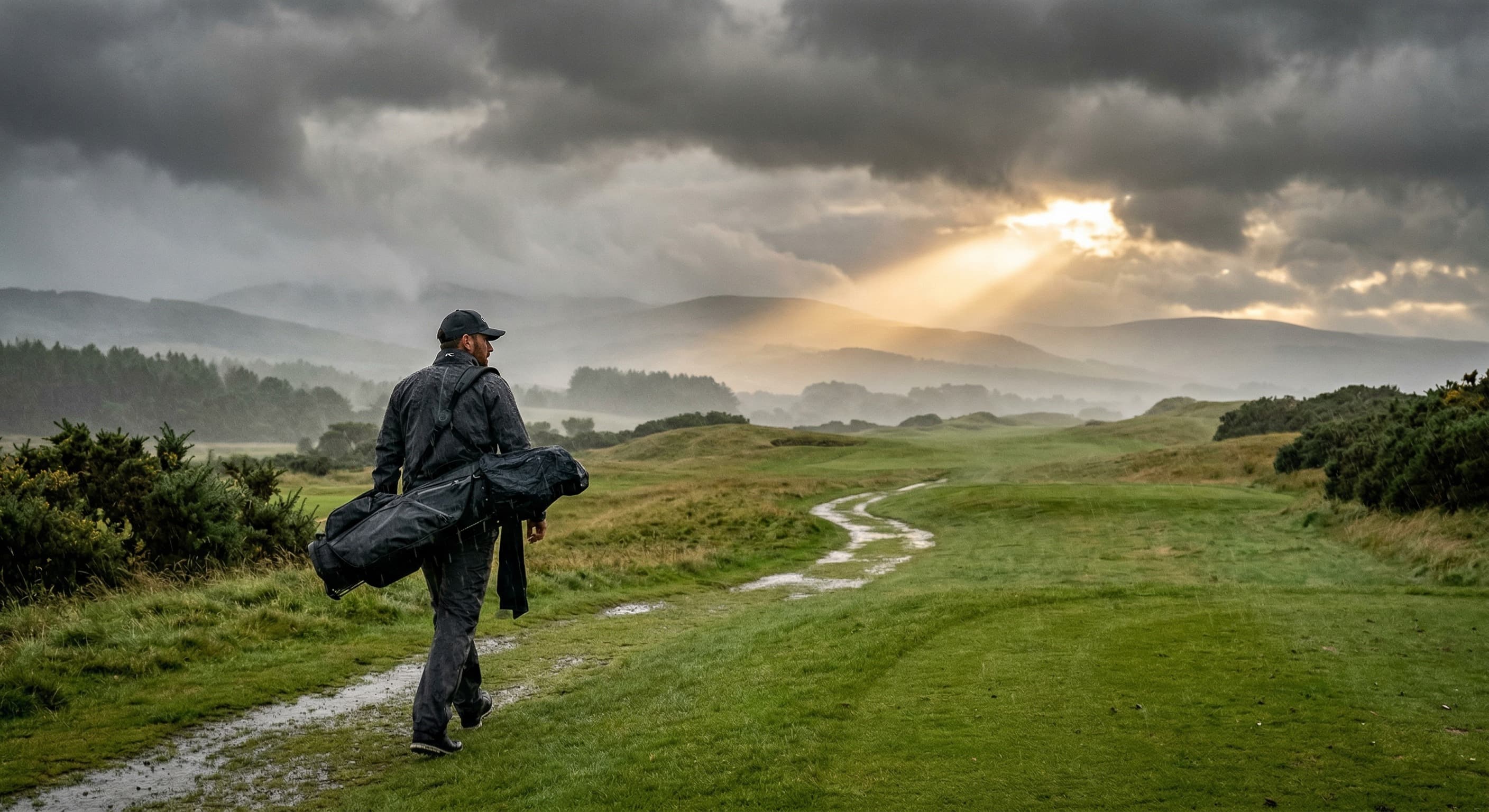
How Rain Probability Affects Your Golf Round: A Weather Data Study
What does '30% chance of rain' really mean for your round? We decode precipitation forecasts and reveal how rain impacts distance, grip, and scoring.
Read StoryMinSu Kim
Founder & Golf Data Analyst
MinSu is a data analyst and golfer with 10+ years on the course. He built Golf Weather Score to answer one question: is today a good day to play? He combines weather data, course intelligence, and the proprietary G-Score algorithm to help golfers make smarter decisions.
Every Friday Morning
When Aspetuck Valley Country Club plays best next weekend.
Friday 6am ET: peak G-Score windows for Aspetuck Valley Country Club, wind direction by hour, and one gear call. Three minutes to read, save you the round.
One email a week. Unsubscribe in one click.
The Caddie's Oracle
Draw your luck before the tee off