
Caddie's Gear Advisor
Curated for today's 73°F · Clear
Tour-Level Drivers
Engineered for maximum distance and forgiveness
Laser Rangefinders
Pin-seeking technology for precision approaches
Premium Golf Balls
Tour-caliber spin and distance performance
Performance Sunglasses
Polarized lenses optimized for reading greens
Your Golf Trip, Handled
The Ultimate Golf Trip Planner
Everything you need to play Avalon Golf Links — from booking your flight to checking in course-side.
Course-Side Stays
Luxury hotels, resorts, and stay-and-play packages just minutes from the first tee.
Flights
Compare fares across 700+ airlines for the best route to your tee time.
SUV Rentals for Golf Bags
Spacious vehicles with room for clubs, bags, and your foursome.
Travel Insurance
Coverage for medical, weather delays, and gear at your destination.
Avalon Golf Links: Course Intelligence
Signature Setup
The first time I drove up Route 9 to Avalon Golf Club in Cape May Court House, the air already smelled of salt marsh — it was a damp 61°F May morning, and the flags were standing dead sideways before I even reached the first tee. Bob Hendricks routed this course in 1960, and it has stayed true to its modest, honest scale: 6,325 yards from the tips, par 71, with a course rating of 70.7 and a slope of 122. It is not long by modern standards, but on the southern New Jersey shore, length is rarely the test. Wind is. The course sits a few miles inland from the Avalon and Stone Harbor beaches, close enough that the afternoon sea breeze off the Atlantic reaches every exposed hole.
Hole-by-Hole Wind & Playing Lines
Three holes decide your round here, and all three are wind-dependent. The #1 handicap par-4 runs roughly into the prevailing southwest breeze that builds by midday. On a calm 7 a.m. round I hit 7-iron in; by 1 p.m. that same approach was a hard 5-iron — a two-club swing on identical yardage. The back-nine par-3 over water plays about 165 yards, and the green sits open to the same SW flow: short and right is wet, so on breezy afternoons I aim at the left edge and let the wind hold the ball back to center. The closing stretch's narrow par-4s are framed by water down one side; with a crosswind off the marsh, the smart play is a three-quarter tee shot to the fat part of the fairway rather than a full driver that the wind can push into the hazard.
Green & Fairway Characteristics
The fairways are narrow and the bentgrass greens run medium-paced, firmer in July and August when the shore dries out. From the tips you face 6,325 yards; the Blue tees ease it to 6,117 (rating 69.5, slope 120), and there are six tee sets down to 4,712 yards. Water is in play on nearly half the holes, so this is a position course — driver is not always the answer. Front nine and back nine balance out at par 71, with the harder par-4s clustered where the wind has the most room to work.
Seasonal Weather Pattern
May and June mornings here run 58–66°F with heavy dew and a soft, slower track. By July and August the marsh dries, greens firm up, and the SW sea breeze becomes a daily fixture — typically calm at dawn, then 10–18 mph by early afternoon. September and October are the sweet spot: cool 60s, lower humidity, and a breeze that is brisk but predictable rather than gusty. Unlike inland Jersey courses, Avalon's proximity to the coast means the wind direction is reliable, which actually makes it easier to plan once you know the pattern.
Local Play Tips
The single most useful thing I learned: the breeze is a clock, not a coin flip. Tee off before 10 a.m. and you play the course as Hendricks scaled it — gettable, fair. Wait until the afternoon and the same holes gain two clubs on every exposed approach. Locals chasing a good number book the first two hours after sunrise. Bring a windshirt even in summer; the dawn marsh air off the shore runs cooler than the inland forecast suggests.
Pre-Round Weather Workflow
Use the 7-day G-Score forecast to pick your tee window before you book. Watch two signals for Avalon specifically: wind speed and direction. If the G-Score shows SW winds climbing past 12 mph after late morning, lock an early tee time — the windExposure rating will flag the over-water par-3 and the closing par-4s as high-exposure. On those, plan one extra club and aim away from the water. A calm dawn G-Score in the 8–12 range above the afternoon value is your green light to play your normal yardages.
Related Reading
Before you tee off at Avalon Golf Links

Reading Coastal Wind: How the Marine Layer Reshapes Pebble Beach, Bandon, and the Pacific Coast Game
Coastal golf does not play by inland rules. The marine layer suppresses wind in the morning, then releases it through midday in a thermal cycle that turns a calm 7am tee into a 22mph back nine. Here is the meteorology behind the pattern, the G-Score data that confirms it across the Pacific coast, and the morning workflow that turns the marine layer from a confusion into a competitive advantage.
Read Story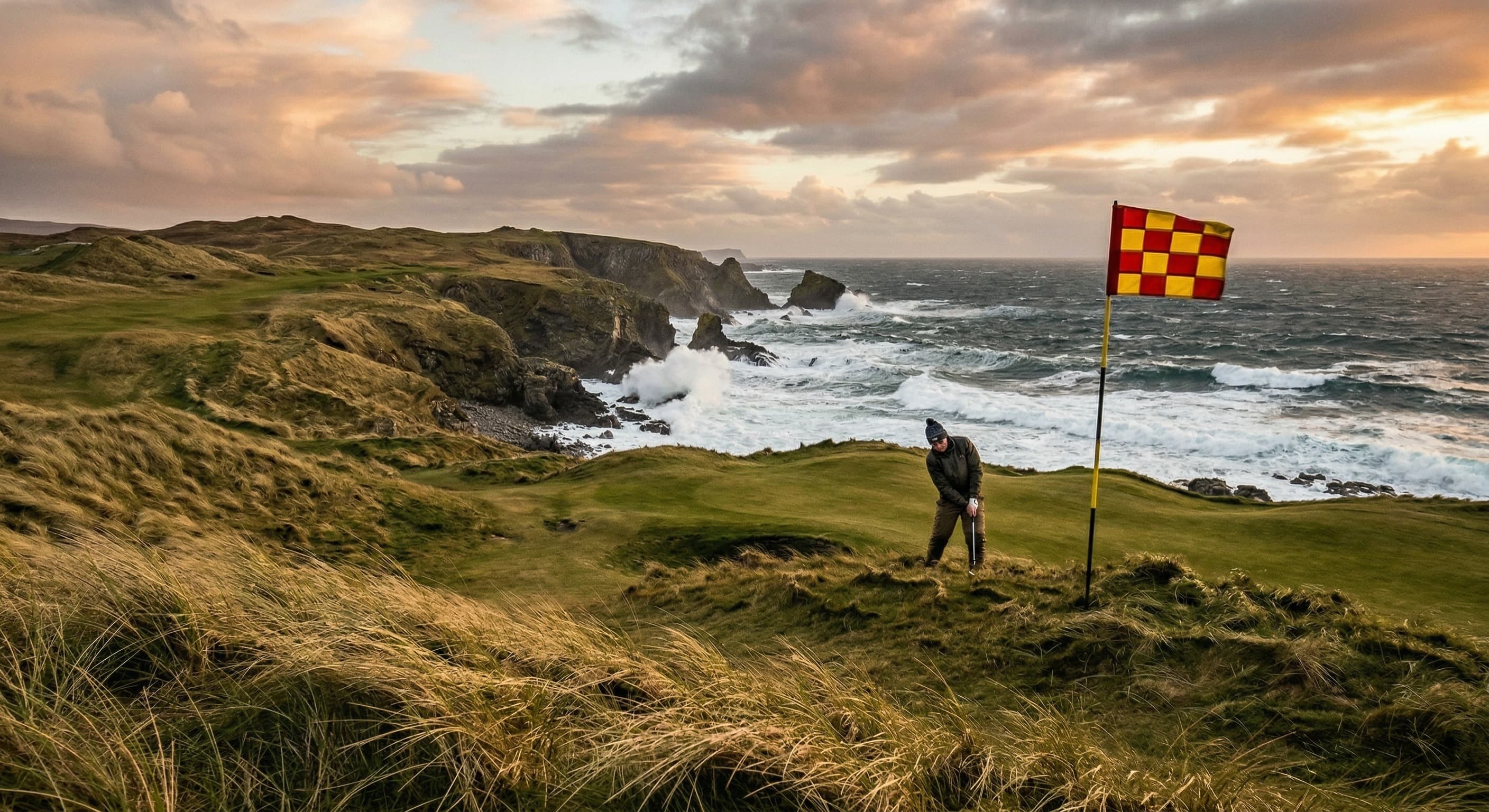
America's 20 Windiest Golf Courses: A G-Score Wind Analysis
We ranked America's 20 windiest golf courses using G-Score wind penalty data. See how coastal gusts and prairie gales reshape playability scores.
Read StoryMinSu Kim
Founder & Golf Data Analyst
MinSu is a data analyst and golfer with 10+ years on the course. He built Golf Weather Score to answer one question: is today a good day to play? He combines weather data, course intelligence, and the proprietary G-Score algorithm to help golfers make smarter decisions.
Every Friday Morning
When Avalon Golf Links plays best next weekend.
Friday 6am ET: peak G-Score windows for Avalon Golf Links, wind direction by hour, and one gear call. Three minutes to read, save you the round.
One email a week. Unsubscribe in one click.
The Caddie's Oracle
Draw your luck before the tee off