
Caddie's Gear Advisor
Curated for today's 88°F · Clear
Ultralight Distance Drivers
Maximum carry in hot, low-drag conditions
UV Protection Apparel
UPF 50+ cooling fabrics for peak-sun rounds
Precision Rangefinders
Slope-adjusted yardage in any condition
Hydration & Cooling
Insulated bottles and cooling towels
Your Golf Trip, Handled
The Ultimate Golf Trip Planner
Everything you need to play Baca Grande Golf Club — from booking your flight to checking in course-side.
Course-Side Stays
Luxury hotels, resorts, and stay-and-play packages just minutes from the first tee.
Flights
Compare fares across 700+ airlines for the best route to your tee time.
SUV Rentals for Golf Bags
Spacious vehicles with room for clubs, bags, and your foursome.
Travel Insurance
Coverage for medical, weather delays, and gear at your destination.
Baca Grande Golf Club: Course Intelligence
Signature Setup
I'll be honest before the first tee: I have not played the Baca Grande's course in Crestone myself. What I have done is recalibrate my whole bag for thin-air Colorado golf on comparable San Luis Valley and high-country rounds, and that experience transfers directly here. The Baca Grande is the member course of the Baca Grande POA in Crestone, Saguache County, sitting on the floor of the San Luis Valley right at the foot of the Sangre de Cristo Mountains — one of the highest, driest valley settings in American golf, near 7,900 feet. It's a 9-hole layout with, per the club, "world class views," and the course is reserved for members. The club itself doesn't publish a scorecard, but the documented Crestone 9-hole executive course — par 31, about 2,228 yards from the back, opened 1974, open May 15–October 15 — almost certainly describes this same property.
TL;DR: Short 9-hole members course (~2,228y, par 31) on the San Luis Valley floor near 7,900 ft, under the Sangre de Cristos. Altitude, not length, defines play — the ball flies ~15% farther, the afternoon valley wind builds daily, and the season is a tight May 15–Oct 15. Play early, club down into the thin air, and respect firmness.
Hole-by-Hole Wind & Playing Lines
I won't invent per-hole numbers the club doesn't publish. What I can give you is the wind logic for a short, fully exposed valley layout near 7,900 ft:
- Longest two-shotter into an up-valley afternoon flow: The San Luis Valley channels a daytime up-valley wind that strengthens through the afternoon. Into it, remember altitude is already adding ~15% carry — so club down relative to the gust, take one less than instinct says, and flight the ball low under the wind rather than high into it.
- Short par-3s with the peaks behind: Depth perception lies against a 14,000-ft mountain wall — the green looks closer than it plays. Trust the rangefinder number, then subtract for altitude, not for the optical pull of the Sangre de Cristos.
- Any downwind hole on firm turf: With the valley baked dry, a downwind, downhill release can run a wedge well past the pin. Land it short and let it chase rather than flying a hot shot to a surface that won't hold.
The habit that travels: read the wind off the flag on the first open hole, decide whether the up-valley flow is already up, and re-club for altitude on every shot — the thin air never turns off.
Green & Fairway Characteristics
This is high-desert golf on the valley floor. The turf lives on bone-dry air, so firmness is the dominant variable — fairways run hot in a dry July high-pressure spell and only soften after the valley's brief monsoon cells. At roughly 2,228 yards to a par of 31, it's a short executive card where position and a clean wedge game matter far more than driver distance. Published slope and rating aren't available, which tells you this plays as a relaxed members' walk rather than a rated championship test — the defense is the elevation and the wind, not card difficulty.
Seasonal Weather Pattern
The San Luis Valley is high, arid, and continental — nothing like a coastal course. The golf season is short and weather-bracketed: roughly May 15 to October 15. Late spring (May–Jun): dry and windy, with wide day-to-night temperature swings and intense UV at altitude — sunblock and layers, not the calendar, decide comfort. Summer (Jul–Aug): warm, dry mornings with a real afternoon thunderstorm and lightning risk off the Sangre de Cristos; the up-valley wind peaks midday. Early fall (Sep–Oct): the prime window — crisp, calm mornings, firm greens, and the steadiest scoring air of the year before the course closes. Winters are cold and snowbound at this elevation, so the course shuts; for that stretch I rely on NOAA San Luis Valley historicals, not anything firsthand.
Local Play Tips
Here's the thing flatland golfers get wrong at 7,900 feet: it isn't a vague "ball goes a little farther." Carry scales with elevation at roughly 2% per 1,000 feet above sea level, which puts you near a 15% gain here — a 150-yard club is suddenly a 170-yard club. Most visitors leave every approach long for the first three holes before they trust it. Recalibrate deliberately on the range or the opening hole, write your adjusted numbers on the card, and commit. And tee off early: the valley's afternoon up-valley wind is a daily, predictable build, so the calmest, most makeable scoring window is the first few hours after sunrise.
Pre-Round Weather Workflow
Treat golfweatherscore's 7-day G-Score and windExposure as your timing tool — read for a high-altitude continental valley, not a coast:
- Three days out: scan the G-Score trend for the cleanest morning. At this elevation the swing between a 9 and a 4 is usually afternoon wind and storm risk, not the date.
- The night before: check wind direction and the afternoon build. If the up-valley flow is forecast strong by early afternoon, lock an early tee time — the morning is your calm window.
- Round morning: if windExposure flags midday gusts, accept that a short par-31 card still plays a club longer into the valley wind, then layer altitude on top: club down ~15% for carry, but back up when hitting into a strong afternoon breeze. Sunscreen and water are non-negotiable at 7,900 ft.
Related Reading
Before you tee off at Baca Grande Golf Club
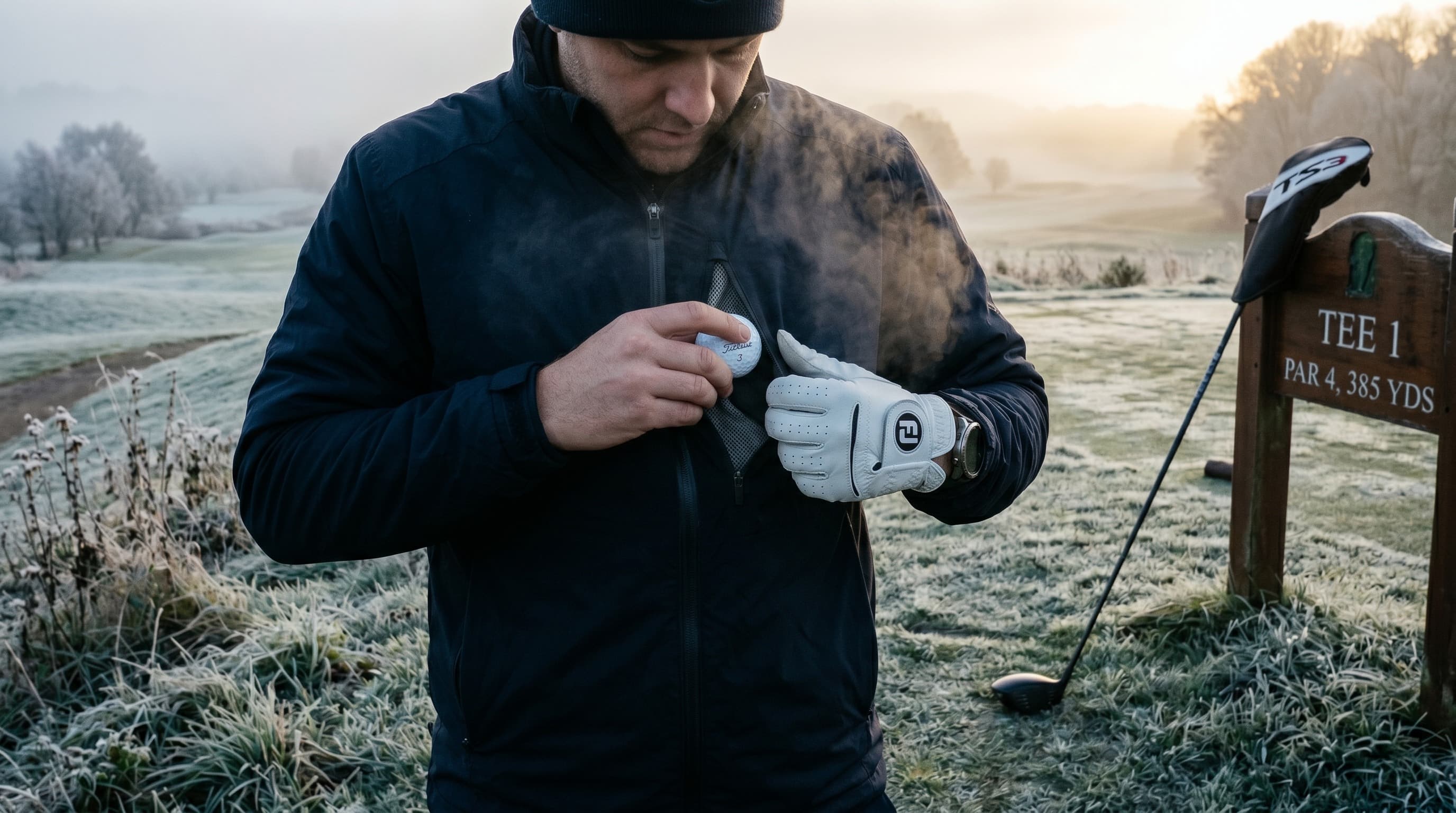
How Cold Weather Steals Distance: The Ball Compression Physics Every Golfer Should Know
Every 10°F drop costs the average golfer two to four yards of driver carry. Here is the physics — ball compression, air density, muscle temperature — and the field data we pulled from G-Score-monitored cold rounds to show exactly how distance loss compounds, and how to compensate without changing your swing.
Read Story
The May 2026 G-Score Heatmap: Where American Golf Peaks This Spring
May is the most underrated month on the American golf calendar. Five regions hit their annual peak this spring, three turn quietly hostile, and the data tells a clearer story than the brochures. Here is where to play, where to avoid, and how to time your booking window.
Read StoryMinSu Kim
Founder & Golf Data Analyst
MinSu is a data analyst and golfer with 10+ years on the course. He built Golf Weather Score to answer one question: is today a good day to play? He combines weather data, course intelligence, and the proprietary G-Score algorithm to help golfers make smarter decisions.
Every Friday Morning
When Baca Grande Golf Club plays best next weekend.
Friday 6am ET: peak G-Score windows for Baca Grande Golf Club, wind direction by hour, and one gear call. Three minutes to read, save you the round.
One email a week. Unsubscribe in one click.
The Caddie's Oracle
Draw your luck before the tee off