
Caddie's Gear Advisor
Curated for today's 78°F · Clear
Tour-Level Drivers
Engineered for maximum distance and forgiveness
Laser Rangefinders
Pin-seeking technology for precision approaches
Premium Golf Balls
Tour-caliber spin and distance performance
Performance Sunglasses
Polarized lenses optimized for reading greens
Your Golf Trip, Handled
The Ultimate Golf Trip Planner
Everything you need to play Badlands Golf Course — from booking your flight to checking in course-side.
Course-Side Stays
Luxury hotels, resorts, and stay-and-play packages just minutes from the first tee.
Flights
Compare fares across 700+ airlines for the best route to your tee time.
SUV Rentals for Golf Bags
Spacious vehicles with room for clubs, bags, and your foursome.
Travel Insurance
Coverage for medical, weather delays, and gear at your destination.
Badlands Golf Course: Course Intelligence
Signature Setup
Let me be honest up front: Badlands Golf Club closed to play around 2016–2017 and has been tied up in a Las Vegas redevelopment dispute since, so the reads below come from the course record, the routing, and my own Mojave desert rounds nearby — not a card I'm dressing up as a recent memory. The course sat in the Peccole Ranch / Summerlin area on the west side of the Las Vegas valley, designed by Johnny Miller with Chi Chi Rodriguez consulting and opened in 1995. It was a 27-hole desert target layout — three nines (Desperado, Diablo, and Outlaw) — built into raw arroyo and native rock rather than wall-to-wall green. That style is the whole point: you played to islands of turf separated by desert wash, and the defense was the forced carry, not the yardage.
TL;DR: A 1995 Johnny Miller desert target course (27 holes, three nines) on the west side of Las Vegas, now closed and in redevelopment limbo. The test was carry over arroyo, plus valley heat and afternoon SW wind. Play it — historically — early, take one extra club into the wind, and respect the wash.
Hole-by-Hole Wind & Playing Lines
Because the course is closed I won't fabricate a verified per-hole handicap card. Here is how Mojave wind and desert routing dictated play on nines like these:
- Long par-4s into the afternoon SW flow: When the valley's prevailing southwesterly builds to 12–20 mph after noon, a flushed 150-yard desert carry behaves like 165–175. With the dry, thin air at roughly 2,500 ft elevation the ball already flies ~6–8% farther, but the headwind erases that and then some — club up and keep flight low.
- Desert-carry par-3s over wash: These were the signature shots. There is no safe miss short into raw arroyo, so you commit to a club that carries the front edge of turf even when the wind is in your face. A bailed, decelerated swing here is a lost ball, not a bogey.
- Downwind holes on a morning northerly: Early, with calm or a light tailwind, the firm desert fairways run hard — land short of the green and let the ball release rather than flying a hot pitch onto a surface baked out by Mojave high pressure.
The habit that travels to any desert course: check the wind on the first exposed carry, decide whether it helps or hurts your forced-carry clubs, and never short-side yourself over a wash.
Green & Fairway Characteristics
The greens were bentgrass — common for premium 1990s Vegas builds — set on desert target fairways framed by native rock, scrub, and arroyo. Firmness was the constant: under a dry Mojave high the surfaces bake fast and release, so a high spinning approach that would hold a coastal green just bounds through here. The fairways were not continuous turf but landing islands, which means the penalty for a wind-pushed miss was severe — you weren't in light rough, you were in desert. With minimal tree cover and an open valley floor, stock yardages were only reliable in the calm dawn window before the thermal wind got going.
Seasonal Weather Pattern
Las Vegas is high Mojave desert — the opposite of a maritime course, with extreme heat and very low humidity. Summer (Jun–Aug): brutal, with afternoon highs routinely 105–110°F and dawn readings still near 80°F; play is a dawn-only proposition, and the SW wind builds hard after midday. Spring (Mar–May) and Fall (Oct–Nov): the prime windows — mild 70s–80s°F, firm fast turf, and the most playable wind of the year. Winter (Dec–Feb): cool and pleasant by day, highs in the upper-50s to 60s°F, but cold desert mornings near 40°F that take distance off the ball and stiffen the swing. Rain is rare year-round, so firmness — not moisture — is the variable that moves your yardages.
Local Play Tips
The one thing a sea-level or coastal instinct gets wrong in the Mojave: you must trust elevation carry and fight afternoon wind at the same time. The thin desert air adds real distance, which tempts you to club down — but the SW thermal wind that builds after noon quietly takes it all back on the holes that face it. The fix is timing, not heroics: get out at first light when the valley is calm and cool, bank the elevation carry while the air is still, and you'll hit your numbers. Wait until late morning and the same forced carries over arroyo turn from comfortable to white-knuckle.
Pre-Round Weather Workflow
For any desert target course of this type, read golfweatherscore's 7-day G-Score and windExposure as a heat-and-wind timing tool, not a coastal one:
- Three days out: scan the G-Score for the heat trend. In summer the difference between an 8 and a 3 is the time of day you tee off, not the date — dawn is the only safe slot.
- The night before: lock in the afternoon wind forecast. A building SW flow means every forced carry over wash plays a club longer after noon; a calm morning means you can bank the ~6–8% elevation carry cleanly.
- Round morning: if windExposure flags sustained afternoon gusts over ~20 mph — routine here in spring and summer — front-load your round, take the extra club on every desert carry, and never aim at a pin tucked behind an arroyo with the wind against you.
Related Reading
Before you tee off at Badlands Golf Course
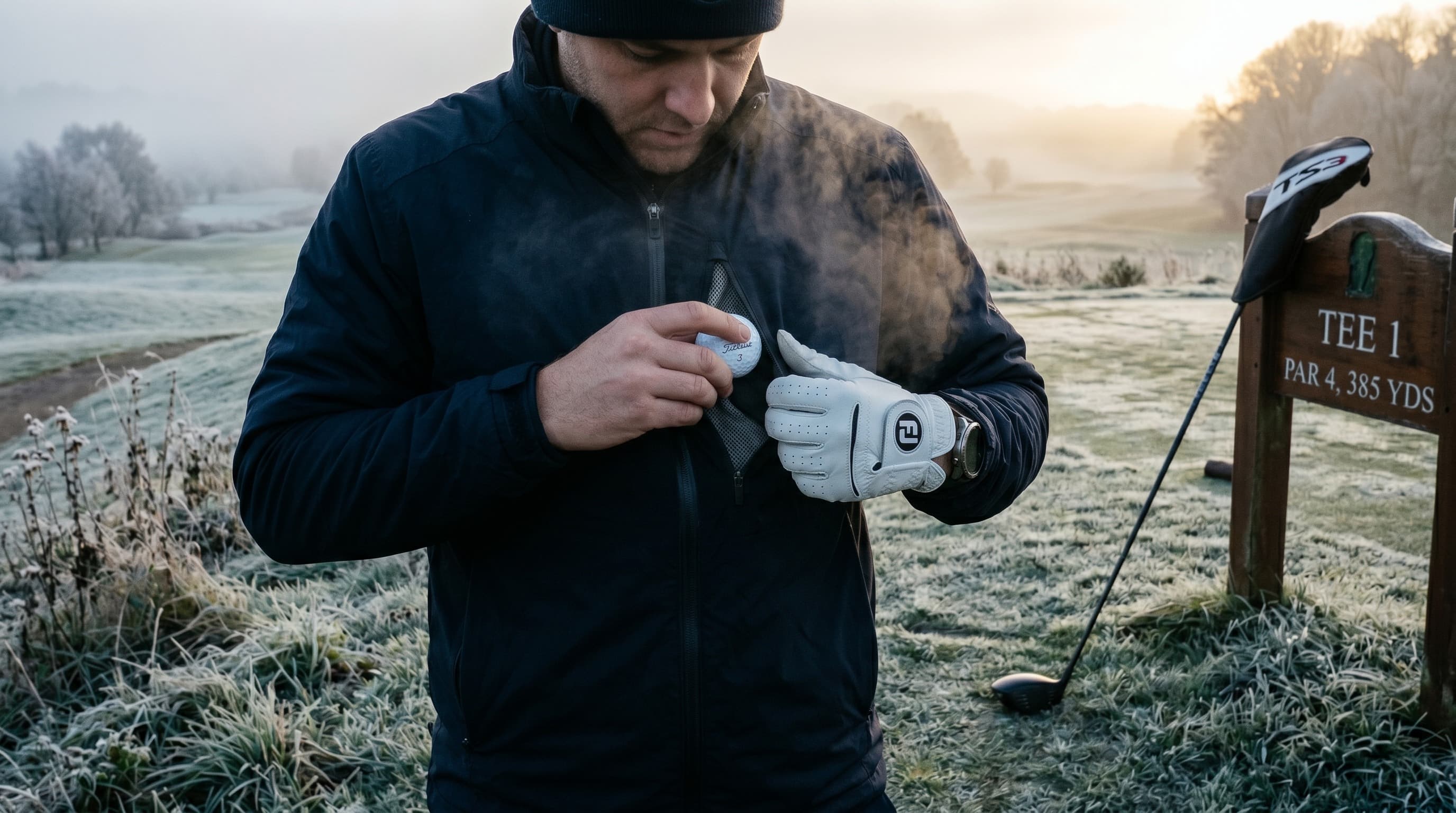
How Cold Weather Steals Distance: The Ball Compression Physics Every Golfer Should Know
Every 10°F drop costs the average golfer two to four yards of driver carry. Here is the physics — ball compression, air density, muscle temperature — and the field data we pulled from G-Score-monitored cold rounds to show exactly how distance loss compounds, and how to compensate without changing your swing.
Read Story
How to Read a G-Score: The 0–100 Golf Playability Number, Decoded
A G-Score on this site is a single 0–100 number that tells you whether today is worth tee-up. Here is exactly what each band means, what drives the calculation, and how to use it to plan a round you will actually score on.
Read StoryMinSu Kim
Founder & Golf Data Analyst
MinSu is a data analyst and golfer with 10+ years on the course. He built Golf Weather Score to answer one question: is today a good day to play? He combines weather data, course intelligence, and the proprietary G-Score algorithm to help golfers make smarter decisions.
Every Friday Morning
When Badlands Golf Course plays best next weekend.
Friday 6am ET: peak G-Score windows for Badlands Golf Course, wind direction by hour, and one gear call. Three minutes to read, save you the round.
One email a week. Unsubscribe in one click.
The Caddie's Oracle
Draw your luck before the tee off