
Caddie's Gear Advisor
Curated for today's 86°F · Clouds
Ultralight Distance Drivers
Maximum carry in hot, low-drag conditions
UV Protection Apparel
UPF 50+ cooling fabrics for peak-sun rounds
Precision Rangefinders
Slope-adjusted yardage in any condition
Hydration & Cooling
Insulated bottles and cooling towels
Your Golf Trip, Handled
The Ultimate Golf Trip Planner
Everything you need to play Bald Head Island Country Club — from booking your flight to checking in course-side.
Course-Side Stays
Luxury hotels, resorts, and stay-and-play packages just minutes from the first tee.
Flights
Compare fares across 700+ airlines for the best route to your tee time.
SUV Rentals for Golf Bags
Spacious vehicles with room for clubs, bags, and your foursome.
Travel Insurance
Coverage for medical, weather delays, and gear at your destination.
Bald Head Island Country Club: Course Intelligence
Signature Setup
Let me be honest with you before the first tee: I've studied Bald Head Island Club from the course's published card, George Cobb's design record, and the coastal North Carolina climate history — I have not walked it myself, so the wind reads below are profile-and-pattern reasoning grounded in how barrier-island layouts behave, not a round I'm dressing up as memory. The course sits on Bald Head Island, a barrier island at the mouth of the Cape Fear River, reachable only by passenger ferry from Southport — no bridge, no car. George Cobb, the architect behind Quail Hollow and the par-3 course at Augusta National, laid it out in 1974. It plays to a par of 72 at roughly 6,855 yards from the back, threading from dense maritime live-oak forest out toward open dune and ocean exposure. The honest summary: it isn't a long course by modern standards, and what actually defends it is the wind that comes off the Atlantic on one side and the Cape Fear estuary on the other.
TL;DR: George Cobb's 1974 barrier-island course (par 72, ~6,855y) on ferry-only Bald Head Island, NC. The maritime forest blocks wind early, then the back opens to full ocean exposure. The prevailing SW summer sea breeze builds through the morning — tee off early to beat it.
Hole-by-Hole Wind & Playing Lines
I won't invent per-hole handicap numbers I can't verify off a published card — instead, here is how the wind dictates play on a Cobb barrier-island routing like this one:
- The exposed par-4s running toward the Atlantic into the SW summer breeze: When the afternoon sea breeze is up at 12–18 mph, a flushed 150-yard club behaves like 170-plus. Club up one and keep the ball under the gust — a low-flighted approach holds a line that a high ball won't.
- The sheltered holes inside the live-oak canopy: The maritime forest is a genuine wind block, so these holes play close to their stated yardage even when the open holes are brutal. The mistake is carrying your "windy day" club selection into the trees and flying the green.
- Crosswind holes along the dune line: On a barrier island nothing stops a side wind. A player who can hold a shaped ball into a left-to-right or right-to-left sea breeze scores far better than one who only hits it far. Length is cheap here; ball flight is expensive.
The habit that travels: read the flags on the first open hole, decide whether you're sheltered-forest or exposed-dune on each tee, and re-club for the difference.
Green & Fairway Characteristics
The turf is Bermuda, the practical choice for a salt-air barrier-island environment, typically overseeded for winter play and running firm and grainy through the summer heat. Grain matters on Bermuda greens — putts break toward the setting sun and toward water more than the slope alone suggests, and a downgrain putt in August firmness gets away from you fast. The fairways move between two very different worlds: tight, tree-lined corridors through the maritime forest where placement off the tee beats power, and open, breeze-swept stretches near the dunes where the firm ground lets a well-judged runner release toward the green. With the card around 6,855 yards, a straight hitter is rewarded on a calm day — but calm days on a barrier island are the exception, not the rule.
Seasonal Weather Pattern
Bald Head sits in a humid subtropical maritime climate, moderated hard by the Atlantic and the Cape Fear River on three sides. Spring (Mar–May): mild and increasingly breezy, daytime highs climbing from the 60s into the upper-70s°F, with a strengthening SW sea breeze and the cleanest mix of comfort and playability of the year. Summer (Jun–Aug): hot and humid, highs in the upper-80s to low-90s°F, a reliable afternoon SW sea breeze, and a real risk of late-day thunderstorms building over the warm water. Fall (Sep–Oct): a prime window — warm, often drier air, firmer greens, and calmer mornings — though it overlaps the back half of Atlantic hurricane season, so watch the tropical outlook. Winter (Dec–Feb): the maritime location keeps it mild and playable, highs commonly in the 50s°F, but raw NE winds behind coastal storms and nor'easters can turn an easy card into a survival test. For the stretches I haven't seen firsthand I lean on NOAA Wilmington-area coastal historicals rather than anything I'd pretend to remember.
Local Play Tips
Here's the piece of local logistics that no other golf course on the mainland forces on you: there is no drive-up. You reach Bald Head Island only by passenger ferry from Deep Point Marina in Southport, and once you're on the island you move by golf cart, not car. That changes how you plan a round — your tee time is downstream of a ferry schedule, not just a starter sheet, so build in the crossing and the cart ride. The golf-specific payoff of that early planning: the SW sea breeze is a thermal that builds as the land heats through the morning, so the genuinely calm scoring window is the first ferry and the first tee, before the breeze turns on. A golfer who treats the ferry timetable as part of the strategy — early boat, early tee, beat the wind — will score better than one who shows up midday into a stiffened breeze.
Pre-Round Weather Workflow
Treat golfweatherscore's 7-day G-Score and windExposure as your go/no-go and your timing tool — and read it for a barrier-island coastal course:
- Three days out: scan the G-Score trend for the sea-breeze pattern and, in late summer and fall, for any tropical or coastal-storm signal. On this island the gap between a 9 and a 4 is usually wind off the Atlantic, not rain alone.
- The night before: lock in wind direction and speed. A building SW flow means a classic summer sea-breeze afternoon where the ocean-facing holes lengthen; a NE flow behind a coastal low means raw, gusty, firm-and-fast conditions on the exposed dune holes.
- Round morning: if windExposure flags sustained gusts over ~20 mph on the open holes — common with afternoon sea breeze and behind winter NE systems — accept that a 6,855-yard card plays a full club or two longer into the wind, and let position-golf, not heroics, protect your number. And book the early ferry: the calmest air is almost always the first tee.
Related Reading
Before you tee off at Bald Head Island Country Club
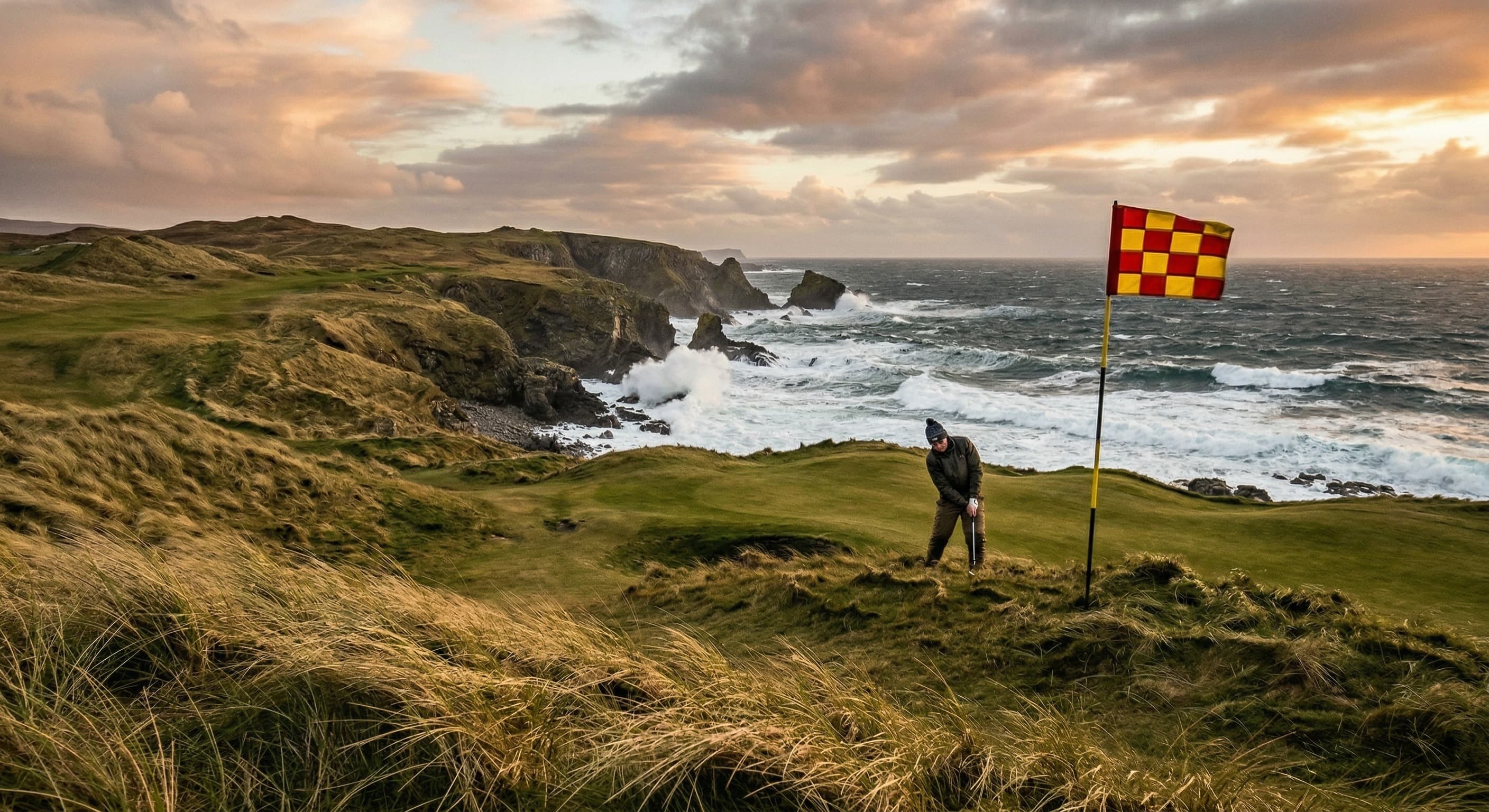
America's 20 Windiest Golf Courses: A G-Score Wind Analysis
We ranked America's 20 windiest golf courses using G-Score wind penalty data. See how coastal gusts and prairie gales reshape playability scores.
Read Story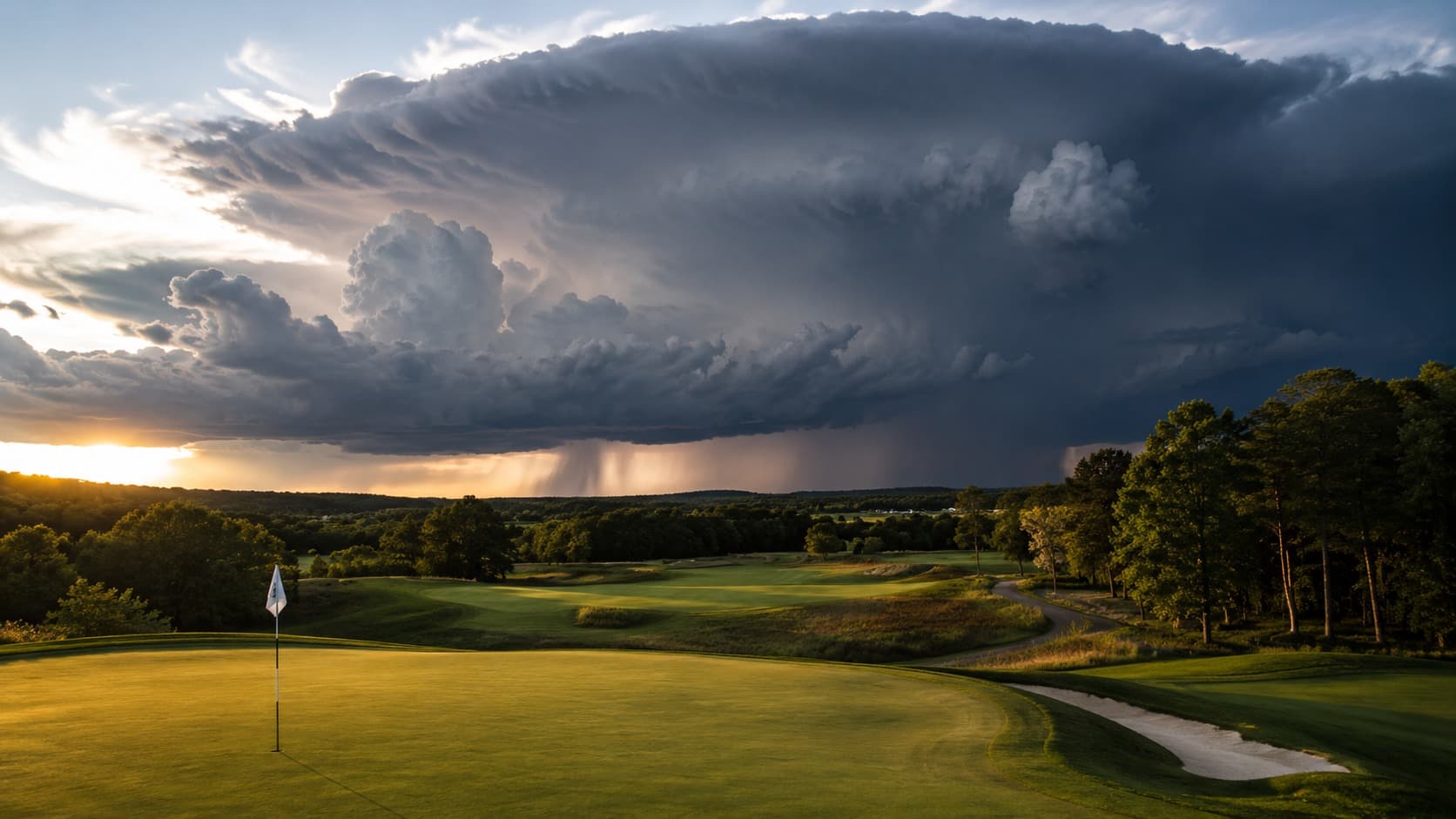
The Three O’Clock Storm: Reading Summer’s Convective Cycle to Protect Your Round
A 40% chance of afternoon thunderstorms does not mean a 40% chance of getting rained on. In the summer convective season it means the morning is nearly clear and the afternoon carries a fast-building, high-energy storm risk driven by a daily heating cycle. Here is the meteorology behind the pattern, the G-Score data on how the storm cycle punishes afternoon tee times across the Southeast, Midwest, and desert Southwest, the lightning-safety decision tree that actually matters, and the workflow that gets you off the course before the first bolt.
Read StoryMinSu Kim
Founder & Golf Data Analyst
MinSu is a data analyst and golfer with 10+ years on the course. He built Golf Weather Score to answer one question: is today a good day to play? He combines weather data, course intelligence, and the proprietary G-Score algorithm to help golfers make smarter decisions.
Every Friday Morning
When Bald Head Island Country Club plays best next weekend.
Friday 6am ET: peak G-Score windows for Bald Head Island Country Club, wind direction by hour, and one gear call. Three minutes to read, save you the round.
One email a week. Unsubscribe in one click.
The Caddie's Oracle
Draw your luck before the tee off