
Caddie's Gear Advisor
Curated for today's 97°F · Clear
Ultralight Distance Drivers
Maximum carry in hot, low-drag conditions
UV Protection Apparel
UPF 50+ cooling fabrics for peak-sun rounds
Precision Rangefinders
Slope-adjusted yardage in any condition
Hydration & Cooling
Insulated bottles and cooling towels
Your Golf Trip, Handled
The Ultimate Golf Trip Planner
Everything you need to play Banbury Golf Course — from booking your flight to checking in course-side.
Course-Side Stays
Luxury hotels, resorts, and stay-and-play packages just minutes from the first tee.
Flights
Compare fares across 700+ airlines for the best route to your tee time.
SUV Rentals for Golf Bags
Spacious vehicles with room for clubs, bags, and your foursome.
Travel Insurance
Coverage for medical, weather delays, and gear at your destination.
Banbury Golf Course: Course Intelligence
Signature Setup
Banbury Golf Course sits along the Boise River in Eagle, Idaho, opened in 1997 to a John Harbottle III routing. Harbottle, who built a reputation for letting terrain dictate the line rather than forcing it, used the river corridor and the flat valley floor as the spine of the course. It plays as a daily-fee parkland layout — mature cottonwoods, water in play on several holes, and a closing stretch that hugs the river. The finishing par-4 18th runs along the water and is the hole locals talk about; bail right and you bring the river back into the second shot.
I haven't played Banbury in deep winter — the course typically closes or runs cart-path-only when the valley freezes — so my notes below lean on summer and shoulder-season rounds, plus Treasure Valley historical weather.
Hole-by-Hole Wind & Playing Lines
The three holes that decide your card here are the 8th, the 12th, and the 18th.
The 8th is the #1 handicap, a long par-4 that points roughly into the prevailing afternoon northwest flow. On a calm 8 a.m. tee time it's a driver and a mid-iron. By 2 p.m., with 12–15 mph off the foothills, that approach grows by 20–25 yards — I've gone 7-iron in the morning and 5-iron on the same hole after lunch.
The 12th brings water down the left; a left-to-right wind pushes a weak drive toward the hazard, so favor the right half off the tee and let the wind work the ball back.
The 18th along the river is exposed. A downstream tailwind makes the green reachable in regulation but runs anything long through the back; into the wind, take the river out of play by laying back and accepting a wedge third.
Green & Fairway Characteristics
The greens are bentgrass and roll in the 10–11 range through summer once they firm up — not lightning, but true. They're medium-sized with modest internal contour; the defense is firmness and pin position near water more than severe slope. Fairways are ryegrass, generous off the tee on the front, tighter as the river comes into the routing on the back. The valley floor keeps most of the course flat, so you get clean, level lies — uphill and downhill stances are the exception here, not the rule. Total yardage from the back tees runs into the high 6,000s; the member/regular tees bring it back under 6,400 and play very fairly.
Seasonal Weather Pattern
Eagle sits in Idaho's Treasure Valley, high-desert climate. July and August daytime highs routinely reach the low-to-mid 90s°F, with mornings in the 60s — the spread is the whole story. Humidity is low, so the ball flies a touch farther than a sea-level player expects, but the afternoon thermal wind off the Boise foothills is the real variable. Spring (April–May) and fall (late September–October) are the sweet spots: highs in the 60s–70s, lighter wind, firmer-but-not-baked turf. November through March the valley turns cold and the course runs limited or closed. Smoke from regional wildfires can also drop air quality in August some years — worth a check, not just the temperature.
Local Play Tips
The local knowledge that doesn't show up on a yardage book: the wind here is a clock, not a coin flip. Calm mornings, building afternoons. If you have any choice in tee time June through September, take the earliest slot you can — you'll play the same course in two completely different conditions. Regulars also know the back-nine river holes hold dew and play slow-and-soft early, so morning rounds get less roll on those fairways; factor that into your driver-vs-3-wood call on 16 through 18.
Pre-Round Weather Workflow
Before you book, pull the 7-day G-Score for Eagle and read it as a morning-vs-afternoon question, not a day question. Check the windExposure flag: Banbury's river-corridor holes (12, 16–18) are the exposed ones, so a high wind reading there matters more than the front-nine number. Two days out, lock your tee time to the lowest-wind morning window in the forecast. The night before, confirm the high temperature — if it's a 95°F+ day, an 8 a.m. start keeps you ahead of both the heat and the thermal wind, and that alone is worth several strokes over an afternoon round.
Related Reading
Before you tee off at Banbury Golf Course
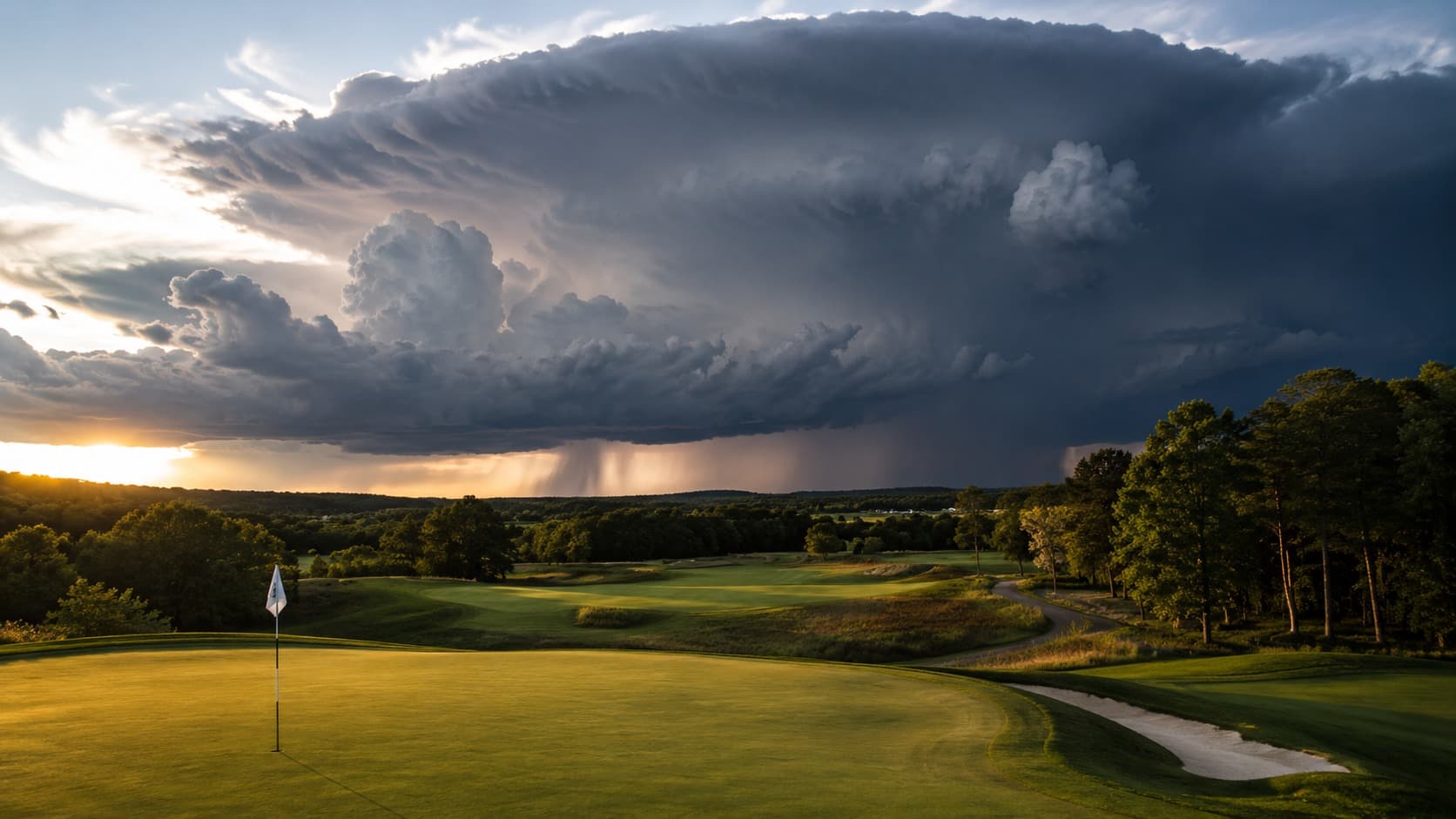
The Three O’Clock Storm: Reading Summer’s Convective Cycle to Protect Your Round
A 40% chance of afternoon thunderstorms does not mean a 40% chance of getting rained on. In the summer convective season it means the morning is nearly clear and the afternoon carries a fast-building, high-energy storm risk driven by a daily heating cycle. Here is the meteorology behind the pattern, the G-Score data on how the storm cycle punishes afternoon tee times across the Southeast, Midwest, and desert Southwest, the lightning-safety decision tree that actually matters, and the workflow that gets you off the course before the first bolt.
Read Story
How to Read a G-Score: The 0–100 Golf Playability Number, Decoded
A G-Score on this site is a single 0–100 number that tells you whether today is worth tee-up. Here is exactly what each band means, what drives the calculation, and how to use it to plan a round you will actually score on.
Read StoryMinSu Kim
Founder & Golf Data Analyst
MinSu is a data analyst and golfer with 10+ years on the course. He built Golf Weather Score to answer one question: is today a good day to play? He combines weather data, course intelligence, and the proprietary G-Score algorithm to help golfers make smarter decisions.
Every Friday Morning
When Banbury Golf Course plays best next weekend.
Friday 6am ET: peak G-Score windows for Banbury Golf Course, wind direction by hour, and one gear call. Three minutes to read, save you the round.
One email a week. Unsubscribe in one click.
The Caddie's Oracle
Draw your luck before the tee off