
Caddie's Gear Advisor
Curated for today's 61°F · Clear
Tour-Level Drivers
Engineered for maximum distance and forgiveness
Laser Rangefinders
Pin-seeking technology for precision approaches
Premium Golf Balls
Tour-caliber spin and distance performance
Performance Sunglasses
Polarized lenses optimized for reading greens
Your Golf Trip, Handled
The Ultimate Golf Trip Planner
Everything you need to play Bandon Sheep Ranch — from booking your flight to checking in course-side.
Course-Side Stays
Luxury hotels, resorts, and stay-and-play packages just minutes from the first tee.
Flights
Compare fares across 700+ airlines for the best route to your tee time.
SUV Rentals for Golf Bags
Spacious vehicles with room for clubs, bags, and your foursome.
Travel Insurance
Coverage for medical, weather delays, and gear at your destination.
Bandon Sheep Ranch: Course Intelligence
Signature Setup
You can see the ocean from almost every step of the Sheep Ranch, and that is exactly the problem. I played it on a calm-looking October morning, 52°F at an 8 a.m. tee, and convinced myself the flat light meant a flat day — then the bluff opened up on the third hole and the wind I couldn't feel on the first tee was suddenly bending my ball over a cliff.
Bill Coore and Ben Crenshaw built this course in 2020, the newest 18 at Bandon Dunes Golf Resort near Bandon, Oregon, laid over the ground of the original 13-green Sheep Ranch that Tom Doak routed in 2000. It plays to a par 72 at roughly 6,700 yards from the back markers. Two things make it unlike anything else at the resort: it has more Pacific frontage than any course here, with nine greens perched on the edge of the bluff, and it has zero sand bunkers — the only Bandon course built entirely without them.
Hole-by-Hole Wind & Playing Lines
Hole 9 (par-4, ~410y). This is the hole that ended my card. It runs along the bluff straight into the prevailing NW summer wind, and with the ocean waiting long and left there is no good miss on the aggressive side. A 14 mph breeze turned my normal 7-iron approach into a punched 5-iron, and I still bailed short-right twice on purpose — short-right is a chip, long is gone.
Hole 16 (par-3, Five Mile Point). The signature, and the one photo everyone has seen. The green sits out on Five Mile Point with the Pacific on three sides, so a crossing NW wind doesn't just push the ball, it raises the stakes of every yard. I aimed at the inland edge and let the wind work it toward center; trying to hold a flag cut into the ocean side is how you make a snowman here.
Hole 3 (par-4). An early bluff hole that turns you toward the water for the first time. The wind reads as a gentle helper off the tee and a brutal crosswind on the approach, because the green sits more exposed than the fairway. I clubbed for the green's wind, not the tee's.
Green & Fairway Characteristics
Fine fescue tee to green, firm and fast like its siblings — but the Sheep Ranch has one feature nothing else at Bandon shares: not a single grain of sand. That absence rewires recovery entirely. Every miss leaves you a slope, a runoff, or a shaved collection area rather than a tidy bunker shot, which is exactly why playing along the ground stops being a preference and becomes the only sane plan. The fairways are vast, about as forgiving as any at the resort, and that width quietly tempts you into lazy lines — until you reach a small bluff green and realize all that room off the tee did nothing for the shot the wind is trying to shove off the cliff. Greens here are mid-sized, gently contoured, rolling around 10–11, and because they sit on the most exposed ground at Bandon they bake out faster than the inland courses the moment any afternoon breeze arrives. Try to fly a wedge in over a 15 mph wind and you'll watch it skip clean through; the shot that holds is a lower runner that climbs the front slope.
Seasonal Weather Pattern
No other course at Bandon is as defenseless against weather as the Sheep Ranch, because almost nothing grows out here to break the wind — there's effectively zero tree cover on this ground, and the cool marine climate hits it head-on. Summer playing-season highs sit in the mid-50s to low-60s°F, with mornings often around 50°F and the marine layer lingering until mid-morning, when the onshore NW wind finally clears it and then keeps strengthening into the afternoon. The dependable dry window is June through September. Once the SW Pacific storm track takes over from November into March, this fully open routing turns into something else entirely — a winter SW gale out here is barely the same game. I've never stood on it during a January storm, so I won't pose as an authority on it; from the NOAA record I'll only say the ground stays green, deeply saturated, and savagely windy, and I'll defer the eyewitness account to whoever's brave enough to book it.
Local Play Tips
Here's the read the scorecard won't give you: the first tee lies to you. It sits lower and more sheltered than the bluff, so you start the round trusting a wind that isn't the real wind. The honest wind shows up on the third hole when you reach the edge, and by then you've already misjudged your opening clubs. I started taking my wind read from the flag on 3 before I even left the practice area. One more practical note — this is a walking-only, caddie-friendly resort course, and the open ground means no shade and no windbreak, so dress for the breeze you'll feel at the point, not the calm you feel at the bag drop.
Pre-Round Weather Workflow
The 7-day G-Score at the top of this page is where I start, and on the most exposed ground at Bandon it earns its keep. Three days out the question is simply whether my tee time beats the midday onshore fill-in or not — on a course this bare that swing is worth 8–12 points by itself. Morning of, the windExposure direction sets the whole plan: an NW reading puts the bluff holes (3, 9, and the Five Mile Point 16) into or across the breeze with the ocean live, so those get my conservative, club-up lines while I save the aggressive numbers for the sheltered inland stretches. When rain meets wind under 55°F, it's the ground game from the first tee — keep it low, count on the firm fescue greens releasing, and never forget there's no sand anywhere to halt a runaway here, only a slope or the edge of the cliff.
Related Reading
Before you tee off at Bandon Sheep Ranch
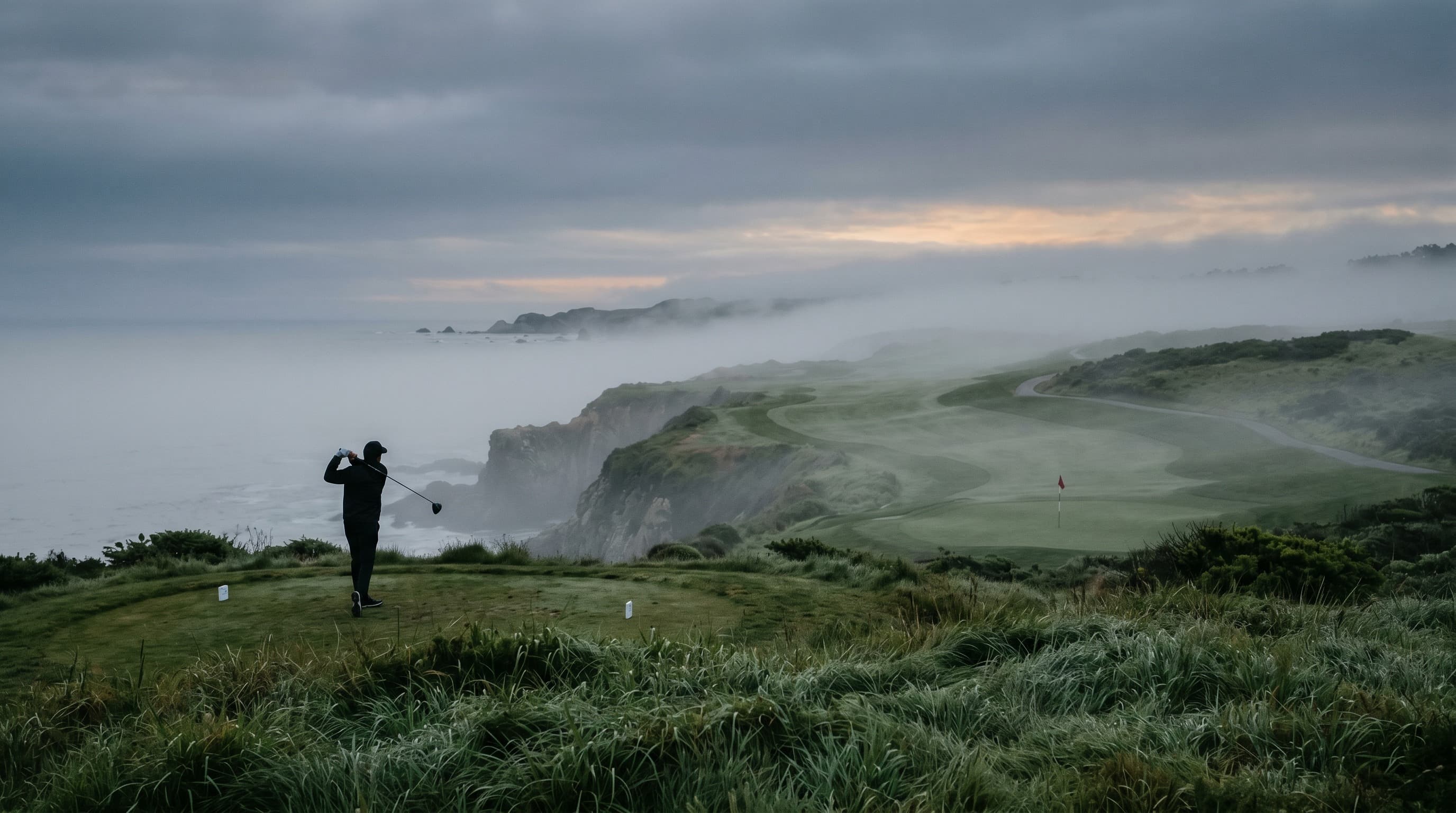
Reading Coastal Wind: How the Marine Layer Reshapes Pebble Beach, Bandon, and the Pacific Coast Game
Coastal golf does not play by inland rules. The marine layer suppresses wind in the morning, then releases it through midday in a thermal cycle that turns a calm 7am tee into a 22mph back nine. Here is the meteorology behind the pattern, the G-Score data that confirms it across the Pacific coast, and the morning workflow that turns the marine layer from a confusion into a competitive advantage.
Read Story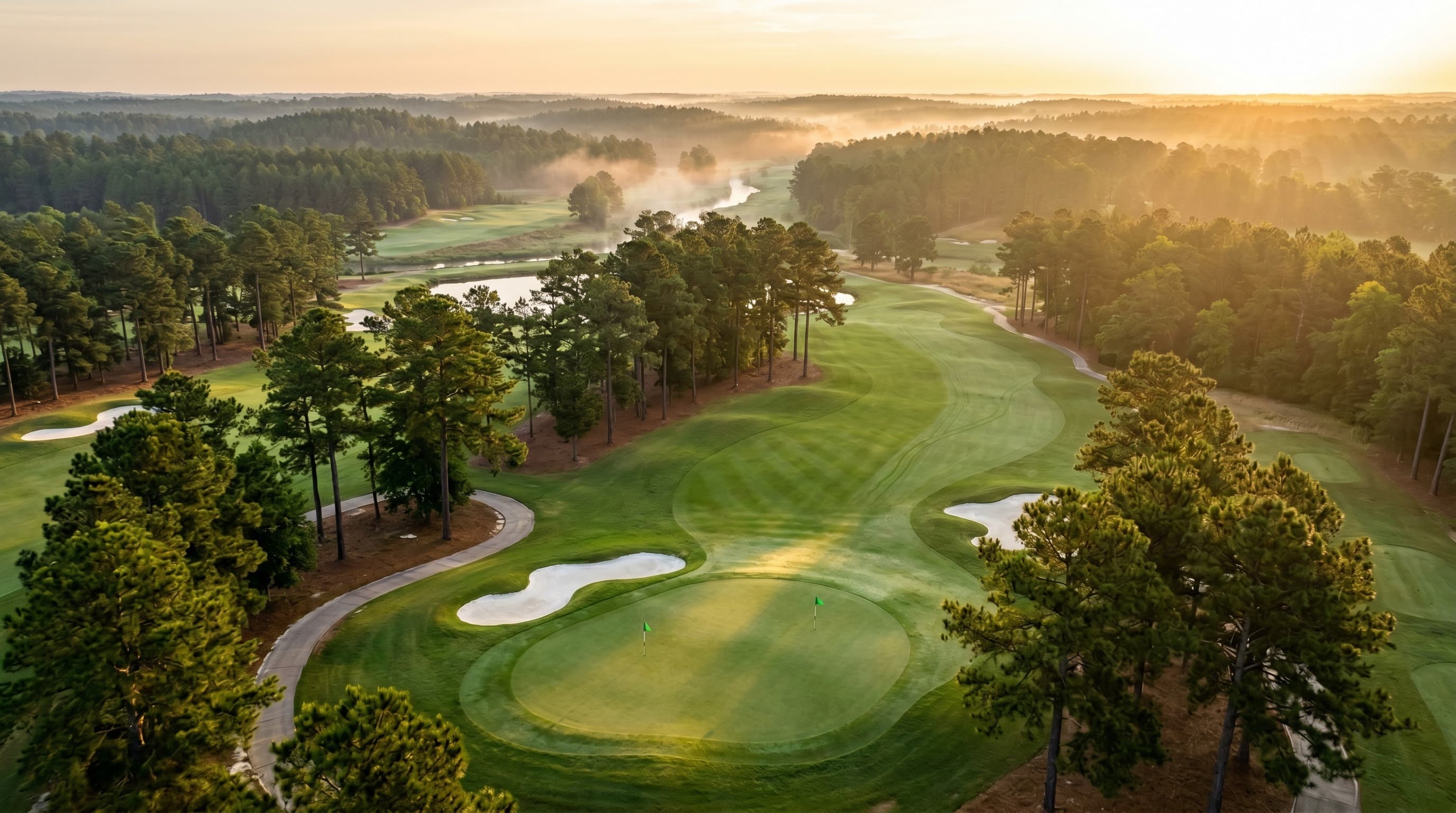
The May 2026 G-Score Heatmap: Where American Golf Peaks This Spring
May is the most underrated month on the American golf calendar. Five regions hit their annual peak this spring, three turn quietly hostile, and the data tells a clearer story than the brochures. Here is where to play, where to avoid, and how to time your booking window.
Read StoryDanorie
Editorial & Data
Golf Weather Score is built by Danorie. We compute the G-Score — our own playability rating — from live NOAA forecasts and published course scorecards, so any US course can be compared on any day with a single number. Methodology and data sources are documented on every page.
Every Friday Morning
When Bandon Sheep Ranch plays best next weekend.
Friday 6am ET: peak G-Score windows for Bandon Sheep Ranch, wind direction by hour, and one gear call. Three minutes to read, save you the round.
One email a week. Unsubscribe in one click.
The Caddie's Oracle
Draw your luck before the tee off