
Caddie's Gear Advisor
Curated for today's 70°F · Clouds
Tour-Level Drivers
Engineered for maximum distance and forgiveness
Laser Rangefinders
Pin-seeking technology for precision approaches
Premium Golf Balls
Tour-caliber spin and distance performance
Performance Sunglasses
Polarized lenses optimized for reading greens
Your Golf Trip, Handled
The Ultimate Golf Trip Planner
Everything you need to play Barton Creek Golf Academy — from booking your flight to checking in course-side.
Best time to golf in TexasCourse-Side Stays
Luxury hotels, resorts, and stay-and-play packages just minutes from the first tee.
Flights
Compare fares across 700+ airlines for the best route to your tee time.
SUV Rentals for Golf Bags
Spacious vehicles with room for clubs, bags, and your foursome.
Travel Insurance
Coverage for medical, weather delays, and gear at your destination.
Barton Creek Golf Academy: Course Intelligence
Signature Setup
I spent a 64°F March morning on the Barton Creek practice tee with a low sun throwing long shadows across the limestone-edged range, hitting wedges into air that was dead calm for maybe an hour before the first southerly stirred. That window — calm dawn, then a building Gulf breeze — is the whole reason to understand this place before you book a lesson here.
The Barton Creek Golf Academy is the teaching and practice operation at Barton Creek Resort in Austin, Texas, anchored by the program long associated with instructor Chuck Cook, who coached major champions out of Central Texas. This is not an 18-hole course — it is a full-length grass range, a short-game and bunker complex, and putting greens, supporting lessons, club fitting, and multi-day schools. It feeds directly into the resort's four championship layouts: Fazio Foothills (1986), Fazio Canyons (2000), Crenshaw Cliffside, and the Palmer Lakeside course off-property. The point of practicing here rather than at a flat suburban range is that the wind, turf, and firmness match what you will actually face that afternoon on Fazio ground.
Hole-by-Hole Wind & Playing Lines
An academy doesn't have holes, but it has the same defender every Barton Creek course has: a persistent south-to-southeast flow off the Gulf. The practice tee faces into it, which makes it the best place in the resort to learn your wind numbers honestly. The single most useful drill is the partial wedge from 60–110 yards. On a calm dawn, my 95-yard gap wedge flies 95; by 2 p.m. into a 15 mph SSE breeze that same swing carries closer to 80, and downwind it runs out 10–12 yards long.
Work three lines on the range before any round: the stock shot into the breeze (club up, swing easy, expect a steeper landing), the holding cut that fights a left-to-right crosswind, and the knockdown that keeps the ball under a gusting 18 mph top. Then take those exact numbers to the first tee. The academy is where you build the data; the courses are where you spend it.
Green & Fairway Characteristics
The practice surfaces are built to mirror the courses. The tees and chipping turf are bermuda over the same thin layer of soil on limestone that makes the resort fairways firm — in late spring and again in October a struck ball releases hard, so the academy's chipping area lets you rehearse the low spinner that checks versus the bump-and-run that the firm Hill Country turf actually rewards. The practice greens run in the low-to-mid 130s slope range, matched deliberately to the Fazio and Crenshaw greens so the speed you dial in at 8 a.m. is the speed you putt at 9. Putts there break subtly toward the canyon drainage, the same tilt that fools first-time visitors on the courses.
Seasonal Weather Pattern
Central Texas weather sets the practice calendar. Summers are punishing: June through September highs run 96–101°F with Gulf humidity, and an afternoon range session becomes heat management more than skill-building — early morning or evening only. Winters are mild but moody, with January highs near 61°F and occasional hard freezes that frost the shaded practice areas into mid-morning. The genuine teaching windows are April–May and October–November: firm bermuda, highs in the 70s to low 80s, and the calmest dawns of the year before the south wind builds. That is when the academy's multi-day schools are most worth the money, because you get usable still-air reps before the breeze turns every wedge into a guess.
Local Play Tips
Here is the thing most visitors miss: stack your lesson or fitting at dawn and your round right after, in that order, on the same morning. The practice tee gives you clean feedback only in the calm early window, and if you finish your range work by mid-morning you carry fresh, accurate wind numbers straight onto the first tee before the afternoon SSE flow distorts them. I also calibrate my wedges here against the actual course turf rather than trusting a launch monitor's static number, because the firm limestone-soil bermuda releases far more than a soft mat suggests. I haven't done a full multi-day school here in peak summer, so I won't pretend to know how the afternoon heat blocks are structured — through spring and fall the productive sessions were all before 10 a.m.
Pre-Round Weather Workflow
Pull the 7-day G-Score for Barton Creek the night before your visit and book both your academy time and your tee time in the earliest slot with the lowest windExposure rating — dawn on this exposed practice tee almost always grades higher than midday, and you avoid both the heat and the building south wind. Use the calm morning to lock your into-wind and downwind wedge carries, then apply them directly on the Fazio or Crenshaw round that follows. If only an afternoon practice block is open, spend it almost entirely on partial wedges and knockdowns into the breeze rather than bombing drivers. For more Central Texas timing notes and the resort's sister courses, see our Texas golf weather hub.
Facility facts drawn from Barton Creek Resort's published golf and instruction information (academy program historically associated with instructor Chuck Cook; the resort's four courses — Fazio Foothills 1986, Fazio Canyons 2000, Crenshaw Cliffside, and Palmer Lakeside); seasonal figures from NOAA Austin climate normals.
Related Reading
Before you tee off at Barton Creek Golf Academy
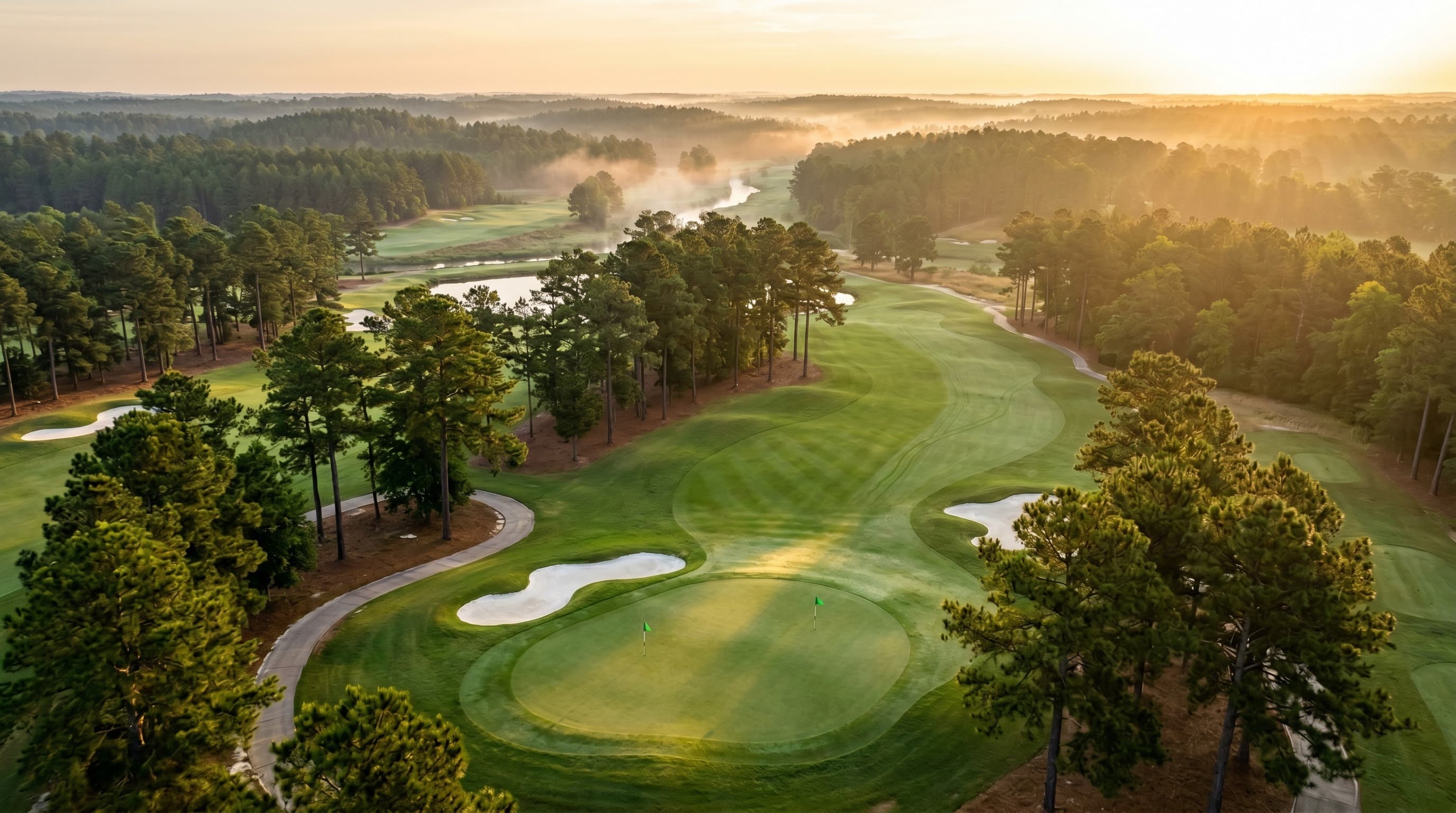
The May 2026 G-Score Heatmap: Where American Golf Peaks This Spring
May is the most underrated month on the American golf calendar. Five regions hit their annual peak this spring, three turn quietly hostile, and the data tells a clearer story than the brochures. Here is where to play, where to avoid, and how to time your booking window.
Read Story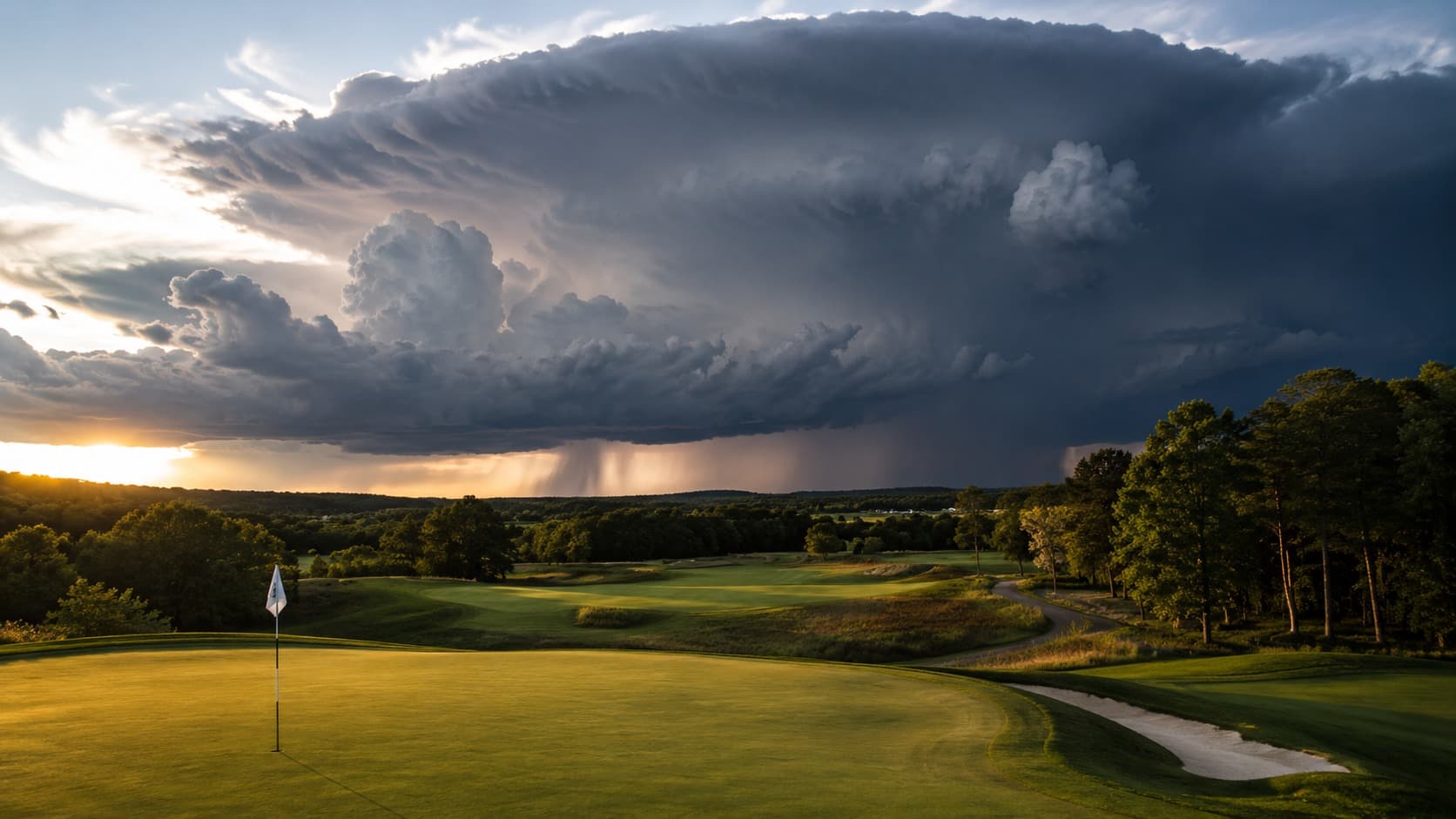
The Three O’Clock Storm: Reading Summer’s Convective Cycle to Protect Your Round
A 40% chance of afternoon thunderstorms does not mean a 40% chance of getting rained on. In the summer convective season it means the morning is nearly clear and the afternoon carries a fast-building, high-energy storm risk driven by a daily heating cycle. Here is the meteorology behind the pattern, the G-Score data on how the storm cycle punishes afternoon tee times across the Southeast, Midwest, and desert Southwest, the lightning-safety decision tree that actually matters, and the workflow that gets you off the course before the first bolt.
Read StoryDanorie
Editorial & Data
Golf Weather Score is built by Danorie. We compute the G-Score — our own playability rating — from live NOAA forecasts and published course scorecards, so any US course can be compared on any day with a single number. Methodology and data sources are documented on every page.
Every Friday Morning
When Barton Creek Golf Academy plays best next weekend.
Friday 6am ET: peak G-Score windows for Barton Creek Golf Academy, wind direction by hour, and one gear call. Three minutes to read, save you the round.
One email a week. Unsubscribe in one click.
The Caddie's Oracle
Draw your luck before the tee off