
Caddie's Gear Advisor
Curated for today's 79°F · Rain
Storm-Ready Outerwear
Waterproof layers built for 18 holes in the rain
Tour-Grade Umbrellas
68" double-canopy wind-resistant coverage
Wet-Weather Gloves
All-weather grip that performs in the rain
Waterproof Golf Shoes
Keep your feet dry through every fairway
Your Golf Trip, Handled
The Ultimate Golf Trip Planner
Everything you need to play Battlement Mesa Golf Club — from booking your flight to checking in course-side.
Course-Side Stays
Luxury hotels, resorts, and stay-and-play packages just minutes from the first tee.
Flights
Compare fares across 700+ airlines for the best route to your tee time.
SUV Rentals for Golf Bags
Spacious vehicles with room for clubs, bags, and your foursome.
Travel Insurance
Coverage for medical, weather delays, and gear at your destination.
Battlement Mesa Golf Club: Course Intelligence
Signature Setup
I walked the first tee at Battlement Mesa on an April morning, 44°F at 7:40 a.m., the kind of cold that makes a high-desert grip feel like a foreign object. Sitting on a bench above the town of Parachute in western Colorado, this is a serious 18 — 7,309 yards, par 72, course rating 73.9, slope 135.
The course was designed by the firm of Finger Dye Spann (Joe Finger, Ken Dye, and Baxter Spann) and opened in 1987, near the tail end of the Colorado River valley's oil-shale era. It is a genuine length test: the routing climbs and falls across mesa benches with elevation changes that the architects, in the club's own words, let "nature predetermine." Golf Digest, Golfweek, and GolfWRX have all listed it as a western-Colorado must-play. It is public, low-key, and far harder than its remote zip code suggests.
Hole-by-Hole Wind & Playing Lines
The three holes that decide your card here all run with the prevailing wind axis — and in this valley the wind is a clock, not a coin flip.
- Hole 7 (par-5, 613y): The longest hole on the property, and it falls downhill. In the morning calm it is reachable in three comfortable shots; after 1 p.m., when the up-valley west wind builds, the same hole becomes a genuine three-and-a-half. I hit driver, 3-wood, and still had 9-iron in. Play the left side off the tee — the slope feeds right toward trouble.
- Hole 6 (par-4, 477y): Into a west wind this is the brute of the round. A 477-yard par-4 already asks for two flush hits at altitude; add a 15 mph headwind and it is driver plus mid-iron. Bail right of the green, not long.
- Hole 9 (par-4, 457y): Plays back toward the clubhouse, often as a left-to-right crosswind. Aim at the left edge of the fairway and let the breeze carry the ball to center — fighting it costs you the right rough every time.
Green & Fairway Characteristics
The greens are bentgrass and the fairways run bluegrass/rye — typical of high-desert Colorado layouts (I'm inferring the turf species from the region and conditions, not a posted spec sheet). What matters for scoring is that in dry summer the fairways get firm and fast: a well-struck drive at this elevation already carries roughly 6–7% farther than at sea level, and firm turf adds another 10–15 yards of run-out. The front nine mixes a drivable feel (Hole 8 is only 143 yards) with back-breakers like the 613-yard 7th, so club selection swings wildly hole to hole. Greens are mid-sized and hold a morning approach; by mid-afternoon, sun-baked and wind-dried, they reject anything but a high, soft landing.
Seasonal Weather Pattern
Parachute sits just above 5,000 feet, and the climate is true high desert — low humidity, big diurnal swings. April and May mornings I've seen start in the low 40s°F and reach the 70s by afternoon; that 30-degree swing changes ball flight across a single round. July highs push into the low 90s°F but humidity stays low, so heat is bearable and the ball flies long. The course generally plays March through November; snow and frost shut it down in deep winter. The defining variable is wind: spring afternoons routinely funnel a stiff west wind up the Colorado River corridor.
Local Play Tips
Here's the thing the tee sheet won't tell you: the wind here is predictable by the hour, not the day. Mornings are usually dead calm; the valley heats, air moves uphill from the west, and by early afternoon you're playing a different golf course. Book the earliest tee time you can stand. A second, less-obvious tip — bring more club than your yardage suggests on the long holes but trust the altitude on your wedges; players who don't adjust fly the green from 110 yards all day.
Pre-Round Weather Workflow
Use the 7-day G-Score on this course page as a tee-time selector, not just a yes/no. Two checks before you drive out:
- G-Score by hour: Morning slots (before noon) will read 8–12 points higher than afternoon in spring and early summer — that gap is almost entirely wind. Pick the window, not just the day.
- windExposure: When the forecast shows a sustained west wind above 12 mph, add a full club into Holes 6, 7, and 9, and expect run-out to vanish on the firm fairways. On calm mornings, do the opposite — this 7,309-yard card shrinks fast at altitude.
Sources: BlueGolf scorecard, Battlement Mesa Golf Club official
Related Reading
Before you tee off at Battlement Mesa Golf Club
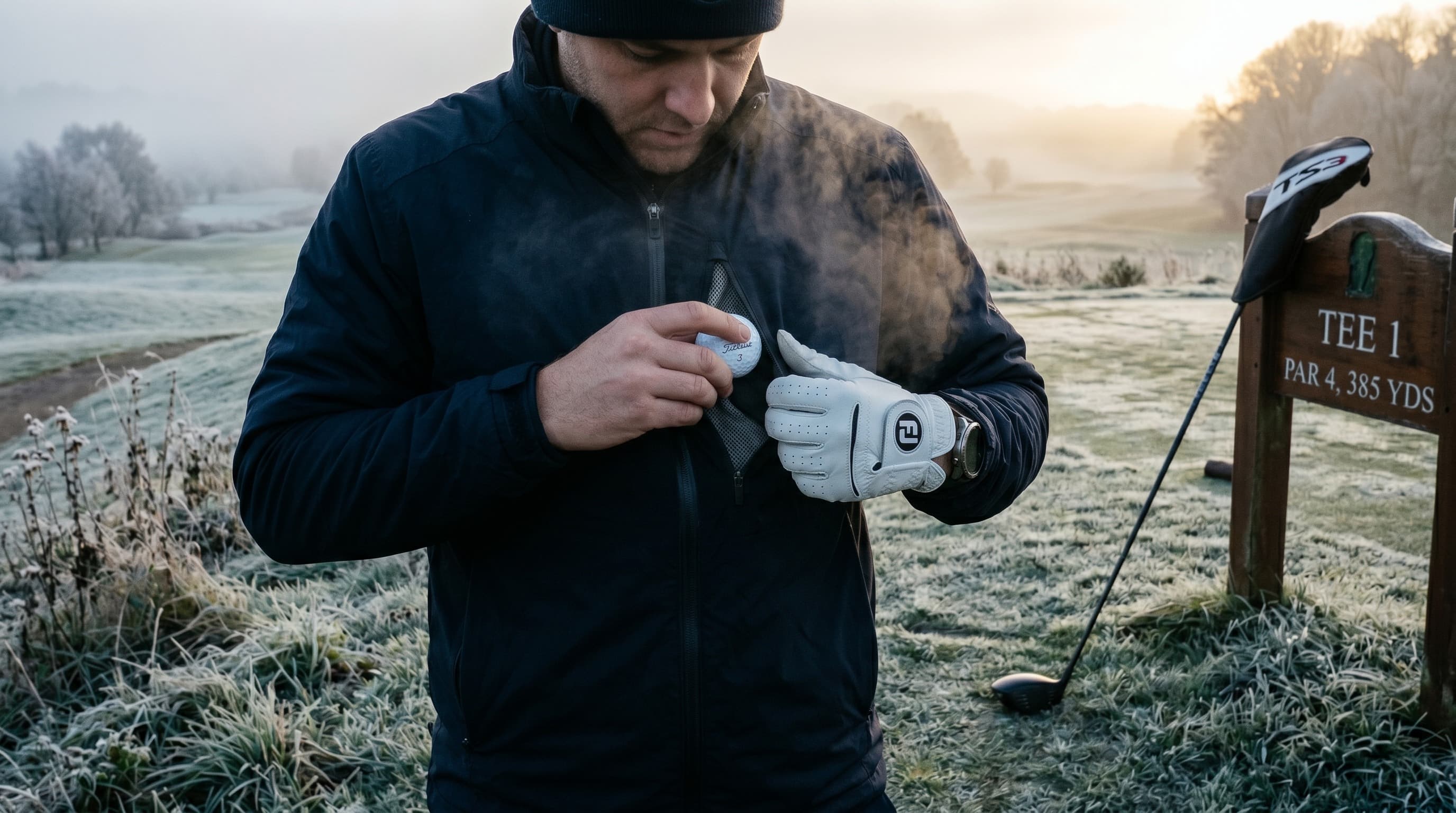
How Cold Weather Steals Distance: The Ball Compression Physics Every Golfer Should Know
Every 10°F drop costs the average golfer two to four yards of driver carry. Here is the physics — ball compression, air density, muscle temperature — and the field data we pulled from G-Score-monitored cold rounds to show exactly how distance loss compounds, and how to compensate without changing your swing.
Read Story
The May 2026 G-Score Heatmap: Where American Golf Peaks This Spring
May is the most underrated month on the American golf calendar. Five regions hit their annual peak this spring, three turn quietly hostile, and the data tells a clearer story than the brochures. Here is where to play, where to avoid, and how to time your booking window.
Read StoryMinSu Kim
Founder & Golf Data Analyst
MinSu is a data analyst and golfer with 10+ years on the course. He built Golf Weather Score to answer one question: is today a good day to play? He combines weather data, course intelligence, and the proprietary G-Score algorithm to help golfers make smarter decisions.
Every Friday Morning
When Battlement Mesa Golf Club plays best next weekend.
Friday 6am ET: peak G-Score windows for Battlement Mesa Golf Club, wind direction by hour, and one gear call. Three minutes to read, save you the round.
One email a week. Unsubscribe in one click.
The Caddie's Oracle
Draw your luck before the tee off