
Caddie's Gear Advisor
Curated for today's 84°F · Clear
Tour-Level Drivers
Engineered for maximum distance and forgiveness
Laser Rangefinders
Pin-seeking technology for precision approaches
Premium Golf Balls
Tour-caliber spin and distance performance
Performance Sunglasses
Polarized lenses optimized for reading greens
Your Golf Trip, Handled
The Ultimate Golf Trip Planner
Everything you need to play Bear Lake Reserve Golf Club — from booking your flight to checking in course-side.
Course-Side Stays
Luxury hotels, resorts, and stay-and-play packages just minutes from the first tee.
Flights
Compare fares across 700+ airlines for the best route to your tee time.
SUV Rentals for Golf Bags
Spacious vehicles with room for clubs, bags, and your foursome.
Travel Insurance
Coverage for medical, weather delays, and gear at your destination.
Bear Lake Reserve Golf Club: Course Intelligence
Signature Setup
Bear Lake Reserve sits above Tuckasegee in Jackson County, North Carolina, deep in the Blue Ridge. The course was routed by Nicklaus Design (the Jack Nicklaus II team) and opened in 2007 as the centerpiece of a 3,000-acre mountain community. Standing on the first tee at roughly 3,000 feet of elevation, the thing that registers first is vertical movement — fairways tip, fall, and climb back, and almost no two lies are level. This is not a links sheet. It's a mountain course where the architect used the terrain instead of fighting it, and the routing rewards players who read slope before they read yardage.
Hole-by-Hole Wind & Playing Lines
The hardest stretch is the uphill par-4 marked the #1 handicap, roughly 440 yards from the member tees. On cool mornings the valley pulls air downslope toward the lake, so a 150-yard approach plays closer to 165 — I take one extra club here every time and aim to land short, letting the firm front edge feed the ball on.
The signature par-3 is the opposite problem. It drops nearly two clubs of elevation to a green guarded short by a fall-away. Downhill ball flight from 3,000 feet carries 4–6% longer than a sea-level eye expects, so a stock 7-iron becomes a hard 9. On a still morning I club down twice.
The closing par-5 doglegs around a ridge. With any tailwind off the ridge top it's reachable; into a quartering breeze, lay back to a full wedge rather than chasing the corner.
Green & Fairway Characteristics
Greens are bentgrass and hold a mountain pace — quick on the downhillers, slower than the stimp suggests on uphill putts because of grain following the drainage. The slope rating runs into the mid-140s from the back tees, which is a fair warning: this is a shot-maker's course, not a bomber's. Fairways are tight and firm, and side-slope lies mean your stance fights the target line on the doglegs. Front nine plays the climbs; the back gives several downhill tee shots that add 15–20 yards of run-out when the ground is dry.
Seasonal Weather Pattern
Western NC mountain golf is a short, glorious window. Peak is May through October. June mornings sit around 55–62°F at 8 a.m. and warm to the mid-70s — cooler than the Carolina lowlands by 10–15 degrees thanks to elevation. Afternoon thunderstorms are common July–August; they build off the ridges after 2 p.m., so a morning tee time isn't just about pace, it's about staying dry. October brings firm turf, leaf color, and the year's best scoring conditions before the course closes for winter.
Local Play Tips
The detail that doesn't show up in a yardage book: morning fog rolls off Bear Lake and settles in the lower fairways, hiding landing zones on the first two holes until it lifts around 9–9:30 a.m. Locals either tee off early and play the first holes by feel, or start an hour later and let it clear. Cart-path-only days after rain are frequent given the grades — bring a rangefinder, because pacing yardages on a slope is unreliable.
Pre-Round Weather Workflow
Pull the 7-day G-Score for Tuckasegee before you book. Look for two things: a morning with low wind and a clear afternoon (no post-2 p.m. storm risk), and a G-Score peak that lands in the 8–10 a.m. window. Check windExposure — on draft-heavy mornings, add a club to every uphill approach and trust the elevation-aided carry on the downhill par-3. A high G-Score morning here scores 8–12 points better than the same afternoon once the valley draft and storm cells arrive.
Related Reading
Before you tee off at Bear Lake Reserve Golf Club

The May 2026 G-Score Heatmap: Where American Golf Peaks This Spring
May is the most underrated month on the American golf calendar. Five regions hit their annual peak this spring, three turn quietly hostile, and the data tells a clearer story than the brochures. Here is where to play, where to avoid, and how to time your booking window.
Read Story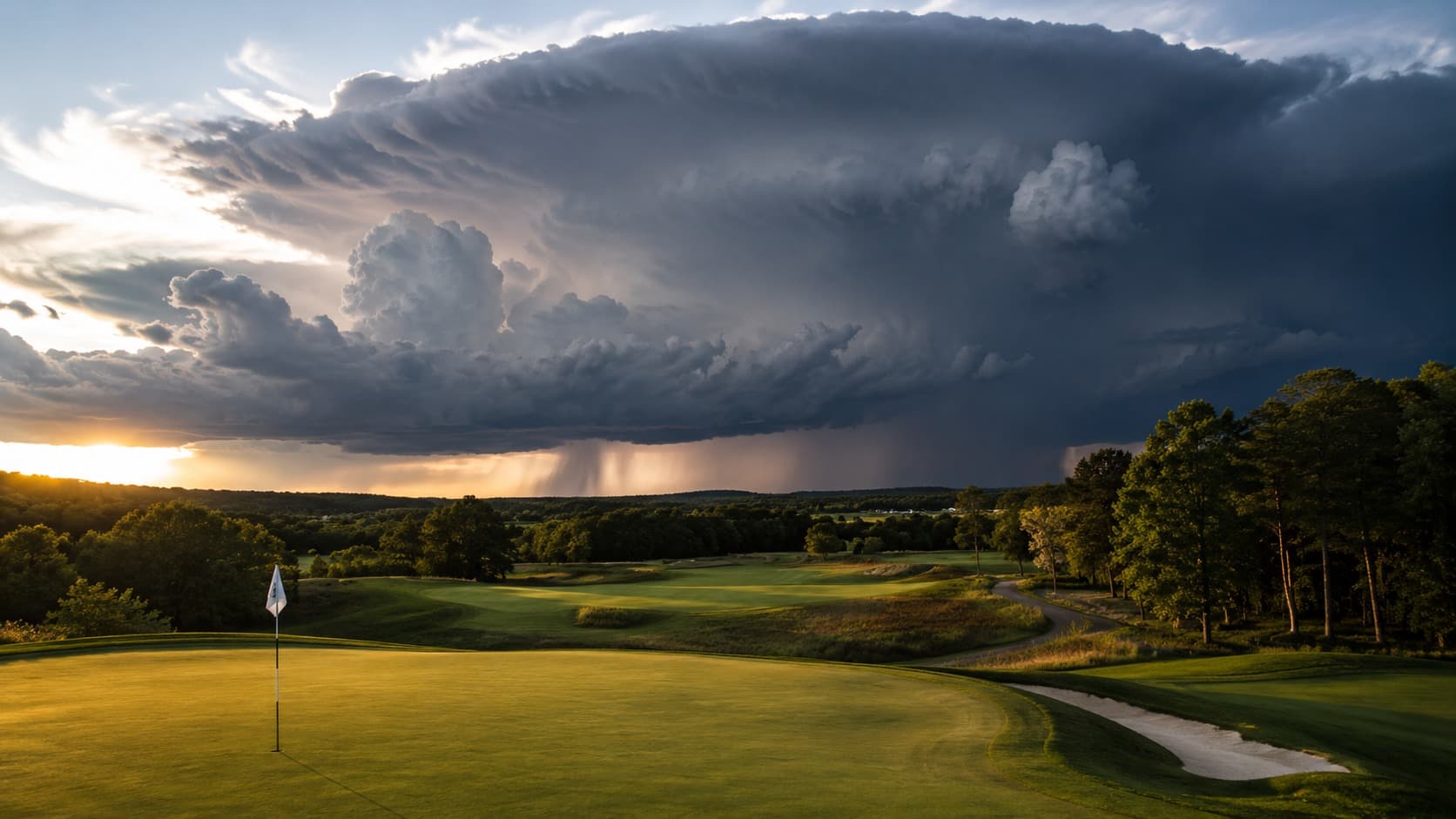
The Three O’Clock Storm: Reading Summer’s Convective Cycle to Protect Your Round
A 40% chance of afternoon thunderstorms does not mean a 40% chance of getting rained on. In the summer convective season it means the morning is nearly clear and the afternoon carries a fast-building, high-energy storm risk driven by a daily heating cycle. Here is the meteorology behind the pattern, the G-Score data on how the storm cycle punishes afternoon tee times across the Southeast, Midwest, and desert Southwest, the lightning-safety decision tree that actually matters, and the workflow that gets you off the course before the first bolt.
Read StoryMinSu Kim
Founder & Golf Data Analyst
MinSu is a data analyst and golfer with 10+ years on the course. He built Golf Weather Score to answer one question: is today a good day to play? He combines weather data, course intelligence, and the proprietary G-Score algorithm to help golfers make smarter decisions.
Every Friday Morning
When Bear Lake Reserve Golf Club plays best next weekend.
Friday 6am ET: peak G-Score windows for Bear Lake Reserve Golf Club, wind direction by hour, and one gear call. Three minutes to read, save you the round.
One email a week. Unsubscribe in one click.
The Caddie's Oracle
Draw your luck before the tee off