
Caddie's Gear Advisor
Curated for today's 69°F · Thunderstorm
Storm-Ready Outerwear
Waterproof layers built for 18 holes in the rain
Tour-Grade Umbrellas
68" double-canopy wind-resistant coverage
Wet-Weather Gloves
All-weather grip that performs in the rain
Waterproof Golf Shoes
Keep your feet dry through every fairway
Your Golf Trip, Handled
The Ultimate Golf Trip Planner
Everything you need to play Bear Trace at Cumberland Mountain State Park — from booking your flight to checking in course-side.
Course-Side Stays
Luxury hotels, resorts, and stay-and-play packages just minutes from the first tee.
Flights
Compare fares across 700+ airlines for the best route to your tee time.
SUV Rentals for Golf Bags
Spacious vehicles with room for clubs, bags, and your foursome.
Travel Insurance
Coverage for medical, weather delays, and gear at your destination.
Bear Trace at Cumberland Mountain State Park: Course Intelligence
Signature Setup
Jack Nicklaus laid this one out in 1998 on the Cumberland Plateau, and the elevation is the first thing you feel — Crossville sits around 1,880 feet, high enough that the air is noticeably thinner and cooler than Nashville two hours west. Bear Trace at Cumberland Mountain State Park is one of the five Jack Nicklaus courses on the Tennessee Golf Trail, routed through Cumberland Mountain State Park around Byrd Lake. It plays to a par 72 and stretches to roughly 6,900 yards from the championship tees. I should be honest up front: I haven't walked this exact routing in person, so the hole-specific reads below lean on plateau-wide playing conditions and historical weather rather than a personal scorecard. What I can vouch for is the climate logic — and on this course, the climate does a lot of the talking.
Hole-by-Hole Wind & Playing Lines
The prevailing wind on the plateau in the playing season runs out of the west to southwest, and three holes turn that into a real scoring question. The #1 handicap par-4 climbs uphill into that breeze — a 150-yard approach can play closer to 170, so club up one and accept the long putt rather than chasing the front pin. The signature par-3 sits across an arm of Byrd Lake; at roughly 175 yards from the regular tees, a 10–12 mph crosswind off the water will push a held shot well right of target, so aim at the fat of the green, not the flag. The closing reachable-ish par-5 tempts you to go at it in two, but with the wind quartering into your face on most afternoons, the smart line is a layup to a full wedge number. On the rare NE morning, those same holes shorten by a club and the par-5 becomes genuinely reachable.
Green & Fairway Characteristics
The greens are bentgrass — typical for the cooler plateau elevation — and they firm up fast in midsummer, so a high spinning approach holds far better than a runner. Expect a slope rating in the low-130s from the back tees, which tells you the trouble is real but fair. Fairways are zoysia/bermuda, generous off most tees but framed by Nicklaus's usual mounding that funnels a slightly errant ball away from the ideal angle. The front nine and back nine balance out near 3,450 yards each; there's no single brutal side, so pace yourself rather than expecting a scorable stretch.
Seasonal Weather Pattern
This is where the plateau separates itself. Summer highs in Crossville sit around 83–85°F — a solid 5–8 degrees cooler than Memphis or Nashville — which makes July and August playable when lowland Tennessee bakes. The trade-off is afternoon convection: clouds build and gusts pick up after midday far more reliably here than down off the plateau. Spring (April–May) and fall (late September–October) are the sweet spots, with crisp 60s in the morning and firm turf. Winter brings frost delays and the occasional closure; January mornings can sit below freezing well past 8 a.m.
Local Play Tips
Two things the booking page won't tell you. First, the morning calm is a genuine asset here — the G-Score routinely runs 8–12 points higher before the plateau breeze fills in around mid-morning, so the earliest tee time is worth more strokes than at a lowland course. Second, because this is a state-park course, walk-up rates and shoulder-season midweek pricing are unusually friendly for a Nicklaus design — pair it with one of the other Tennessee Golf Trail Bear Trace courses for a two-day plateau swing.
Pre-Round Weather Workflow
Pull the 7-day G-Score for Crossville the night before and again at dawn. Prioritize the morning slot — on this plateau the windExposure rating climbs through the day, so an 8 a.m. tee time will almost always read calmer and score better than a 1 p.m. one. Check the wind direction specifically: a W/SW reading means the #1 handicap and the closing par-5 play long, so add a club to your planning. If the forecast shows afternoon convection (common June–August), treat any tee time after noon as a wind-and-shower gamble and book early instead.
Related Reading
Before you tee off at Bear Trace at Cumberland Mountain State Park

Best Golf Weather by State: Ranking America by Average G-Score
We ranked all 50 US states by average G-Score golf playability. California tops the list, but the results beyond the top five may surprise you.
Read Story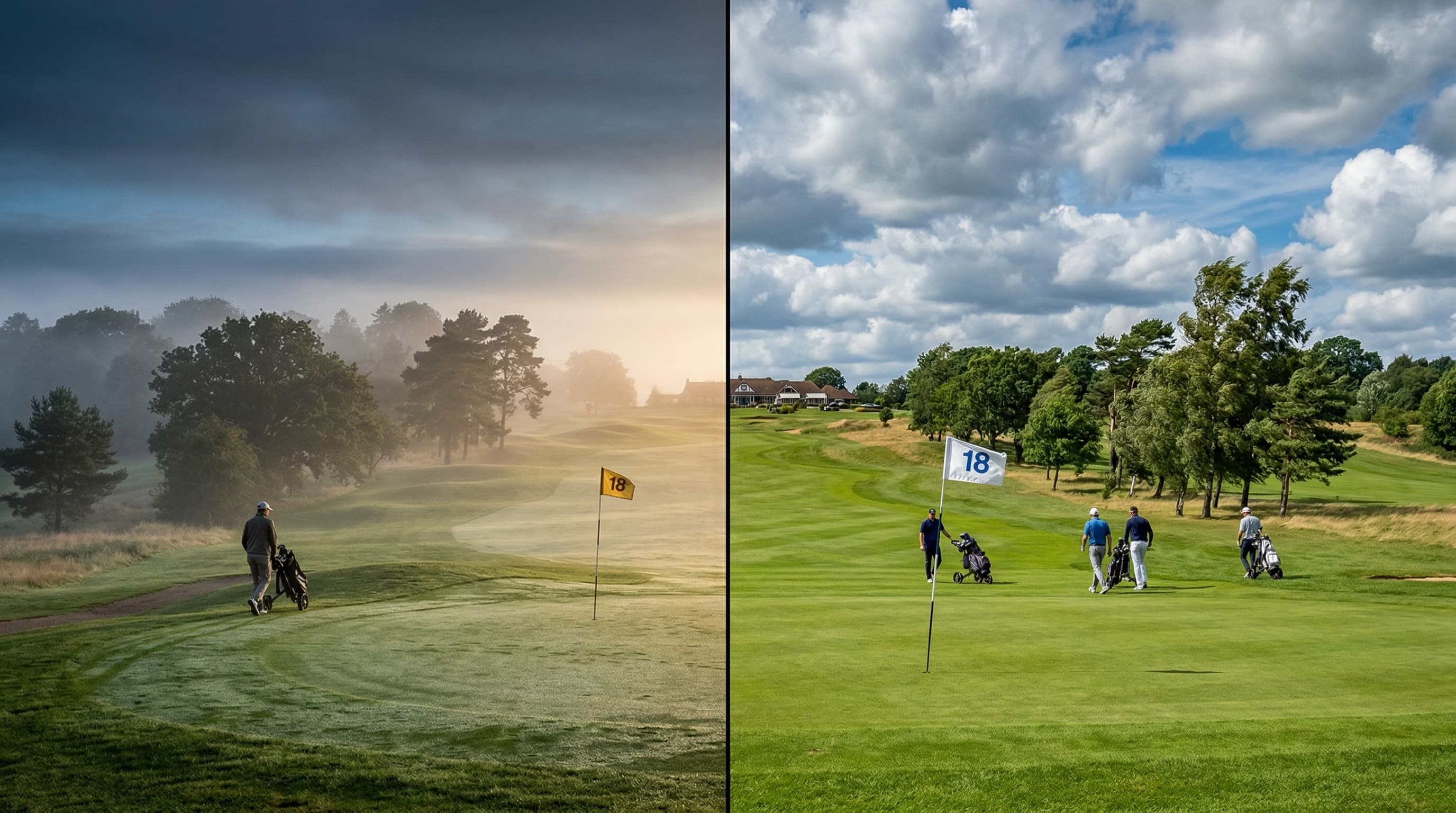
Morning vs Afternoon Tee Times: What Weather Data Reveals About When to Play
Hourly weather data reveals morning tee times score 8-12 G-Score points higher than afternoon slots. Here is what the numbers say about optimal timing.
Read StoryMinSu Kim
Founder & Golf Data Analyst
MinSu is a data analyst and golfer with 10+ years on the course. He built Golf Weather Score to answer one question: is today a good day to play? He combines weather data, course intelligence, and the proprietary G-Score algorithm to help golfers make smarter decisions.
Every Friday Morning
When Bear Trace at Cumberland Mountain State Park plays best next weekend.
Friday 6am ET: peak G-Score windows for Bear Trace at Cumberland Mountain State Park, wind direction by hour, and one gear call. Three minutes to read, save you the round.
One email a week. Unsubscribe in one click.
The Caddie's Oracle
Draw your luck before the tee off