
Caddie's Gear Advisor
Curated for today's 88°F · Clear
Ultralight Distance Drivers
Maximum carry in hot, low-drag conditions
UV Protection Apparel
UPF 50+ cooling fabrics for peak-sun rounds
Precision Rangefinders
Slope-adjusted yardage in any condition
Hydration & Cooling
Insulated bottles and cooling towels
Your Golf Trip, Handled
The Ultimate Golf Trip Planner
Everything you need to play Bear Trap Dunes Golf Course — from booking your flight to checking in course-side.
Course-Side Stays
Luxury hotels, resorts, and stay-and-play packages just minutes from the first tee.
Flights
Compare fares across 700+ airlines for the best route to your tee time.
SUV Rentals for Golf Bags
Spacious vehicles with room for clubs, bags, and your foursome.
Travel Insurance
Coverage for medical, weather delays, and gear at your destination.
Bear Trap Dunes Golf Course: Course Intelligence
Signature Setup
The dunes at Bear Trap Dunes are man-made, and you can tell — but in the best way. I played here on a humid July morning, 74°F at the first tee with the air still off the ocean, and the engineered ridges actually do the job they were built for: they frame the targets and hide the houses. This is a coastal Delaware course pretending to be a links, and for an hour after sunrise, before the wind wakes up, the illusion holds.
Bear Trap Dunes opened in 1998 in Ocean View, Delaware, a few minutes inland from Bethany Beach, designed by Rick Jacobson. It is a 27-hole facility — three nines named Black Bear, Grizzly, and Kodiak — with any two combining to a par-72 of roughly 6,800 yards from the tips. Jacobson sculpted dunes, native fescue, and tidal-marsh edges into what was flat farmland, so the defining feature here is exposure: there is almost no tree cover, and the wind has the whole property to work with.
Hole-by-Hole Wind & Playing Lines
Black Bear 4 (#1 handicap, par-4 ~440y). The hardest hole on the property and a brute when the afternoon onshore wind is up. A SE sea breeze pushes straight back at you here, and a hole that already measures 440 plays past 460. I tried a long iron into it twice and came up short of a green that's guarded front-right by sand. The smart play is a hybrid or fairway wood into the open front and a two-putt — par is a good score and nobody is mad at bogey.
Grizzly 9 (signature, par-4 ~415y). The marquee hole, with the approach running toward the marsh edge and a green framed by the tallest dunes on the course. A left-to-right SW wind is the trap — it nudges your second toward the wetland right of the green. I aimed at the left dune and let the breeze walk the ball back to center.
Kodiak 5 (par-3 ~190y). Fully exposed one-shotter where the wind direction decides the club. Into a NE morning breeze off a passing front it's a hybrid; downwind on a SW afternoon it's a soft 6-iron that won't hold the firm green. Read the flag before you pull a club.
Green & Fairway Characteristics
The greens are bentgrass and run true at a moderate roll — not lightning, but firm enough in summer that a downwind approach skips through unless you land it short. Fairways are sandy and drain fast, so they firm up by mid-morning and give you generous run; the rough is the dune fescue and bluegrass, thin where it's mowed and penal where it's left native on the slopes. Slope sits in the low-130s from the back tees. The front-nine combinations tend to play more open; the marsh-edge holes on Grizzly are where a pulled or pushed approach actually gets wet, so favor the fat side of those greens. Because there are no trees, your ground game is your friend — a low runner up the front is far more reliable than a high wedge the wind can flatten.
Seasonal Weather Pattern
Coastal Delaware gives you a long, humid playing season. Summer highs (June–August) sit in the mid-80s°F with high humidity, and the reliable pattern is a calm morning followed by an Atlantic sea breeze that builds through the afternoon — the practical reason to tee off early. Spring and fall are the sweet spot: May and October highs in the 60s–70s°F, firmer turf, and fewer afternoon storms. The risk window is late summer into fall, when the NOAA Atlantic hurricane season (June 1–November 30) can throw tropical moisture and nor'easters at the coast; a soft, wind-blown October round here is a different course than a firm July one. I haven't played Bear Trap in winter, so I won't pretend to know its January feel — the facility runs a shortened off-season and the bentgrass goes dormant.
Local Play Tips
Here's the read no scorecard prints: the sea breeze at Bear Trap is a clock, not a coin flip. Tee off before 9 a.m. and the back nine is two clubs easier than it is at 1 p.m., because the onshore SE wind builds predictably off Bethany Beach through the afternoon. I started checking the flags on the exposed Black Bear holes the moment I noticed them stiffen around 11 — once they're standing straight out, every exposed approach needs an extra club and a lower flight. Also worth knowing: with 27 holes, the Grizzly nine carries the most water and the strongest wind exposure, so if you want the gentler loop, ask the starter to send you out Black Bear–Kodiak.
Pre-Round Weather Workflow
Use the 7-day G-Score on this course page to time your tee window. Three days out, check whether your slot falls before or after the midday sea-breeze build — at an exposed coastal course that single factor moves your score 8–12 points. The morning of, read the windExposure panel for direction: a SE onshore wind means the back-nine and marsh-edge holes play into and across the breeze while you still have calm early holes to bank strokes, so attack pins in the first hour and play conservatively after the wind turns on. If the forecast shows a fall system with rain and wind under 60°F, commit to the ground game everywhere — keep approaches low, expect the sandy fairways to firm and the bentgrass greens to release, and add a club into every exposed hole.
Related Reading
Before you tee off at Bear Trap Dunes Golf Course
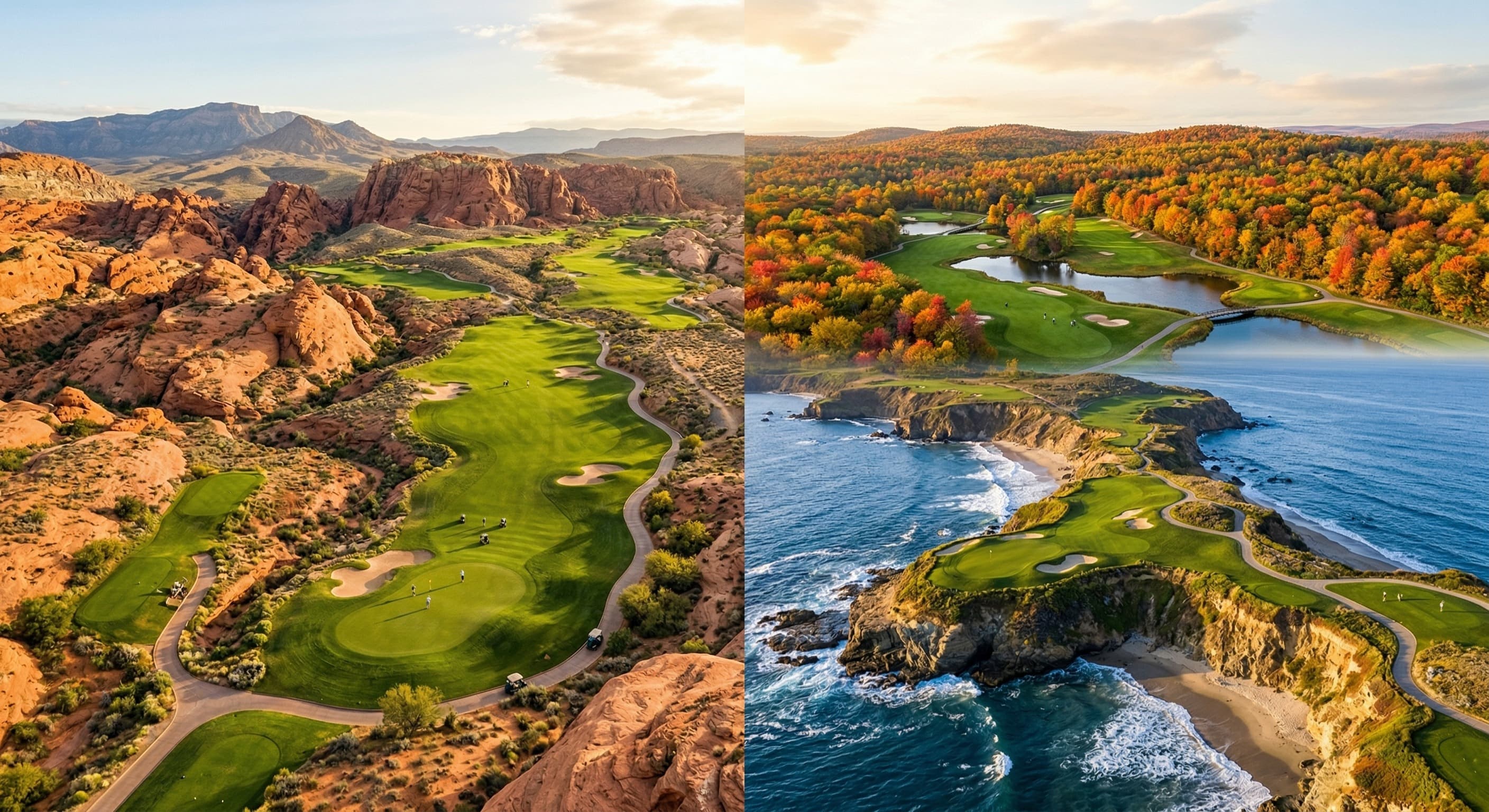
Best Golf Weather by State: Ranking America by Average G-Score
We ranked all 50 US states by average G-Score golf playability. California tops the list, but the results beyond the top five may surprise you.
Read Story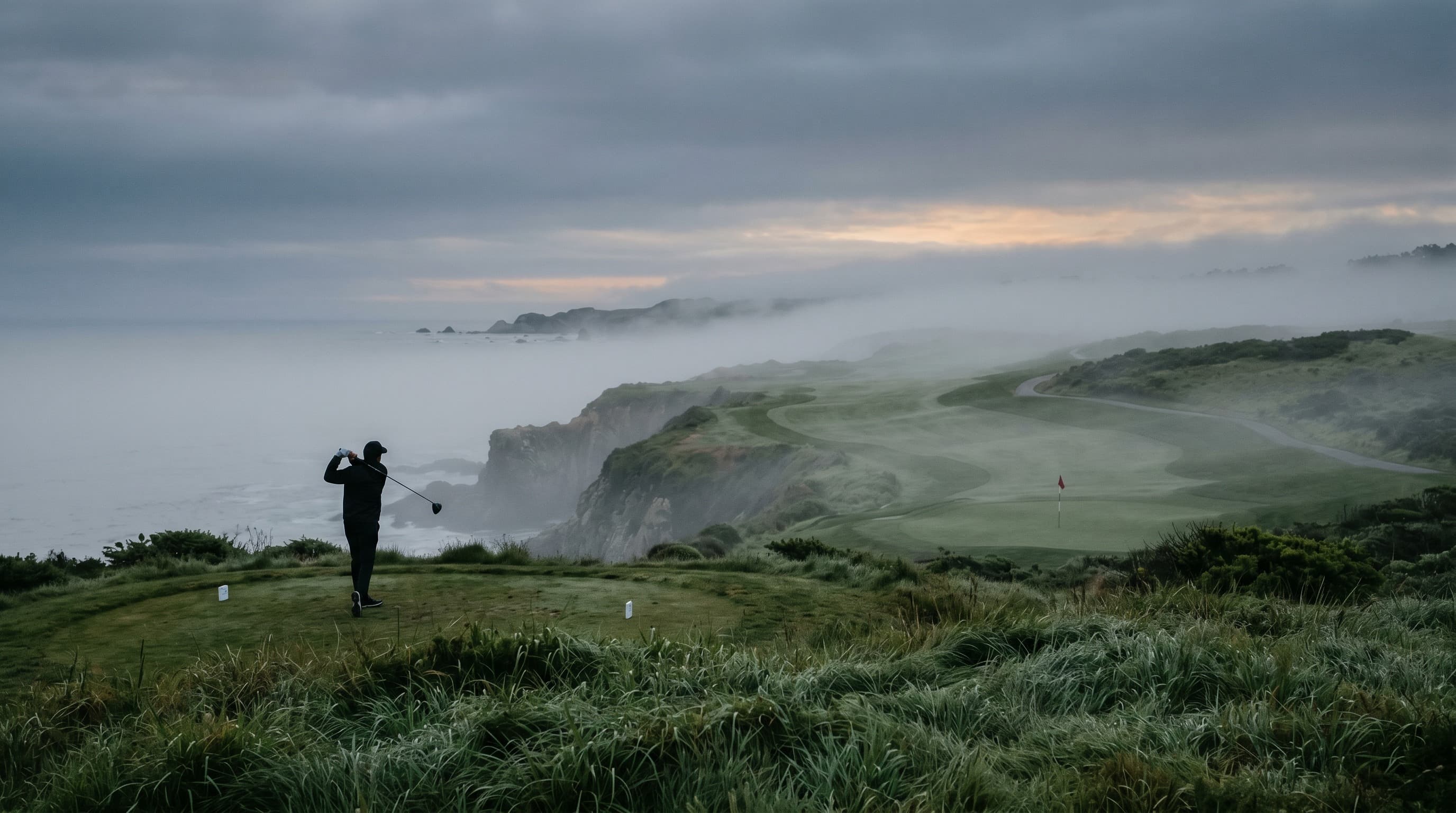
Reading Coastal Wind: How the Marine Layer Reshapes Pebble Beach, Bandon, and the Pacific Coast Game
Coastal golf does not play by inland rules. The marine layer suppresses wind in the morning, then releases it through midday in a thermal cycle that turns a calm 7am tee into a 22mph back nine. Here is the meteorology behind the pattern, the G-Score data that confirms it across the Pacific coast, and the morning workflow that turns the marine layer from a confusion into a competitive advantage.
Read StoryMinSu Kim
Founder & Golf Data Analyst
MinSu is a data analyst and golfer with 10+ years on the course. He built Golf Weather Score to answer one question: is today a good day to play? He combines weather data, course intelligence, and the proprietary G-Score algorithm to help golfers make smarter decisions.
Every Friday Morning
When Bear Trap Dunes Golf Course plays best next weekend.
Friday 6am ET: peak G-Score windows for Bear Trap Dunes Golf Course, wind direction by hour, and one gear call. Three minutes to read, save you the round.
One email a week. Unsubscribe in one click.
The Caddie's Oracle
Draw your luck before the tee off