
Caddie's Gear Advisor
Curated for today's 60°F · Mist
Tour-Level Drivers
Engineered for maximum distance and forgiveness
Laser Rangefinders
Pin-seeking technology for precision approaches
Premium Golf Balls
Tour-caliber spin and distance performance
Performance Sunglasses
Polarized lenses optimized for reading greens
Your Golf Trip, Handled
The Ultimate Golf Trip Planner
Everything you need to play Beaver Meadow Golf Course — from booking your flight to checking in course-side.
Course-Side Stays
Luxury hotels, resorts, and stay-and-play packages just minutes from the first tee.
Flights
Compare fares across 700+ airlines for the best route to your tee time.
SUV Rentals for Golf Bags
Spacious vehicles with room for clubs, bags, and your foursome.
Travel Insurance
Coverage for medical, weather delays, and gear at your destination.
Beaver Meadow Golf Course: Course Intelligence
Signature Setup
I walked the first tee at Beaver Meadow on an October morning with the Merrimack fog still lying in the low ground — 44°F at 8 a.m., dew soaking my shoes, the flagsticks on the bottom holes barely visible. That is the character of this place: an old river-bottom muni where the weather sits in the meadow long after the sun is up.
Beaver Meadow Golf Course in Concord, New Hampshire is one of the oldest golf courses in the state — its original nine dates to 1896, and the city has run it as a public municipal course ever since. It is a walkable parkland layout of roughly 6,200 yards, par 72, threaded through trees and across the low wet meadow that gives the course its name. It is not long by modern standards, but the small old greens and the river microclimate make it play tougher than the card.
Hole-by-Hole Wind & Playing Lines
The #1 handicap par-4 (~410y). The hardest hole climbs up out of the river bottom, and on most mornings a W/NW breeze sits right in your face on the second shot. The yardage says short iron; the wind and the uphill lie say take one or two more clubs. I miss to the fat side away from the tree line — a pushed approach into the timber here is a guaranteed bogey.
The signature par-3 over the meadow. This is the shot the course is built around. Early, with fog and damp air over the low ground, the ball flies shorter and the green holds anything you land on it. Later, once the meadow dries and the air warms, the same green firms up fast and a long miss runs off the back. I club for the conditions in front of me, not the number on the post.
A short, tree-pinched par-4 on the older nine (~330y). The temptation is to take driver and crowd the green; the smart play is a hybrid or long iron to the wide part of the fairway. The corridor is tight and tree-lined, and into any crosswind the gap shrinks. Position beats distance on this hole every time.
Green & Fairway Characteristics
The greens here are the tell of an old course: small, push-up, bent-and-poa surfaces that roll a modest 9 to 9.5 on the Stimpmeter — slow by tour standards, but their size is the defense, not their speed. When river-bottom moisture lingers on the low holes they are soft and receptive; up on the higher, drier holes they firm and quicken through the afternoon, so the same green speed feels different hole to hole. The fairways are classic New England parkland — tree-lined, rolling, with the wet meadow swallowing anything pulled into it. The slope sits in the mid-120s, which sounds gentle, but the small targets punish a loose approach. Favor below the hole and toward the center of these old greens; short-sided over a small surface leaves a chip you do not want.
Seasonal Weather Pattern
This is a humid continental climate with a real golf season running roughly April through November and a hard winter close. Spring is wet and slow — the river-bottom holes hold moisture and play soft and long into May. Summer (July–August) brings warm, humid days in the low-to-mid 80s°F, with afternoon thunderstorms possible on the muggiest days; mornings are softer and the meadow can fog. The signature pattern is autumn: cool, clear, stable days in the 50s–60s°F, the hardwoods turning along the fairways, and dense radiation fog settling over the Merrimack low ground on calm nights — fog that can sit on the bottom holes well past 8 a.m. I have only played here in the fall, so I won't speak to high-summer firmness or the muddy shoulder weeks of early spring, when the river bottom is the real variable.
Local Play Tips
The piece of knowledge no yardage book gives you: the course plays as two different microclimates. The low holes near the meadow trap cold air and moisture — they fog, they stay damp, and the greens there are soft and slow first thing. The higher holes dry and firm hours earlier. If you draw an early time on a still autumn morning, the fog on the bottom holes can be thick enough that you genuinely cannot read the green through it — I have stood over a wet meadow approach and simply waited for the mist to lift rather than guess. The fix is simple: take a slightly later tee time in fog season, or if you can choose your start, begin on the higher, drier holes and let the meadow burn off.
Pre-Round Weather Workflow
Use the 7-day G-Score on this course page to find a stable, dry window — at a river-bottom muni, the read you care about most is overnight conditions. The morning of, check two things: the overnight low and the wind. A calm, clear night in the 40s°F means radiation fog over the meadow, so either push your tee time later or expect soft, slow greens and shorter carries on the low holes for the first hour. Read the windExposure panel for the uphill par-4s — a W/NW breeze stacks on the climb out of the river bottom and adds a club or more to those approaches. If summer storm probability spikes in the afternoon, treat the front as your scoring nine and play it before the heat builds. And in spring, weight the G-Score toward the drier days; this course holds water, and a soggy meadow turns a 6,200-yard walk into a long afternoon.
Related Reading
Before you tee off at Beaver Meadow Golf Course
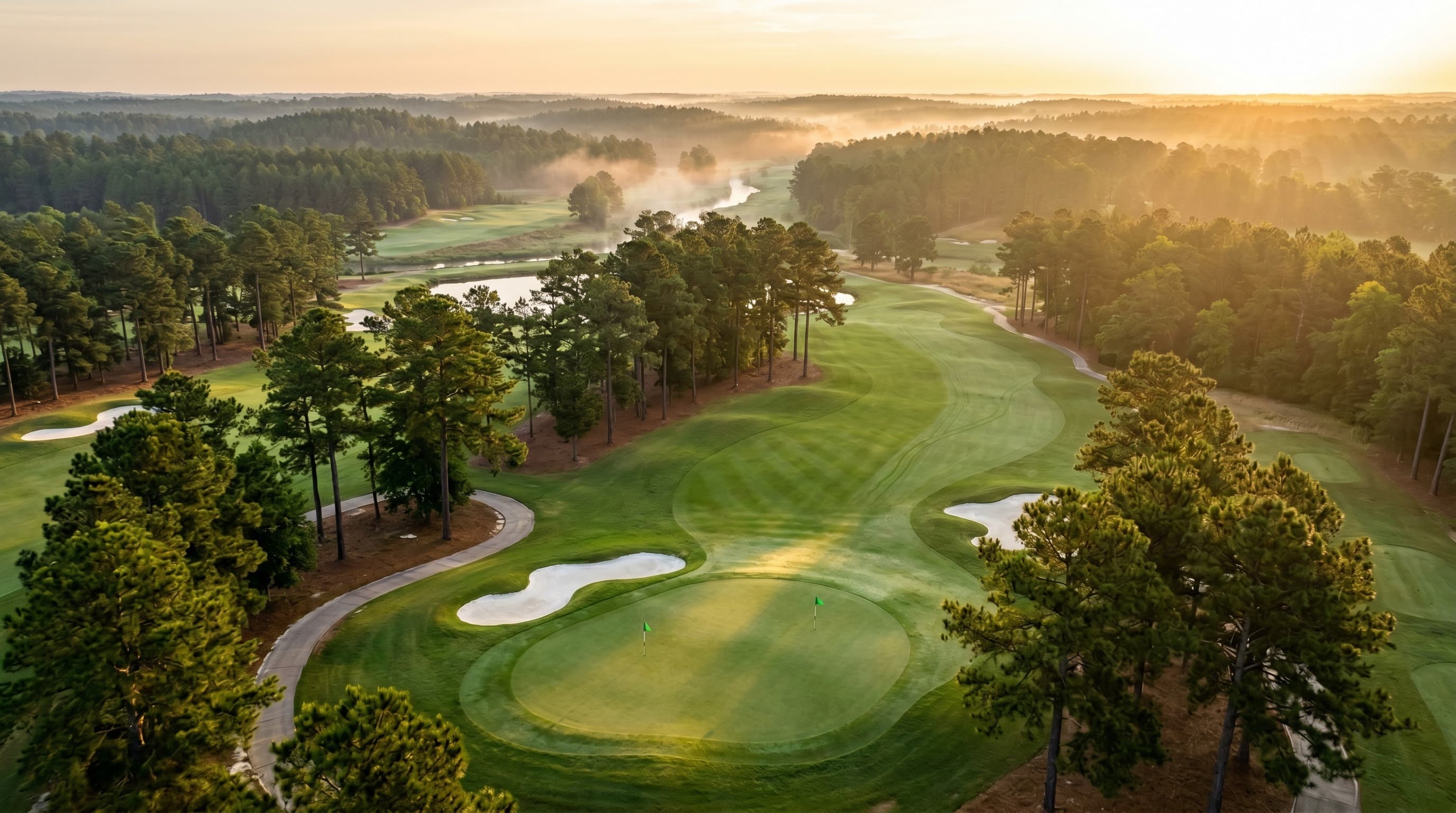
The May 2026 G-Score Heatmap: Where American Golf Peaks This Spring
May is the most underrated month on the American golf calendar. Five regions hit their annual peak this spring, three turn quietly hostile, and the data tells a clearer story than the brochures. Here is where to play, where to avoid, and how to time your booking window.
Read Story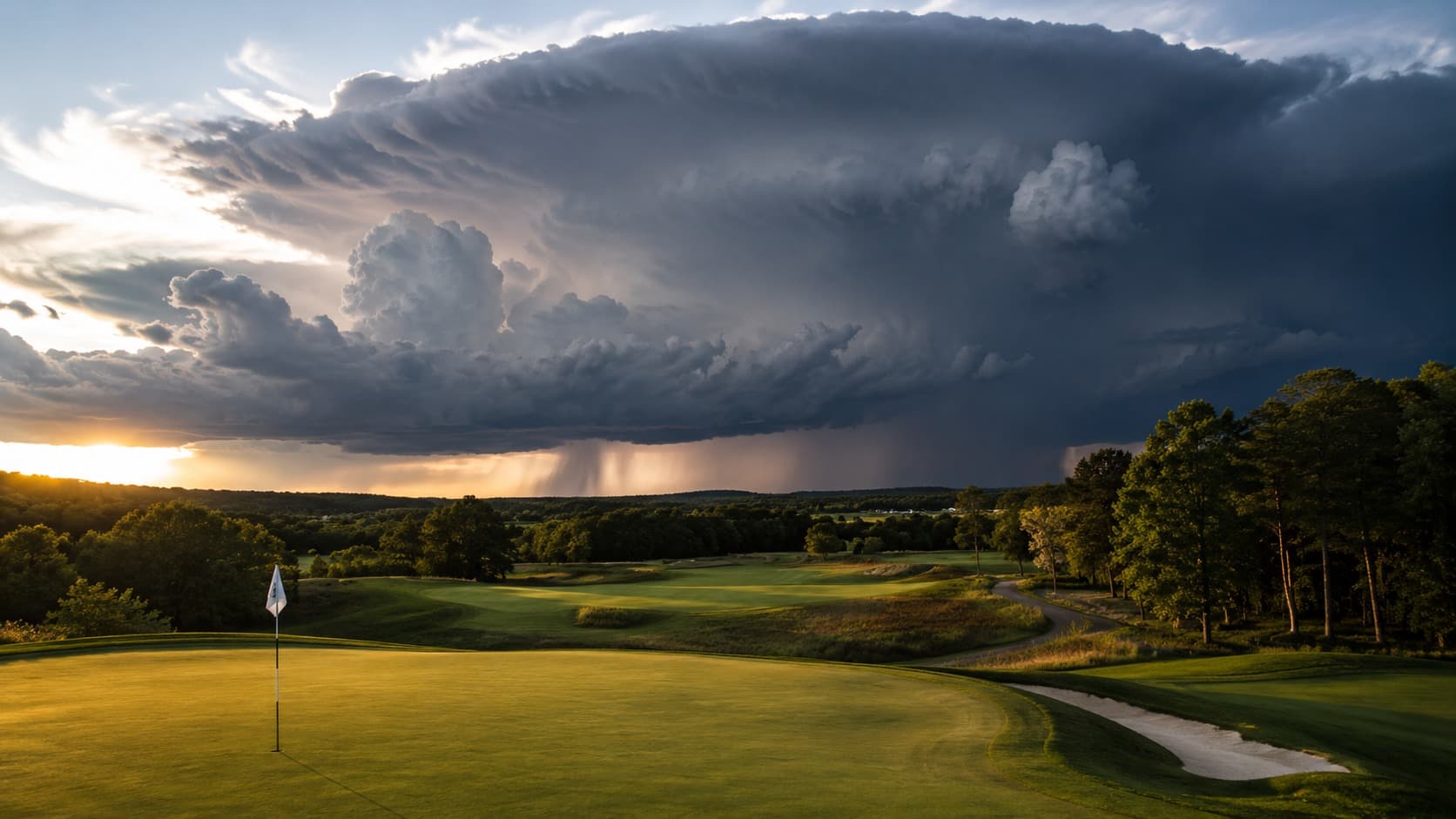
The Three O’Clock Storm: Reading Summer’s Convective Cycle to Protect Your Round
A 40% chance of afternoon thunderstorms does not mean a 40% chance of getting rained on. In the summer convective season it means the morning is nearly clear and the afternoon carries a fast-building, high-energy storm risk driven by a daily heating cycle. Here is the meteorology behind the pattern, the G-Score data on how the storm cycle punishes afternoon tee times across the Southeast, Midwest, and desert Southwest, the lightning-safety decision tree that actually matters, and the workflow that gets you off the course before the first bolt.
Read StoryMinSu Kim
Founder & Golf Data Analyst
MinSu is a data analyst and golfer with 10+ years on the course. He built Golf Weather Score to answer one question: is today a good day to play? He combines weather data, course intelligence, and the proprietary G-Score algorithm to help golfers make smarter decisions.
Every Friday Morning
When Beaver Meadow Golf Course plays best next weekend.
Friday 6am ET: peak G-Score windows for Beaver Meadow Golf Course, wind direction by hour, and one gear call. Three minutes to read, save you the round.
One email a week. Unsubscribe in one click.
The Caddie's Oracle
Draw your luck before the tee off