
Caddie's Gear Advisor
Curated for today's 74°F · Clear
Tour-Level Drivers
Engineered for maximum distance and forgiveness
Laser Rangefinders
Pin-seeking technology for precision approaches
Premium Golf Balls
Tour-caliber spin and distance performance
Performance Sunglasses
Polarized lenses optimized for reading greens
Your Golf Trip, Handled
The Ultimate Golf Trip Planner
Everything you need to play Bedford Creek Golf Course — from booking your flight to checking in course-side.
Course-Side Stays
Luxury hotels, resorts, and stay-and-play packages just minutes from the first tee.
Flights
Compare fares across 700+ airlines for the best route to your tee time.
SUV Rentals for Golf Bags
Spacious vehicles with room for clubs, bags, and your foursome.
Travel Insurance
Coverage for medical, weather delays, and gear at your destination.
Bedford Creek Golf Course: Course Intelligence
Signature Setup
The 9th at Bedford Creek is a 184-yard par-3 from the back, and it is the last thing you play on each loop — a long iron or hybrid with nowhere to bail short. I want to be honest up front: I have not teed it up at Bedford Creek itself. But I have played enough shoulder-season golf along the Lake Ontario shore to respect what an 184-yard one-shotter does when a northwest wind is coming off the water cold and steady.
Bedford Creek opened in 1978, a nine-hole public course in Sackets Harbor, New York, designed by Clyde W. Wehr. It measures 3,021 yards to a par of 36 from the blue tees, with a course rating of 35.0 and a slope of 113. By the numbers it is a modest, walkable parkland nine — but it sits a short drive from Black River Bay where Lake Ontario empties out, and that location, not the yardage, is what shapes the round.
Hole-by-Hole Wind & Playing Lines
Hole 4 (par-4 376y, the card's longest two-shotter). This is the stoutest hole by length on the scorecard. The prevailing summer wind in this corner of Jefferson County runs out of the west to southwest, and into it the 376 plays every inch. I'd take the fat side off the tee, then club up one on the approach instead of trying to muscle the listed number — into a steady breeze, the carry you lose is more than the yardage you read.
Hole 9 (par-3 184y, closing hole). The long one-shotter to finish each loop. From 184 most players are hitting hybrid or a long iron, and that is exactly the club a quartering NW wind off the bay punishes most. When the lake breeze is up, this is a two-club adjustment — play to the front-middle and take your three.
Hole 5 (par-5 482y). The only par-5 over 450 on the card and the clearest birdie chance if the wind is at your back from the west. Downwind it shrinks to a reachable two-shotter; into the wind it is a routine three-shot hole. Let the day's wind direction, not ego, decide whether you go for it.
Green & Fairway Characteristics
This is a cool-season parkland nine — the greens and fairways are the northern-New-York norm of bentgrass and poa rather than anything exotic. The slope of 113 and rating of 35.0 tell you the defense here is not severe contour or speed; it is positioning and wind. The card runs four par-4s in the 341–376 range (holes 1, 2, 3, 4 and 6), bookended by a short-ish par-5 at the 8th (406y) and the long par-3 9th (184y). With nothing tricked-up in the yardage, the scoring comes down to keeping the ball below the hole and under the breeze. I will not quote a Stimp number I have not personally rolled — treat green speed as a known unknown and use the practice green to calibrate before the 1st.
Seasonal Weather Pattern
Sackets Harbor sits in true lake-effect country. The Tug Hill Plateau just east of here is one of the snowiest places in the eastern United States, and the Watertown area routinely takes well over 100 inches of snow a winter. The practical consequence for golfers: the season is short. Expect a late opening — often not until April or May once the ground firms — and an early close in fall. Summer is the prize, with comfortable highs in the high-70s°F and long daylight. The defining weather variable is Lake Ontario itself: in spring and fall the water moderates the air near the shore, but it also feeds raw northwest winds that arrive cold and persistent. A calm 70°F afternoon inland can be a 60°F, two-club-wind round here when the lake breeze turns onshore. I am writing the seasonal read from regional historical climate rather than personal rounds on this exact nine, so weight the wind guidance over any specific-day claim.
Local Play Tips
The local read that the scorecard will not give you: this is a nine you loop twice, so plan your wind strategy for two passes, not one. The wind direction that helps you on the front loop's outbound holes will hurt you on the same holes the second time around only if it shifts — and near Lake Ontario, the afternoon lake breeze often does shift onshore as the day warms. If you tee off in calm morning air, expect the back-to-the-bay holes (the long par-3 9th especially) to play harder on your second loop than your first. Walk it — at 3,021 yards it is an easy walking nine, and at roughly $24 for nine it is honest, unpretentious golf where the value is the setting, not amenities (there is no driving range on site, so warm up on the practice green).
Pre-Round Weather Workflow
Use the 7-day G-Score on this course page to pick your window, and read it specifically for wind, because at a Lake Ontario shore course wind is the whole game. Three days out, watch the forecast wind direction: a west-to-southwest day favors the long holes (the 376-yard 4th, the 482-yard 5th downwind) while a northwest onshore flow off Black River Bay turns the 184-yard 9th into a hybrid-into-the-teeth finish. The morning of, check the overnight low and the onshore-breeze timing — if the lake breeze is forecast to build in the afternoon, play your first loop early when the air is calmest and bank strokes before the wind arrives for loop two. Use the windExposure panel to flag the holes that turn toward the bay, and on those add a club and aim for the center of the green rather than the number.
Related Reading
Before you tee off at Bedford Creek Golf Course
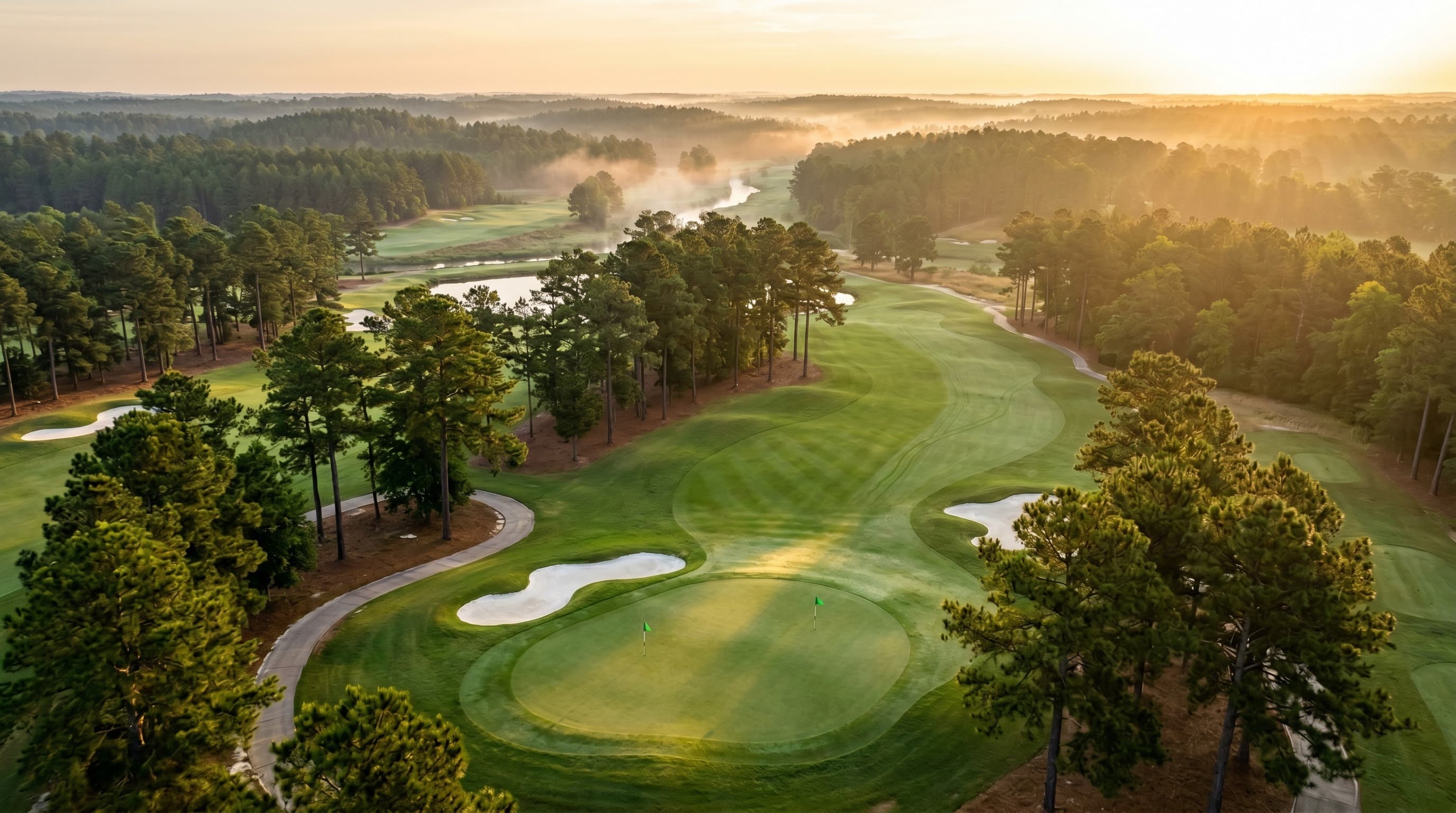
The May 2026 G-Score Heatmap: Where American Golf Peaks This Spring
May is the most underrated month on the American golf calendar. Five regions hit their annual peak this spring, three turn quietly hostile, and the data tells a clearer story than the brochures. Here is where to play, where to avoid, and how to time your booking window.
Read Story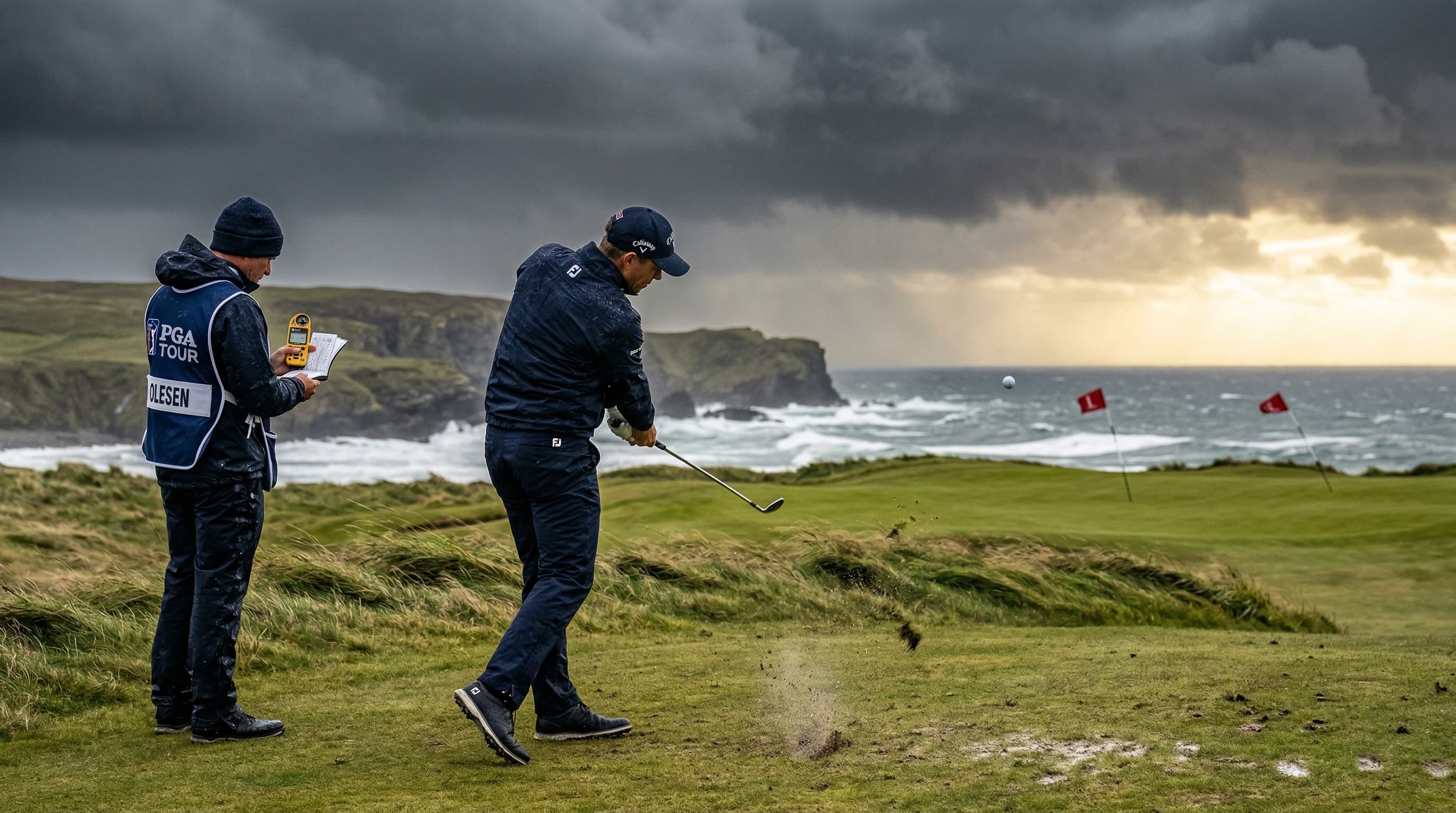
Golf Weather Physics: How Temperature, Altitude, and Humidity Change Ball Flight
Real physics data on how temperature, altitude, humidity, and wind change your golf ball flight — with specific yard adjustments, named course examples, and measured G-Score data from courses we track daily.
Read StoryMinSu Kim
Founder & Golf Data Analyst
MinSu is a data analyst and golfer with 10+ years on the course. He built Golf Weather Score to answer one question: is today a good day to play? He combines weather data, course intelligence, and the proprietary G-Score algorithm to help golfers make smarter decisions.
Every Friday Morning
When Bedford Creek Golf Course plays best next weekend.
Friday 6am ET: peak G-Score windows for Bedford Creek Golf Course, wind direction by hour, and one gear call. Three minutes to read, save you the round.
One email a week. Unsubscribe in one click.
The Caddie's Oracle
Draw your luck before the tee off