
Caddie's Gear Advisor
Curated for today's 61°F · Rain
Storm-Ready Outerwear
Waterproof layers built for 18 holes in the rain
Tour-Grade Umbrellas
68" double-canopy wind-resistant coverage
Wet-Weather Gloves
All-weather grip that performs in the rain
Waterproof Golf Shoes
Keep your feet dry through every fairway
Your Golf Trip, Handled
The Ultimate Golf Trip Planner
Everything you need to play Bedford Hills Golf Club — from booking your flight to checking in course-side.
Course-Side Stays
Luxury hotels, resorts, and stay-and-play packages just minutes from the first tee.
Flights
Compare fares across 700+ airlines for the best route to your tee time.
SUV Rentals for Golf Bags
Spacious vehicles with room for clubs, bags, and your foursome.
Travel Insurance
Coverage for medical, weather delays, and gear at your destination.
Bedford Hills Golf Club: Course Intelligence
Signature Setup
The first time I pulled into Temperance, the sky over the Ohio line was that flat Great Lakes gray that tells you the wind is about to do the talking. Bedford Hills sits a few miles north of Toledo, and it is not a coastal showpiece — it is honest Midwest public golf, and that is exactly why I keep coming back to write about it.
Bedford Hills opened in 1993, designed by Fred Berning and John Rutter, and it is built as 27 holes — three nines named Irish, Buckeye, and Wolverine. The Irish nine plays to a par of 36 over 3,024 yards from the back tees. There is no major-tournament pedigree here and the club does not pretend otherwise; the draw is mix-and-match nines, fair green fees (around $52 for nine), and terrain open enough that the weather, not the architect's trickery, sets your score.
Hole-by-Hole Wind & Playing Lines
Because Bedford Hills does not publish a full hole-by-hole handicap card publicly, I write the wind strategy by feel and by the prevailing pattern, not by inventing yardages I cannot verify.
The land is flat-to-rolling parkland with little tree protection on the outer holes, so the prevailing southwest wind is the real defense. On a SW morning, the longest Irish par-4s play straight into it — your stock 150-yard approach becomes a 165–170-yard shot, and a smooth 7-iron turns into a hard 5-iron. The smart line is the fat side of the green: with this little elevation change, a ball short and right will release up, while anything that balloons into the wind drops dead. When the wind swings to the NW behind a front, the same holes turn downwind and short-iron spin gets unpredictable — land it front-edge and let it run.
Green & Fairway Characteristics
The greens are bentgrass and run true rather than lightning-fast — this is a daily-fee club, not a US Open setup, so expect medium pace that quickens in the dry heat of July and August. Fairways are typical Midwest parkland: generous landing zones, longer rough in summer, and gentle roll that gives a little extra carry-and-run when the ground firms up. Across the three nines the terrain is mild, so distance control off the tee matters more than shot-shaping around hazards.
Seasonal Weather Pattern
This is southeast Michigan, roughly 15 miles west of Lake Erie, humid continental climate. Spring (April–May) is the windy season — 15–20 mph SW gusts are common and morning temps can sit in the low 50s°F. Summer is warm and sticky: July highs in the mid-80s°F with afternoon humidity that takes carry off the ball even as the fairways speed up. The best playing window is September into mid-October — daytime highs in the 60s–70s°F, calmer mornings, and firm turf. Lake Erie's proximity keeps frost lingering later on cold mornings than you'd expect inland.
Local Play Tips
Use the 27-hole layout to dodge the weather, not just the crowds: if the SW wind is already up by mid-morning, ask to start on whichever nine plays you downwind first and into the breeze on the back side, so you finish with the wind helping. Walkers should note the open terrain means no shade — carry water in July.
Pre-Round Weather Workflow
Check the 7-day G-Score for Temperance the night before and again at dawn. Two numbers decide your club selection here: wind direction (SW = play long, NW = play short and run it) and the morning-to-afternoon wind ramp, which is steep on this flatland. If windExposure is high and your tee time is after noon, add a full club to every approach and tee off as early as the sheet allows.
Related Reading
Before you tee off at Bedford Hills Golf Club
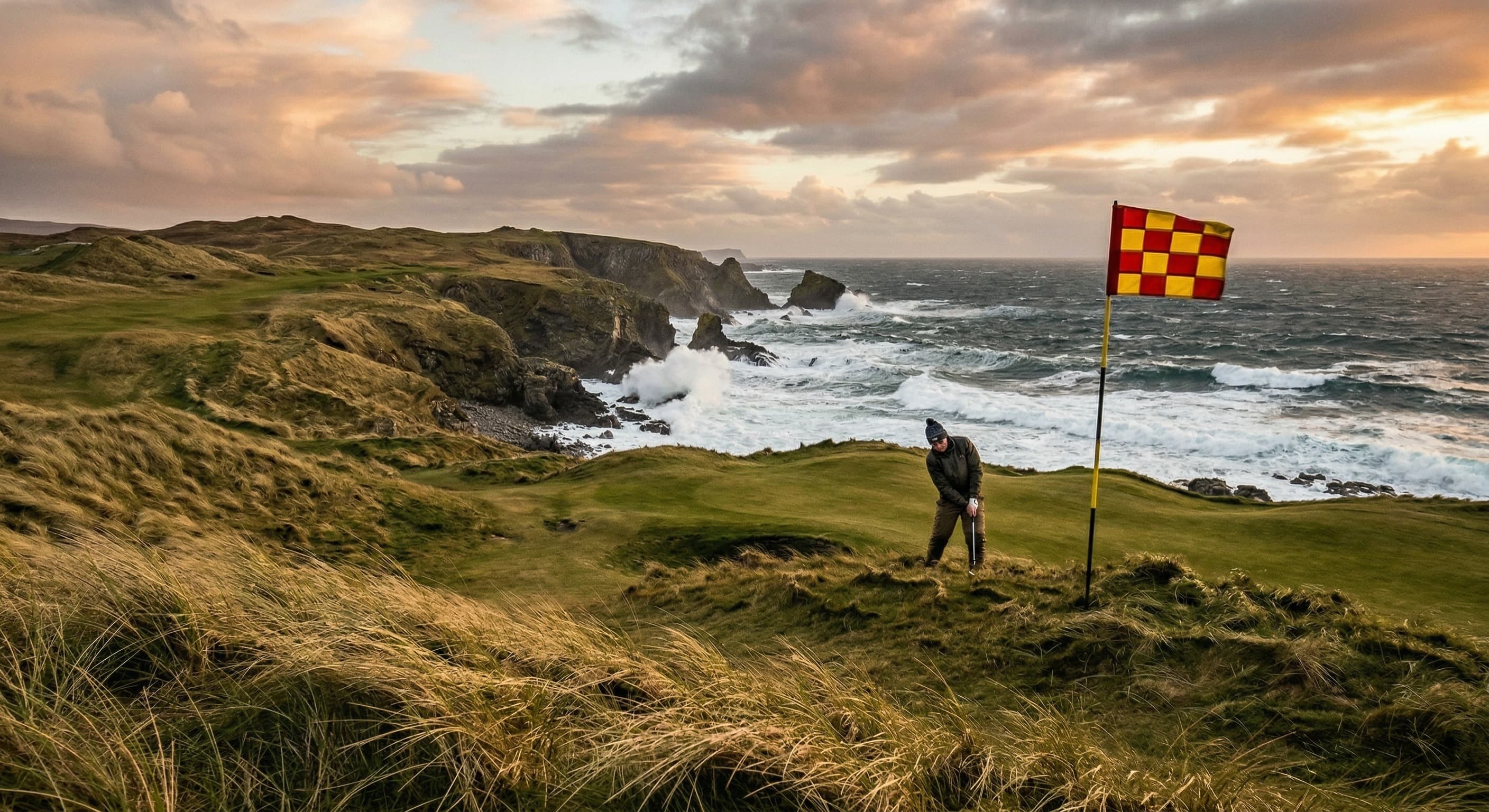
America's 20 Windiest Golf Courses: A G-Score Wind Analysis
We ranked America's 20 windiest golf courses using G-Score wind penalty data. See how coastal gusts and prairie gales reshape playability scores.
Read Story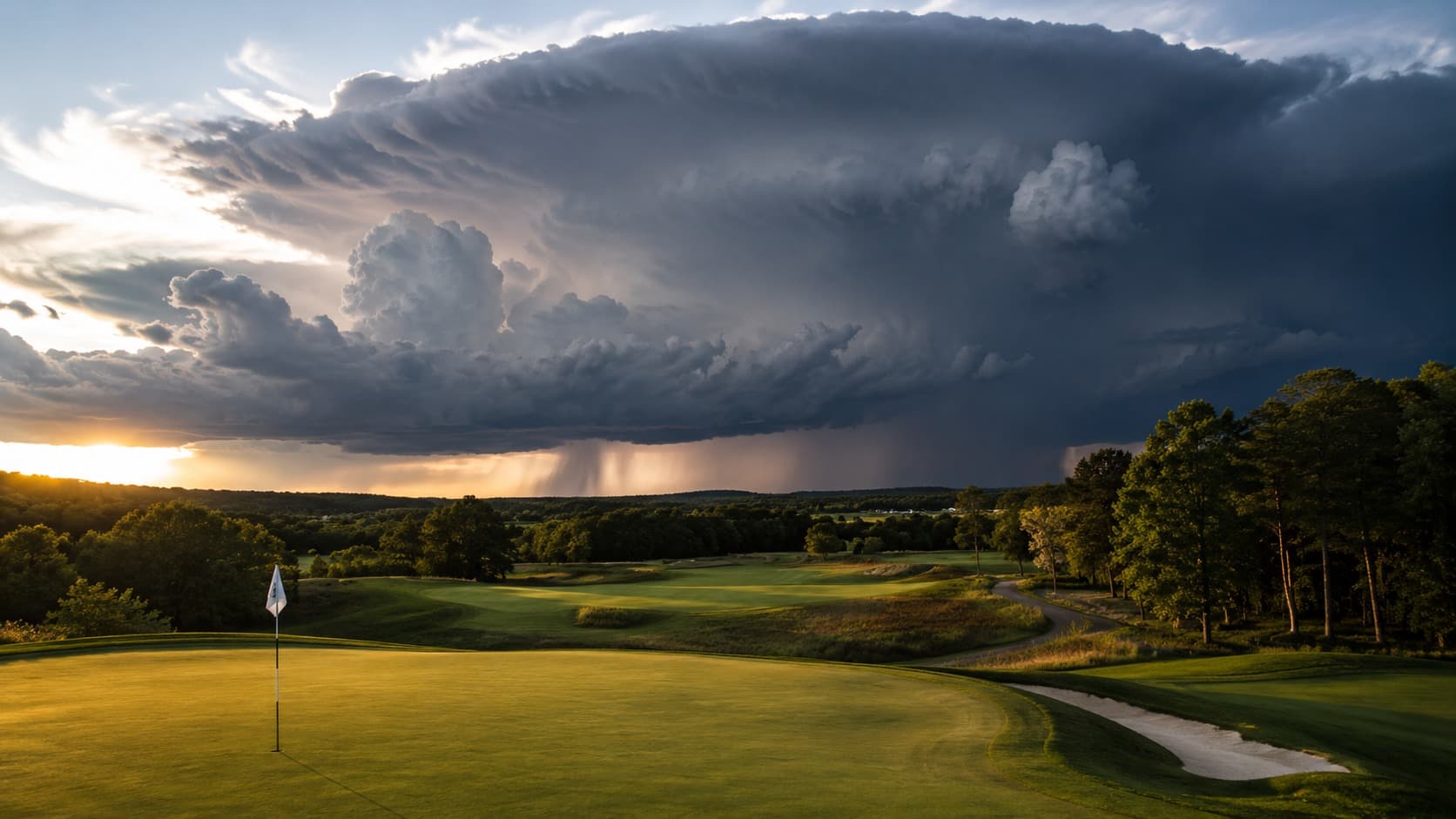
The Three O’Clock Storm: Reading Summer’s Convective Cycle to Protect Your Round
A 40% chance of afternoon thunderstorms does not mean a 40% chance of getting rained on. In the summer convective season it means the morning is nearly clear and the afternoon carries a fast-building, high-energy storm risk driven by a daily heating cycle. Here is the meteorology behind the pattern, the G-Score data on how the storm cycle punishes afternoon tee times across the Southeast, Midwest, and desert Southwest, the lightning-safety decision tree that actually matters, and the workflow that gets you off the course before the first bolt.
Read StoryMinSu Kim
Founder & Golf Data Analyst
MinSu is a data analyst and golfer with 10+ years on the course. He built Golf Weather Score to answer one question: is today a good day to play? He combines weather data, course intelligence, and the proprietary G-Score algorithm to help golfers make smarter decisions.
Every Friday Morning
When Bedford Hills Golf Club plays best next weekend.
Friday 6am ET: peak G-Score windows for Bedford Hills Golf Club, wind direction by hour, and one gear call. Three minutes to read, save you the round.
One email a week. Unsubscribe in one click.
The Caddie's Oracle
Draw your luck before the tee off