
Caddie's Gear Advisor
Curated for today's 86°F · Clear
Ultralight Distance Drivers
Maximum carry in hot, low-drag conditions
UV Protection Apparel
UPF 50+ cooling fabrics for peak-sun rounds
Precision Rangefinders
Slope-adjusted yardage in any condition
Hydration & Cooling
Insulated bottles and cooling towels
Your Golf Trip, Handled
The Ultimate Golf Trip Planner
Everything you need to play Bennett Valley Golf Course — from booking your flight to checking in course-side.
Course-Side Stays
Luxury hotels, resorts, and stay-and-play packages just minutes from the first tee.
Flights
Compare fares across 700+ airlines for the best route to your tee time.
SUV Rentals for Golf Bags
Spacious vehicles with room for clubs, bags, and your foursome.
Travel Insurance
Coverage for medical, weather delays, and gear at your destination.
Bennett Valley Golf Course: Course Intelligence
Signature Setup
The 11th at Bennett Valley falls away from you toward the Taylor Mountain ridgeline, and on a clear October morning the green sits in shadow while the hills behind it are already lit. I played here on a Tuesday at 7:40 a.m., 52°F, hands cold enough that my first tee shot came off the heel.
Bennett Valley Golf Course is a Santa Rosa municipal layout in Sonoma County, opened in 1969 to a Ben Harmon routing. It plays to a par 72 of roughly 6,500 yards from the back markers — not long by modern standards, but the valley floor setting, mature oaks, and an afternoon wind off the coast give it more teeth than the yardage suggests. It is the busiest public course in the area, and its rounds-per-year volume is the reason the fairways wear thin in late summer.
Hole-by-Hole Wind & Playing Lines
The defining weather variable here is the Petaluma Gap — a low break in the coastal hills that funnels Pacific air northeast into the Santa Rosa plain most afternoons from May through September. It arrives as a NW-to-W wind, typically building after 1 p.m.
- Hole 4 (#1 handicap, par-4 ~430y): Plays straight into the afternoon NW gap wind. A morning round leaves a mid-iron in; by 2 p.m. the same approach is a 4-iron or hybrid. I lay back off the tee to keep the second shot below the bunker that guards the left front.
- Hole 11 (signature par-3, downhill): Wind swirls here because the green sits lower than the tee against the ridge. The downhill helps, but a crossing W wind pushes anything cut toward the right slope. I club down one and aim at the left-center.
- Hole 7 (par-4 dogleg): Sheltered by oaks on the front nine, so it plays calmer than its yardage even when the gap wind is up. The tee shot matters more than the wind read here.
Green & Fairway Characteristics
The greens are a Poa/bent mix, medium in size, and on a normal municipal maintenance cycle they run in the mid-9s on the Stimpmeter — quick enough that downhill putts on 11 and 18 get away from you, but not glassy. They hold well in the foggy morning and firm noticeably by afternoon as the marine layer burns off.
Fairways are ryegrass, lush and soft through spring, then firm and running by August when irrigation can't keep pace with play volume. Front-nine yardage is the gentler half; the back nine has the elevation movement and the exposed holes where the gap wind does its work. Several fairways are tree-lined enough that an offline drive is dead — accuracy beats distance on this routing.
Seasonal Weather Pattern
Santa Rosa's pattern is classic inland-Sonoma: dry, warm summers and a concentrated wet winter. June–September days reach the mid-80s to low-90s°F by afternoon, but mornings start in the low 50s under valley fog that usually clears by 9–10 a.m. December through February is the rain window — Santa Rosa averages well over 30 inches a year, nearly all of it in those months — and the course can play soft or close briefly after heavy storms. October and April are the honest sweet spots: stable air, mild temperatures in the 60s–70s, and the gap wind at its weakest.
Local Play Tips
Book the earliest tee time you can get. The fog that frustrates a sightseer is a golfer's friend here — it keeps the greens receptive and, more importantly, it sits in the valley until the gap wind would otherwise start. A 7:30–8:00 a.m. group routinely finishes the wind-exposed back nine before the NW flow builds, which is worth several strokes on holes 4 and 11. I haven't played this course in deep winter after a storm cycle, so I can't speak to how the low-lying fairways drain — that I'd check with the pro shop before booking a January round.
Pre-Round Weather Workflow
Use the 7-day G-Score on this course page as your tee-time selector, not just a go/no-go. Two checks matter most here:
- Wind timing & direction (windExposure): If the forecast shows a building NW/W afternoon wind — the Petaluma Gap signature — push your tee time earlier. A morning G-Score here will often read 8–12 points higher than the same afternoon slot purely because of that wind.
- Morning fog vs. firmness: A foggy, cool start means soft, receptive greens; a clear warm afternoon means firmer, faster surfaces. Plan your approach clubbing accordingly.
Check the G-Score the evening before, lock the earliest open slot, and let the marine layer work for you.
Related Reading
Before you tee off at Bennett Valley Golf Course

Best Golf Weather by State: Ranking America by Average G-Score
We ranked all 50 US states by average G-Score golf playability. California tops the list, but the results beyond the top five may surprise you.
Read Story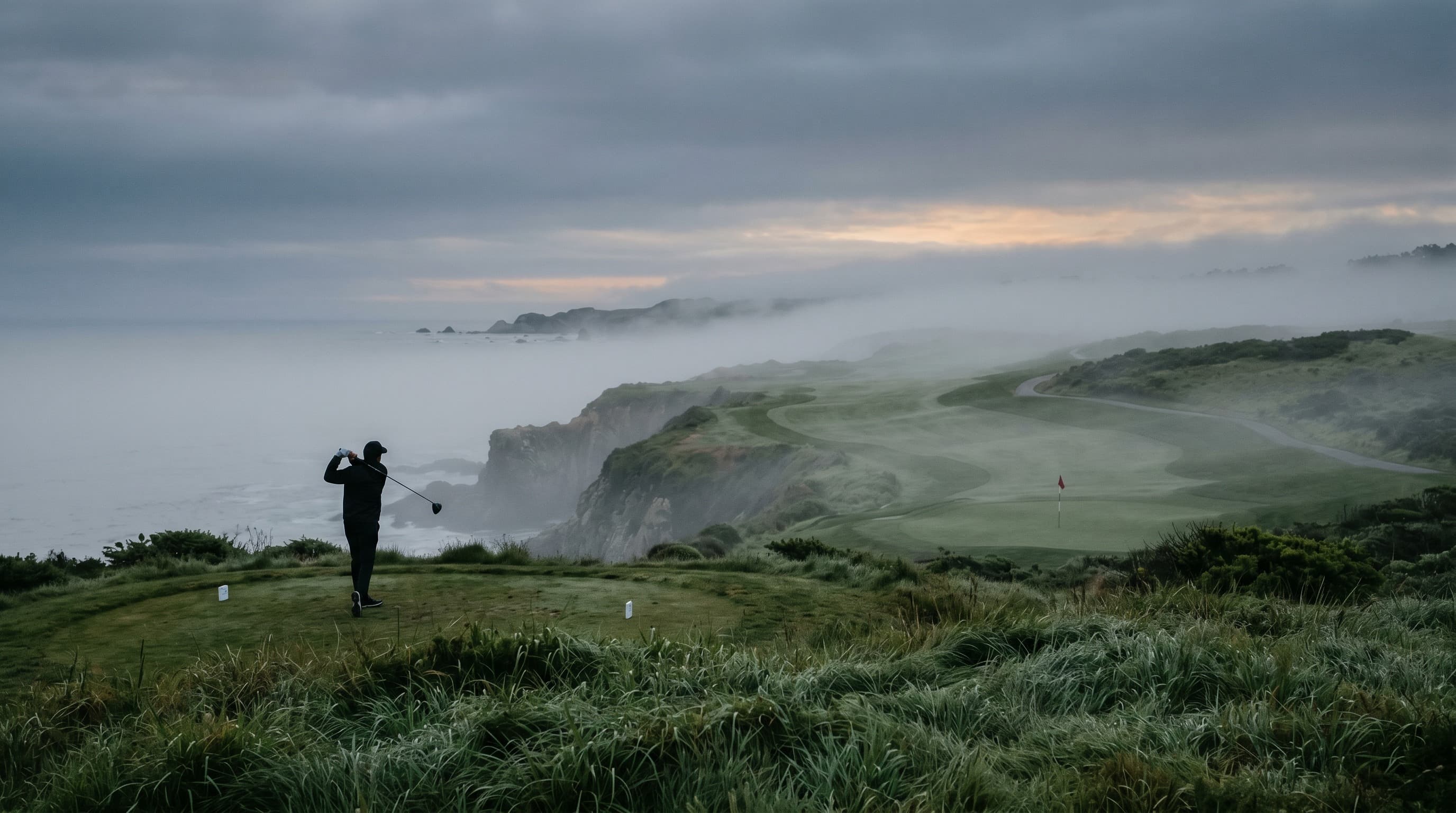
Reading Coastal Wind: How the Marine Layer Reshapes Pebble Beach, Bandon, and the Pacific Coast Game
Coastal golf does not play by inland rules. The marine layer suppresses wind in the morning, then releases it through midday in a thermal cycle that turns a calm 7am tee into a 22mph back nine. Here is the meteorology behind the pattern, the G-Score data that confirms it across the Pacific coast, and the morning workflow that turns the marine layer from a confusion into a competitive advantage.
Read StoryMinSu Kim
Founder & Golf Data Analyst
MinSu is a data analyst and golfer with 10+ years on the course. He built Golf Weather Score to answer one question: is today a good day to play? He combines weather data, course intelligence, and the proprietary G-Score algorithm to help golfers make smarter decisions.
Every Friday Morning
When Bennett Valley Golf Course plays best next weekend.
Friday 6am ET: peak G-Score windows for Bennett Valley Golf Course, wind direction by hour, and one gear call. Three minutes to read, save you the round.
One email a week. Unsubscribe in one click.
The Caddie's Oracle
Draw your luck before the tee off