
Caddie's Gear Advisor
Curated for today's 94°F · Clear
Ultralight Distance Drivers
Maximum carry in hot, low-drag conditions
UV Protection Apparel
UPF 50+ cooling fabrics for peak-sun rounds
Precision Rangefinders
Slope-adjusted yardage in any condition
Hydration & Cooling
Insulated bottles and cooling towels
Your Golf Trip, Handled
The Ultimate Golf Trip Planner
Everything you need to play Bentwater Golf Club — from booking your flight to checking in course-side.
Course-Side Stays
Luxury hotels, resorts, and stay-and-play packages just minutes from the first tee.
Flights
Compare fares across 700+ airlines for the best route to your tee time.
SUV Rentals for Golf Bags
Spacious vehicles with room for clubs, bags, and your foursome.
Travel Insurance
Coverage for medical, weather delays, and gear at your destination.
Bentwater Golf Club: Course Intelligence
Signature Setup
The first thing to know about Bentwater is the slope: 142 from the tips, against a course rating of 73.4 — a number that tells you the trouble is real before you ever see Red Top Mountain over the trees. This is the Acworth, Georgia, course in northwest metro Atlanta — not the Lake Conroe property in Texas that shares the name. Mike Dasher (ASGCA) designed it, and it opened in 2000, playing to par 72 at roughly 6,896 yards from the back. Dasher routed it through ponds, creeks, and the Westbrook Creek wetlands, with several downhill tee shots balanced by uphill approaches and modest elevation change throughout. I have not walked Bentwater Acworth myself — I write the hole detail from the course's own layout notes and from playing similar Dasher-era bentgrass courses around Atlanta — so where I lean on first-hand feel below, it is from comparable northwest-Georgia conditions, not this exact card.
Hole-by-Hole Wind & Playing Lines
Bentwater sits in rolling Cobb County terrain near Lake Allatoona, so the wind that matters most is the warm southwest flow that builds through a summer afternoon rather than a steady coastal breeze.
- The long uphill par 4 toward Red Top Mountain (the listed #1-handicap type): Played late in a hot afternoon, the uphill climb and a quartering SW wind both lengthen it. Take one extra club into the green, favor the wider fairway side, and keep the approach below the hole — these greens are multi-tiered and a downhill putt on fast bentgrass is its own bogey.
- The Westbrook Creek wetland carries: On a still dawn these are a stock club; once the afternoon breeze freshens and pushes across the marsh, the carry over water turns into a one-more-club decision. Aim at the fat of the green, not the flag tucked behind the wetland.
- The downhill tee-shot holes: Generous off the tee but deceptive — a helping wind down the slope runs the ball through the fairway into creek or tree trouble. Club down off the tee here and trust the roll rather than chasing distance.
Green & Fairway Characteristics
The greens are bentgrass — fast and firm when dry, several of them multi-tiered, others subtle but no easier for it. In Georgia heat bentgrass softens and grabs in the early morning, then firms and quickens as the day dries out, so a putt that died at 8 a.m. will run two feet past by mid-afternoon on the same line. Fairways are Bermuda, generous off most tees but framed by ponds, creeks, and the wetland corridor exactly where the aggressive line wants to go. Slope 142 from the back is the honest signal: leave the short grass and the recovery is real.
Seasonal Weather Pattern
Northwest Atlanta's golf year is humid-subtropical, defined by summer storms rather than frost. Spring (March–May) brings mild mornings near 50–66°F and afternoon highs in the 70s, but also heavy tree pollen off the surrounding pine and oak — grips and cart seats go yellow by April. Summer (June–August) is hot and muggy, highs in the upper 80s to low 90s with a heat index past 95°F, and near-daily Cobb County thunderstorms that build off the heat by 2–3 p.m. and can shut play for an hour. Fall (Sept–Nov) is the prime window: cool mornings, dry firm bentgrass, and the Red Top Mountain color worth the early tee time. Winter brings occasional frost delays that push first groups back an hour or two. I have played Atlanta-area bentgrass in July and seen those afternoon greens go from receptive to glassy in a single round, so I trust the morning-tee advice here even without this exact card.
Local Play Tips
The detail the scorecard will not give you: the wetland and creek holes sit lowest and catch both the morning damp and the afternoon storm runoff first. A round that feels benign across the higher, downhill holes can unravel the moment the routing drops into the Westbrook Creek corridor — that is where the slope-142 trouble actually lives. If you have a choice of tee time, take the earliest one: not only for the cooler air, but to play the wetland carries before the afternoon SW wind and storm cells set up. In spring, bring a towel for pollen on grips; in summer, treat any post-1 p.m. tee time as provisional.
Pre-Round Weather Workflow
Pull the 7-day G-Score for Bentwater the night before and again at dawn, and watch two things: the afternoon thunderstorm probability in summer, and how fast the day will dry the greens. If June–August radar shows cells building, get to the wetland holes before the turn and check the windExposure flag on the low creek holes — they are the ones that swing your score. If the forecast is dry and warm, expect the bentgrass to firm and quicken through the round: land approaches short and let them release, and keep every putt below the hole. On a spring high-pollen day, the greens read true but slower in the damp morning — play the early break, not the one you saw last afternoon.
Related Reading
Before you tee off at Bentwater Golf Club
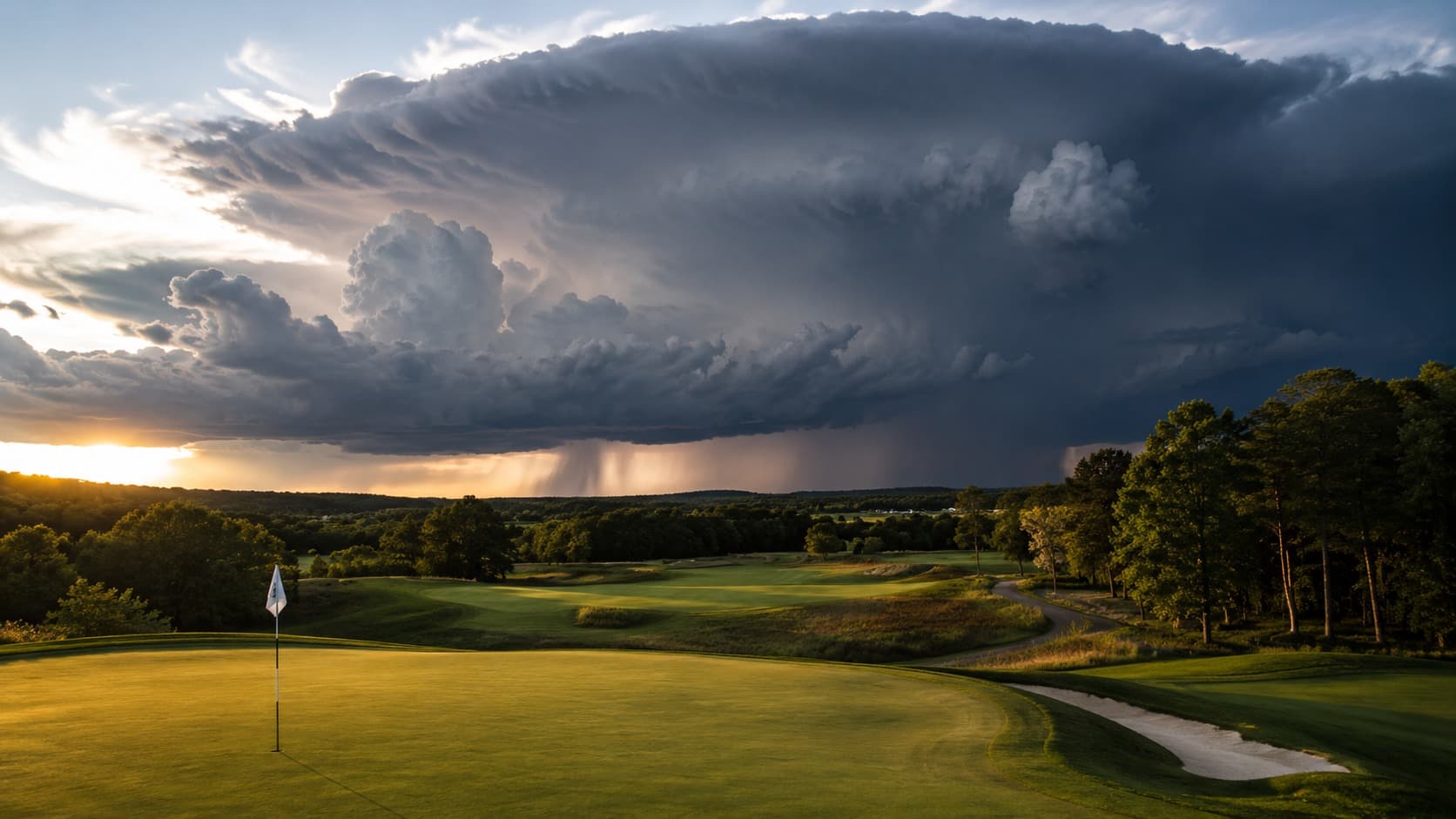
The Three O’Clock Storm: Reading Summer’s Convective Cycle to Protect Your Round
A 40% chance of afternoon thunderstorms does not mean a 40% chance of getting rained on. In the summer convective season it means the morning is nearly clear and the afternoon carries a fast-building, high-energy storm risk driven by a daily heating cycle. Here is the meteorology behind the pattern, the G-Score data on how the storm cycle punishes afternoon tee times across the Southeast, Midwest, and desert Southwest, the lightning-safety decision tree that actually matters, and the workflow that gets you off the course before the first bolt.
Read Story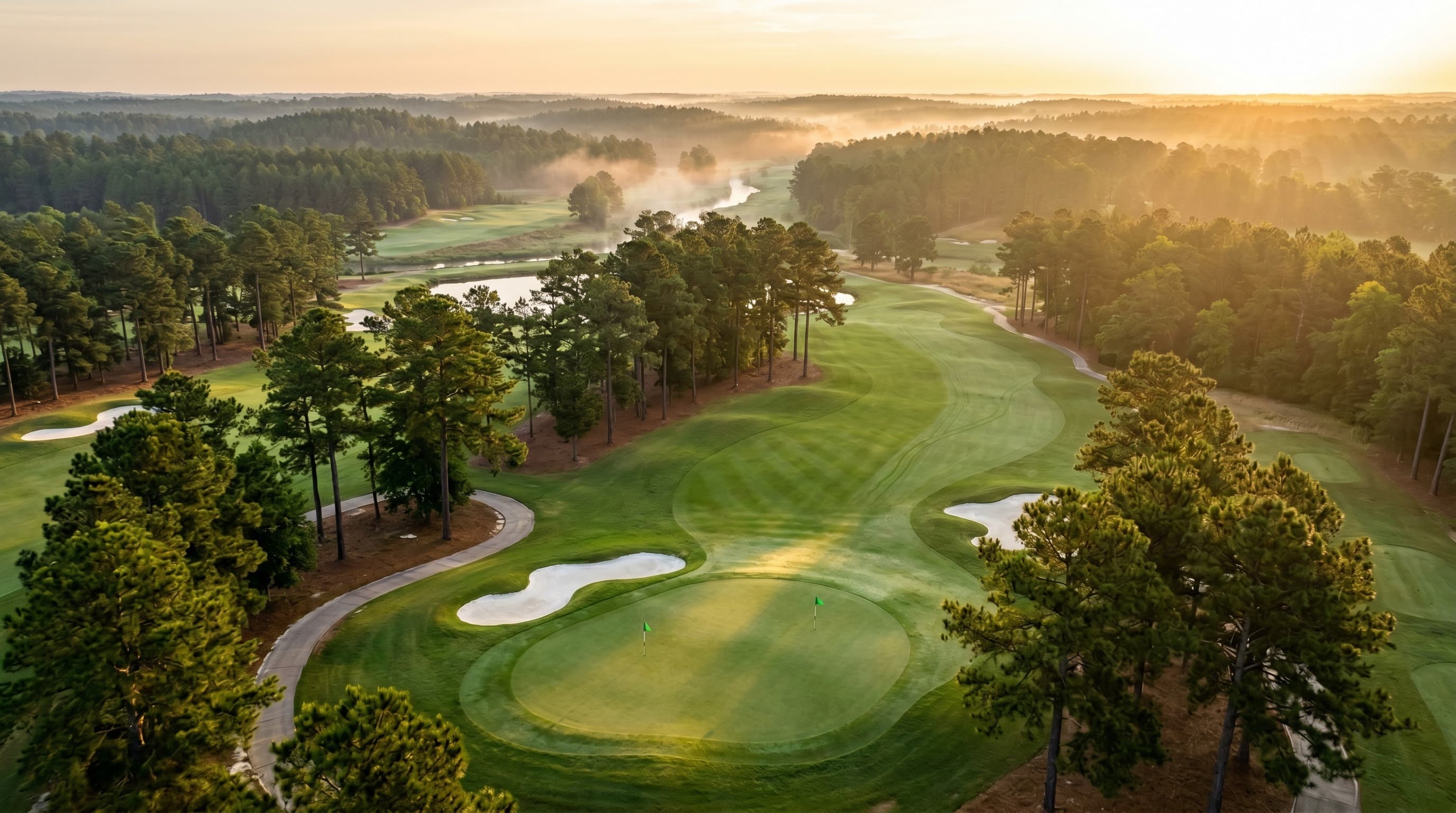
The May 2026 G-Score Heatmap: Where American Golf Peaks This Spring
May is the most underrated month on the American golf calendar. Five regions hit their annual peak this spring, three turn quietly hostile, and the data tells a clearer story than the brochures. Here is where to play, where to avoid, and how to time your booking window.
Read StoryMinSu Kim
Founder & Golf Data Analyst
MinSu is a data analyst and golfer with 10+ years on the course. He built Golf Weather Score to answer one question: is today a good day to play? He combines weather data, course intelligence, and the proprietary G-Score algorithm to help golfers make smarter decisions.
Every Friday Morning
When Bentwater Golf Club plays best next weekend.
Friday 6am ET: peak G-Score windows for Bentwater Golf Club, wind direction by hour, and one gear call. Three minutes to read, save you the round.
One email a week. Unsubscribe in one click.
The Caddie's Oracle
Draw your luck before the tee off