
Caddie's Gear Advisor
Curated for today's 94°F · Clear
Ultralight Distance Drivers
Maximum carry in hot, low-drag conditions
UV Protection Apparel
UPF 50+ cooling fabrics for peak-sun rounds
Precision Rangefinders
Slope-adjusted yardage in any condition
Hydration & Cooling
Insulated bottles and cooling towels
Your Golf Trip, Handled
The Ultimate Golf Trip Planner
Everything you need to play Bentwinds Country Club — from booking your flight to checking in course-side.
Course-Side Stays
Luxury hotels, resorts, and stay-and-play packages just minutes from the first tee.
Flights
Compare fares across 700+ airlines for the best route to your tee time.
SUV Rentals for Golf Bags
Spacious vehicles with room for clubs, bags, and your foursome.
Travel Insurance
Coverage for medical, weather delays, and gear at your destination.
Bentwinds Country Club: Course Intelligence
Signature Setup
Bentwinds Golf & Country Club sits in Fuquay-Varina, about 25 minutes south of downtown Raleigh in Wake County. The course opened in 1980 to a Tom Hunter routing, then got a meaningful refresh from North Carolina architect Kris Spence in 2006 — a renovation that reworked bunkering and greens rather than the corridors. From the back tees it measures 6,770 yards, par 72, with a 72.9 rating and a slope of 137. That slope number is the tell: this is a Piedmont parkland layout with enough length and forced thinking to punish a loose driver, not a resort track that gives you the round for free.
Hole-by-Hole Wind & Playing Lines
The two stretches that decide your card are 6–9 and 16–18. I'll be straight about the stroke index — Bentwinds doesn't publish its #1 handicap hole the way bigger clubs do — but the 7–9 run is where I lost shots. Those are the longest par-4s on the front, and in the Raleigh Piedmont the prevailing summer flow is out of the southwest at roughly 6–10 mph by mid-morning. On 7 through 9 that breeze sits in your face: a 150-yard approach plays closer to 165, and the smart move is one extra club aimed at the center of the green instead of a tucked pin.
The 16–18 finish brings water into the picture and runs back toward that same SW wind. On a still 8 a.m. tee time these are reachable, fair holes. By a gusty 2 p.m. they become the difference between breaking 80 and not. Take the layup line on 18 seriously — the bail-out short is dry, the hero line over the water is not.
Green & Fairway Characteristics
The greens are A-1/A-4 bentgrass — locally regarded as some of the best-conditioned bentgrass surfaces in Wake County — set over Bermuda fairways. That grass pairing is the whole story for how the course plays by season. In spring and fall the bent runs firm and quick; my October read was a putting surface that held its line and rewarded a confident stroke. In deep summer, southern bentgrass fights the heat, so superintendents raise the cut and slow things down to protect the turf. Same green, different putt, depending on the month.
Seasonal Weather Pattern
Central North Carolina is humid subtropical. July and August routinely push 88–92°F with afternoon dewpoints in the low 70s, and pop-up thunderstorms cluster between 2 and 6 p.m. — check the radar before any afternoon tee time here. April through May and September through October are the sweet spot: 60s–70s, lower humidity, and the bent at its best. Winter is mild but dormant Bermuda fairways give little roll, so the course plays its full 6,770. I haven't played Bentwinds in true July heat, so I'm describing that window from regional climate data, not a personal round.
Local Play Tips
Book the earliest morning slot you can get. The morning sea-of-calm before the SW breeze builds is worth several strokes across 7–9 and 16–18, and on summer days it's also your only reliable escape from the afternoon thunderstorm window. The bent greens are fastest before the sun softens them — another reason the dawn tee time wins twice.
Pre-Round Weather Workflow
Before you drive out, pull the 7-day G-Score and the windExposure read for Bentwinds. Two checks matter most here: wind direction (a SW flow stiffens the 7–9 and 16–18 stretches) and the afternoon storm probability in summer. If G-Score favors a morning block, take it — firmer greens, calmer air, and no radar anxiety. If only an afternoon slot is open in July or August, watch the convective timing and be ready to finish the back nine ahead of the 2 p.m. cells.
Related Reading
Before you tee off at Bentwinds Country Club
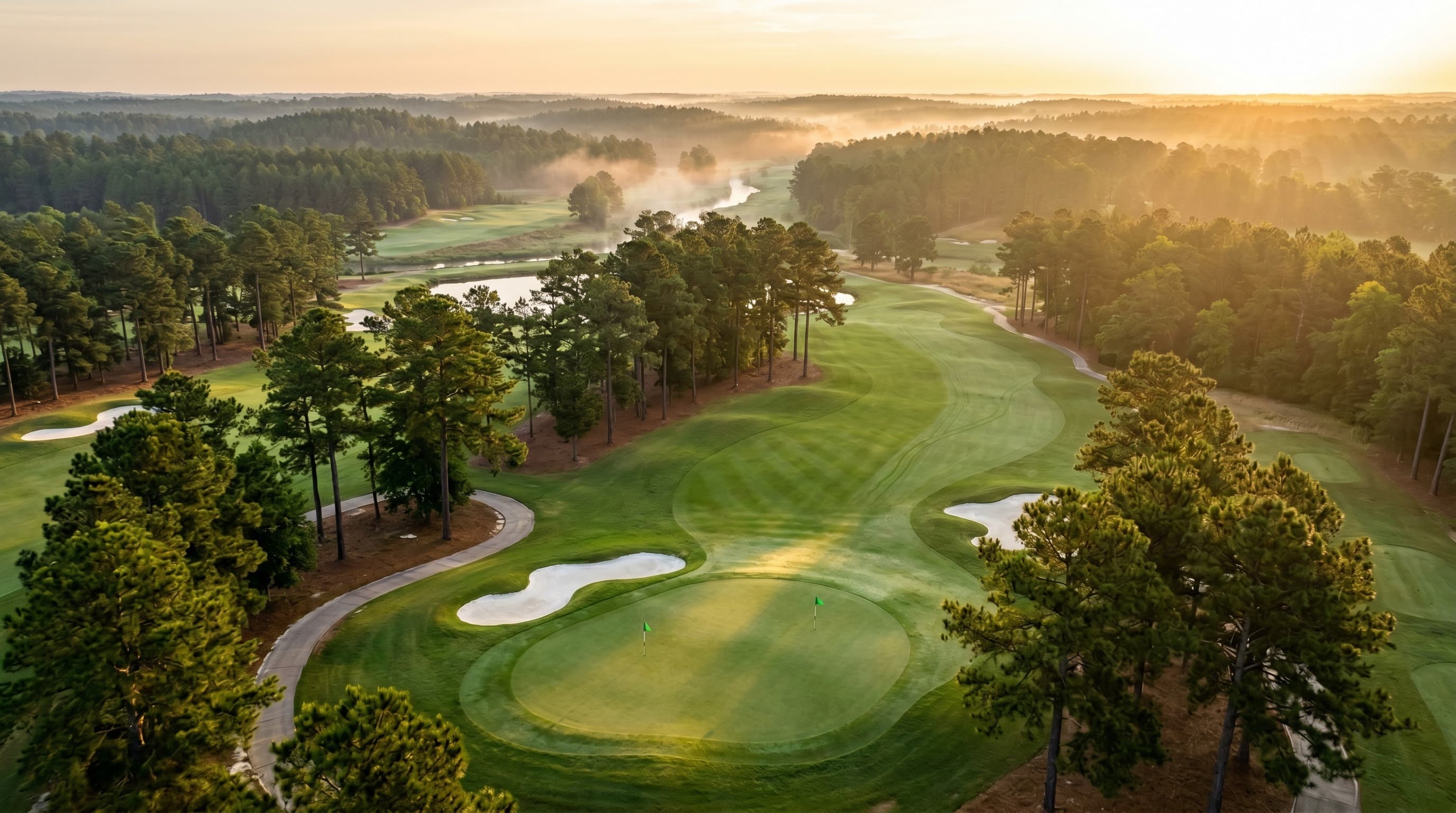
The May 2026 G-Score Heatmap: Where American Golf Peaks This Spring
May is the most underrated month on the American golf calendar. Five regions hit their annual peak this spring, three turn quietly hostile, and the data tells a clearer story than the brochures. Here is where to play, where to avoid, and how to time your booking window.
Read Story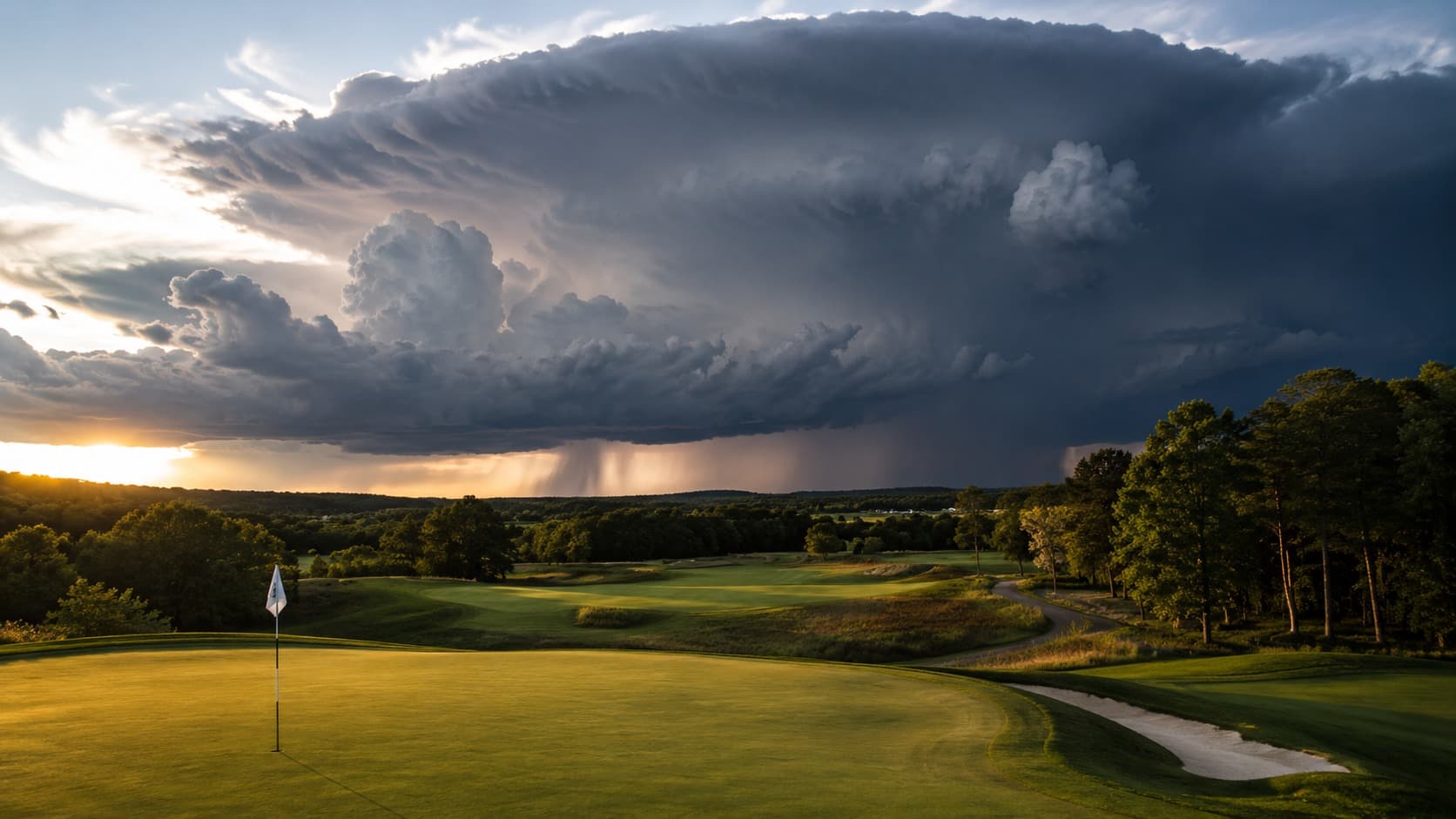
The Three O’Clock Storm: Reading Summer’s Convective Cycle to Protect Your Round
A 40% chance of afternoon thunderstorms does not mean a 40% chance of getting rained on. In the summer convective season it means the morning is nearly clear and the afternoon carries a fast-building, high-energy storm risk driven by a daily heating cycle. Here is the meteorology behind the pattern, the G-Score data on how the storm cycle punishes afternoon tee times across the Southeast, Midwest, and desert Southwest, the lightning-safety decision tree that actually matters, and the workflow that gets you off the course before the first bolt.
Read StoryMinSu Kim
Founder & Golf Data Analyst
MinSu is a data analyst and golfer with 10+ years on the course. He built Golf Weather Score to answer one question: is today a good day to play? He combines weather data, course intelligence, and the proprietary G-Score algorithm to help golfers make smarter decisions.
Every Friday Morning
When Bentwinds Country Club plays best next weekend.
Friday 6am ET: peak G-Score windows for Bentwinds Country Club, wind direction by hour, and one gear call. Three minutes to read, save you the round.
One email a week. Unsubscribe in one click.
The Caddie's Oracle
Draw your luck before the tee off