
Caddie's Gear Advisor
Curated for today's 84°F · Rain
Storm-Ready Outerwear
Waterproof layers built for 18 holes in the rain
Tour-Grade Umbrellas
68" double-canopy wind-resistant coverage
Wet-Weather Gloves
All-weather grip that performs in the rain
Waterproof Golf Shoes
Keep your feet dry through every fairway
Your Golf Trip, Handled
The Ultimate Golf Trip Planner
Everything you need to play Bethpage State Park Golf Courses — from booking your flight to checking in course-side.
Course-Side Stays
Luxury hotels, resorts, and stay-and-play packages just minutes from the first tee.
Flights
Compare fares across 700+ airlines for the best route to your tee time.
SUV Rentals for Golf Bags
Spacious vehicles with room for clubs, bags, and your foursome.
Travel Insurance
Coverage for medical, weather delays, and gear at your destination.
Bethpage State Park Golf Courses: Course Intelligence
Signature Setup
I walked off the Green Course one September afternoon, 71°F with a soft SW breeze, and realized I'd just played a Devereux Emmet routing from 1923 for the price of a public greens fee. That is the strange luxury of Bethpage: five full 18-hole courses inside one Long Island state park in Farmingdale, NY, and only one of them is the monster everyone photographs.
The Black, A.W. Tillinghast's 1936 brute, hosted the 2002 and 2009 U.S. Opens, the 2019 PGA Championship, and the 2025 Ryder Cup — 7,468 yards, par 71, slope 155. But the park is 90 holes deep. Tillinghast also drew the Red (1935) and had a hand in the Blue; Emmet's Green dates to 1923, originally the private Lenox Hills club; and Alfred Tull added the Yellow in 1958. Knowing which of the five to book is the whole game here.
Hole-by-Hole Wind & Playing Lines
The five courses share the same rolling glacial terrain, so wind behaves the same across all of them: the prevailing summer SW breeze fills in late morning and turns the uphill approaches into two-club problems.
Red Course, the long uphill par-4s. The Red's #1-handicap hole climbs the whole way and faces straight into that SW wind by midday. On a 12 mph morning my 260-yard drive still left a 4-iron in. Take the left-side bailout and accept the longer putt rather than short-siding yourself right.
Red Course closing stretch (18th). It finishes uphill to a raised, bunker-flanked green — pure Tillinghast, just shorter than the Black's version. Into the breeze, club up one and aim at the front-left bunker face to let the wind hold the ball on.
Green Course, the short par-4s. Emmet's older routing is tighter and shorter (~6,267 yards). Here the SW wind helps more than it hurts — I've reached two of the par-4s in regulation on a downwind day that I'd never reach on the Red. Position over power.
Green & Fairway Characteristics
These are parkland courses, tree-lined and firm in summer, not links. Greens run bentgrass-and-poa and sit faster than most public players expect, though only the Black is pushed to championship speed. The Red plays as the clear #2 — ~6,756 yards, par 70, slope in the low-130s — with the same deep bunkering and uphill approaches as the Black at maybe 80% of the length and difficulty. The Blue (~6,684y) and Yellow (~6,316y) are the most forgiving off the tee; the Green's smaller, older greens reward a precise short game over distance. Front nines tend to play the hillier half on the Red and Black.
Seasonal Weather Pattern
Bethpage sits inland, roughly five miles north of Long Island's south shore, so the Atlantic moderates the swings without dominating them. Spring (April–May) is cold and wet, 45–60°F, with soft fairways that give zero roll. Summer (June–August) runs humid at 78–86°F with that SW sea breeze building from late morning. September into mid-October is my favorite window — 55–70°F, firm turf, calm early mornings. NOAA's Long Island records show summer afternoon gusts commonly in the 12–18 mph range out of the southwest, which is exactly when the Red and Black get long.
Local Play Tips
A thing the website buries: the Black and Red have no carts for the public — you walk every yard — while the Green and Yellow allow carts, which matters on a hot, humid August afternoon. Tee times release on a rolling reservation window and the dawn Black slots vanish in minutes, but the Red, Blue, Green, and Yellow are far easier to book and play much faster. I've played the Red and Green here repeatedly; I haven't logged a full summer round on the Blue, so I won't pretend to know its afternoon wind lines.
Pre-Round Weather Workflow
Use the 7-day G-Score on this page to pick both your course and your tee time. Three days out, check whether your slot lands before or after the late-morning SW sea-breeze build — on the Red and Black it can move your score 6–10 points. The morning of, read the windExposure panel: a SW or W reading means the uphill par-4s on the Red and Black all play long, so favor left-side targets and club up one. If you're on the Green or Yellow, a downwind SW reading is a green light to be aggressive. And if it reads below 55°F with overnight rain, expect no fairway release on any of the five — take an extra club into every green.
Related Reading
Before you tee off at Bethpage State Park Golf Courses
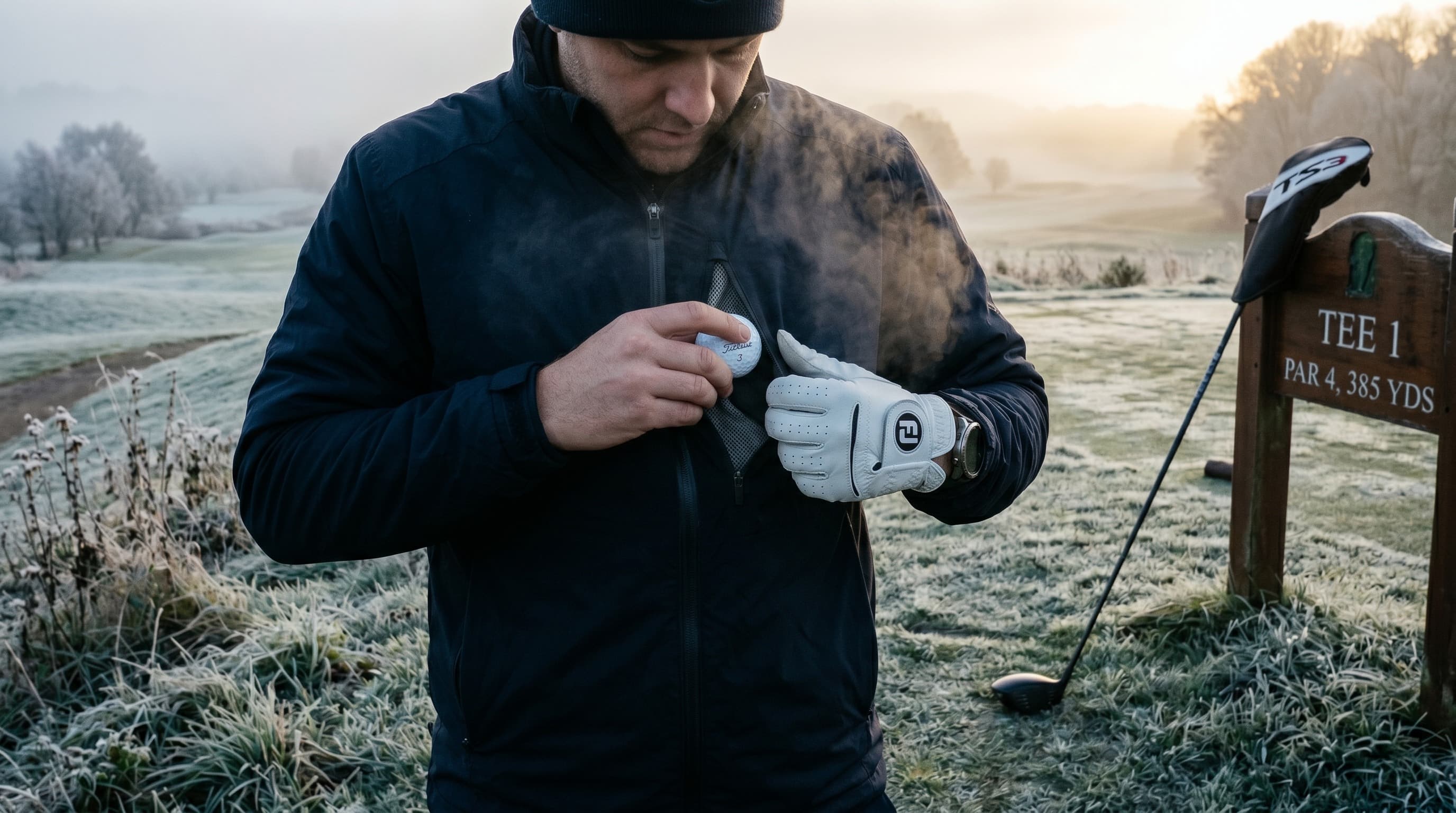
How Cold Weather Steals Distance: The Ball Compression Physics Every Golfer Should Know
Every 10°F drop costs the average golfer two to four yards of driver carry. Here is the physics — ball compression, air density, muscle temperature — and the field data we pulled from G-Score-monitored cold rounds to show exactly how distance loss compounds, and how to compensate without changing your swing.
Read Story
Saturday Morning Tee Time Decision Tree: How to Pick the Right Window in Six Minutes
You have Saturday open. Three courses on the shortlist, the weather is mixed, and your tee-time window is 6am to 4pm. Here is the six-minute decision tree we use to pick the right round, the right course, and the right hour — without overthinking.
Read StoryMinSu Kim
Founder & Golf Data Analyst
MinSu is a data analyst and golfer with 10+ years on the course. He built Golf Weather Score to answer one question: is today a good day to play? He combines weather data, course intelligence, and the proprietary G-Score algorithm to help golfers make smarter decisions.
Every Friday Morning
When Bethpage State Park Golf Courses plays best next weekend.
Friday 6am ET: peak G-Score windows for Bethpage State Park Golf Courses, wind direction by hour, and one gear call. Three minutes to read, save you the round.
One email a week. Unsubscribe in one click.
The Caddie's Oracle
Draw your luck before the tee off