
Caddie's Gear Advisor
Curated for today's 46°F · Clouds
Cold-Weather Performance Layers
Thermal mid-layers that move with your swing
Tour Hand Warmers
Rechargeable warmers trusted by caddies
Thermal Base Layers
Lightweight compression that traps heat
Winter Golf Headwear
Beanies and ear warmers built for the links
Your Golf Trip, Handled
The Ultimate Golf Trip Planner
Everything you need to play Big Fish Golf Course — from booking your flight to checking in course-side.
Course-Side Stays
Luxury hotels, resorts, and stay-and-play packages just minutes from the first tee.
Flights
Compare fares across 700+ airlines for the best route to your tee time.
SUV Rentals for Golf Bags
Spacious vehicles with room for clubs, bags, and your foursome.
Travel Insurance
Coverage for medical, weather delays, and gear at your destination.
Big Fish Golf Course: Course Intelligence
Signature Setup
Big Fish Golf Club sits just outside Hayward, Wisconsin, deep in the Northwoods of Sawyer County. Pete Dye routed it in 2004, and the name nods to the town's claim to fame — Hayward is home to the National Fresh Water Fishing Hall of Fame and its 143-foot muskie. The course plays to a par 72 and stretches to roughly 7,190 yards from the back tees, with a slope in the low-140s that tells you this is not a resort layout that gives strokes away. Dye's fingerprints are everywhere: railroad-tie bulkheads, pot bunkers cut into mounding, and greens that fall away at the edges. It has hosted Wisconsin State Golf Association events and remains the most demanding public test in the Hayward-Cable lakes region.
Hole-by-Hole Wind & Playing Lines
The hardest stretch is holes 4, 9, and 18, and wind off the surrounding pine treeline changes each one.
- Hole 4 (#1 handicap, par-4, 451y): On a NW morning wind — common in late September — the approach plays a full club and a half longer. A drive that normally leaves a 7-iron becomes a 5-iron into a green that runs front-to-back. Aim at the right third; the left bunker is a Dye pot you cannot advance from.
- Hole 9 (par-5, 565y): The split-fairway signature hole. With a helping SW summer breeze, the left line is reachable for big hitters, but water guards that landing zone. Into any wind, take the right fairway and lay back — a 90-yard wedge here beats a 230-yard gamble.
- Hole 18 (par-4, 448y): Prevailing W wind quarters left-to-right toward water down the right. Start the tee shot at the left bunker and let the wind feed it back to center.
Green & Fairway Characteristics
The greens and fairways are bentgrass, which on a northern course means tight lies and true roll once the surfaces dry. Dye built run-outs and false fronts rather than target greens, so a firm summer afternoon rewards a low approach that releases. Green speed runs in the low-11s on stimp during peak season and slows noticeably in the cool, dewy mornings. The front nine is more open and water-heavy; the back nine narrows into the pines with elevation change. Expect doglegs on 7 and 13 that take driver out of your hands. I've only played here in mid-summer, so I can't speak to how the bentgrass behaves in a cold October round — but even in August warmth, my early approaches checked and the same shots two hours later released 15–20 feet past the pin.
Seasonal Weather Pattern
Hayward's season is short — playable golf runs roughly mid-May through early October. July highs sit around 78–82°F, but dawn starts can drop into the low-50s, and lake-effect fog hangs in the valleys until the sun clears it. August is the most stable month for firm, fast conditions. By late September, NW cold fronts push through and morning rounds can start near 45°F, which deadens carry distance by 5–8 yards on every club.
Local Play Tips
The dew here is the local variable nobody warns you about. In July the Northwoods grass holds moisture late, and I've teed off mornings where the fairways played soft enough to plug a drive — then watched the same surfaces firm up by early afternoon. Book a tee time after 9 a.m. if you want roll; book before 8 a.m. if you want receptive greens and calmer air. Bring more golf balls than you think — the water on the front and the railroad-tie hazards swallow anything tentative.
Pre-Round Weather Workflow
Use the 7-day G-Score and windExposure forecast on this page before you drive up. For Big Fish, two signals matter most: morning temperature (under 55°F means add a club on every approach) and wind direction (a NW front turns the 4th and 18th into bogey holes). Check the G-Score the night before — if it spikes higher in the afternoon slot, shift your tee time later to catch the firm, fast bentgrass conditions Dye designed this course to reward.
Related Reading
Before you tee off at Big Fish Golf Course
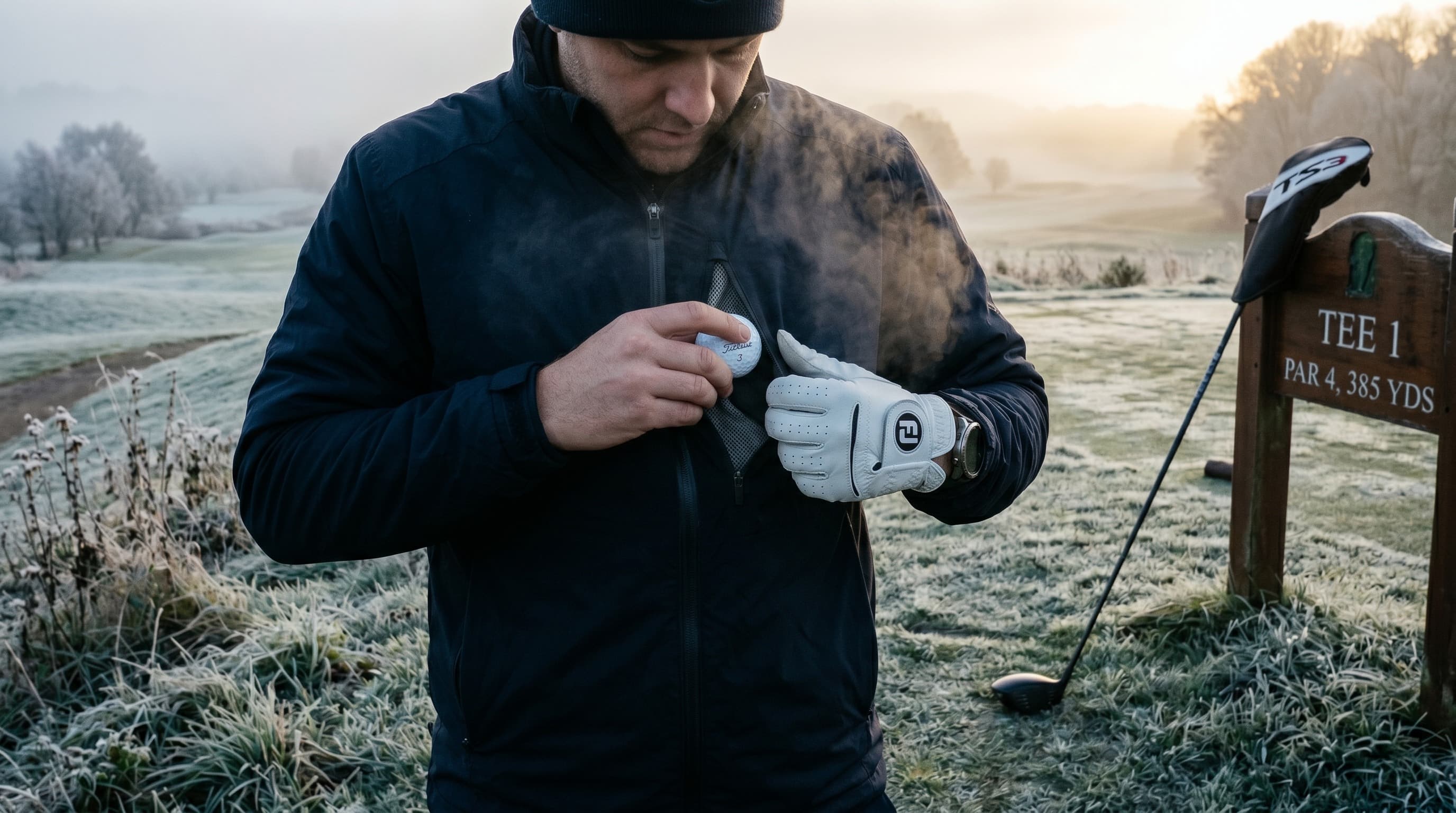
How Cold Weather Steals Distance: The Ball Compression Physics Every Golfer Should Know
Every 10°F drop costs the average golfer two to four yards of driver carry. Here is the physics — ball compression, air density, muscle temperature — and the field data we pulled from G-Score-monitored cold rounds to show exactly how distance loss compounds, and how to compensate without changing your swing.
Read Story
How to Read a G-Score: The 0–100 Golf Playability Number, Decoded
A G-Score on this site is a single 0–100 number that tells you whether today is worth tee-up. Here is exactly what each band means, what drives the calculation, and how to use it to plan a round you will actually score on.
Read StoryMinSu Kim
Founder & Golf Data Analyst
MinSu is a data analyst and golfer with 10+ years on the course. He built Golf Weather Score to answer one question: is today a good day to play? He combines weather data, course intelligence, and the proprietary G-Score algorithm to help golfers make smarter decisions.
Every Friday Morning
When Big Fish Golf Course plays best next weekend.
Friday 6am ET: peak G-Score windows for Big Fish Golf Course, wind direction by hour, and one gear call. Three minutes to read, save you the round.
One email a week. Unsubscribe in one click.
The Caddie's Oracle
Draw your luck before the tee off