
Caddie's Gear Advisor
Curated for today's 78°F · Clear
Tour-Level Drivers
Engineered for maximum distance and forgiveness
Laser Rangefinders
Pin-seeking technology for precision approaches
Premium Golf Balls
Tour-caliber spin and distance performance
Performance Sunglasses
Polarized lenses optimized for reading greens
Your Golf Trip, Handled
The Ultimate Golf Trip Planner
Everything you need to play Big Foot Country Club — from booking your flight to checking in course-side.
Course-Side Stays
Luxury hotels, resorts, and stay-and-play packages just minutes from the first tee.
Flights
Compare fares across 700+ airlines for the best route to your tee time.
SUV Rentals for Golf Bags
Spacious vehicles with room for clubs, bags, and your foursome.
Travel Insurance
Coverage for medical, weather delays, and gear at your destination.
Big Foot Country Club: Course Intelligence
Signature Setup
The honest caveat first: I built this read from Big Foot's location, the southeastern Wisconsin golf calendar, and Walworth County climate records — I have not teed it up, so the wind logic below is pattern reasoning, not a round I'm recalling. The club sits in Fontana-on-Geneva Lake, in Walworth County, on the rolling moraine ground above the south shore of Geneva Lake, roughly 42.5°N at about 880 feet of elevation, an hour-and-change northwest of Chicago. It's one of the oldest clubs in Wisconsin, with a founding that dates to the 1890s. I could not confirm a single verified architect of record for the original layout, so I won't hand you a designer's name I can't stand behind. What I can stand behind is the geography: glacial-moraine terrain, a small inland lake, and a humid-continental sky that swings hard with every passing front.
TL;DR: Historic 1890s club in Fontana, Wisconsin, on the moraine above Geneva Lake's south shore (~42.5°N, ~880 ft). The defining test is exposure to a W/NW continental wind across rolling ground, inside a short late-April–October season. Read the front, club for the gust, and stop trusting the clock.
Hole-by-Hole Wind & Playing Lines
I can't independently verify Big Foot's per-hole handicap card, so rather than invent hole numbers I'll explain how the wind dictates play on rolling moraine ground like this:
- The longer par-4s into a W/NW afternoon wind: with the prevailing westerly at 12–18 mph — routine on summer afternoons here — a 150-yard shot plays nearer 170. Take the extra club or two and keep the ball under the gust instead of throwing it up into the wind.
- The downwind holes after a NW post-front shift: once a cold front clears, the dry tailwind shortens the card and the firm moraine fairways start running. Land it short and let it release rather than flying a hot pitch onto a green that won't hold.
- The crossing and elevation-change holes: on open moraine ground little blocks the wind, and a player who can hold a shaped ball into a side wind will beat one who only hits it high and far.
The carryover habit: on the first exposed hole, decide whether this is system wind behind a front or just a light daytime drift, and let that one read set your clubbing through the round.
Green & Fairway Characteristics
Expect cool-season turf typical of southeastern Wisconsin — bentgrass-and-poa greens over bluegrass-and-fescue fairways. At this latitude the surfaces firm up under a dry July high and soften fast after the thunderstorms the region sees through summer, so your stock yardages only hold in a genuinely settled window. The moraine rolls — uneven stances and elevation changes are the texture of the place rather than the flat lies of a parkland build — which means a downhill, downwind approach to a firm green is a very different shot than the same number on a calm, soft morning.
Seasonal Weather Pattern
Big Foot sits in a humid continental climate with real four-season swing — the opposite of a maritime course. Spring (late Apr–May) opens late and wet; cold, shifting winds and saturated moraine ground are common into mid-May. Summer (Jun–Aug) is the prime window — highs in the upper-70s to mid-80s°F, a prevailing W/NW breeze, and the firmest conditions of the year between thunderstorm systems. Fall (Sep–Oct) brings crisp, often gorgeous golf, but the first hard cold snaps can arrive by mid-October and shorten the playable day fast. Winter closes the course for snow; for that stretch I lean on NOAA southeastern-Wisconsin historicals rather than anything firsthand.
Local Play Tips
Here's where a seaside golfer's playbook fails you: an early tee time buys you nothing on this inland-lake moraine. Geneva Lake is small, and the wind is fed by passing continental systems, not a land-sea cycle that turns over every afternoon — so the deciding factor is the state of the nearest front, not the position of the sun. A stable summer high can leave the course nearly glassy from dawn to dusk; a front rolling through can park 20-plus-mph gusts on the property for the whole round regardless of when you started. Watch the systems and the wind shift behind them, and you'll out-read a player who just books the dawn slot out of habit.
Pre-Round Weather Workflow
For a moraine lake course like this, lean on golfweatherscore's 7-day G-Score and windExposure the way a Lake Geneva local would — front-first, not clock-first. Three days out, the G-Score curve mostly tells you when the next system lands; at 42.5°N a slide from 9 down to 4 is a front moving in, almost never the time of day. The night before, settle the wind: a westerly flow points to warmer, firmer summer golf, while a post-front NW shift brings dry, fast turf that swallows the downwind holes. And on the tee, if windExposure is calling steady 20-mph-plus gusts, plan for the exposed holes to demand a club or two more into the wind — let a low, well-placed ball do the work that swinging harder never will.
Related Reading
Before you tee off at Big Foot Country Club
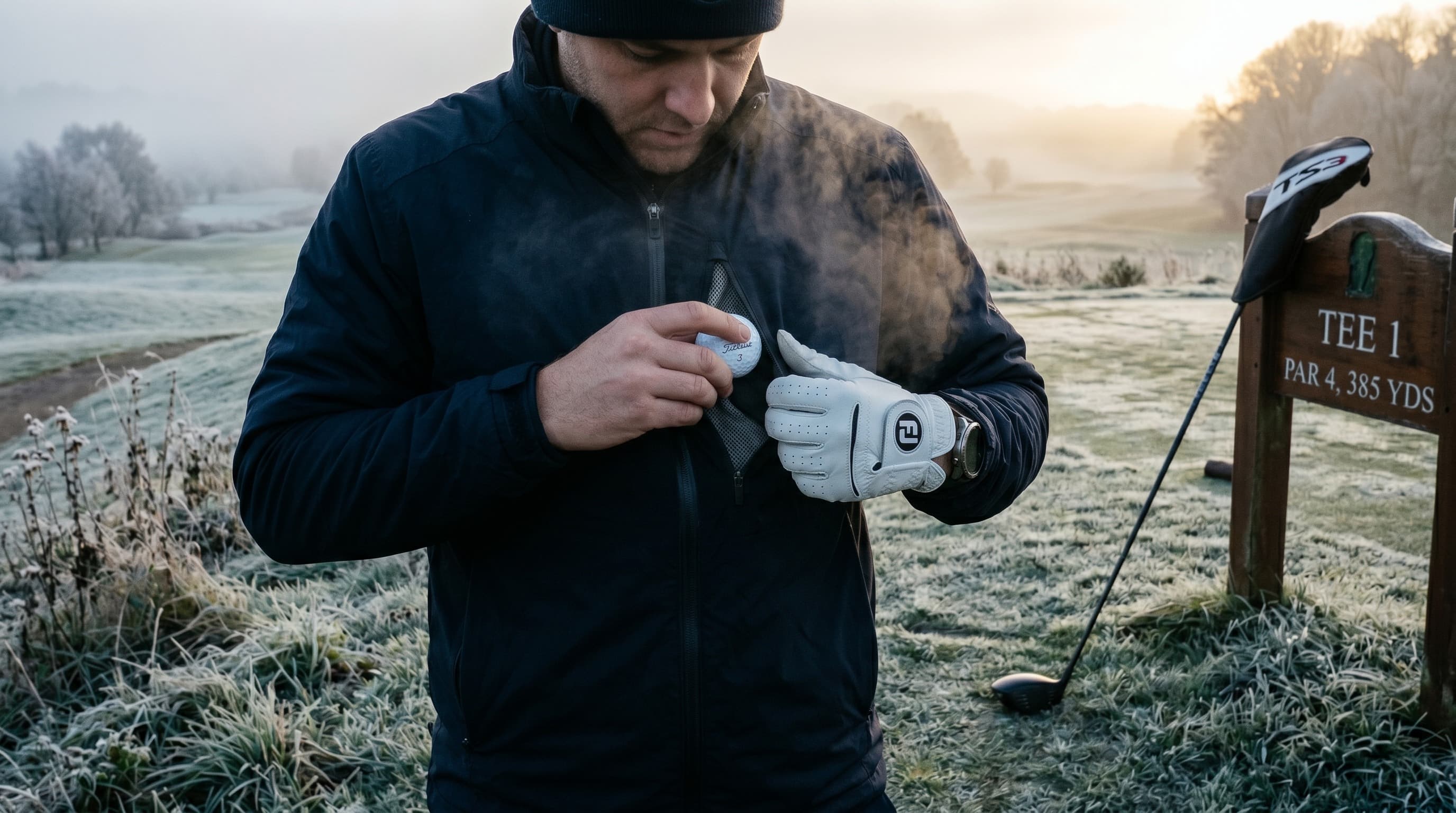
How Cold Weather Steals Distance: The Ball Compression Physics Every Golfer Should Know
Every 10°F drop costs the average golfer two to four yards of driver carry. Here is the physics — ball compression, air density, muscle temperature — and the field data we pulled from G-Score-monitored cold rounds to show exactly how distance loss compounds, and how to compensate without changing your swing.
Read Story
How to Read a G-Score: The 0–100 Golf Playability Number, Decoded
A G-Score on this site is a single 0–100 number that tells you whether today is worth tee-up. Here is exactly what each band means, what drives the calculation, and how to use it to plan a round you will actually score on.
Read StoryMinSu Kim
Founder & Golf Data Analyst
MinSu is a data analyst and golfer with 10+ years on the course. He built Golf Weather Score to answer one question: is today a good day to play? He combines weather data, course intelligence, and the proprietary G-Score algorithm to help golfers make smarter decisions.
Every Friday Morning
When Big Foot Country Club plays best next weekend.
Friday 6am ET: peak G-Score windows for Big Foot Country Club, wind direction by hour, and one gear call. Three minutes to read, save you the round.
One email a week. Unsubscribe in one click.
The Caddie's Oracle
Draw your luck before the tee off