
Caddie's Gear Advisor
Curated for today's 55°F · Mist
Tour-Level Drivers
Engineered for maximum distance and forgiveness
Laser Rangefinders
Pin-seeking technology for precision approaches
Premium Golf Balls
Tour-caliber spin and distance performance
Performance Sunglasses
Polarized lenses optimized for reading greens
Your Golf Trip, Handled
The Ultimate Golf Trip Planner
Everything you need to play Bishops Bay Golf Course — from booking your flight to checking in course-side.
Course-Side Stays
Luxury hotels, resorts, and stay-and-play packages just minutes from the first tee.
Flights
Compare fares across 700+ airlines for the best route to your tee time.
SUV Rentals for Golf Bags
Spacious vehicles with room for clubs, bags, and your foursome.
Travel Insurance
Coverage for medical, weather delays, and gear at your destination.
Bishops Bay Golf Course: Course Intelligence
TL;DR: Bishops Bay (Bob Lohmann, 1995) is a 7,160-yard, slope-130 parkland course on the open ground north of Lake Mendota in Middleton, WI. The defining variable here isn't the routing — it's the prairie wind. Get out before mid-morning and the course is fair; wait until the afternoon SW breeze sets in and the same approach shots play a club or two longer. Below is how I'd read the weather before a round.
Signature Setup
Bishops Bay Country Club was designed by Bob Lohmann and opened for play in 1995, sitting on rolling glacial terrain just north of Lake Mendota in Middleton, Wisconsin — a Madison suburb at roughly 43°N latitude. From the back tees it stretches to 7,160 yards with a slope rating of 130, a parkland layout shaped by water hazards and sand bunkering rather than forced carries or tricked-up greens. I haven't walked all 18 here myself, so I'm reading the per-hole detail from the scorecard and the club's routing rather than personal play — but the macro picture, an exposed lakeside Wisconsin course, is one I know well from Madison-area golf.
Hole-by-Hole Wind & Playing Lines
The single biggest factor at Bishops Bay is exposure. This is not a tree-walled course — much of the property is open, which means the wind reaches your ball on nearly every shot. In summer the prevailing flow in the Madison basin is from the south-southwest. On those mornings, holes running into the SW quadrant eat distance: a stock 150-yard approach can play 165–170 once the breeze is up. The closing lakeside holes near the Lake Mendota corridor are the most exposed of all — a crosswind off the water will push a held shot well right of target. My rule on a SW day: aim at the fat side of the green, never the flag, and accept the two-putt.
Green & Fairway Characteristics
Like most courses in southern Wisconsin's cool-season climate, expect bentgrass greens and bluegrass/rye fairways. In spring and after summer rain these run soft and receptive; by late July and August, with firm prairie heat, fairways speed up and approach shots release hard. The slope of 130 from 7,160 yards tells you the trouble is real from the tips but the course is playable from the forward sets — pick a tee that leaves you mid-iron, not long-iron, into these exposed greens.
Seasonal Weather Pattern
The Madison golf season runs roughly mid-April through late October. July is the warmest stretch, with average highs near 82°F and morning lows around 60°F — pleasant, but humid afternoons spawn the SW wind that defines play here. September into October is the sweet spot: crisp 8 a.m. starts in the 50s, firm turf, and lower humidity, though cold fronts can swing the wind to the NW and drop temperatures fast. I've teed off Madison-area mornings in early October with the thermometer barely past 50°F and my driving distance noticeably shorter in the dense, cold air.
Local Play Tips
Treat the clock as part of your strategy. The genuinely useful, non-obvious tip: book before 10 a.m. in mid-summer. The morning air off the lake is calm and the greens hold; by early afternoon the SW prairie wind firms up and the back nine plays as much as a club or two longer into the breeze. An afternoon tee time isn't a different course on paper — but in the wind, it scores like one.
Pre-Round Weather Workflow
Use the 7-day G-Score on golfweatherscore before you book. Check two things: the morning wind direction and gust forecast (a SW or NW flag means the open holes will play long), and the dew-point/temperature spread (cold, dense morning air costs carry distance). If the G-Score is meaningfully higher for the morning slot than the afternoon — common here in July and August — take the earlier tee time and pack a wind layer for the exposed lakeside finish.
Related Reading
Before you tee off at Bishops Bay Golf Course
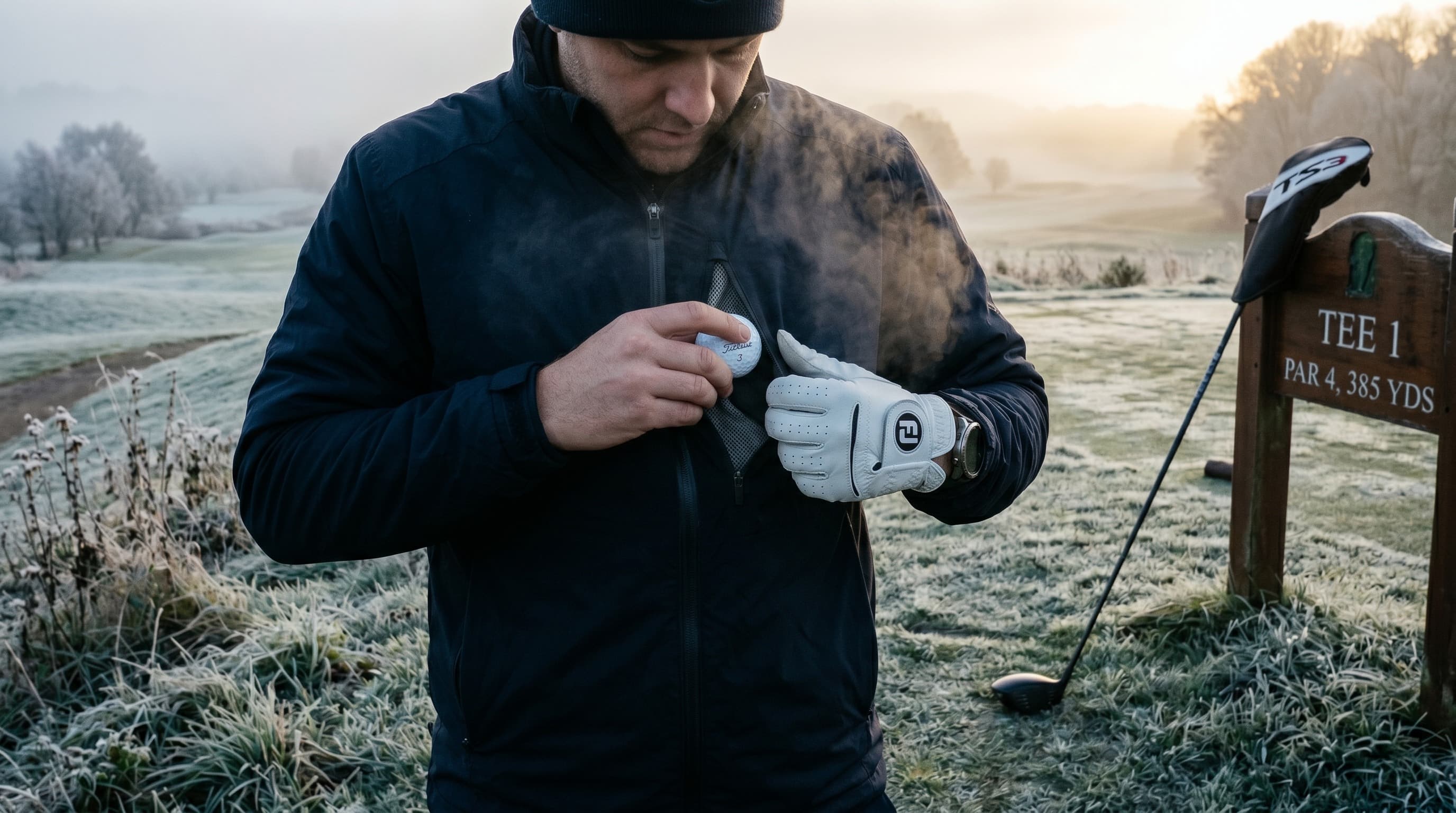
How Cold Weather Steals Distance: The Ball Compression Physics Every Golfer Should Know
Every 10°F drop costs the average golfer two to four yards of driver carry. Here is the physics — ball compression, air density, muscle temperature — and the field data we pulled from G-Score-monitored cold rounds to show exactly how distance loss compounds, and how to compensate without changing your swing.
Read Story
How to Read a G-Score: The 0–100 Golf Playability Number, Decoded
A G-Score on this site is a single 0–100 number that tells you whether today is worth tee-up. Here is exactly what each band means, what drives the calculation, and how to use it to plan a round you will actually score on.
Read StoryMinSu Kim
Founder & Golf Data Analyst
MinSu is a data analyst and golfer with 10+ years on the course. He built Golf Weather Score to answer one question: is today a good day to play? He combines weather data, course intelligence, and the proprietary G-Score algorithm to help golfers make smarter decisions.
Every Friday Morning
When Bishops Bay Golf Course plays best next weekend.
Friday 6am ET: peak G-Score windows for Bishops Bay Golf Course, wind direction by hour, and one gear call. Three minutes to read, save you the round.
One email a week. Unsubscribe in one click.
The Caddie's Oracle
Draw your luck before the tee off