
Caddie's Gear Advisor
Curated for today's 85°F · Clear
Tour-Level Drivers
Engineered for maximum distance and forgiveness
Laser Rangefinders
Pin-seeking technology for precision approaches
Premium Golf Balls
Tour-caliber spin and distance performance
Performance Sunglasses
Polarized lenses optimized for reading greens
Your Golf Trip, Handled
The Ultimate Golf Trip Planner
Everything you need to play Black Bear — from booking your flight to checking in course-side.
Course-Side Stays
Luxury hotels, resorts, and stay-and-play packages just minutes from the first tee.
Flights
Compare fares across 700+ airlines for the best route to your tee time.
SUV Rentals for Golf Bags
Spacious vehicles with room for clubs, bags, and your foursome.
Travel Insurance
Coverage for medical, weather delays, and gear at your destination.
Black Bear: Course Intelligence
Signature Setup
The 7th at Black Bear funnels between trees toward a green that tilts hard back-to-front, and on an October morning my hands were colder than the forecast promised — 44°F at 8 a.m. up in the Sussex Highlands, while the rest of New Jersey was already in the 50s.
Black Bear Golf Club opened in July 1996 in Franklin, NJ, designed by Jack Kurlander with David Glenz, and it's now part of the Crystal Springs Resort family. From the Black tees it measures 6,673 yards, par 72, rated 72.2 with a slope of 130. The number that actually shapes your round, though, is 65 — the bunker count — and the fact that water only comes into play on two holes (#2 and #7). This is a course defended by sand and elevation, not by lakes.
Hole-by-Hole Wind & Playing Lines
The three holes I'd warn a first-timer about:
- Hole 7 (signature, water + trees): With water in play and a steep green, a long approach won't hold. On a prevailing NW autumn wind quartering off your shoulder, club down on the approach and land it short-center — past the flag is a guaranteed two-putt at best.
- Hole 9 (the hardest test): A downhill tee shot tempts you to chase distance; the green is heavily undulating. On a SW breeze — common on warm summer afternoons here — take one more club into it, not less, because the helping wind dies the moment you drop below the treeline.
- Hole 2 (the other water hole): A hidden bunker sits short of the green. Into a cool morning headwind off the higher ground, the fairway plays longer than the card; favor the right side to open the angle.
Green & Fairway Characteristics
Greens are bentgrass and run noticeably faster once the Highlands sun burns off the morning dew — early groups roll over slow, damp surfaces, afternoon groups face a different course. Fairways are ryegrass and hold moisture; in early summer the grips were damp by the 4th hole. Several greens tilt toward the surrounding hills rather than an obvious water line, so read break toward the lower terrain, not toward the pin's framing. The front and back both work uphill-and-down through wooded corridors — distance control off elevation changes matters more than raw length on a 6,673-yard card.
Seasonal Weather Pattern
The elevation is the whole story here. Franklin sits up in the NJ Highlands, so it runs 5–8°F cooler than valley courses an hour south. July and August highs reach the low-to-mid 80s with stiff humidity, and afternoon thunderstorms build over the ridges — by NOAA norms for this part of Sussex County, late-day summer storms are routine, not rare. October is the sweet spot: crisp 40s at dawn, firm-but-not-frozen turf, low wind. I haven't played it in deep July, so I'm reading summer playability off the historical pattern, not a personal card.
Local Play Tips
Book the earliest tee time you can stomach. The damp, slow morning greens cost me roughly nothing compared to the afternoon, when the bentgrass speeds up and those hill-ward slopes turn three-footers into adventures. Bring a towel for the grips through the first few holes in summer — the ryegrass holds dew late up here. And don't over-club trusting an afternoon tailwind; below the treeline it evaporates.
Pre-Round Weather Workflow
Check the 7-day G-Score before you book. Target a morning slot with low windExposure and a G-Score in the 8–12 range — that's when Black Bear's cooler Highlands air and slower early greens favor scoring. If the afternoon shows rising SW wind or a storm-risk band, move your tee time earlier rather than gambling on the ridges staying dry.
Related Reading
Before you tee off at Black Bear
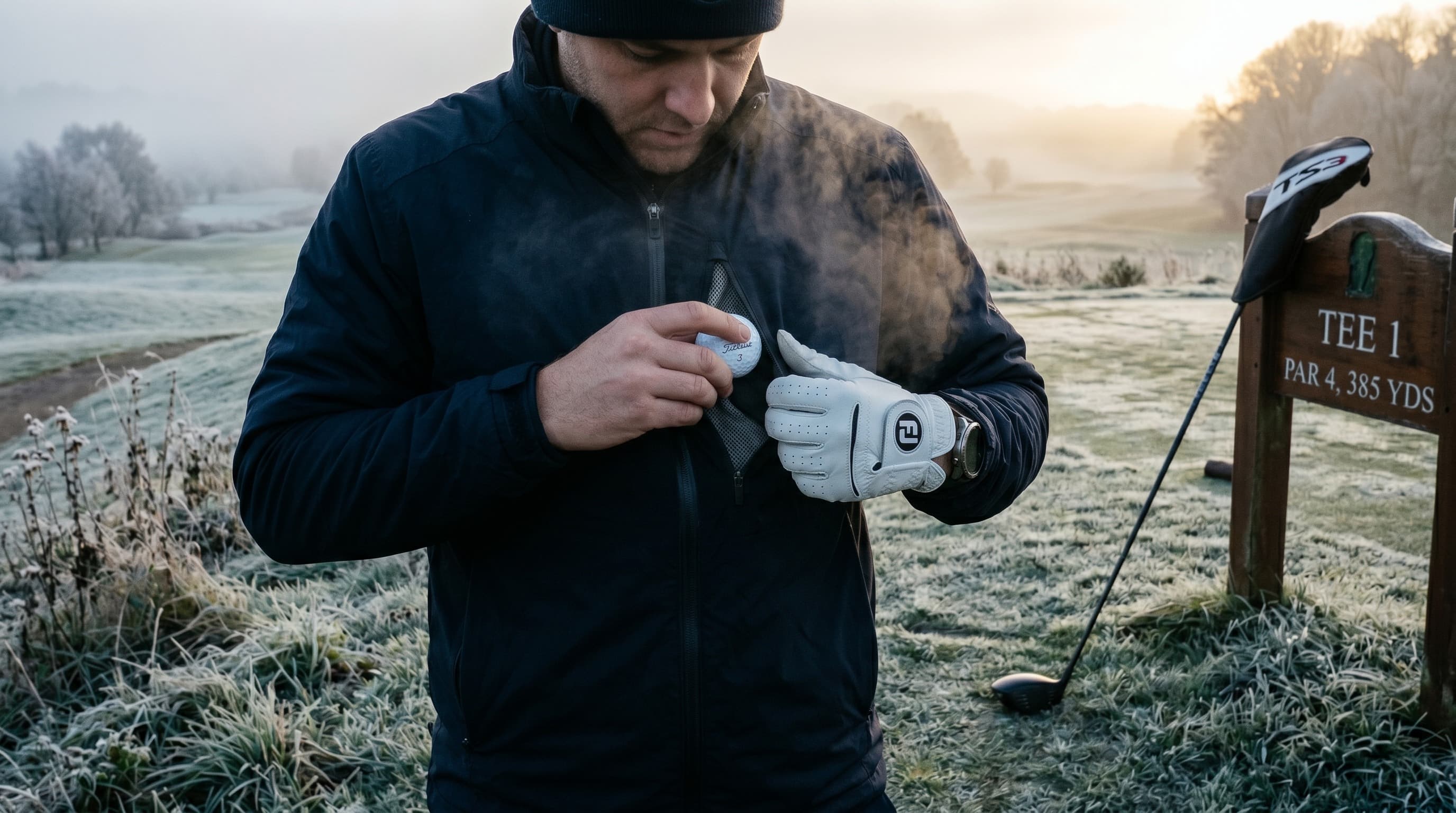
How Cold Weather Steals Distance: The Ball Compression Physics Every Golfer Should Know
Every 10°F drop costs the average golfer two to four yards of driver carry. Here is the physics — ball compression, air density, muscle temperature — and the field data we pulled from G-Score-monitored cold rounds to show exactly how distance loss compounds, and how to compensate without changing your swing.
Read Story
How to Read a G-Score: The 0–100 Golf Playability Number, Decoded
A G-Score on this site is a single 0–100 number that tells you whether today is worth tee-up. Here is exactly what each band means, what drives the calculation, and how to use it to plan a round you will actually score on.
Read StoryMinSu Kim
Founder & Golf Data Analyst
MinSu is a data analyst and golfer with 10+ years on the course. He built Golf Weather Score to answer one question: is today a good day to play? He combines weather data, course intelligence, and the proprietary G-Score algorithm to help golfers make smarter decisions.
Every Friday Morning
When Black Bear plays best next weekend.
Friday 6am ET: peak G-Score windows for Black Bear, wind direction by hour, and one gear call. Three minutes to read, save you the round.
One email a week. Unsubscribe in one click.
The Caddie's Oracle
Draw your luck before the tee off