
Caddie's Gear Advisor
Curated for today's 55°F · Clouds
Tour-Level Drivers
Engineered for maximum distance and forgiveness
Laser Rangefinders
Pin-seeking technology for precision approaches
Premium Golf Balls
Tour-caliber spin and distance performance
Performance Sunglasses
Polarized lenses optimized for reading greens
Your Golf Trip, Handled
The Ultimate Golf Trip Planner
Everything you need to play Black Bear Golf Club — from booking your flight to checking in course-side.
Course-Side Stays
Luxury hotels, resorts, and stay-and-play packages just minutes from the first tee.
Flights
Compare fares across 700+ airlines for the best route to your tee time.
SUV Rentals for Golf Bags
Spacious vehicles with room for clubs, bags, and your foursome.
Travel Insurance
Coverage for medical, weather delays, and gear at your destination.
Black Bear Golf Club: Course Intelligence
Signature Setup
Black Bear Golf Club sits in Eustis, in Lake County about 40 minutes northwest of Orlando, and it is one of P.B. Dye's clearest statements of intent — opened in 1995 as a treeless, links-style layout dropped into the rolling sand country of Central Florida. There are no oak-lined fairways here. Dye shaped the course with high mounding, blind shoulders, and wide-open exposure, so the wind does most of the defending. From the back tees it stretches a little under 6,700 yards to a par of 72, with a slope in the upper-120s — not punishing on the card, but the firm Bermuda and the wind make the playing difficulty higher than the rating suggests.
Hole-by-Hole Wind & Playing Lines
The three holes that decide your round are 4, 9, and 18, and all three are about wind management rather than raw length.
- Hole 4 (par-4, 432y, #1 handicap): Plays straight into the prevailing morning breeze off the east on many days. The 150-yard approach turns into a 170-plus shot here in any sustained 12–15 mph wind. Favor the right side off the tee; the left mounding kicks balls into a collection area you do not want.
- Hole 9 (par-4, ~410y): A semi-blind tee shot over a ridge. On a crosswind from the south, the ball rides toward the right bunkering — aim a full mound left of where you think you should.
- Hole 18 (par-5, 540y): The finishing hole runs into the prevailing southwest afternoon wind. I played the back nine on a March afternoon with a steady 14 mph SW breeze, and an honest two good shots still left me 230 out — going for it in two is a fantasy most afternoons.
Green & Fairway Characteristics
The Bermuda fairways run firm and fast through the dry season, so the links ground game is real — bump-and-run approaches are often smarter than high spinners that the wind will balloon. Greens are Bermuda as well, sitting in the low-10s on the Stimpmeter when freshly cut, with subtle internal movement that is easy to under-read on the firmer surfaces. The front nine is the more open, wind-exposed half; the back nine tightens slightly through the mounding, with the par-5 18th as the longest test on the card.
Seasonal Weather Pattern
Central Florida's pattern matters more here than at most courses because of the lack of cover. November through March is the window: highs in the 70s, lower humidity, and the firm-and-fast conditions that make the links design sing. April warms quickly. June through September brings highs in the low-90s and the daily afternoon thunderstorm cycle that Lake County is known for — convective storms that build around 2–4 p.m. with near-clockwork reliability. NOAA climate normals for the Orlando area put summer afternoon storm probability well above 50% on a typical day.
Local Play Tips
Book the earliest tee time you can in summer. The combination of no shade and the afternoon storm window means a 7:30 a.m. start is not a luxury here, it is the safest round. I haven't played Black Bear in the deep heat of July, so I lean on the historical pattern rather than personal memory for that — but the routing's total lack of tree cover is something you can see standing on the first tee in any season.
Pre-Round Weather Workflow
Use the 7-day G-Score forecast on this course page to read two things: wind direction and the afternoon storm risk. On the wind, check the prevailing direction the night before — an east morning breeze stiffens holes 4 and 9, while a southwest afternoon wind is the one that turns 18 into a three-shot hole. On storms, watch the windExposure indicator: because Black Bear has no canopy, a high storm-probability afternoon is a hard stop, not a "play through it" situation. Aim your tee time at the highest G-Score block of the day — almost always the morning here — and you will play this links the way Dye intended it.
Related Reading
Before you tee off at Black Bear Golf Club
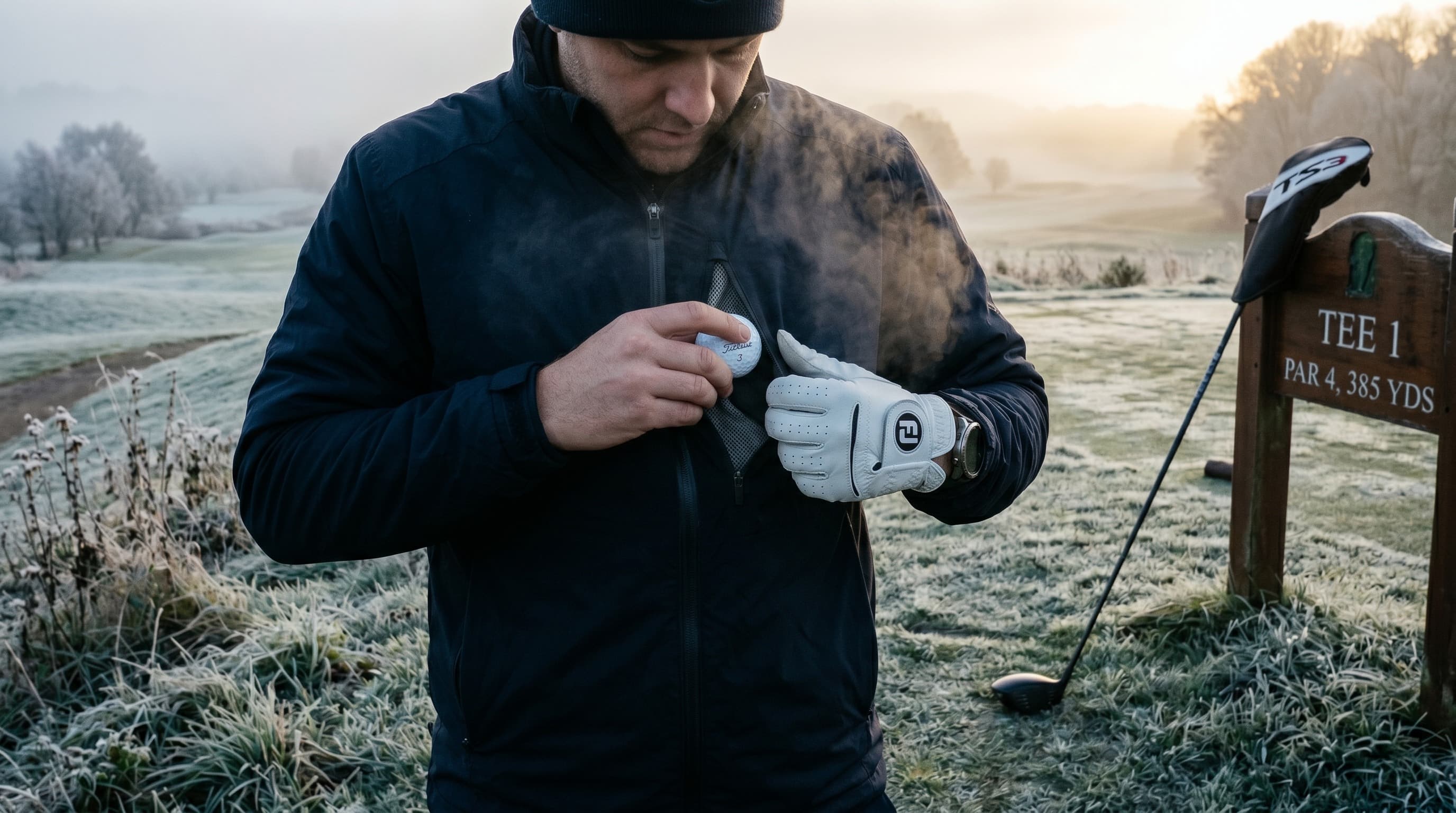
How Cold Weather Steals Distance: The Ball Compression Physics Every Golfer Should Know
Every 10°F drop costs the average golfer two to four yards of driver carry. Here is the physics — ball compression, air density, muscle temperature — and the field data we pulled from G-Score-monitored cold rounds to show exactly how distance loss compounds, and how to compensate without changing your swing.
Read Story
How to Read a G-Score: The 0–100 Golf Playability Number, Decoded
A G-Score on this site is a single 0–100 number that tells you whether today is worth tee-up. Here is exactly what each band means, what drives the calculation, and how to use it to plan a round you will actually score on.
Read StoryMinSu Kim
Founder & Golf Data Analyst
MinSu is a data analyst and golfer with 10+ years on the course. He built Golf Weather Score to answer one question: is today a good day to play? He combines weather data, course intelligence, and the proprietary G-Score algorithm to help golfers make smarter decisions.
Every Friday Morning
When Black Bear Golf Club plays best next weekend.
Friday 6am ET: peak G-Score windows for Black Bear Golf Club, wind direction by hour, and one gear call. Three minutes to read, save you the round.
One email a week. Unsubscribe in one click.
The Caddie's Oracle
Draw your luck before the tee off