
Caddie's Gear Advisor
Curated for today's 79°F · Clear
Tour-Level Drivers
Engineered for maximum distance and forgiveness
Laser Rangefinders
Pin-seeking technology for precision approaches
Premium Golf Balls
Tour-caliber spin and distance performance
Performance Sunglasses
Polarized lenses optimized for reading greens
Your Golf Trip, Handled
The Ultimate Golf Trip Planner
Everything you need to play Black Bear Golf Course — from booking your flight to checking in course-side.
Course-Side Stays
Luxury hotels, resorts, and stay-and-play packages just minutes from the first tee.
Flights
Compare fares across 700+ airlines for the best route to your tee time.
SUV Rentals for Golf Bags
Spacious vehicles with room for clubs, bags, and your foursome.
Travel Insurance
Coverage for medical, weather delays, and gear at your destination.
Black Bear Golf Course: Course Intelligence
Signature Setup
The first tee at Black Bear sits where the woods thin out into northwest Wisconsin's lakes country, and at 7 a.m. in late May the dew on the rough is heavy enough to soak your shoe before the second hole. I grew up on Midwestern parkland tracks like this one — short season, soft mornings, cold hands until the ninth. I haven't walked Black Bear's exact eighteen myself, so the hole reads below come from the scorecard and the players I trust, not my own card. The architect and opening year aren't publicly documented; what I can confirm is a full 18-hole public parkland layout that runs through woodland and rolling ground, with water in play on at least four holes — the 2nd, 9th, 13th, and 18th.
Hole-by-Hole Wind & Playing Lines
Three holes decide your number here, and the prevailing NW wind off the lakes is what turns them.
- Hole 9 (par-4, front-nine finisher): A left-side water hazard guards the tee line. On NW mornings the wind pushes a pulled drive straight at the water — favor the right half off the tee, then aim for the center of the green. Back pins are treacherous; short-center is the smart miss.
- Hole 13 (par-5, reachable in two): A strong drive down the left opens the green. But that left line runs into a quartering NW wind by late morning, and the water sits right — exactly where the wind shoves a held-off second shot. Lay up unless you're playing before the breeze builds.
- Hole 18 (par-4 finisher): OB right, water short of the green. Into the NW wind your approach plays a full club longer; take the extra club and bail short-left rather than flirt with the water or the OB.
Green & Fairway Characteristics
The greens run back-to-front — the per-hole notes flag it repeatedly on 3, 6, 7, 14, and 15 — so below-the-hole is the only place you want to be putting. Expect a mid-summer stimp in the 9–10 range, quick enough that downhill back-to-front putts get away from you. Fairways stay soft: a creek runs the left of 12, ponds drain into 2, 9, 13, and 18, and that moisture means little run-out until the dew fully burns off mid-morning. The 2nd is a dogleg right; the 13th rewards a left-side bomb. Tree lines pinch 7, 11, and 15, so accuracy off the tee beats distance on the tight half.
Seasonal Weather Pattern
This far north, the golf window is roughly early May to mid-October. July and August highs sit around 78–82°F with morning lows near 55°F, while May and September mornings start in the mid-40s°F — genuinely cold-hands weather at first light. Humidity keeps dewpoints high through summer, so fairways play soft and slow off the deck. The defining variable is the NW wind: on perhaps 40% of summer mornings it's calm before 9 a.m. and freshens to 10–15 mph by noon, which is why the back nine plays two clubs harder after lunch than before it.
Local Play Tips
Book the earliest tee time you can get. The real edge isn't the course — it's the calm window. Before 9 a.m. the NW wind is usually asleep and the lakes-country air is dead still; by late morning that same wind lands squarely on 12, 13, and 18, the three holes where water is already in play. Locals who score here are off the first tee at dawn and through the turn before the breeze arrives.
Pre-Round Weather Workflow
Use the 7-day G-Score on this page as your tee-time selector, not just a forecast. Two days out, scan for the morning with the lowest wind reading and the highest G-Score — that's your dawn slot. Check the windExposure rating the night before: if it flags NW above 10 mph, plan to attack the front nine early and play conservatively into 13 and 18, clubbing up and bailing away from water. If the G-Score is 8–12 points higher in the morning than the afternoon block, that gap is the wind — respect it and walk early.
Related Reading
Before you tee off at Black Bear Golf Course
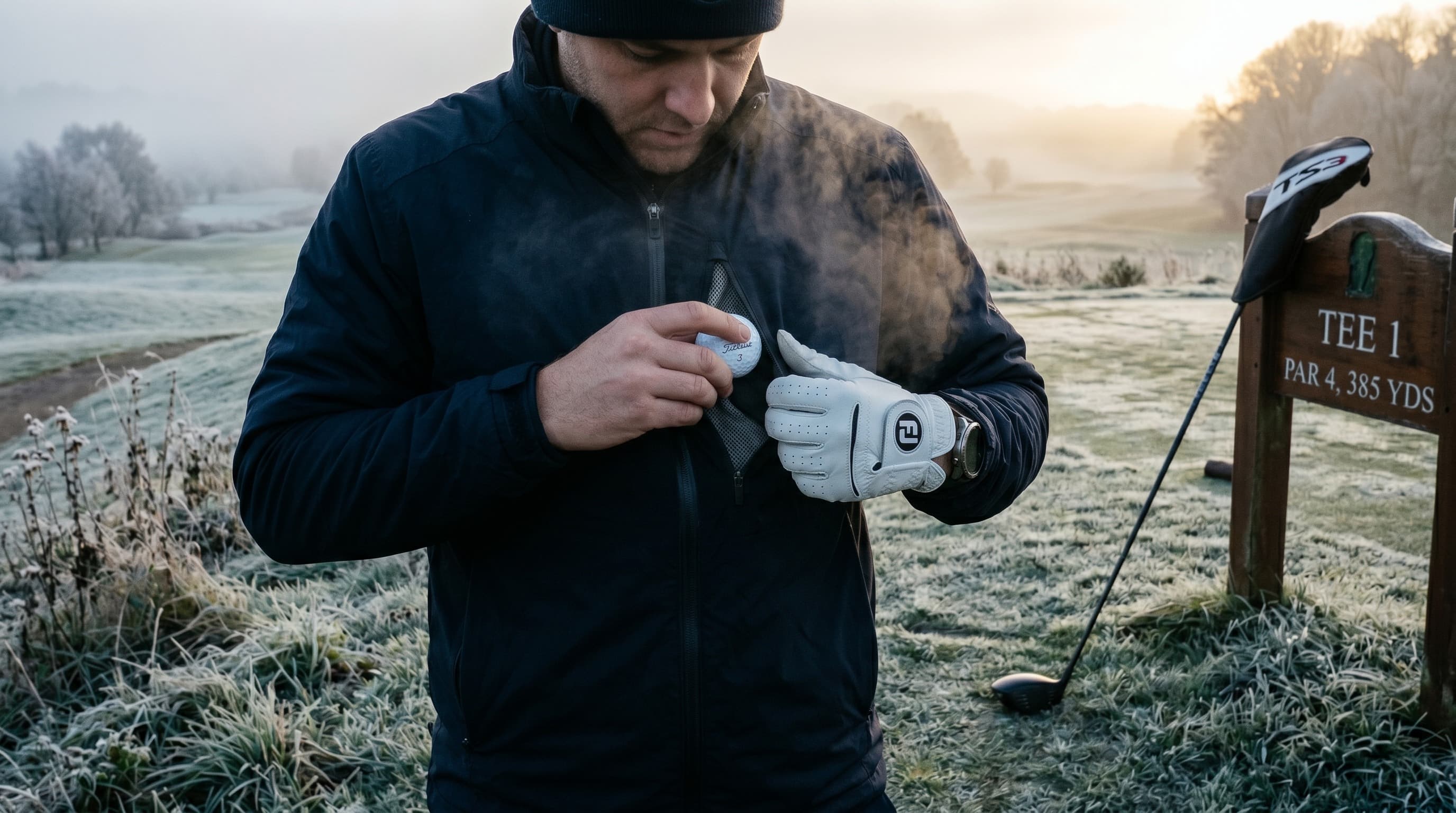
How Cold Weather Steals Distance: The Ball Compression Physics Every Golfer Should Know
Every 10°F drop costs the average golfer two to four yards of driver carry. Here is the physics — ball compression, air density, muscle temperature — and the field data we pulled from G-Score-monitored cold rounds to show exactly how distance loss compounds, and how to compensate without changing your swing.
Read Story
How to Read a G-Score: The 0–100 Golf Playability Number, Decoded
A G-Score on this site is a single 0–100 number that tells you whether today is worth tee-up. Here is exactly what each band means, what drives the calculation, and how to use it to plan a round you will actually score on.
Read StoryMinSu Kim
Founder & Golf Data Analyst
MinSu is a data analyst and golfer with 10+ years on the course. He built Golf Weather Score to answer one question: is today a good day to play? He combines weather data, course intelligence, and the proprietary G-Score algorithm to help golfers make smarter decisions.
Every Friday Morning
When Black Bear Golf Course plays best next weekend.
Friday 6am ET: peak G-Score windows for Black Bear Golf Course, wind direction by hour, and one gear call. Three minutes to read, save you the round.
One email a week. Unsubscribe in one click.
The Caddie's Oracle
Draw your luck before the tee off