
Caddie's Gear Advisor
Curated for today's 100°F · Clear
Ultralight Distance Drivers
Maximum carry in hot, low-drag conditions
UV Protection Apparel
UPF 50+ cooling fabrics for peak-sun rounds
Precision Rangefinders
Slope-adjusted yardage in any condition
Hydration & Cooling
Insulated bottles and cooling towels
Your Golf Trip, Handled
The Ultimate Golf Trip Planner
Everything you need to play Black Creek Golf Club — from booking your flight to checking in course-side.
Course-Side Stays
Luxury hotels, resorts, and stay-and-play packages just minutes from the first tee.
Flights
Compare fares across 700+ airlines for the best route to your tee time.
SUV Rentals for Golf Bags
Spacious vehicles with room for clubs, bags, and your foursome.
Travel Insurance
Coverage for medical, weather delays, and gear at your destination.
Black Creek Golf Club: Course Intelligence
Signature Setup
Straight answer first: I have not walked Black Creek Golf Club, and the publicly documented record on its design and architect is thin, so I won't invent a name or a heroic opening-day story I can't stand behind. What I can ground this in is the place. Black Creek sits in the Richmond, Virginia orbit — Mechanicsville/Hanover County country, transition-zone golf where Bermuda turf meets central-Virginia humidity. The course takes its name from Black Creek and the low, wet ground its tributaries cut across the property, and that single geographic fact tells you more about how it plays than any marketing line would. When water and creekbed define the routing, the test stops being raw length and becomes a string of carry-or-bail decisions over ground that holds moisture long after the rest of the fairway has dried.
TL;DR: A Richmond-area, Virginia daily-fee course named for the creek that threads its low ground. Transition-zone Bermuda turf, hot humid summers, frequent thunderstorms. No ocean sea breeze to game — the wind and the wet come with weather systems. Favor the dry side of the creek and take the extra club in August air.
Hole-by-Hole Wind & Playing Lines
I don't have a verified per-hole stroke index for Black Creek, so I won't fabricate hole numbers. Instead, here is how central-Virginia wind and the creek-side ground rewrite the kind of holes this routing implies:
- Two-shot holes into a summer SW breeze: at 8–14 mph out of the S/SW, thick August air, a flushed 150-yard shot behaves like a 165-yard carry. The smart play is the bigger club and a flatter flight — never a high spinning wedge that the headwind balloons and drops short into the wet collar.
- Holes running with the creek down the low side: the tributary ground stays soft and grabby after the area's regular afternoon storms. Bail away from the water side even at the cost of a longer approach; a dry lie 15 yards off line scores better than a flier from trampled creek-edge rough.
- Crossing-wind holes through the open stretches: with a quartering breeze, a player who can knock down a controlled fade or draw beats the longer hitter who only flies it straight, because the firm-or-soft state of the landing zone swings hard with the last rain.
The portable lesson: on the first creek-side hole, decide whether the ground is in its firm July-ridge state or its soft post-storm state, and let that read set your bail-out side for the round.
Green & Fairway Characteristics
Black Creek lives in Virginia's transition zone, the awkward latitude where neither cool-season nor warm-season grass is fully at home. Expect Bermuda-based fairways that run firm and fast under a stable July high, with greens that bake out and quicken in that same dry window. The flip side is moisture: this is thunderstorm country, and the creek-fed low areas soften within hours of a cell passing through. Your stock yardages only hold in the brief dry windows between systems. When the ground is firm, land approaches short and let them chase; when it's soft after rain, the creek holes turn grabby and you can fly the ball to the number without fear of release.
Seasonal Weather Pattern
Central Virginia gives Black Creek four genuinely distinct golf seasons. Spring (Apr–May) is the prime stretch — mild highs in the 60s–70s°F, firming turf, and the year's most pleasant scoring conditions before the humidity arrives. Summer (Jun–Aug) turns hot and heavy: highs in the upper-80s to low-90s°F, oppressive humidity that adds yardage to every iron, a steady S/SW breeze, and near-daily afternoon thunderstorm risk that can soak the creek ground or stop play outright. Fall (Sep–Oct) is the other sweet spot — drier NW air behind departing fronts, firm fast greens, and cool mornings. Winter (Dec–Feb) is playable on mild days but the Bermuda goes dormant and the low ground stays cold and wet; for that window I lean on NOAA Richmond-area historicals rather than firsthand memory of this specific course.
Local Play Tips
The coastal habit that fails inland here: there's no dawn sea breeze to outrun. Richmond-area wind is synoptic — driven by whatever front or storm system is crossing the Mid-Atlantic — not a daily land-sea thermal you can schedule around. So the question that decides your card isn't morning versus afternoon, it's whether a storm cell has just passed (soft, grabby creek ground, receptive greens) or the property has had a dry day or two under high pressure (firm, fast, releasing turf). In summer, the genuinely useful move is to book an early-morning slot — not for wind, but to finish your round before the afternoon thunderstorm window opens and either soaks the low holes or sends you to the clubhouse.
Pre-Round Weather Workflow
Use golfweatherscore's 7-day G-Score and windExposure as decision tools, read for a humid transition-zone layout:
- Three days out: watch the G-Score curve for where summer storm chances land. A 9 sliding to a 4 in June–August usually means an incoming system that will wet the creek ground, not a time-of-day change.
- The evening before: pin down wind direction and the storm-timing detail. A S/SW flow signals warm, humid, distance-eating air with afternoon storm risk; a NW flow behind a front means dry, firm, fast turf where downwind holes release hard.
- Round morning: if the forecast shows an afternoon thunderstorm window, take the earliest tee you can get so you finish on dry creek ground. And in peak August humidity, club up — heavy air alone can add 8–10% to your carry numbers before the wind even factors in.
Related Reading
Before you tee off at Black Creek Golf Club

The May 2026 G-Score Heatmap: Where American Golf Peaks This Spring
May is the most underrated month on the American golf calendar. Five regions hit their annual peak this spring, three turn quietly hostile, and the data tells a clearer story than the brochures. Here is where to play, where to avoid, and how to time your booking window.
Read Story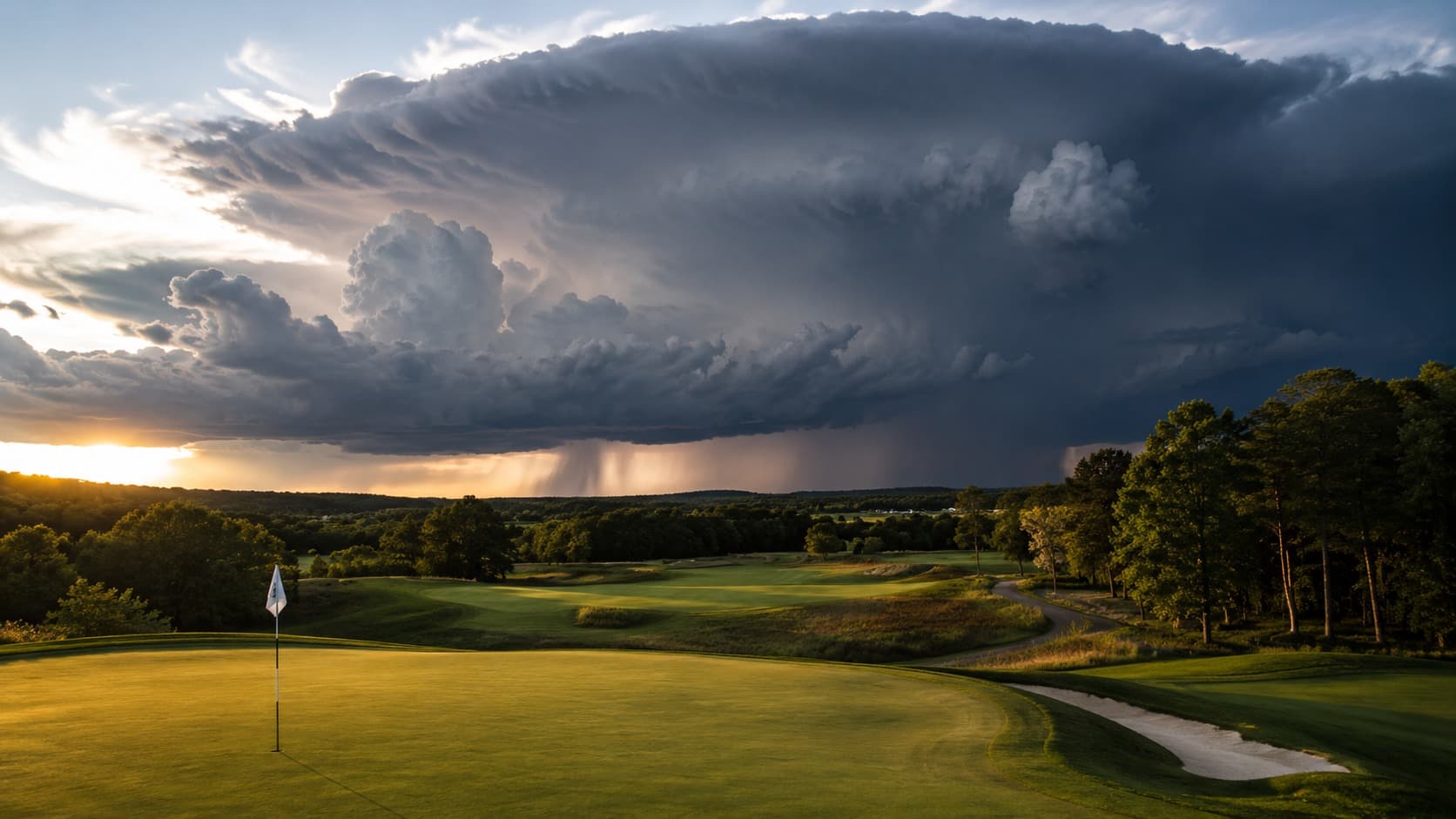
The Three O’Clock Storm: Reading Summer’s Convective Cycle to Protect Your Round
A 40% chance of afternoon thunderstorms does not mean a 40% chance of getting rained on. In the summer convective season it means the morning is nearly clear and the afternoon carries a fast-building, high-energy storm risk driven by a daily heating cycle. Here is the meteorology behind the pattern, the G-Score data on how the storm cycle punishes afternoon tee times across the Southeast, Midwest, and desert Southwest, the lightning-safety decision tree that actually matters, and the workflow that gets you off the course before the first bolt.
Read StoryMinSu Kim
Founder & Golf Data Analyst
MinSu is a data analyst and golfer with 10+ years on the course. He built Golf Weather Score to answer one question: is today a good day to play? He combines weather data, course intelligence, and the proprietary G-Score algorithm to help golfers make smarter decisions.
Every Friday Morning
When Black Creek Golf Club plays best next weekend.
Friday 6am ET: peak G-Score windows for Black Creek Golf Club, wind direction by hour, and one gear call. Three minutes to read, save you the round.
One email a week. Unsubscribe in one click.
The Caddie's Oracle
Draw your luck before the tee off