
Caddie's Gear Advisor
Curated for today's 19°F · Clear
Cold-Weather Performance Layers
Thermal mid-layers that move with your swing
Tour Hand Warmers
Rechargeable warmers trusted by caddies
Thermal Base Layers
Lightweight compression that traps heat
Winter Golf Headwear
Beanies and ear warmers built for the links
Black Diamond Golf Course: Course Intelligence
Signature Setup
Straight answer first: I have not walked Black Diamond, and I'd rather say so than fake a memory of a course I haven't played. Everything below leans on the published scorecard, the course's own record, and Holmes County weather history. What that record gives me is clear enough to plan a round around. Black Diamond Golf Course sits in Millersburg, Ohio — the hilly heart of the state's Amish country — and it opened in 1999 to a Barry T. Serafin design. The numbers tell the real story: 6,462 yards, par 72, a course rating of 71.3 and a slope of 130 on bentgrass greens. Read those two figures together and you see the trick of the place. The yardage is modest, but a 130 slope off 6,462 yards means the difficulty isn't length — it's the constant elevation change and the way wind behaves over folded terrain. The signature image is the 11th, a green tucked beneath a working barn.
TL;DR: Barry T. Serafin design (1999) in Millersburg, Holmes County, Ohio. Only 6,462y / par 72, but slope 130 from rating 71.3 — short on paper, hard underfoot because the land never sits flat. Bentgrass greens, signature barn on 11. Club for elevation first, wind second; the wind bends as you climb between holes.
Hole-by-Hole Wind & Playing Lines
The course doesn't publish a per-hole stroke index I can confirm, so rather than invent hole numbers I'll lay out how slope 130 and hill-country wind rewrite your club selection:
- Uphill two-shotters into a NW post-front flow: elevation and breeze stack. A 150-yard uphill number already plays nearer 165; add a 12–15 mph northwesterly off a passing cold front and it can stretch past 175. Take two extra clubs and keep the trajectory under the ridge gust — a high ball gets eaten alive coming over the crest.
- Downhill holes running downwind: the opposite trap. The drop shortens the shot and a following breeze chases it, so a stock 8-iron can sail the green. Land it short of the surface and let the firm bentgrass approach feed it.
- Holes routed across a valley: wind crosses flush here, and because the terrain channels it, the direction on the tee is rarely the direction at the green. A player who knocks down a quartering fade will beat a longer hitter who only flies it straight.
Portable lesson: on each tee, read the elevation change first and the flag on the green second — the slope-130 defense is positional, not muscular.
Green & Fairway Characteristics
The greens are bentgrass, the standard for putting surfaces this far north, and at a 130 slope they reward a player who respects the contour. The fairways are well-groomed but they roll — "constant elevation change" is the phrase that keeps coming up in the course's own description, and almost every hole sits on some grade. From 6,462 yards the card flatters a straight driver on a calm day, but calm, flat lies are scarce here. Firmness swings with the sky: the bentgrass holds a soft, receptive surface after the region's frequent summer rain, then quickens as a high-pressure ridge dries it out. Because so much of the round is played off uneven stances, your stock yardages only survive the rare windless, level shots — everywhere else, the ground is part of the calculation.
Seasonal Weather Pattern
Millersburg lives in a true continental climate, no ocean anywhere near to soften it. Spring (Apr–May) is wet and gusty, with sharp SW-to-NW shifts behind passing systems and soft, slow turf — the hardest scoring stretch of the year. Summer (Jun–Aug) runs warm and humid, highs in the mid-80s°F, lighter morning wind, and a real chance of afternoon thunderstorms rolling over the Appalachian plateau. Fall (Sep–Oct) is the sweet spot: cool mornings often in the 50s°F, dry NW air behind departing fronts, firm bentgrass and the calmest, clearest golf of the year — and Holmes County's foliage makes it the prettiest window too. Winter effectively closes the course for Ohio cold and snow; for that gap I lean on NOAA Northeast-Ohio historicals rather than firsthand knowledge.
Local Play Tips
The mistake a flatland golfer makes here is trusting a single forecast wind arrow for the whole round. Black Diamond is routed through valley-and-ridge terrain, and wind in folded country doesn't behave like wind over an open field — it accelerates over crests, stalls in the hollows, and changes direction as you climb and drop between holes. A breeze that's helping on a high, exposed tee can be dead calm by the time you walk down into a sheltered green complex, then hit you flush again on the next climb. So the read that matters isn't the regional forecast; it's local and hole-by-hole. Watch how the treeline is moving and where the next flag is pointing before you commit to a club. Played that way, this short-on-paper card stays very playable; played on autopilot off one wind number, the slope 130 will find you.
Pre-Round Weather Workflow
Use golfweatherscore's 7-day G-Score and windExposure as your decision tools — but read them for a hill-country layout:
- Three days out: track the G-Score curve for where the fronts land. In northeast Ohio, a 9 sliding to a 4 almost always means a weather system arriving, not a time-of-day change — there's no daily sea breeze to schedule around here.
- The evening before: pin down wind direction and speed. A S/SE flow signals warm, humid, storm-prone golf on soft greens; a NW flow behind a front means dry, firm, faster bentgrass where downhill-downwind holes get treacherous.
- Round morning: if windExposure shows sustained gusts past ~15 mph, accept that a 6,462-yard, slope-130 card will play a club or two longer on every uphill approach. Let elevation-adjusted club selection and patient placement — not aggression — hold your score together.
Related Reading
Before you tee off at Black Diamond Golf Course

Best Golf Weather by State: Ranking America by Average G-Score
We ranked all 50 US states by average G-Score golf playability. California tops the list, but the results beyond the top five may surprise you.
Read Story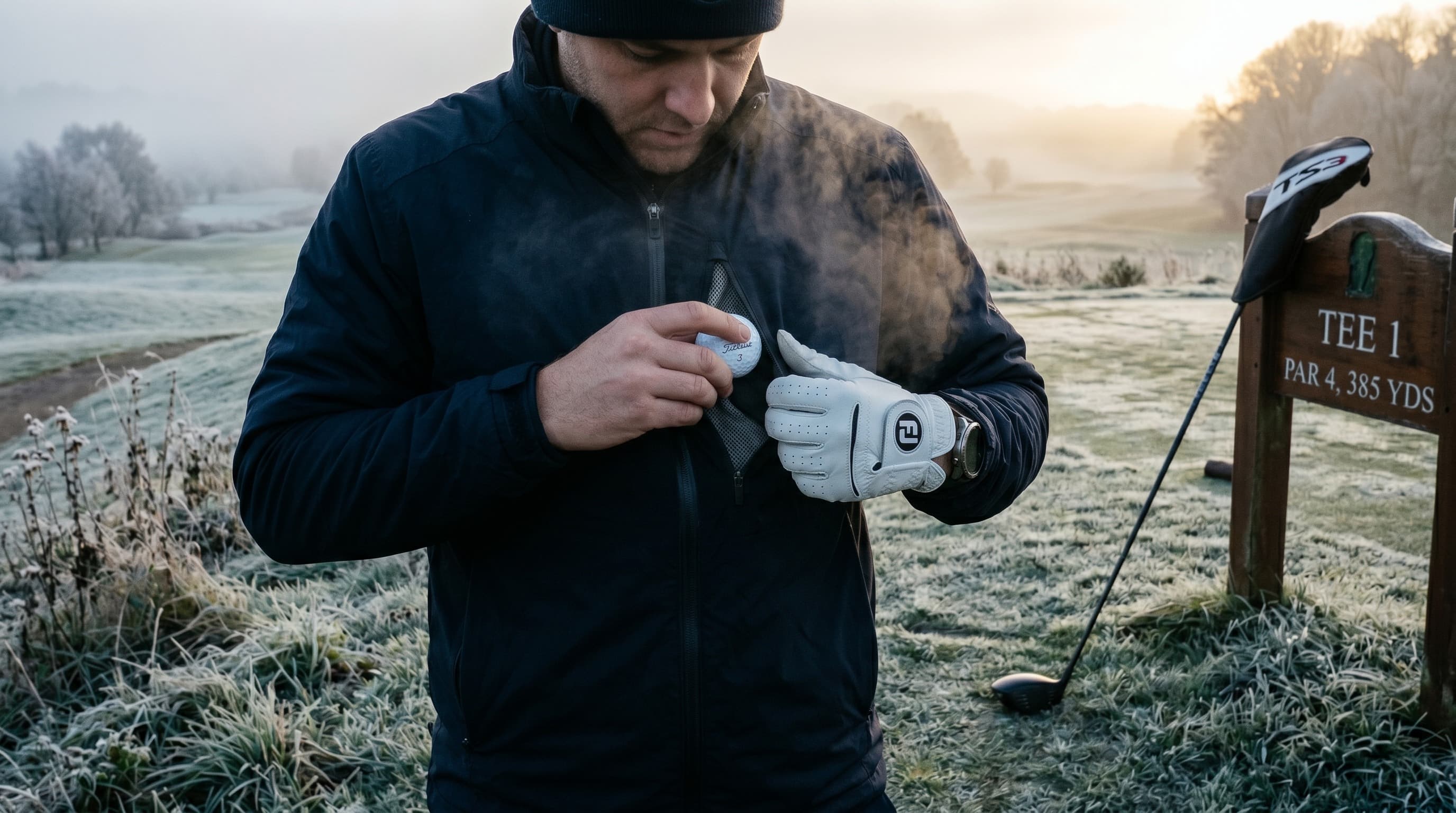
How Cold Weather Steals Distance: The Ball Compression Physics Every Golfer Should Know
Every 10°F drop costs the average golfer two to four yards of driver carry. Here is the physics — ball compression, air density, muscle temperature — and the field data we pulled from G-Score-monitored cold rounds to show exactly how distance loss compounds, and how to compensate without changing your swing.
Read StoryDanorie
Editorial & Data
Golf Weather Score is built by Danorie. We compute the G-Score — our own playability rating — from NOAA forecasts and published course scorecards, so any US course can be compared on any day with a single number. Methodology and data sources are documented on every page.
Every Friday Morning
When Black Diamond Golf Course plays best next weekend.
Friday 6am ET: peak G-Score windows for Black Diamond Golf Course, wind direction by hour, and one gear call. Three minutes to read, save you the round.
One email a week. Unsubscribe in one click.
The Caddie's Oracle
Draw your luck before the tee off