
Caddie's Gear Advisor
Curated for today's 57°F · Mist
Tour-Level Drivers
Engineered for maximum distance and forgiveness
Laser Rangefinders
Pin-seeking technology for precision approaches
Premium Golf Balls
Tour-caliber spin and distance performance
Performance Sunglasses
Polarized lenses optimized for reading greens
Your Golf Trip, Handled
The Ultimate Golf Trip Planner
Everything you need to play Black Hawk Run Golf Club — from booking your flight to checking in course-side.
Course-Side Stays
Luxury hotels, resorts, and stay-and-play packages just minutes from the first tee.
Flights
Compare fares across 700+ airlines for the best route to your tee time.
SUV Rentals for Golf Bags
Spacious vehicles with room for clubs, bags, and your foursome.
Travel Insurance
Coverage for medical, weather delays, and gear at your destination.
Black Hawk Run Golf Club: Course Intelligence
Signature Setup
Black Hawk Run sits on some of the highest, most exposed ground in Illinois — Stockton, in Jo Daviess County, up in the driftless country near Galena where the land actually rolls. The course started life in 1964 as the nine-hole Stockton-Atwood Community course and grew to a full 18 in 1995, so it carries the honest, walk-up feel of a course a town built for itself rather than a marquee architect's statement piece. From the back tees it's 6,478 yards to a par 72, course rating 72.0 and slope 127 — numbers that read gentle until you factor in the elevation changes and the wind that comes with sitting on a ridge. The closing hole tells you what kind of test it is: a 189-yard par-3 with nothing but water between the tee and a bunkered green.
Hole-by-Hole Wind & Playing Lines
The 18th (par-3, 189y, signature): This is the hole everyone talks about, and it earns it. A 189-yard forced carry over water is already a long-iron or hybrid for most players; add the prevailing southwest summer breeze quartering across the tee and the effective number climbs toward 200. I'd play to the fat, left-center of the green and take the two-putt rather than flirt with the front bunkers guarding a back-right pin.
The ridge par-4s into the wind: The longer two-shotters that run along the high ground are where the course defends par. Into a steady SW wind, an uphill 400-yard par-4 plays a full club longer — your stock 7-iron approach becomes a 5. I haven't walked every hole here in person, so I won't pretend to know each yardage marker; the reliable read on driftless ground is simple — club up on anything uphill and into the breeze.
The sheltered valley holes: Not every hole is exposed. Where the routing drops between the rises, the wind dies and the ball flies its true number. Recognizing which holes are protected and which sit up on the ridge is the single most useful course-management skill here.
Green & Fairway Characteristics
This is northern-Illinois turf — a cool-season bentgrass and bluegrass character that plays soft and receptive in spring, then firms up through a dry July and August. In the wet early season the greens hold a wedge that spins back; by midsummer the same surfaces run quicker and a downhill putt on the ridge greens gets away from you. The fairways follow the land's natural movement rather than being bulldozed flat, so you'll draw plenty of uneven lies — ball-above-feet and ball-below-feet stances are part of the test on the rolling holes. At 6,478 yards it's not a bomber's course; it rewards the player who controls trajectory and keeps the ball under the wind on the exposed stretches.
Seasonal Weather Pattern
Stockton's golf season is sharply defined by a continental Midwest climate. Peak play is May through September: summer highs sit in the upper 70s to mid-80s°F with real humidity, and the prevailing wind is out of the southwest. Spring and fall bring the firmest scoring conditions but also the most volatile wind — a passing cold front swings the breeze hard to the northwest and drops the temperature 15–20°F in an afternoon, flipping every into-the-wind hole into a downwind one. Winters shut the course down under snow; this is not a year-round destination. The shoulder months of late April and October can be beautiful and quiet, but pack a layer — at this elevation the wind has teeth even when the sun is out.
Local Play Tips
The local edge here is reading the terrain against the wind. Because the course is split between exposed ridge holes and sheltered valley holes, a single wind direction plays completely differently from one hole to the next — the valley holes lull you into a club, then the ridge holes punish that same club. Before you stand on the 18th tee, glance at the flags on the higher holes to gauge what the breeze is doing up top, because the water carry there is far more demanding into a crosswind than the 189-yard card suggests. As a small-town public course, tee times are easy to get and the pace is unhurried — an early weekday round is about as relaxed as Midwest golf gets.
Pre-Round Weather Workflow
Check the 7-day G-Score before you drive out — for Black Hawk Run, weight wind direction and front timing above temperature. If a cold front is forecast to pass, the wind will swing from southwest to northwest and the whole course reverses; time your round for the stable side of that change if you can. Use the windExposure read to plan the ridge holes and the 18th specifically: into a stiff SW or NW wind, club up at least one extra on every uphill approach and on the closing par-3's water carry. In the soft, wet spring, plan for the ball to stop where it lands and attack pins; once July firms the surfaces, factor in roll and play for the front of the ridge greens. And always pack a wind layer — this is high, open Illinois country, not a tucked-away valley.
Related Reading
Before you tee off at Black Hawk Run Golf Club
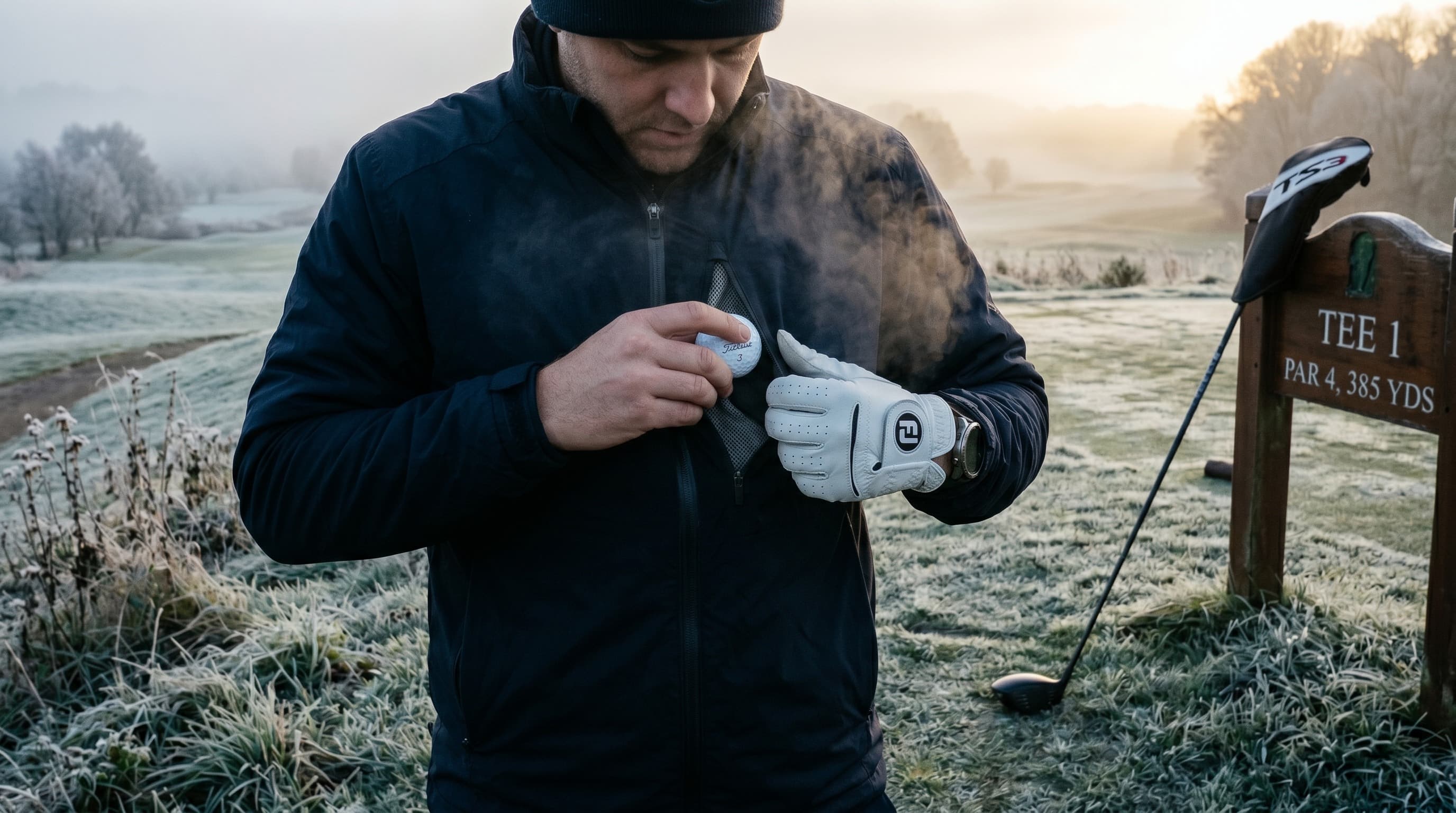
How Cold Weather Steals Distance: The Ball Compression Physics Every Golfer Should Know
Every 10°F drop costs the average golfer two to four yards of driver carry. Here is the physics — ball compression, air density, muscle temperature — and the field data we pulled from G-Score-monitored cold rounds to show exactly how distance loss compounds, and how to compensate without changing your swing.
Read Story
How to Read a G-Score: The 0–100 Golf Playability Number, Decoded
A G-Score on this site is a single 0–100 number that tells you whether today is worth tee-up. Here is exactly what each band means, what drives the calculation, and how to use it to plan a round you will actually score on.
Read StoryMinSu Kim
Founder & Golf Data Analyst
MinSu is a data analyst and golfer with 10+ years on the course. He built Golf Weather Score to answer one question: is today a good day to play? He combines weather data, course intelligence, and the proprietary G-Score algorithm to help golfers make smarter decisions.
Every Friday Morning
When Black Hawk Run Golf Club plays best next weekend.
Friday 6am ET: peak G-Score windows for Black Hawk Run Golf Club, wind direction by hour, and one gear call. Three minutes to read, save you the round.
One email a week. Unsubscribe in one click.
The Caddie's Oracle
Draw your luck before the tee off