
Caddie's Gear Advisor
Curated for today's 74°F · Clouds
Tour-Level Drivers
Engineered for maximum distance and forgiveness
Laser Rangefinders
Pin-seeking technology for precision approaches
Premium Golf Balls
Tour-caliber spin and distance performance
Performance Sunglasses
Polarized lenses optimized for reading greens
Your Golf Trip, Handled
The Ultimate Golf Trip Planner
Everything you need to play Black River Golf Club — from booking your flight to checking in course-side.
Course-Side Stays
Luxury hotels, resorts, and stay-and-play packages just minutes from the first tee.
Flights
Compare fares across 700+ airlines for the best route to your tee time.
SUV Rentals for Golf Bags
Spacious vehicles with room for clubs, bags, and your foursome.
Travel Insurance
Coverage for medical, weather delays, and gear at your destination.
Black River Golf Club: Course Intelligence
Signature Setup
The thing that surprised me about Black River was how exposed the back stretch feels for a Wisconsin nine — I played it on a June morning, 54°F at the first tee with the dew still heavy, and by the turn the wind had already swung the round around. Black River Golf Club sits just outside Medford, in Taylor County in north-central Wisconsin, and it is a 9-hole, par-35 public course measuring roughly 3,043 yards from the back markers. Arthur L. Johnson laid it out in 1992. The numbers read short — course rating 35.0, slope 119 — and on paper a single-digit handicap should expect to score. The defense here is not length; it is wind, firm bentgrass surfaces by mid-season, and the water that comes into play on the short holes. The par-3 over the pond is the photograph everyone takes, but it is the long par-4 stamped #1 handicap that decides your card.
Hole-by-Hole Wind & Playing Lines
Black River runs across open, gently rolling Taylor County ground, and the prevailing warm-season wind is a southwest breeze that strengthens through the morning; cold fronts swing it hard out of the northwest.
- The #1-handicap par-4 (long, uphill): Into the SW summer breeze this plays well past its card yardage. I hold the right-center off the tee and take one extra club into the green — short and right sheds away, and a flighted-down mid-iron holds better than a high ball the wind stands up.
- The water par-3: Short on the scorecard and tempting, but a left-to-right NW crosswind pushes a stock 7-iron toward the pond. On those mornings I club up to a 5 or 6 and aim at the fat, safe side of the green rather than the flag.
- The open finishing holes: The closing stretch is the most exposed on the property. When the SW wind is up after late morning, the tee shots that felt routine at dawn need an extra half-club and a lower flight.
Green & Fairway Characteristics
The greens and fairways are both bentgrass, which gives the course a consistent, true surface that a lot of nine-hole municipals can't match. In spring the greens are medium-paced and holding — receptive to a well-struck iron — but they firm up noticeably through July and August once the surfaces dry out, and approaches start releasing rather than checking. The fairways are bentgrass too, so a solid drive picks up reliable roll on a dry afternoon and gives almost none back on a wet spring morning. With a slope of 119, this is not a course that beats you with hazards or forced carries; the premium is distance control into firm greens and managing the wind across the open holes. Play the ball back and flight it down when the breeze is up.
Seasonal Weather Pattern
North-central Wisconsin gives you a short, weather-driven golf season — realistically late April through October, with peak conditions June through September. Summer mornings around Medford commonly open in the low-to-mid 50s and climb into the upper 70s and low 80s by afternoon, with the southwest breeze building as the day warms. Spring and fall are the frost story: April and October mornings can sit near or below freezing, and frost delays are routine until the sun gets on the turf. I have played Black River in late spring and early summer only; for high-summer firmness and any shoulder-season frost-delay specifics I lean on Taylor County climate records and the course's own seasonal scheduling rather than my own scorecard.
Local Play Tips
The detail that doesn't surface in a search: this is a true nine, and most players go around twice. That changes how you should think about the wind. The same hole you played soft and downwind on your first loop at 8 a.m. can play dead into a stiffened SW breeze on your second loop after 10 — so don't lock in club selections from the front nine for the back. And on cool spring and fall mornings, the first available tee time after the frost delay lifts is gold: the greens are still soft and receptive before they firm and before the afternoon wind arrives.
Pre-Round Weather Workflow
Pull the 7-day G-Score for Black River the night before and again at dawn, and watch two signals: the SW wind timing and, in spring and fall, the overnight low for frost. If the forecast shows a southwest breeze building above 10 mph, plan to be through the #1-handicap par-4 and the exposed finishing holes before late morning, and add a club into the wind on every approach to these firm bentgrass greens. On frost-delay mornings, expect soft, holding conditions early that firm up fast once the sun is on the turf — adjust your distance control as the round goes. The windExposure flag on the open closing stretch is the one to trust here; the calm early loop is your scoring window before the afternoon wind lengthens the course.
Related Reading
Before you tee off at Black River Golf Club
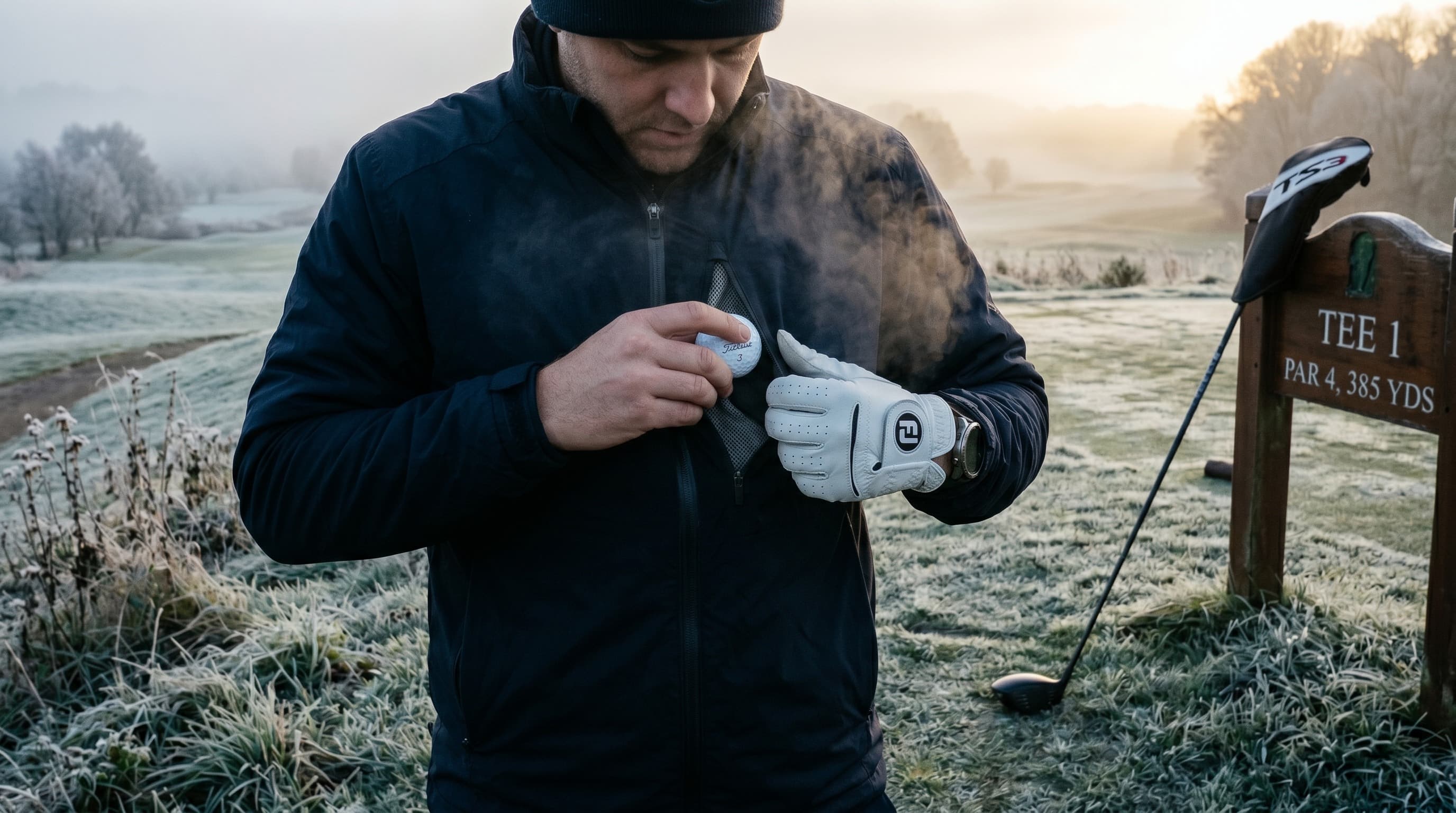
How Cold Weather Steals Distance: The Ball Compression Physics Every Golfer Should Know
Every 10°F drop costs the average golfer two to four yards of driver carry. Here is the physics — ball compression, air density, muscle temperature — and the field data we pulled from G-Score-monitored cold rounds to show exactly how distance loss compounds, and how to compensate without changing your swing.
Read Story
How to Read a G-Score: The 0–100 Golf Playability Number, Decoded
A G-Score on this site is a single 0–100 number that tells you whether today is worth tee-up. Here is exactly what each band means, what drives the calculation, and how to use it to plan a round you will actually score on.
Read StoryMinSu Kim
Founder & Golf Data Analyst
MinSu is a data analyst and golfer with 10+ years on the course. He built Golf Weather Score to answer one question: is today a good day to play? He combines weather data, course intelligence, and the proprietary G-Score algorithm to help golfers make smarter decisions.
Every Friday Morning
When Black River Golf Club plays best next weekend.
Friday 6am ET: peak G-Score windows for Black River Golf Club, wind direction by hour, and one gear call. Three minutes to read, save you the round.
One email a week. Unsubscribe in one click.
The Caddie's Oracle
Draw your luck before the tee off