
Caddie's Gear Advisor
Curated for today's 84°F · Clear
Tour-Level Drivers
Engineered for maximum distance and forgiveness
Laser Rangefinders
Pin-seeking technology for precision approaches
Premium Golf Balls
Tour-caliber spin and distance performance
Performance Sunglasses
Polarized lenses optimized for reading greens
Your Golf Trip, Handled
The Ultimate Golf Trip Planner
Everything you need to play Boone Golf Club — from booking your flight to checking in course-side.
Course-Side Stays
Luxury hotels, resorts, and stay-and-play packages just minutes from the first tee.
Flights
Compare fares across 700+ airlines for the best route to your tee time.
SUV Rentals for Golf Bags
Spacious vehicles with room for clubs, bags, and your foursome.
Travel Insurance
Coverage for medical, weather delays, and gear at your destination.
Boone Golf Club: Course Intelligence
Signature Setup
Boone Golf Club sits in the High Country of western North Carolina, in Watauga County, at roughly 3,300 feet of elevation — high enough that the air itself changes how the course plays. Public record credits the layout to Ellis Maples, opened in 1959, a parkland par 71 routed through the floor of a mountain valley with the Blue Ridge rising on every side. Maples used the natural grade rather than fighting it, so the round climbs and falls with the land. I'll be honest with readers: I have not played Boone myself, so the hole-by-hole judgments below lean on the Appalachian weather record and on rounds I've walked at comparable mid-elevation mountain tracks where altitude and valley drafts govern scoring more than any bunker does. Where I'm reasoning from climate data rather than a personal scorecard, I'll mark it.
Hole-by-Hole Wind & Playing Lines
In a mountain valley the wind doesn't behave like it does on open ground — it funnels along the valley axis and swirls near the ridges, so direction matters more than raw speed.
- The #1-handicap par-4 (~430y): This plays uphill, and the instinct is to club up for the climb. But at 3,300 feet the ball carries roughly 5–7% farther than at sea level. From the data, the elevation gain and the thin air roughly cancel — play the card number, not card-plus-two, or you fly the green.
- The signature par-3 (~175y): Framed by the ridge, it sits exposed to the along-valley draft. On a down-valley breeze the 7-iron becomes an 8; into it, a soft 6. Aim center, because a ridge swirl will move a flag-hunting shot more than you expect.
- Closing holes: Afternoon thermals build off the warming valley floor by 2 p.m. in summer. Morning groups play dead-still air; afternoon groups fight a quartering 8–12 mph breeze the early wave never feels.
Green & Fairway Characteristics
The cool High Country summer is the reason these greens are bentgrass and not the bermuda you'd find 200 miles east in the Piedmont heat. They roll a comfortable low-to-mid 9 on the stimp through summer, firm but receptive. Fairways are a rye/bluegrass mix that turns firm and fast-running by August's dry stretch and goes soft quickly after the frequent mountain afternoon showers. The rolling valley grade means a lot of uneven lies — ball-above-feet and ball-below-feet shots are routine, and that, more than the 6,400-or-so yardage, is what defends the course.
Seasonal Weather Pattern
Boone runs a genuinely different calendar from lowland North Carolina because of the altitude. July highs sit around a mild 78–80°F — cooler than almost anywhere else in the state — while January lows drop near 22°F and snow regularly closes the course in deep winter. The standout window is autumn: late September into October brings Blue Ridge foliage and crisp, dry, low-humidity air with morning starts in the 40s°F. Summer mornings frequently begin under valley fog that doesn't burn off until mid-morning, then open into bluebird afternoons. The shoulder months — April and late October — are the variable-temperature gamble, swinging 30°F between dawn and mid-afternoon.
Local Play Tips
The local knowledge that the yardage book won't give you: altitude and fog, working together. At 3,300 feet your normal carry distances are off by half a club to a full club longer than the sea-level numbers in your head, and it takes a few holes to recalibrate — don't over-club early. Pair that with the summer fog pattern: the valley holds a damp morning mist that lifts late, so the first hour can play soft and slow before the course firms up. The reward for an early tee time is the calmest, clearest air of the day, before the afternoon valley thermals and storms arrive.
Pre-Round Weather Workflow
Use the 7-day G-Score on this course page as a planning tool, not just a single number. Two days out, check the wind direction relative to the valley axis: an along-valley reading means the exposed par-3s play a half-club different than the card. Check windExposure for the ridge-side holes — a high-exposure day means trusting center-of-green targets over flags. The morning of, watch two things: the overnight low (anything near the 40s°F in shoulder season can mean a chilly, distance-robbing start despite the altitude help) and the fog forecast (a damp valley morning plays soft and slow until it clears). Play the altitude and the valley draft, not just the yardage, and Boone gives the round back to you.
Related Reading
Before you tee off at Boone Golf Club
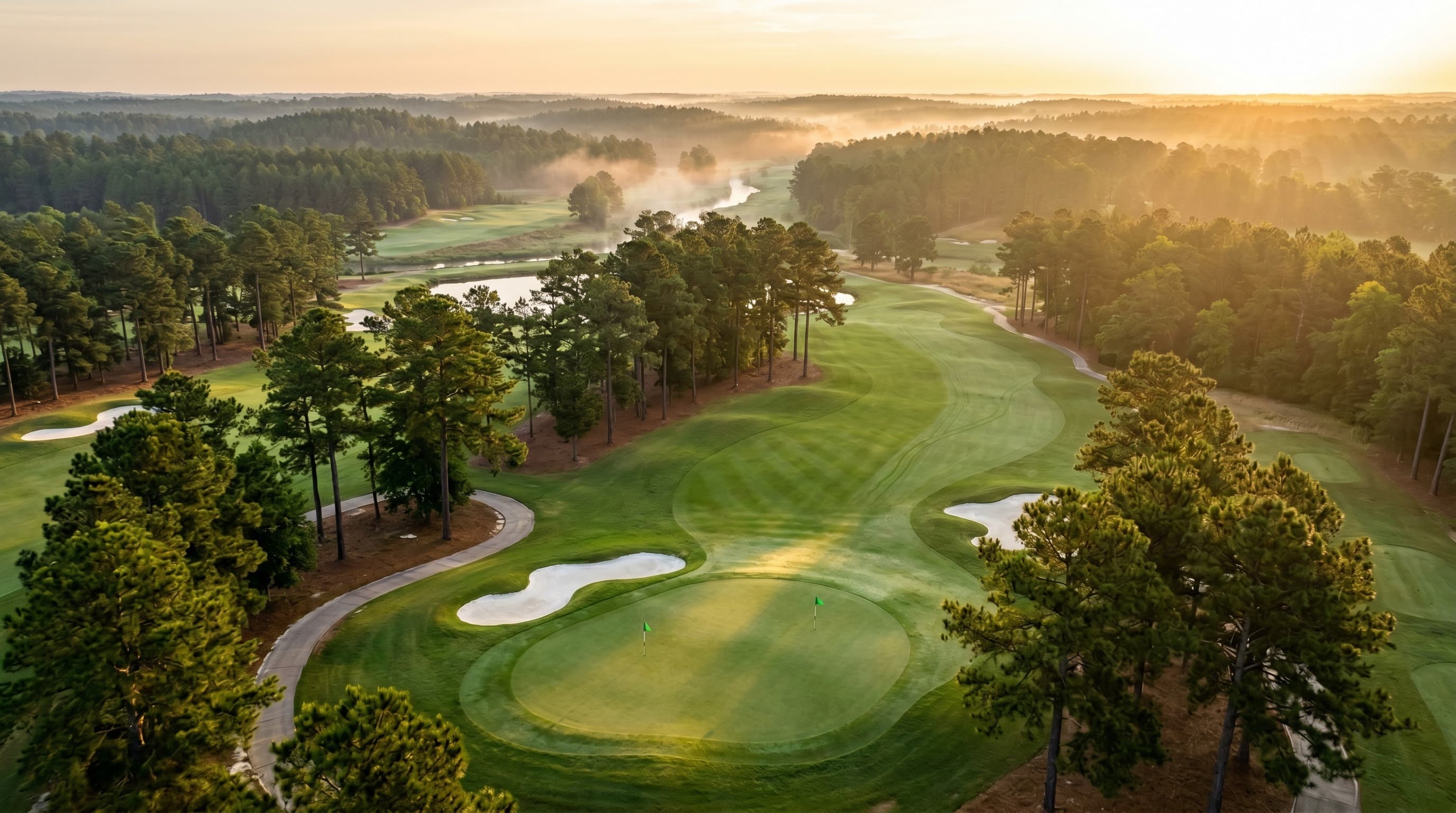
The May 2026 G-Score Heatmap: Where American Golf Peaks This Spring
May is the most underrated month on the American golf calendar. Five regions hit their annual peak this spring, three turn quietly hostile, and the data tells a clearer story than the brochures. Here is where to play, where to avoid, and how to time your booking window.
Read Story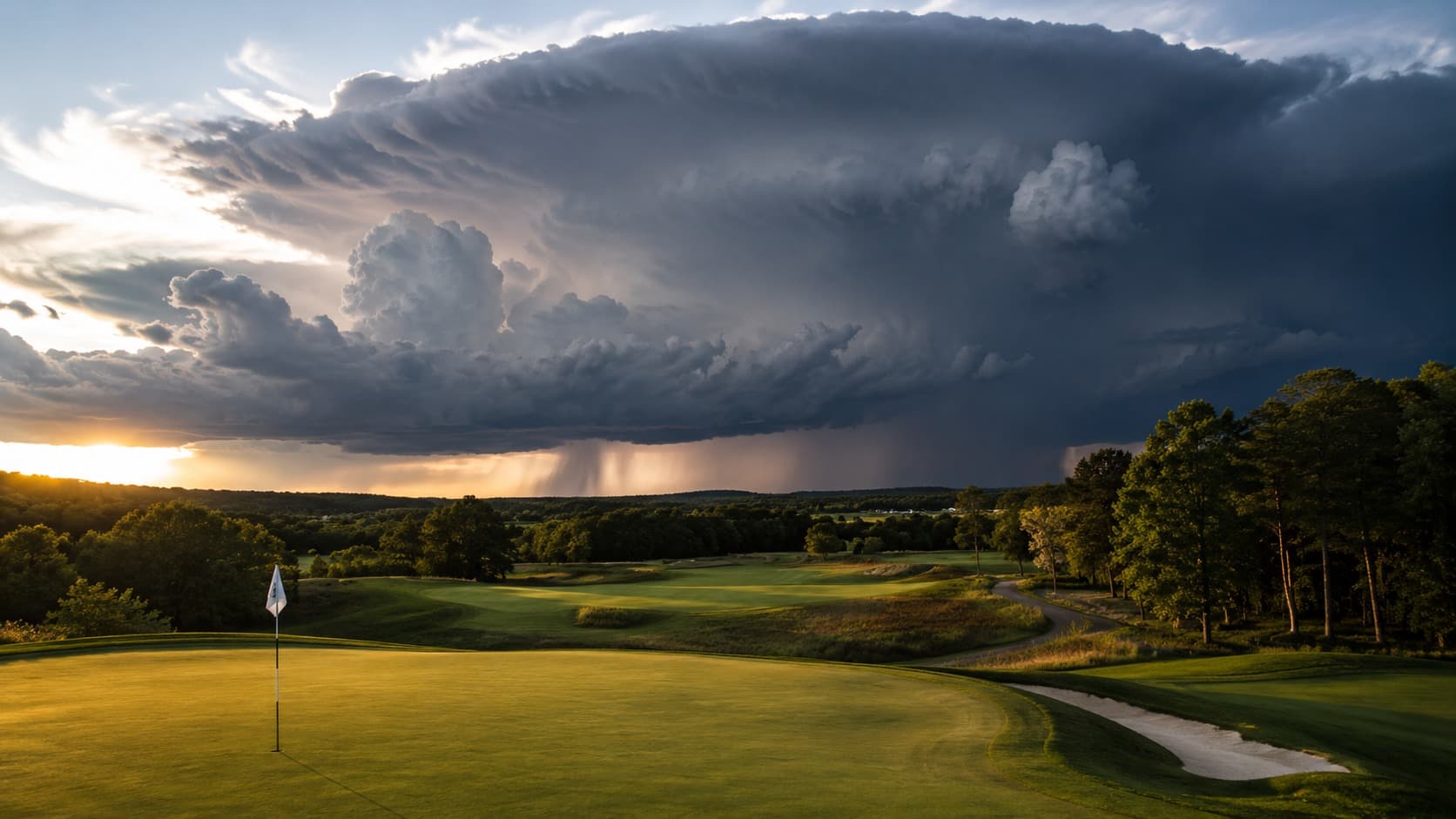
The Three O’Clock Storm: Reading Summer’s Convective Cycle to Protect Your Round
A 40% chance of afternoon thunderstorms does not mean a 40% chance of getting rained on. In the summer convective season it means the morning is nearly clear and the afternoon carries a fast-building, high-energy storm risk driven by a daily heating cycle. Here is the meteorology behind the pattern, the G-Score data on how the storm cycle punishes afternoon tee times across the Southeast, Midwest, and desert Southwest, the lightning-safety decision tree that actually matters, and the workflow that gets you off the course before the first bolt.
Read StoryMinSu Kim
Founder & Golf Data Analyst
MinSu is a data analyst and golfer with 10+ years on the course. He built Golf Weather Score to answer one question: is today a good day to play? He combines weather data, course intelligence, and the proprietary G-Score algorithm to help golfers make smarter decisions.
Every Friday Morning
When Boone Golf Club plays best next weekend.
Friday 6am ET: peak G-Score windows for Boone Golf Club, wind direction by hour, and one gear call. Three minutes to read, save you the round.
One email a week. Unsubscribe in one click.
The Caddie's Oracle
Draw your luck before the tee off