
Caddie's Gear Advisor
Curated for today's 79°F · Thunderstorm
Storm-Ready Outerwear
Waterproof layers built for 18 holes in the rain
Tour-Grade Umbrellas
68" double-canopy wind-resistant coverage
Wet-Weather Gloves
All-weather grip that performs in the rain
Waterproof Golf Shoes
Keep your feet dry through every fairway
Your Golf Trip, Handled
The Ultimate Golf Trip Planner
Everything you need to play Boulder Creek Golf Club — from booking your flight to checking in course-side.
Course-Side Stays
Luxury hotels, resorts, and stay-and-play packages just minutes from the first tee.
Flights
Compare fares across 700+ airlines for the best route to your tee time.
SUV Rentals for Golf Bags
Spacious vehicles with room for clubs, bags, and your foursome.
Travel Insurance
Coverage for medical, weather delays, and gear at your destination.
Boulder Creek Golf Club: Course Intelligence
Signature Setup
The first thing the Mojave teaches you is that the scorecard yardage is a starting guess, not an answer. I've played enough desert golf around the Las Vegas valley to respect what the dry air and the afternoon wind do to a number, and Boulder Creek sits right in that lesson. Let me be straight about this one: Boulder Creek Golf Club is a 27-hole public facility in Boulder City, Nevada, southeast of Las Vegas, designed by Mark Rathert and opened in 2003. Its three nines — Coyote Run, Desert Hawk, and Eldorado Valley — combine into full 18-hole rounds, and the routing runs through open high-desert terrain at roughly 2,400 feet of elevation with the Eldorado Valley and the surrounding mountains framing the holes. I'm writing the hole logic from that geography and from Mojave climate records rather than claiming a hole-by-hole card I can't verify in front of me.
TL;DR: A 2003 Mark Rathert 27-hole desert course in Boulder City, NV (Coyote Run / Desert Hawk / Eldorado Valley nines), at ~2,400 ft. The defense isn't tree-lined trouble — it's the thin dry air that flatters carry and the afternoon Eldorado Valley wind and heat that take it right back. Play a dawn tee time and re-club for the wind.
Hole-by-Hole Wind & Playing Lines
I won't assign hole numbers and exact yardages I can't confirm from a card, so here's the playing logic that actually decides scoring on a high-desert layout in this valley:
- The exposed par-3s over a wash: Calm at dawn, these are honest one-club holes. By early afternoon the Eldorado Valley wind fills in, and a 15–20 mph gust turns a smooth 7-iron into a knockdown 5-iron held under the wind. Take the extra club, flight it low, and accept the fat of the green over flirting with the front wash.
- The longer par-4s into the prevailing afternoon wind: The thin air at 2,400 ft gives you maybe 6–8% more carry on a calm morning, which is real free distance — but into a desert headwind that bonus evaporates and then some. Re-club every approach by feel, not by the number on the sprinkler head.
- The downwind holes: The same wind that punishes you one direction gifts you the other. Downwind, a desert ball flies and then runs out on firm turf — land it short and let it chase, because an aggressive carry to a back flag will release over.
The habit that travels here: read the wind before the yardage, every single shot.
Green & Fairway Characteristics
This is target golf on Bermuda turf that's overseeded with ryegrass for the winter season, so the firmness swings with the calendar. In the cool months the fairways are firm and fast and your roll-out is generous; through the deep summer the turf is stressed and the ball reacts a touch quicker off hardpan-firm desert lies. Landing zones are framed by native rock, sand, and desert wash — miss the corridor and you're not chipping from rough, you're often playing off bare desert or taking a drop. The greens run quick and true; on firm afternoons a shot that lands hot will skip through, so favor landing the ball below the hole and letting the slope feed it. Position over power is the whole game: the smart line into the fat side beats the hero line at a tucked desert pin almost every time.
Seasonal Weather Pattern
Boulder City's high-desert microclimate runs to extremes, and that's the planning story. Late fall through early spring — roughly November to March — is the prime window: daytime highs commonly in the 55–68°F range, low humidity, and lighter morning wind, with the overseeded turf at its best. Spring warms quickly and brings the windier afternoons as the valley heats and air moves. Then summer is brutal: June through August routinely sees highs of 100–108°F with intense sun and very low humidity, and the heat builds fast through the day — midday rounds in that stretch are a genuine endurance and safety question, not a comfort one. The upside of the dry Mojave air is firm, playable turf nearly year-round and very few rain washouts; the trade is the heat and the wind, not precipitation.
Local Play Tips
One piece of first-hand desert logic that won't show on any scorecard: in this valley the wind and the heat are both a clock, and they run together. The Eldorado Valley acts like a funnel — as the desert floor heats through the morning, the afternoon wind reliably stiffens, so the same hole you played dead calm at 7 a.m. can be a two-club wind by 2 p.m. That means a dawn round isn't just cooler, it's a measurably easier scoring game. Practical move: in spring and summer, take the earliest tee time you can get, carry far more water than you think you need, and watch the flags on the early holes — if they're already snapping by the turn, the back nine will be a full wind game and you should commit to flighting everything down. Treat the heat like a hazard you manage hole by hole, the same way you'd manage water.
Pre-Round Weather Workflow
Use the 7-day G-Score and the windExposure read on this page as a pre-round routine, not an afterthought. A few days out, scan the G-Score trend and target the calmer, cooler morning slots — in this desert valley the spread between a dawn and an afternoon round is often the difference between a comfortable score and a grind. The day before, check the forecast high and the afternoon wind: if the high is pushing triple digits or the wind is forecast above 15 mph by early afternoon, move your tee time earlier rather than fighting it. On the range before you start, hit a few stock wedges and mid-irons to feel that morning's air — the dry, thin Mojave air will flatter your carry, and you want to calibrate that before the first tee, then re-club upward as the valley wind builds through the round.
Related Reading
Before you tee off at Boulder Creek Golf Club

The May 2026 G-Score Heatmap: Where American Golf Peaks This Spring
May is the most underrated month on the American golf calendar. Five regions hit their annual peak this spring, three turn quietly hostile, and the data tells a clearer story than the brochures. Here is where to play, where to avoid, and how to time your booking window.
Read Story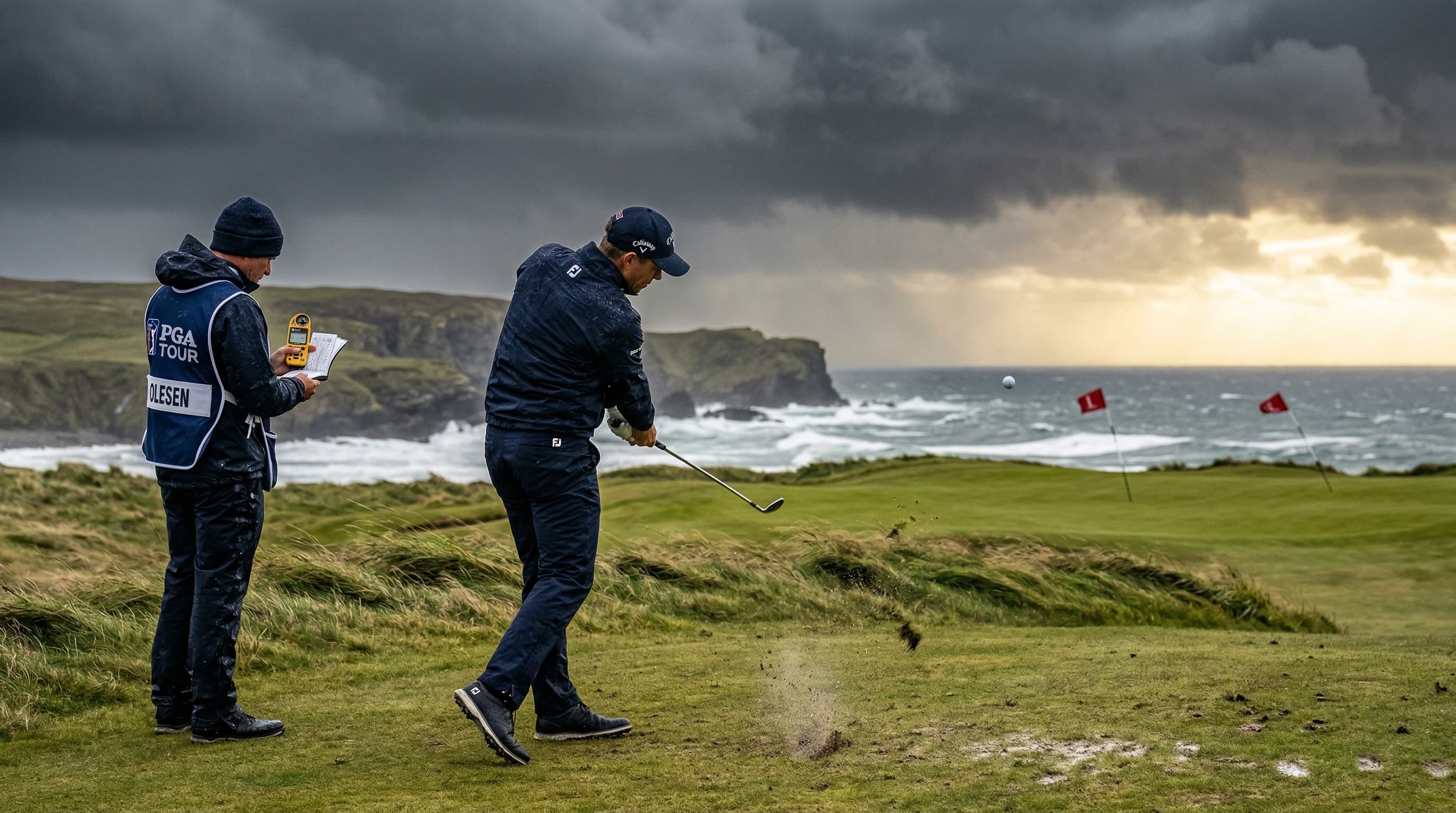
Golf Weather Physics: How Temperature, Altitude, and Humidity Change Ball Flight
Real physics data on how temperature, altitude, humidity, and wind change your golf ball flight — with specific yard adjustments, named course examples, and measured G-Score data from courses we track daily.
Read StoryMinSu Kim
Founder & Golf Data Analyst
MinSu is a data analyst and golfer with 10+ years on the course. He built Golf Weather Score to answer one question: is today a good day to play? He combines weather data, course intelligence, and the proprietary G-Score algorithm to help golfers make smarter decisions.
Every Friday Morning
When Boulder Creek Golf Club plays best next weekend.
Friday 6am ET: peak G-Score windows for Boulder Creek Golf Club, wind direction by hour, and one gear call. Three minutes to read, save you the round.
One email a week. Unsubscribe in one click.
The Caddie's Oracle
Draw your luck before the tee off