
Caddie's Gear Advisor
Curated for today's 78°F · Clear
Tour-Level Drivers
Engineered for maximum distance and forgiveness
Laser Rangefinders
Pin-seeking technology for precision approaches
Premium Golf Balls
Tour-caliber spin and distance performance
Performance Sunglasses
Polarized lenses optimized for reading greens
Your Golf Trip, Handled
The Ultimate Golf Trip Planner
Everything you need to play Bowes Creek Country Club — from booking your flight to checking in course-side.
Course-Side Stays
Luxury hotels, resorts, and stay-and-play packages just minutes from the first tee.
Flights
Compare fares across 700+ airlines for the best route to your tee time.
SUV Rentals for Golf Bags
Spacious vehicles with room for clubs, bags, and your foursome.
Travel Insurance
Coverage for medical, weather delays, and gear at your destination.
Bowes Creek Country Club: Course Intelligence
Signature Setup
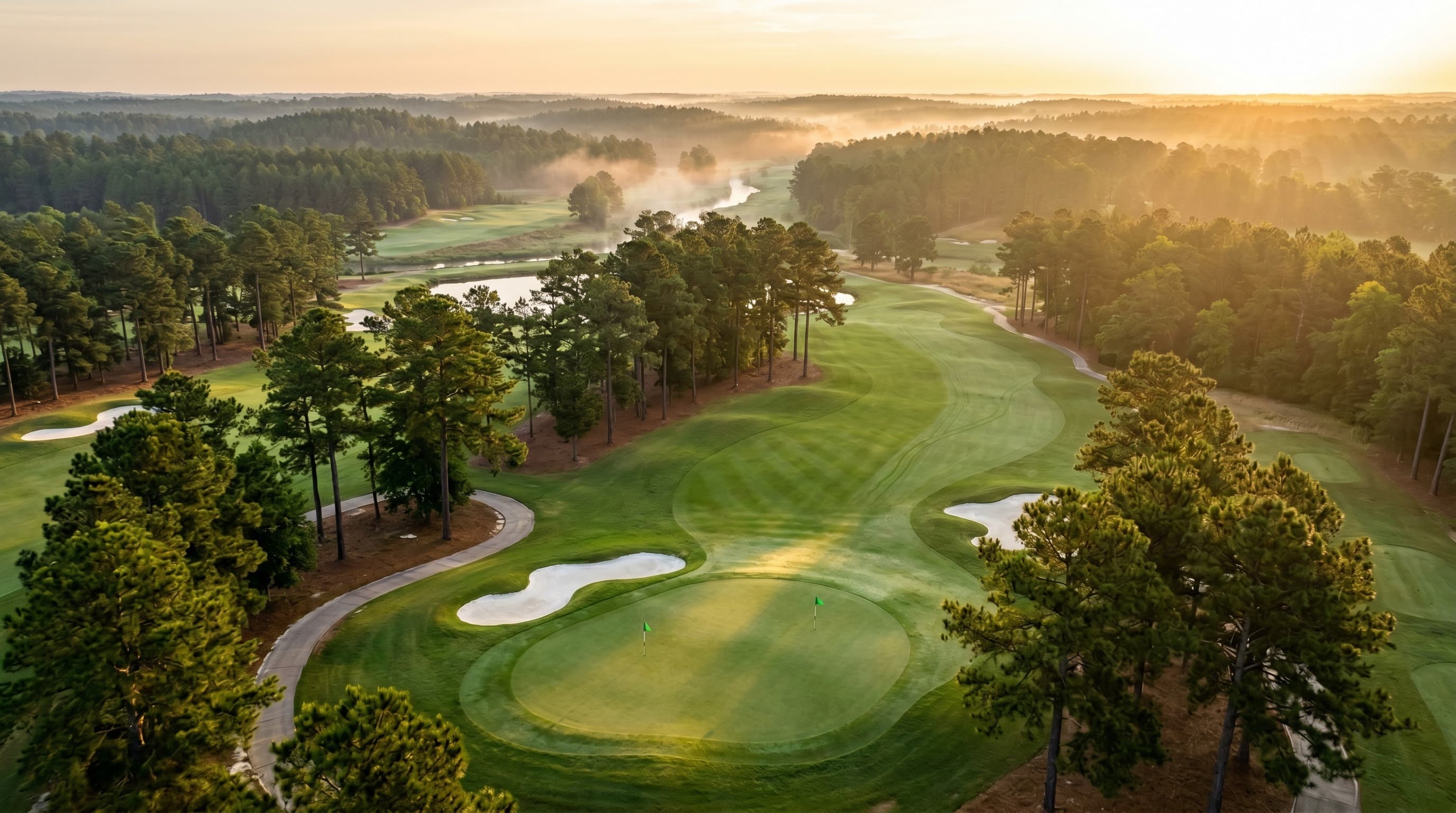
Straight talk before the strategy: I built this from Bowes Creek's scorecard, its Rick Jacobson prairie routing, and the Fox Valley climate I've driven through many fall mornings on the way to courses farther west — I haven't walked all 18 here, and I won't dress a study up as a round I didn't play. The course sits in Elgin, Illinois, on the open glacial prairie of the far northwest Chicago suburbs, woven into a Toll Brothers residential community. Jacobson opened it in 2007 as a prairie-style layout: wide corridors, restored native fescue, and the Bowes Creek that gives the place its name threading through the lower holes. It's the kind of routing where the grassland itself — not trees, not water hazards stacked on every hole — is the strongest defense the builders had. What I can stand behind is the one feature that actually protects par on ground this exposed: the wind off the prairie.
TL;DR: Rick Jacobson prairie-style course (2007) in Elgin, IL, far northwest of Chicago. Open fescue grassland, the Bowes Creek corridor, firm summer turf. No lake breeze reaches this far inland — fronts drive the wind. Flight it low, place it wide of the fescue, and plan around the weather systems rather than the clock.
Hole-by-Hole Wind & Playing Lines
Bowes Creek doesn't publish a stroke-index breakdown I'd stake a yardage on, so rather than invent hole numbers I'll lay out how the wind governs a prairie layout this open:
- Long par-4s into a spring SW wind: when the prevailing southwesterly climbs to 15–20 mph — routine across the Fox Valley in April and May — a 150-yard club starts behaving like a 175. Two more clubs, a low boring flight, and a target on the wide side; a high ball balloons and drops short into the fescue collar.
- Downwind holes on a post-front NW breeze: with a dry northwesterly behind a cleared cold front, the firm fairways run and a 150-yard shot can shrink toward 130. Land it short and let it chase on — a hot, high pitch skips straight off a baked bentgrass green.
- Creek-corridor holes: where Bowes Creek comes into play down low, a crossing wind, not the water alone, sets the danger. Keep a low cut or draw boring under the gust and you'll out-score a longer hitter who only flies it tall and straight over the hazard.
The carryover skill: read the wind on the opening exposed hole — dry frontal air versus a humid summer thermal — and let that one judgment govern your clubbing for the rest of the round.
Green & Fairway Characteristics
The greens play as bentgrass on rolling, glacially shaped prairie ground, framed by links-style mounding and tall native fescue rather than tree lines. The challenge is exposure and firmness more than wild contour. Through a dry Midwest summer the fairways firm up and the ball chases along the ground — exactly the prairie-golf character Jacobson was after. With little timber to break the wind, your stock yardages only hold in the rare calm window. After a wet stretch the greens grab more and a bump-and-run you trusted in August may need to be flown in May. Roll a few putts and test fairway firmness on the range before you commit to a single number off the card.
Seasonal Weather Pattern
Bowes Creek sits in a continental northern-Illinois climate, about 40 miles inland from Lake Michigan — far enough that the lake breeze that cools downtown Chicago never reaches it. Spring (Apr–May) is the windiest stretch of the golf season here, with strong SW-to-NW shifts behind passing fronts and big day-to-day temperature swings — often the toughest scoring conditions of the year. Summer (Jun–Aug) turns warm and humid, highs commonly in the mid-80s°F, a prevailing S/SW breeze, fast firm turf, and a real risk of afternoon thunderstorms and straight-line wind that can halt play. Fall (Sep–Oct) is the prime window — crisp mornings, dry NW air behind departing systems, firm greens, and the most pleasant golf of the year on the Fox Valley prairie. Winter closes the course for Chicago-area cold and snow; for that stretch I lean on NOAA Chicago/Aurora historical records rather than anything I've seen on the ground.
Local Play Tips
The reflex a coastal or lakefront golfer brings that fails out here: there's no afternoon sea breeze to time, so an early tee slot buys you nothing automatically. Forty miles inland, the wind at Bowes Creek is system-driven — what shapes your round is whether a cold front has cleared or is still building, not whether you're off at 7 a.m. or 1 p.m. A high-pressure bluebird day can sit calm at any hour; a spring frontal passage or a summer outflow boundary can hold 20 mph gusts on you from the first tee to the last. Track the NW shift behind a departing front and you'll read this prairie better than a player who just grabs the first available slot. And carry more club than feels right into the fescue-framed approaches — open prairie greens devour high, soft shots.
Pre-Round Weather Workflow
Use the 7-day G-Score and windExposure panel on this course page as a planning tool, not a formality. Two days out, note which direction the wind is forecast to come from and whether a front is timed to pass during your round — that single read decides your clubbing more than the temperature does. The morning of, check the G-Score for the gust ceiling: under roughly 10 mph, play your stock yardages; into a 15–20 mph prairie wind, pre-commit to taking two extra clubs and flighting the ball low. Cross-check the windExposure rating against the holes that run through the open fescue and the Bowes Creek corridor — those are where an exposed crossing wind will cost you most. Plan the round around the system on the map, not the slot on the sheet, and Bowes Creek rewards you for it.
Related Reading
Before you tee off at Bowes Creek Country Club
The May 2026 G-Score Heatmap: Where American Golf Peaks This Spring
May is the most underrated month on the American golf calendar. Five regions hit their annual peak this spring, three turn quietly hostile, and the data tells a clearer story than the brochures. Here is where to play, where to avoid, and how to time your booking window.
Read Story
Golf Weather Physics: How Temperature, Altitude, and Humidity Change Ball Flight
Real physics data on how temperature, altitude, humidity, and wind change your golf ball flight — with specific yard adjustments, named course examples, and measured G-Score data from courses we track daily.
Read StoryMinSu Kim
Founder & Golf Data Analyst
MinSu is a data analyst and golfer with 10+ years on the course. He built Golf Weather Score to answer one question: is today a good day to play? He combines weather data, course intelligence, and the proprietary G-Score algorithm to help golfers make smarter decisions.
Every Friday Morning
When Bowes Creek Country Club plays best next weekend.
Friday 6am ET: peak G-Score windows for Bowes Creek Country Club, wind direction by hour, and one gear call. Three minutes to read, save you the round.
One email a week. Unsubscribe in one click.
The Caddie's Oracle
Draw your luck before the tee off