
Caddie's Gear Advisor
Curated for today's 62°F · Clouds
Tour-Level Drivers
Engineered for maximum distance and forgiveness
Laser Rangefinders
Pin-seeking technology for precision approaches
Premium Golf Balls
Tour-caliber spin and distance performance
Performance Sunglasses
Polarized lenses optimized for reading greens
Your Golf Trip, Handled
The Ultimate Golf Trip Planner
Everything you need to play Brad Sill Golf Center — from booking your flight to checking in course-side.
Best time to golf in South CarolinaCourse-Side Stays
Luxury hotels, resorts, and stay-and-play packages just minutes from the first tee.
Flights
Compare fares across 700+ airlines for the best route to your tee time.
SUV Rentals for Golf Bags
Spacious vehicles with room for clubs, bags, and your foursome.
Travel Insurance
Coverage for medical, weather delays, and gear at your destination.
Brad Sill Golf Center: Course Intelligence
Signature Setup
Let me be straight with you before we start, the way I'd want a writer to be with me: Brad Sill Golf Center sits in upstate South Carolina — the coordinates put it in Greenville County, in the Greer/Taylors corridor northeast of downtown Greenville — and from everything I can verify, it is a golf center: a practice and instruction facility, range tee, short-game area, the kind of place you go to build a swing, not card a score. I have not found a published designer, opening year, or 18-hole routing for it, and I have not hit balls there myself, so what follows is practice-facility reasoning plus upstate-SC climate pattern — not a round I'm dressing up as memory.
TL;DR: A golf practice center in the Greenville, SC area (Piedmont upstate). Treat it as a wind-and-distance calibration lab, not a course to "play." Bermuda-base turf goes firm under summer high pressure, soft after afternoon storms. The single most useful thing you can do here is learn exactly how the prevailing SW breeze changes your yardages — then take that number to a real upstate course the same week.
Hole-by-Hole Wind & Playing Lines
A practice center flips the usual logic: there are no holes to attack, only ball-flights to build. So instead of inventing a hole-by-hole card I can't verify, here is how upstate-SC wind should shape what you rehearse on the range tee:
- Long iron / hybrid into the prevailing SW breeze: Greenville's warm-season flow is predominantly out of the southwest. A 165-yard 6-iron that flies clean on a still morning plays a club-and-a-half longer once that breeze fills in by early afternoon. Rehearse the adjustment, not the stock shot: take one extra club, move the ball back a touch, and flight it down so the wind can't balloon it.
- Wedge work in a gusty crosswind: This is where range practice pays off most. A 90-yard wedge held into a 12–15 mph quartering wind drifts more than players expect. Practice a lower, fuller wedge that holds its line instead of a soft high one the wind grabs.
- Downwind driver / long game: With a tailwind, your carry numbers inflate and you start chasing distance you won't have on a calm day. Note the difference so you don't over-club into trouble on the course later.
The habit that travels off this tee line: a personal yardage chart that already accounts for wind, so the course doesn't surprise you.
Green & Fairway Characteristics
A golf center's surfaces are practice surfaces — expect a range tee (mats, grass, or both), a practice putting green, and a short-game/chipping area rather than a fairway-and-green routing. On Piedmont ground the turf base is warm-season bermuda, and the single biggest variable is firmness, which swings hard with the weather: under a dry July high the putting and short-game greens bake out fast and release everything, while after the region's frequent afternoon thunderstorms they soften and hold. Use that to your advantage — practice firm-green release shots on the dry days and high spinning shots after rain, so you've rehearsed both before you meet them on a real course.
Seasonal Weather Pattern
Upstate South Carolina is humid-subtropical but milder and a touch cooler than the Lowcountry coast, thanks to the Piedmont elevation. Spring (Mar–May): the sweet spot — highs in the 60s–70s°F, lower humidity, generally calmer mornings; the best window for clean ball-flight work. Summer (Jun–Aug): hot and humid, highs in the upper-80s to low-90s°F, with near-daily afternoon thunderstorm risk building after about 2–3 p.m. — practice early, and watch the radar. Fall (Sep–Oct): firm, dry, often the most pleasant stretch of the year, with crisp post-front NW winds. Winter (Dec–Feb): cool but very playable, with frequent 50s°F afternoons and only occasional hard freezes; bermuda surfaces go dormant and firm. For anything I can't observe firsthand I lean on NOAA's Greenville-Spartanburg (GSP) historicals rather than guessing.
Local Play Tips
Here's the practical thing most golfers underrate about a center like this: it's the cheapest, fastest wind-calibration lab you'll ever find, and almost nobody uses it that way. Don't just rake balls and swing for the fence. Pick one club — say your 7-iron — and hit ten balls into the prevailing SW breeze, then ten with your back to it, and write down the carry difference. Do the same with a wedge. Within an hour you'll have a personal wind chart that turns a guessing game into arithmetic on every nearby Greenville-area course. Practice early in summer to beat both the heat and the afternoon storm cells, and if grass tees are available after a dry spell, use them to feel how firm bermuda affects your strike — that's information a mat will never give you.
Pre-Round Weather Workflow
Treat golfweatherscore's 7-day G-Score and windExposure as your practice-timing tool here, not a scorecard predictor:
- The day before: scan the G-Score trend and pick a calm-ish morning window, ideally before summer's afternoon storm risk builds. Calm air lets you isolate your swing; you add the wind variable on purpose, not by accident.
- Session start: lock in wind direction and speed. A SW breeze is the upstate default — set up your into-wind and downwind stations to match it so the numbers you log are the ones you'll actually face on local courses.
- If windExposure flags sustained gusts over ~18 mph: don't fight it — make it the drill. Club up a full club into the breeze, flight everything lower, and treat the whole session as wind-control work. That's exactly the skill that saves you strokes when you carry it from this range to a real tee.
Related Reading
Before you tee off at Brad Sill Golf Center

America's 20 Windiest Golf Courses: A G-Score Wind Analysis
We ranked America's 20 windiest golf courses using G-Score wind penalty data. See how coastal gusts and prairie gales reshape playability scores.
Read Story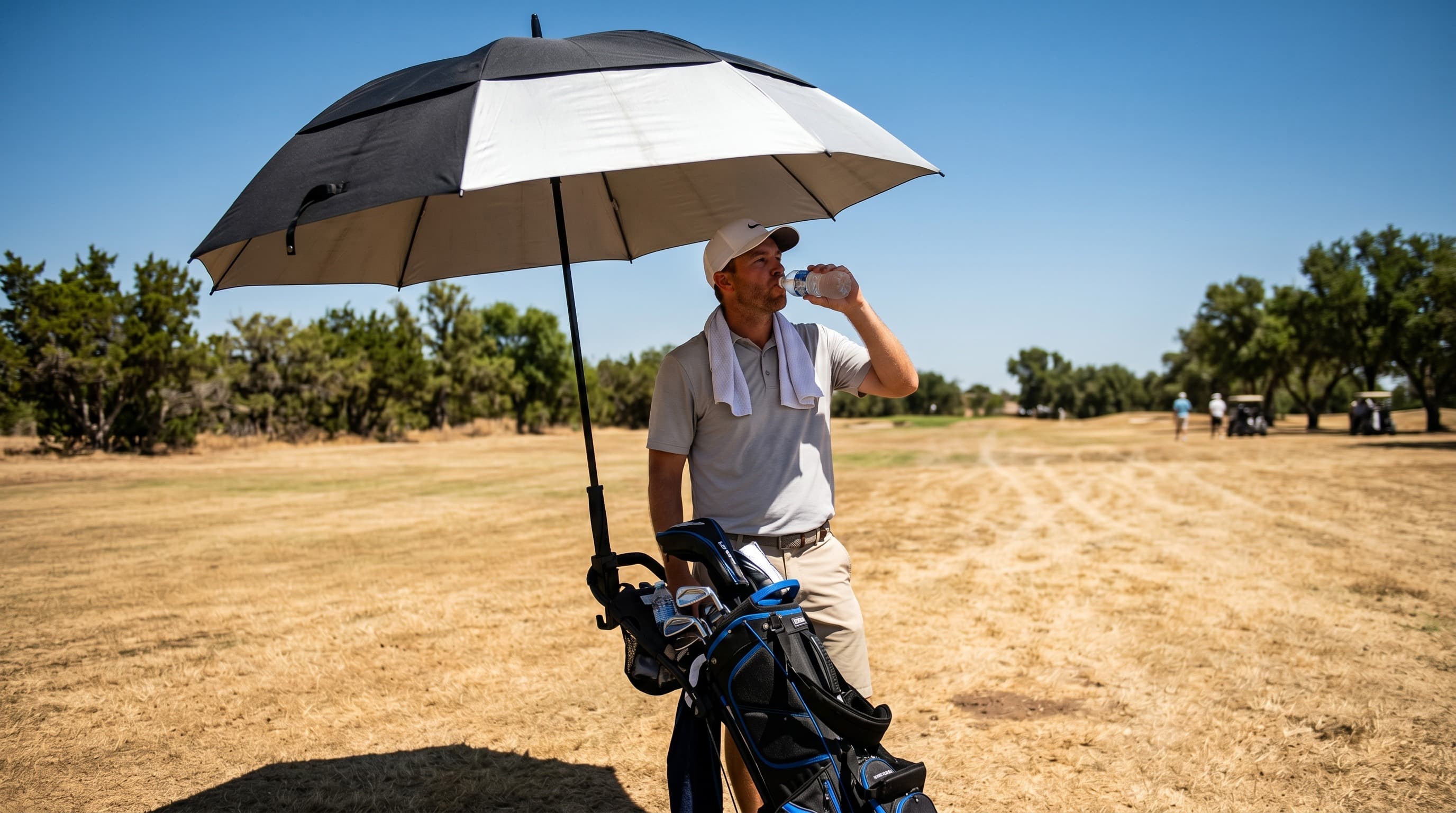
The Summer Golf Survival Guide: Beat the Heat Without Losing Your Game
Summer heat kills more than just your energy — it degrades your decision-making, grip, and ball flight. Here is the complete guide to playing smart golf when temperatures push past 90 degrees.
Read StoryDanorie
Editorial & Data
Golf Weather Score is built by Danorie. We compute the G-Score — our own playability rating — from live NOAA forecasts and published course scorecards, so any US course can be compared on any day with a single number. Methodology and data sources are documented on every page.
Every Friday Morning
When Brad Sill Golf Center plays best next weekend.
Friday 6am ET: peak G-Score windows for Brad Sill Golf Center, wind direction by hour, and one gear call. Three minutes to read, save you the round.
One email a week. Unsubscribe in one click.
The Caddie's Oracle
Draw your luck before the tee off