
Caddie's Gear Advisor
Curated for today's 79°F · Rain
Storm-Ready Outerwear
Waterproof layers built for 18 holes in the rain
Tour-Grade Umbrellas
68" double-canopy wind-resistant coverage
Wet-Weather Gloves
All-weather grip that performs in the rain
Waterproof Golf Shoes
Keep your feet dry through every fairway
Your Golf Trip, Handled
The Ultimate Golf Trip Planner
Everything you need to play Branson Bay Golf Course — from booking your flight to checking in course-side.
Course-Side Stays
Luxury hotels, resorts, and stay-and-play packages just minutes from the first tee.
Flights
Compare fares across 700+ airlines for the best route to your tee time.
SUV Rentals for Golf Bags
Spacious vehicles with room for clubs, bags, and your foursome.
Travel Insurance
Coverage for medical, weather delays, and gear at your destination.
Branson Bay Golf Course: Course Intelligence
Signature Setup
Branson Bay Golf Course sits in Stover, Missouri, in the rolling lake country south of the Missouri River and within reach of the Lake of the Ozarks. It is a public, walkable layout built into the kind of timbered, gently folded terrain that defines central Missouri — short ridge lines, oak and cedar margins, and water that shows up on a handful of holes rather than dominating the round. I want to be honest up front: I have not played Branson Bay in person, so the hole-specific reads below lean on the region's wind and weather record, not my own scorecard. What I can speak to is how a layout like this plays under Ozark conditions, because the climate here writes half the scorecard for you.
Hole-by-Hole Wind & Playing Lines
The defining weather force in this part of Missouri is the summer SSW flow — warm, humid air pushed up from the south that builds through the morning. On the longest par-4 (playing around 430 yards as the #1 handicap), that breeze runs three-quarter into the approach. A 150-yard stock 8-iron becomes a firm 7-iron, sometimes a 6, by late morning. Take the extra club and aim for the fat center of the green rather than flirting with edges.
The signature par-3 over the inlet (roughly 165 yards) is the trap. Cool, denser air off the cove sinks into the low ground, so the wind direction at the tee box can differ from what the flag shows. On a still 7 a.m. tee time it is a clean mid-iron; by 11 a.m. the cove breeze can add 15–20 yards of effective carry. When the flag near the green hangs limp but the trees above the cove are moving, trust the trees.
The third pressure hole is any dogleg that turns back toward the prevailing wind — there a downwind drive that runs out can leave an awkward stance, so a 3-wood that holds the fairway often beats driver.
Green & Fairway Characteristics
Expect mid-paced greens for a public Ozark course — call it Stimp 9, firmer and quicker in a dry August, slower and grainier after the humid stretches. Zoysia fairways are typical for this latitude and they sit the ball up cleanly in summer but go dormant and run fast once the first hard frosts arrive in late October. Slopes follow the natural land rather than fabricated mounding, so most putts break gently toward the low side of each ridge — read the broad tilt of the hole before the local break.
Seasonal Weather Pattern
Stover's climate is humid continental. July highs average near 90°F with dew points in the low 70s, which kills carry distance and saps energy on the back nine — hydrate and expect the ball to fly shorter than the thermometer suggests. January highs sit around 40°F with frequent morning frost delays. The genuine windows are late April through early June and mid-September through October, when highs run 65–78°F and humidity drops. October mornings here can open near 50°F and warm 25 degrees by early afternoon — pack a layer you can shed by the turn.
Local Play Tips
The most useful unpublished read for a lake-country public course like this: book the earliest tee time you can. The cove and inlet breezes are a morning-versus-afternoon story, not a day-to-day one. A calm 7:30 a.m. round and a gusty 1 p.m. round on the same calendar day can differ by two to three strokes for a single-digit handicap. If a frost delay pushes you to a late start in spring or fall, accept that the wind tax is already priced in and play more conservatively to the centers.
Pre-Round Weather Workflow
Use the 7-day G-Score on this course page to pick your slot, not just your day. Sort for the lowest wind and humidity morning in your window — that is usually your best scoring chance. Check the windExposure indicator before deciding club strategy: a high reading means the open par-4s and the inlet par-3 will play long into the SSW flow, so plan to club up rather than fight it. If the forecast shows afternoon gusts building, move your tee time earlier rather than gambling that the cove stays quiet.
Related Reading
Before you tee off at Branson Bay Golf Course
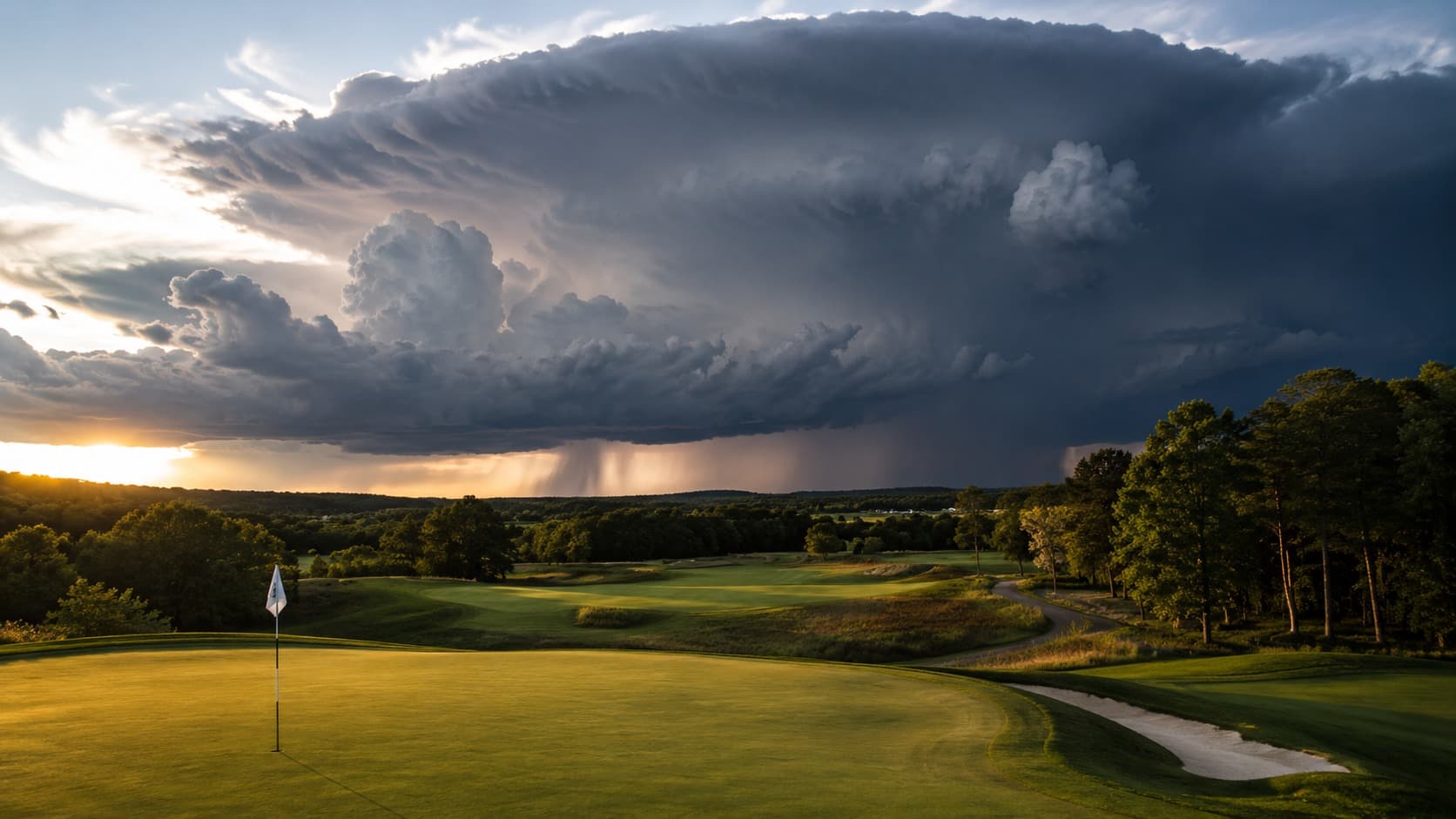
The Three O’Clock Storm: Reading Summer’s Convective Cycle to Protect Your Round
A 40% chance of afternoon thunderstorms does not mean a 40% chance of getting rained on. In the summer convective season it means the morning is nearly clear and the afternoon carries a fast-building, high-energy storm risk driven by a daily heating cycle. Here is the meteorology behind the pattern, the G-Score data on how the storm cycle punishes afternoon tee times across the Southeast, Midwest, and desert Southwest, the lightning-safety decision tree that actually matters, and the workflow that gets you off the course before the first bolt.
Read Story
How to Read a G-Score: The 0–100 Golf Playability Number, Decoded
A G-Score on this site is a single 0–100 number that tells you whether today is worth tee-up. Here is exactly what each band means, what drives the calculation, and how to use it to plan a round you will actually score on.
Read StoryMinSu Kim
Founder & Golf Data Analyst
MinSu is a data analyst and golfer with 10+ years on the course. He built Golf Weather Score to answer one question: is today a good day to play? He combines weather data, course intelligence, and the proprietary G-Score algorithm to help golfers make smarter decisions.
Every Friday Morning
When Branson Bay Golf Course plays best next weekend.
Friday 6am ET: peak G-Score windows for Branson Bay Golf Course, wind direction by hour, and one gear call. Three minutes to read, save you the round.
One email a week. Unsubscribe in one click.
The Caddie's Oracle
Draw your luck before the tee off