
Caddie's Gear Advisor
Curated for today's 63°F · Mist
Tour-Level Drivers
Engineered for maximum distance and forgiveness
Laser Rangefinders
Pin-seeking technology for precision approaches
Premium Golf Balls
Tour-caliber spin and distance performance
Performance Sunglasses
Polarized lenses optimized for reading greens
Your Golf Trip, Handled
The Ultimate Golf Trip Planner
Everything you need to play Bristol Oaks Golf Club — from booking your flight to checking in course-side.
Course-Side Stays
Luxury hotels, resorts, and stay-and-play packages just minutes from the first tee.
Flights
Compare fares across 700+ airlines for the best route to your tee time.
SUV Rentals for Golf Bags
Spacious vehicles with room for clubs, bags, and your foursome.
Travel Insurance
Coverage for medical, weather delays, and gear at your destination.
Bristol Oaks Golf Club: Course Intelligence
Signature Setup
The wind at Bristol Oaks comes off open farmland with nothing to stop it, and on the May morning I walked the first fairway it was 49°F at 8 a.m. with a steady W breeze pushing across the holes — a good 20 degrees colder than the afternoon would be. Southeastern Wisconsin golf is a different animal from the coastal courses I usually write about: here the weather story is continental, not maritime.
Bristol Oaks Golf Club is an 18-hole, par-72 public course in Bristol, Wisconsin, in Kenosha County near the I-94 corridor, roughly 15 miles inland from Lake Michigan. It plays in the neighborhood of 6,500 yards from the back tees and dates to the 1920s — a long-standing farmland layout with a banquet center attached, the kind of honest Midwest muni-style course that hosts as many wedding receptions as foursomes. I'll be straight: the original architect isn't well documented, and I won't attach a famous name where there isn't one. What it is, is a walkable, gently rolling parkland test where wind and turf firmness — not slope rating — decide your score.
Hole-by-Hole Wind & Playing Lines
Bristol Oaks sits in open country, so the prevailing west-to-southwest wind is the single biggest variable. There's little tree protection on the exposed holes, and that changes the math.
- The #1-handicap par-4 (mid-430s yards): plays into the prevailing W/SW wind on most spring and fall mornings. A 430-yard hole into a 12–15 mph breeze stretches to a 470-yard problem — driver, then a long iron or hybrid, and accept that center-green is a good result. Bail right; short-left brings the tree line into play.
- The 18th, par-5 finisher back toward the clubhouse: downwind on a W day it's reachable in two and tempting, but flip the wind to NW and it becomes a disciplined 3-shotter. Read the flag on the clubhouse before you decide.
- Exposed mid-round par-3s: with no shelter, a crosswind off the fields will move a high iron more than you expect. Into or across the breeze I club up and play a lower, flatter ball flight rather than fighting it with a stock high shot.
Green & Fairway Characteristics
The greens are cool-season surfaces — bent/poa, typical of Wisconsin parkland courses — running a moderate pace in the mid-120s slope range, fair rather than tricked-up. They hold a well-struck approach in spring when there's still moisture in the ground, then firm up noticeably by August after a dry stretch, so the same 7-iron that bit and stopped in May will release toward the back in late summer. Fairways are the inverse: soft and slow right after the spring melt (little roll, club up off the tee), firming through the season. The terrain rolls gently — this is comfortable walking ground, not a cart-mandatory course — but the open routing means the wind, not the contours, is what you're managing hole to hole.
Seasonal Weather Pattern
This is a true four-season Wisconsin course with a real playing window. Spring opens cold and damp — April–May mornings in the high-40s to low-50s°F, ground still soft, and a raw W wind that makes an early tee time feel colder than the number. Summer is prime: July highs around 82°F, occasional humidity, but generally the most settled wind of the year, and that's when the fairways run fastest. Fall is the connoisseur's season — September and October bring crisp mornings in the 50s, firm turf, and the best ball-flight conditions of the year, though the wind picks back up as the season turns. By November the course is winding down. (These figures are NOAA/weather.com historical norms for the Kenosha County area, not a single measured round — I've played here in spring, not deep summer.)
Local Play Tips
The local knowledge that doesn't show up on a yardage book: book the earliest tee time you're willing to wake up for, and respect how cold it starts. In spring and fall the Kenosha County morning can sit 15–20°F below the afternoon high, and your hands — and your distance control — pay for it on the first three holes. I lost two shots early simply from under-clubbing in cold, dense air before my body loosened up. Warm up properly, add a half-club for the chill until the sun is up, and don't trust your summer carry numbers on a 49°F morning. I haven't played Bristol Oaks in July heat, so I can't speak firsthand to how baked the greens get at peak summer — that's a gap in my own notes, not a claim either way.
Pre-Round Weather Workflow
The night before, pull the 7-day G-Score on golfweatherscore and read the windExposure signal for this course specifically — Bristol Oaks is an open, low-shelter layout, so wind weighting matters more here than on a tree-lined course. If the forecast shows a W/SW wind over 12 mph, expect the #1-handicap par-4 and the exposed par-3s to play a full club-plus longer, and plan your front-nine targets at center-green rather than flag-hunting. In spring and fall, also check the morning-vs-afternoon temperature spread: when the overnight low is far below the daytime high, a G-Score that's stronger from late morning onward usually means the early holes will play cold and heavy, and pushing your tee time an hour later can hand you warmer air and truer distances.
Related Reading
Before you tee off at Bristol Oaks Golf Club
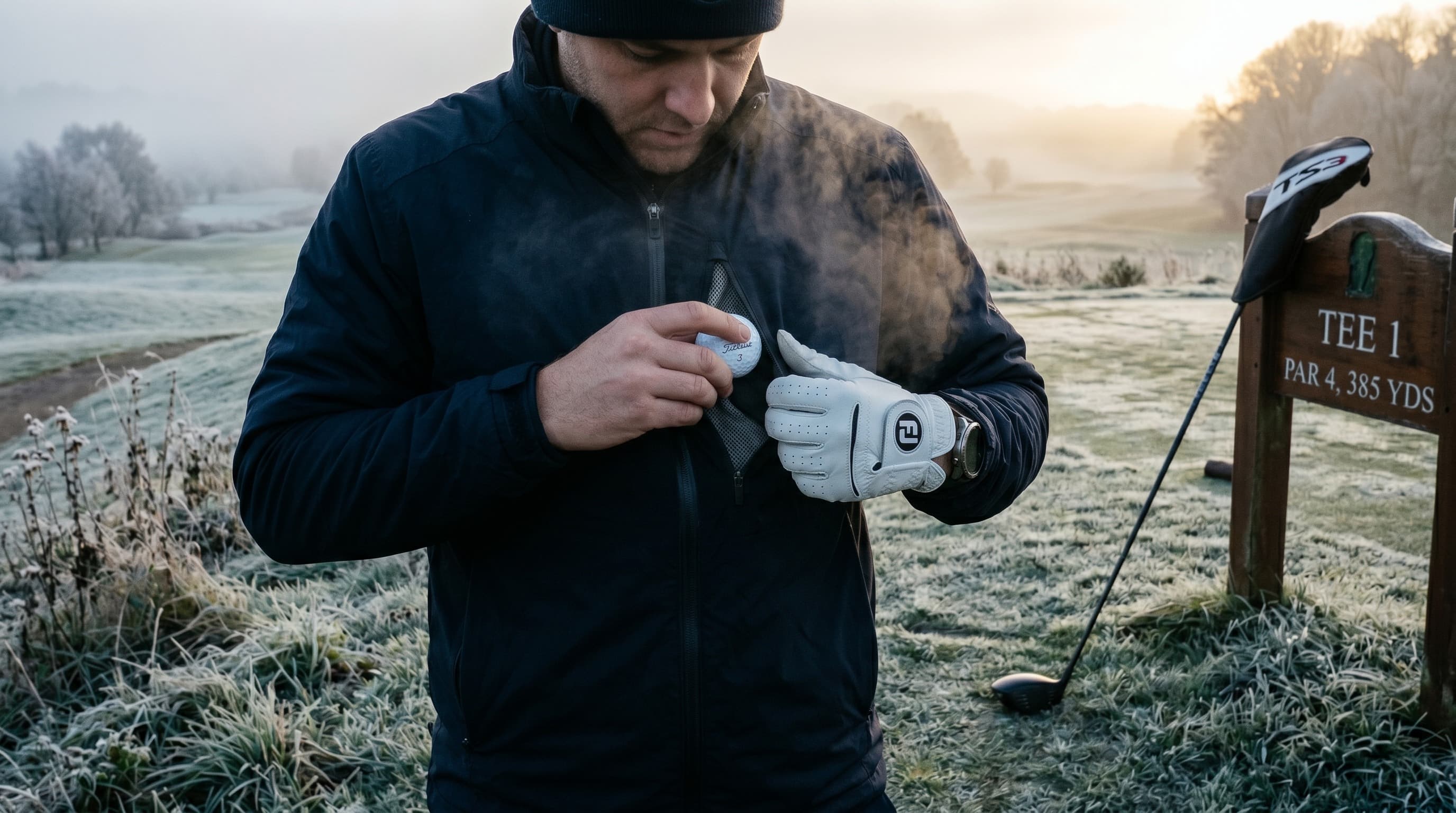
How Cold Weather Steals Distance: The Ball Compression Physics Every Golfer Should Know
Every 10°F drop costs the average golfer two to four yards of driver carry. Here is the physics — ball compression, air density, muscle temperature — and the field data we pulled from G-Score-monitored cold rounds to show exactly how distance loss compounds, and how to compensate without changing your swing.
Read Story
How to Read a G-Score: The 0–100 Golf Playability Number, Decoded
A G-Score on this site is a single 0–100 number that tells you whether today is worth tee-up. Here is exactly what each band means, what drives the calculation, and how to use it to plan a round you will actually score on.
Read StoryMinSu Kim
Founder & Golf Data Analyst
MinSu is a data analyst and golfer with 10+ years on the course. He built Golf Weather Score to answer one question: is today a good day to play? He combines weather data, course intelligence, and the proprietary G-Score algorithm to help golfers make smarter decisions.
Every Friday Morning
When Bristol Oaks Golf Club plays best next weekend.
Friday 6am ET: peak G-Score windows for Bristol Oaks Golf Club, wind direction by hour, and one gear call. Three minutes to read, save you the round.
One email a week. Unsubscribe in one click.
The Caddie's Oracle
Draw your luck before the tee off