
Caddie's Gear Advisor
Curated for today's 58°F · Rain
Storm-Ready Outerwear
Waterproof layers built for 18 holes in the rain
Tour-Grade Umbrellas
68" double-canopy wind-resistant coverage
Wet-Weather Gloves
All-weather grip that performs in the rain
Waterproof Golf Shoes
Keep your feet dry through every fairway
Your Golf Trip, Handled
The Ultimate Golf Trip Planner
Everything you need to play Bronson Golf Club — from booking your flight to checking in course-side.
Course-Side Stays
Luxury hotels, resorts, and stay-and-play packages just minutes from the first tee.
Flights
Compare fares across 700+ airlines for the best route to your tee time.
SUV Rentals for Golf Bags
Spacious vehicles with room for clubs, bags, and your foursome.
Travel Insurance
Coverage for medical, weather delays, and gear at your destination.
Bronson Golf Club: Course Intelligence
TL;DR — Bronson Golf Club is a flat, Bermuda-turfed north-central Florida layout where the daily Gulf sea breeze and afternoon convection, not the yardage, set the difficulty. Walk it early, club up on the 421-yard 4th when the wind turns onshore, and stay below the hole on grainy greens.
Signature Setup
I teed off here on a humid June morning, 7:25 on the sheet, the air already at 76°F with dew sitting heavy on the first fairway. Bronson Golf Club sits in Levy County, inland of Florida's Gulf coast, and it carries the honest character of a rural club that opened back in the mid-1960s rather than a manicured resort track. The routing is flat and walkable, framed by pine and live oak with cypress crowding the lower holes. The 7th — a 178-yard par-3 played over a cypress-edged pond — is the photograph hole and the one that quietly collects bogeys when the breeze swirls off the water. I don't know who first laid out the original nine, so I won't attach a famous name to it; the records I found credit a local design rather than a marquee architect.
Hole-by-Hole Wind & Playing Lines
In this part of Florida the wind has a schedule. Mornings are near-calm; by late morning the southwest sea breeze pushes inland and changes every exposed approach.
- 4th (par-4, 421y, #1 handicap): Into a filled-in SW sea breeze, this longest two-shotter plays a full club longer. I held back to a controlled 6-iron and aimed at the right half — the pond sits short-left and swallows the pulled approach. Take your par and leave.
- 7th (par-3, 178y): Wind off the pond is rarely the same twice. On a quartering SW breeze the ball drifts right toward the trees; I'd rather be pin-high left-center than flirt with the water carry.
- Closing par-5s, downwind morning: Before 10 a.m. the calm lets you chase a green you can't reach after lunch — the firm Bermuda fairways add roll that the afternoon humidity later kills.
Green & Fairway Characteristics
The surfaces are Bermudagrass through and through — greens and fairways both — which in summer run firm and fast off the tee and grow grainy on the greens. Grain here leans toward the setting sun, so a downgrain putt that looks dead-flat will release a foot past the cup. The greens are mid-sized and gently contoured rather than wildly tiered, and the slope sits in the mid-120s; the protection isn't severe undulation but the grain and the firmness. Fairways are wide and flat with subtle drainage swales near the cypress, and after a dry week the ball can run out well past where the yardage book suggests.
Seasonal Weather Pattern
North-central Florida golf is a heat-and-humidity game. From June through September, dew-point readings sit high and the afternoon brings near-daily convective thunderstorms, most often building between 1 and 4 p.m. as the sea breezes from both Florida coasts collide inland — Levy County sits right in that collision zone. Spring and late autumn are the prime windows: drier air, lower wind, comfortable 60–75°F mornings. Winter mornings can drop into the 40s with the occasional frost delay slowing tee sheets. I've only played here in the warm season, so I won't claim to know how the Bermuda plays dormant and brown in January — that I'd check against historical turf and temperature data rather than guess.
Local Play Tips
The single most useful thing I can tell you: beat the sea breeze. It typically fills in around 11 a.m., and an exposed, flat course like this turns from gentle to fiddly the moment it does. A practical caddie note from my round — the lakes and the cypress drainage favor a dry miss every time, so when in doubt aim to the fat, dry side even if it lengthens the next shot. And carry more water than you think; the heat index climbs fast and a dehydrated back nine is how good front-nine scores fall apart here.
Pre-Round Weather Workflow
Pull the 7-day G-Score for Bronson before you book and target the highest morning scores paired with the lowest afternoon storm probability. The night before, read the windExposure rating — on this open, flat layout a high reading is a direct cue to add a club on the 4th and 7th and to favor the dry side of every pond. In summer, treat any afternoon thunderstorm probability above the morning baseline as a hard reason to move your tee time earlier rather than risk a lightning delay on an exposed course with little shelter. Walk to the first tee with the sea-breeze timing in mind, and the back nine won't catch you out.
Related Reading
Before you tee off at Bronson Golf Club
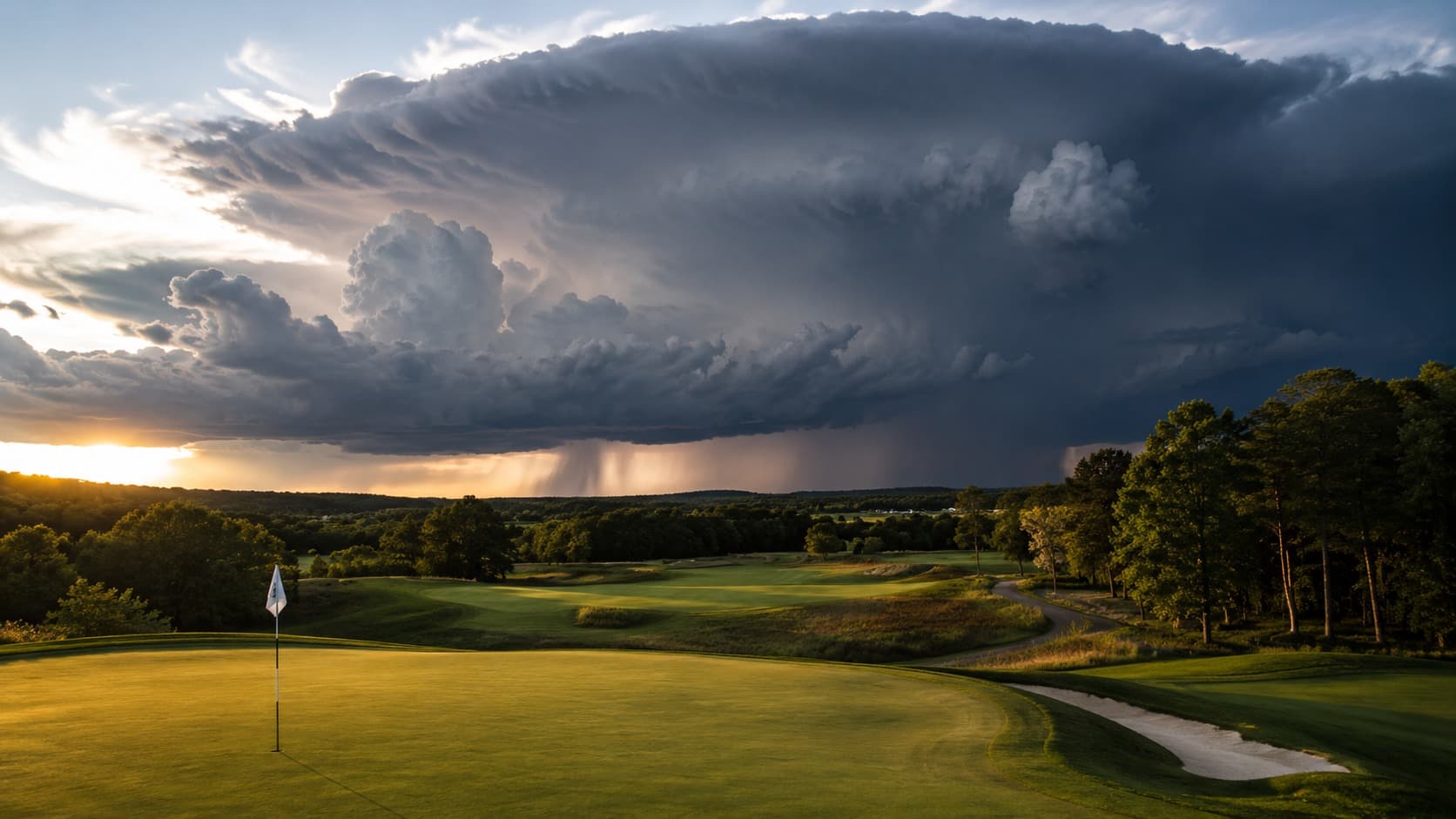
The Three O’Clock Storm: Reading Summer’s Convective Cycle to Protect Your Round
A 40% chance of afternoon thunderstorms does not mean a 40% chance of getting rained on. In the summer convective season it means the morning is nearly clear and the afternoon carries a fast-building, high-energy storm risk driven by a daily heating cycle. Here is the meteorology behind the pattern, the G-Score data on how the storm cycle punishes afternoon tee times across the Southeast, Midwest, and desert Southwest, the lightning-safety decision tree that actually matters, and the workflow that gets you off the course before the first bolt.
Read Story
How to Read a G-Score: The 0–100 Golf Playability Number, Decoded
A G-Score on this site is a single 0–100 number that tells you whether today is worth tee-up. Here is exactly what each band means, what drives the calculation, and how to use it to plan a round you will actually score on.
Read StoryMinSu Kim
Founder & Golf Data Analyst
MinSu is a data analyst and golfer with 10+ years on the course. He built Golf Weather Score to answer one question: is today a good day to play? He combines weather data, course intelligence, and the proprietary G-Score algorithm to help golfers make smarter decisions.
Every Friday Morning
When Bronson Golf Club plays best next weekend.
Friday 6am ET: peak G-Score windows for Bronson Golf Club, wind direction by hour, and one gear call. Three minutes to read, save you the round.
One email a week. Unsubscribe in one click.
The Caddie's Oracle
Draw your luck before the tee off