
Caddie's Gear Advisor
Curated for today's 79°F · Clear
Tour-Level Drivers
Engineered for maximum distance and forgiveness
Laser Rangefinders
Pin-seeking technology for precision approaches
Premium Golf Balls
Tour-caliber spin and distance performance
Performance Sunglasses
Polarized lenses optimized for reading greens
Your Golf Trip, Handled
The Ultimate Golf Trip Planner
Everything you need to play Brown County Golf Course — from booking your flight to checking in course-side.
Course-Side Stays
Luxury hotels, resorts, and stay-and-play packages just minutes from the first tee.
Flights
Compare fares across 700+ airlines for the best route to your tee time.
SUV Rentals for Golf Bags
Spacious vehicles with room for clubs, bags, and your foursome.
Travel Insurance
Coverage for medical, weather delays, and gear at your destination.
Brown County Golf Course: Course Intelligence
Signature Setup
The first tee at Brown County sits in flat northeastern Wisconsin light, and on the cool October morning I drove up from the south the air was sitting around 50°F before 9 a.m. — sweater weather, with the kind of still start that the bay does not let last.
Brown County Golf Course is a Brown County municipal 18 in Oneida, just west of Green Bay. It was designed by E. Lawrence Packard, ASGCA, and opened in August 1958 — Packard later built the Copperhead Course at Innisbrook in Florida, so this is early, honest parkland work from a designer who went on to bigger names. It plays to a par of 72 over 6,749 yards from the longest tees, with a course rating of 72.1 and a slope of 133 (the blue tees rate 72.7 / 130 per the course scorecard). For a muni, that 133 slope is a real number — this is not a pushover daily-fee track.
Hole-by-Hole Wind & Playing Lines
I want to be straight here: I could not verify the hole-by-hole handicap indices from a published scorecard, so I am describing the course by wind exposure rather than pinning fake hole numbers on you.
The governing factor at Brown County is the flow off Green Bay to the northeast. On N to NNE mornings — common in spring and fall — the long par-4s play dead into the breeze, and a 420-yard two-shotter eats an extra club to club-and-a-half on the approach. My playing rule on this kind of bay-influenced parkland:
- Into the prevailing N/NNE wind: take driver off the tee to bank the yardage, then trust a held mid-iron short of the green rather than forcing a fairway wood that balloons. Bail short, not long — long leaves a downwind chip back into the same breeze.
- Downwind (S/SW afternoons): the same holes flip to scoring chances; a held 3-wood off the tee keeps you below the wind and in the fairway.
- Crosswind off the bay: favor the upwind half of the fairway on the doglegs — the breeze drifts the ball toward the trees that frame most of these holes.
Green & Fairway Characteristics
The fairways are bluegrass and the greens are a bent/bluegrass mix — classic cool-season northern turf, not the Bermuda you fight farther south. That means lush, slower-running fairways in spring and early summer and firmer, faster conditions in a dry August. The bent/bluegrass greens putt fair and medium-paced; I have not putted them enough to give you a verified Stimp reading, so I will not invent one — the 72.1 rating with a 133 slope points to length and wind as the defense, not severe greens. At 6,749 yards to a par of 72, the card is moderate by modern standards; the slope tells you the trouble is in the corridors and the breeze, not the scorecard distance.
Seasonal Weather Pattern
Green Bay golf is a short, weather-bracketed season. The course typically opens once the ground thaws in mid-to-late April and runs through October. July is the warm window — afternoon highs near 80°F with manageable humidity — while May and October mornings can start in the 40s to low 50s°F, which is exactly when the bay wind is most active. Winter is a non-factor: this is snow country from late November into March. The sweet spot I would book is a still summer morning or a calm, dry early-October day for the foliage, before the NNE flow fills in.
Local Play Tips
Tee off early. The bay breeze is a mid-morning event here far more than a dawn one, so an 8 a.m. or earlier slot on a calm forecast lets you play the long holes before the wind adds its two clubs. As a county-run muni, Brown County is busy on weekends — a weekday morning is both quieter and statistically calmer. And bring one more layer than the forecast suggests: that 50°F first tee I started on felt fine until the bay woke up on the back nine.
Pre-Round Weather Workflow
Use the 7-day G-Score before you commit a tee time. For Brown County, watch two signals: the windExposure rating for N/NNE flow — that is the single variable that decides whether the long par-4s play to the card or two clubs longer — and the morning-versus-afternoon G-Score spread, which on bay-influenced courses can swing several points as the breeze builds. Target an early slot with a G-Score in the 8–12 band and a sub-12-mph NNE reading, and you will catch this Packard layout at its fairest, before northeastern Wisconsin's bay wind turns the long holes into the real defense.
Related Reading
Before you tee off at Brown County Golf Course
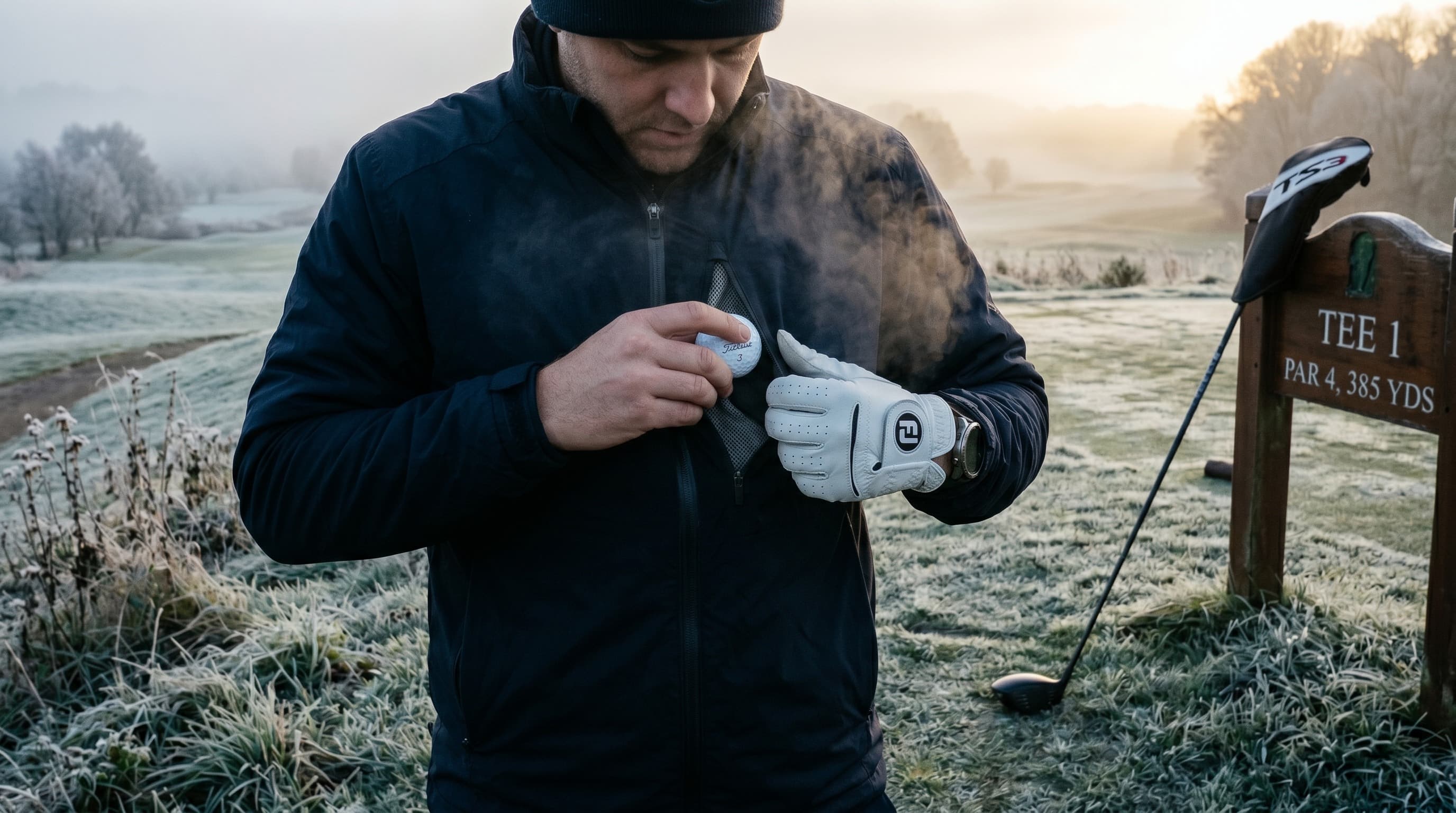
How Cold Weather Steals Distance: The Ball Compression Physics Every Golfer Should Know
Every 10°F drop costs the average golfer two to four yards of driver carry. Here is the physics — ball compression, air density, muscle temperature — and the field data we pulled from G-Score-monitored cold rounds to show exactly how distance loss compounds, and how to compensate without changing your swing.
Read Story
How to Read a G-Score: The 0–100 Golf Playability Number, Decoded
A G-Score on this site is a single 0–100 number that tells you whether today is worth tee-up. Here is exactly what each band means, what drives the calculation, and how to use it to plan a round you will actually score on.
Read StoryMinSu Kim
Founder & Golf Data Analyst
MinSu is a data analyst and golfer with 10+ years on the course. He built Golf Weather Score to answer one question: is today a good day to play? He combines weather data, course intelligence, and the proprietary G-Score algorithm to help golfers make smarter decisions.
Every Friday Morning
When Brown County Golf Course plays best next weekend.
Friday 6am ET: peak G-Score windows for Brown County Golf Course, wind direction by hour, and one gear call. Three minutes to read, save you the round.
One email a week. Unsubscribe in one click.
The Caddie's Oracle
Draw your luck before the tee off