
Caddie's Gear Advisor
Curated for today's 86°F · Clear
Ultralight Distance Drivers
Maximum carry in hot, low-drag conditions
UV Protection Apparel
UPF 50+ cooling fabrics for peak-sun rounds
Precision Rangefinders
Slope-adjusted yardage in any condition
Hydration & Cooling
Insulated bottles and cooling towels
Your Golf Trip, Handled
The Ultimate Golf Trip Planner
Everything you need to play Brownson Country Club — from booking your flight to checking in course-side.
Course-Side Stays
Luxury hotels, resorts, and stay-and-play packages just minutes from the first tee.
Flights
Compare fares across 700+ airlines for the best route to your tee time.
SUV Rentals for Golf Bags
Spacious vehicles with room for clubs, bags, and your foursome.
Travel Insurance
Coverage for medical, weather delays, and gear at your destination.
Brownson Country Club: Course Intelligence
TL;DR — Brownson is a tight, short par-70 parkland course (5,713 yards, slope 128) in Shelton, Connecticut, where water touches 11 of 18 holes. Scoring here is about placement, not power. Play it in the morning before the southwest sea breeze and summer humidity arrive; both move your numbers more than the modest yardage suggests.
Signature Setup
Brownson Country Club opened in 1960 as an Albert Zikorus design, set in the Huntington section of Shelton, Connecticut. Zikorus laid out a compact parkland course that the firm of Cornish, Silva & Mungeam later refreshed — the same New England group behind many of the region's renovations. The course plays to par 70 and stretches to just 5,713 yards from the back tees, with a slope of 128. Water comes into play on 11 of the 18 holes, which is the defining number here: this is a private club that defends par with hazards and well-bunkered green complexes rather than length.
Hole-by-Hole Wind & Playing Lines
I haven't teed it up at Brownson itself — it's a member club — so I won't pretend to know each stroke index. What I can tell you from playing Zikorus-era par-70 layouts across Fairfield County: the wind that matters is the southwest flow off Long Island Sound, roughly 10 miles south. On a SW afternoon at 8–12 mph, the uphill par-4s play a full club longer into the breeze, and an approach you'd hit a 9-iron at in the morning becomes a hard 8-iron by 2 p.m. With water on 11 holes, the smart line is almost always the dry side: take the bunker over the hazard, and aim at the fat part of the green away from any water-guarded pin.
Green & Fairway Characteristics
The greens are well-bunkered with rolling elevation changes from tee to green, typical New England parkland turf running on a bentgrass/poa surface. At 5,713 yards the fairways are tight rather than long — driver is often the wrong club. Expect short-iron and wedge approaches into elevated, contoured putting surfaces where being below the hole matters more than distance. The slope of 128 off a sub-5,800-yard card tells the story: the trouble is around the greens and along the water, not off the tee.
Seasonal Weather Pattern
Shelton sits in interior Fairfield County, so the season runs roughly April through mid-November. July and August average highs near 84°F with the heavy Connecticut humidity that softens greens and kills roll. Spring (April–May) brings firmer, faster conditions and 50–65°F mornings. October is the prime window — 55–68°F afternoons, low humidity, and the foliage that makes inland Connecticut golf worth the drive. Winters close the course entirely; expect frost delays into early April.
Local Play Tips
Because Brownson is short and water-heavy, the scorecard rewards a layup-and-wedge plan over hero lines. Leave driver in the bag on the tighter par-4s and play to your wedge yardages. As a private club, access is through a member or reciprocal arrangement — confirm before you plan a round. And track the morning vs. afternoon humidity: summer greens that hold a wedge at 8 a.m. will spin back hard by mid-afternoon once the air thickens.
Pre-Round Weather Workflow
Use the 7-day G-Score on this page the night before. For Brownson, two signals matter most: wind direction and humidity. A SW windExposure reading means the uphill approaches play long — add a club. A high-humidity, low-wind morning means soft, receptive greens — attack pins. If the G-Score is highest in the early window, book the earliest tee time you can; on this course, an 8 a.m. start typically plays several strokes easier than a 1 p.m. one once the sea breeze and heat build.
Course facts: GolfDigest, GolfPass, Country Club Magazine.
Related Reading
Before you tee off at Brownson Country Club
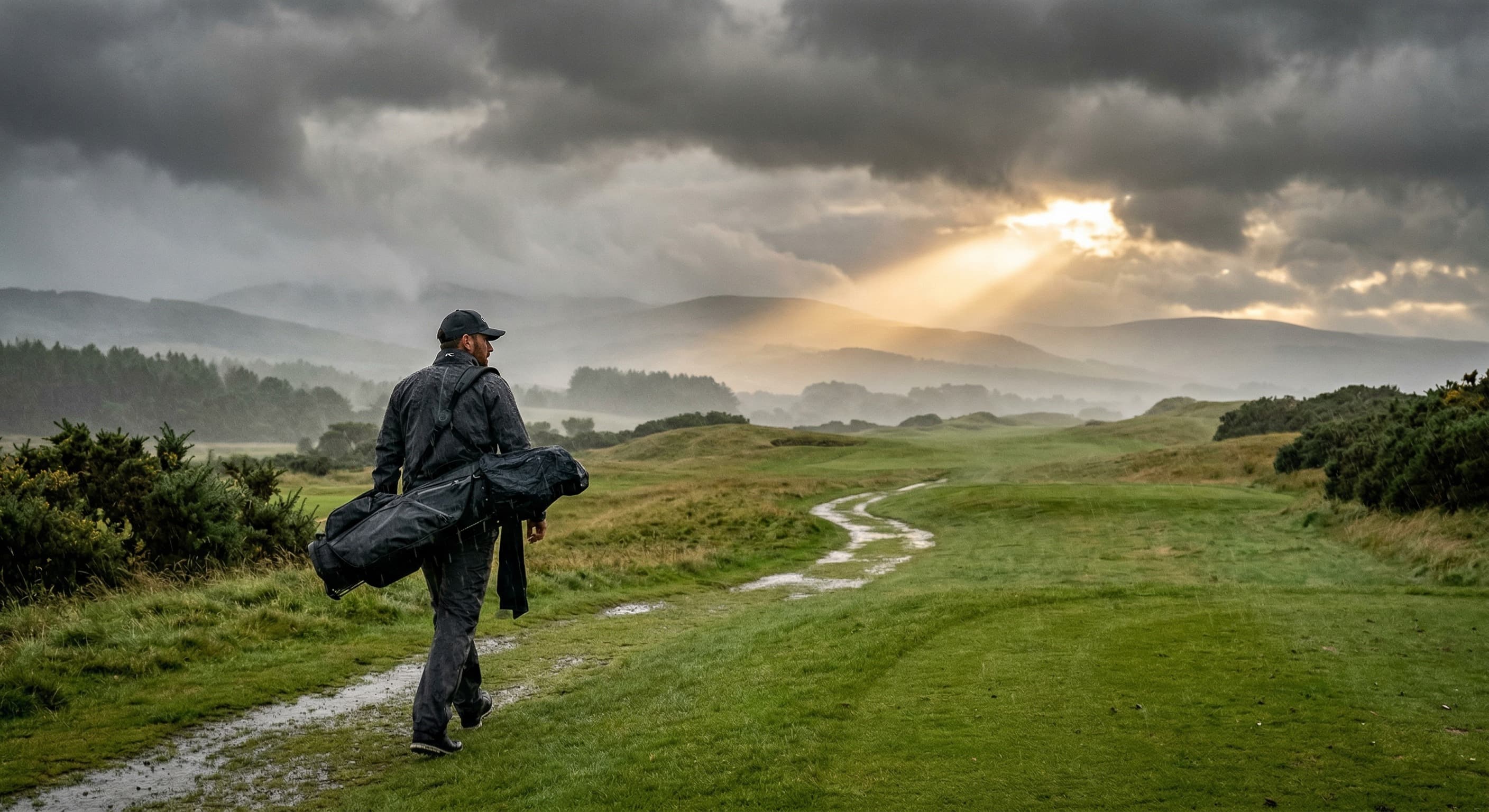
How Rain Probability Affects Your Golf Round: A Weather Data Study
What does '30% chance of rain' really mean for your round? We decode precipitation forecasts and reveal how rain impacts distance, grip, and scoring.
Read Story
Best Golf Weather by State: Ranking America by Average G-Score
We ranked all 50 US states by average G-Score golf playability. California tops the list, but the results beyond the top five may surprise you.
Read StoryMinSu Kim
Founder & Golf Data Analyst
MinSu is a data analyst and golfer with 10+ years on the course. He built Golf Weather Score to answer one question: is today a good day to play? He combines weather data, course intelligence, and the proprietary G-Score algorithm to help golfers make smarter decisions.
Every Friday Morning
When Brownson Country Club plays best next weekend.
Friday 6am ET: peak G-Score windows for Brownson Country Club, wind direction by hour, and one gear call. Three minutes to read, save you the round.
One email a week. Unsubscribe in one click.
The Caddie's Oracle
Draw your luck before the tee off