
Caddie's Gear Advisor
Curated for today's 85°F · Thunderstorm
Storm-Ready Outerwear
Waterproof layers built for 18 holes in the rain
Tour-Grade Umbrellas
68" double-canopy wind-resistant coverage
Wet-Weather Gloves
All-weather grip that performs in the rain
Waterproof Golf Shoes
Keep your feet dry through every fairway
Your Golf Trip, Handled
The Ultimate Golf Trip Planner
Everything you need to play Buffalo Run Golf Course — from booking your flight to checking in course-side.
Course-Side Stays
Luxury hotels, resorts, and stay-and-play packages just minutes from the first tee.
Flights
Compare fares across 700+ airlines for the best route to your tee time.
SUV Rentals for Golf Bags
Spacious vehicles with room for clubs, bags, and your foursome.
Travel Insurance
Coverage for medical, weather delays, and gear at your destination.
Buffalo Run Golf Course: Course Intelligence
Signature Setup
The first thing that hits you at Buffalo Run is how little there is between you and the horizon. I played it on a dry September morning, 54°F at 8 a.m. with the High Plains wind already moving the fescue — and there isn't a tree worth hiding behind on most of the back nine. Keith Foster built this Commerce City muni in 1996 as a true links-inspired layout on open prairie northeast of Denver, and he leaned into the bareness instead of fighting it. From the back tees it stretches past 7,400 yards to a par 72, but the card never tells the real story here; the wind and the 5,170-foot elevation do. The closing 18th — a 462-yard par 4 with water guarding the left and a deep bunker short of the green — is the hole that decides most rounds and most matches.
Hole-by-Hole Wind & Playing Lines
Three holes carry the difficulty here, and all three are wind problems before they're shot-making problems.
Hole 4 (#1 handicap, ~455y par 4) plays straight into the prevailing NW plains wind on most mornings. A drive that carries 250 in still air gives back 20–25 yards into a 15 mph headwind, which turns the approach from a 7-iron into a 4-iron. Favor the right half of the fairway off the tee — the left side leaves a longer, more exposed second.
Hole 9 turns back with the wind at your shoulder. Downwind here the firm fairway runs hard, and a normal drive can chase 30+ yards past where you expect, flirting with the bunkering. Club down off the tee on breezy days rather than chasing distance.
Hole 18 is the one that matters. Into a quartering NW wind, the water left tightens the entire tee shot, and the deep front bunker punishes anyone who bails out short and right. I'd rather be 30 yards back in the fairway than dead but blocked.
Green & Fairway Characteristics
The greens are bentgrass, rolling around a moderate 10–11 on the Stimp for daily play — quick enough that downwind, downhill putts get away from you, but not glassy. Fairways are a bluegrass/rye blend that firms up fast in the dry Colorado air, so the course plays as a ground game more than a target game once summer sets in. The rough is prairie fescue: thin lies and unpredictable flyers, not deep cabbage. The front nine runs a touch shorter and more sheltered; the back nine opens up and exposes you to the full plains wind, so your scoring window is usually the first nine holes.
Seasonal Weather Pattern
Commerce City's golf season runs roughly April through October. Late spring (May, highs in the 60s–70s) brings the most playable mornings before afternoon gusts build. July and August push afternoon highs into the low 90s with frequent pop-up thunderstorms after 2 p.m. — the standard Front Range pattern — so an early tee time isn't just preference here, it's strategy. September and early October are the sweet spot: 50s at dawn, dry air, and stretches of calmer mornings before the wind organizes. By November the course is still open on mild days but frost delays become common.
Local Play Tips
The altitude math is the local knowledge most visitors get wrong. At 5,170 feet the ball carries roughly 8–10% farther than at sea level — but on the days the NW wind is honking, that bonus gets eaten right back, and your effective yardage lands close to sea-level numbers. Don't commit to "altitude clubs" until you've felt the wind on the first two holes. The other tip: walk-up morning rates here are a genuine value for a course this long, and the early tee sheet is far less crowded than Denver's mountain-area tracks.
Pre-Round Weather Workflow
Use the 7-day G-Score on this page as a tee-time selector, not just a go/no-go. Buffalo Run's score swings hard on wind, so:
- Check the morning vs. afternoon wind delta. If afternoon gusts exceed ~18 mph, book the earliest slot you can — the G-Score will typically read 8–12 points higher before 10 a.m.
- Watch the windExposure flag. On exposed-back-nine days, plan to score on holes 1–9 and play defensively coming in.
- In July–August, treat the afternoon thunderstorm window as a hard stop — aim to be on the 16th by the time the radar lights up after 2 p.m.
- Recheck the dawn temperature for frost-delay risk in spring and late fall before you leave the house.
Related Reading
Before you tee off at Buffalo Run Golf Course
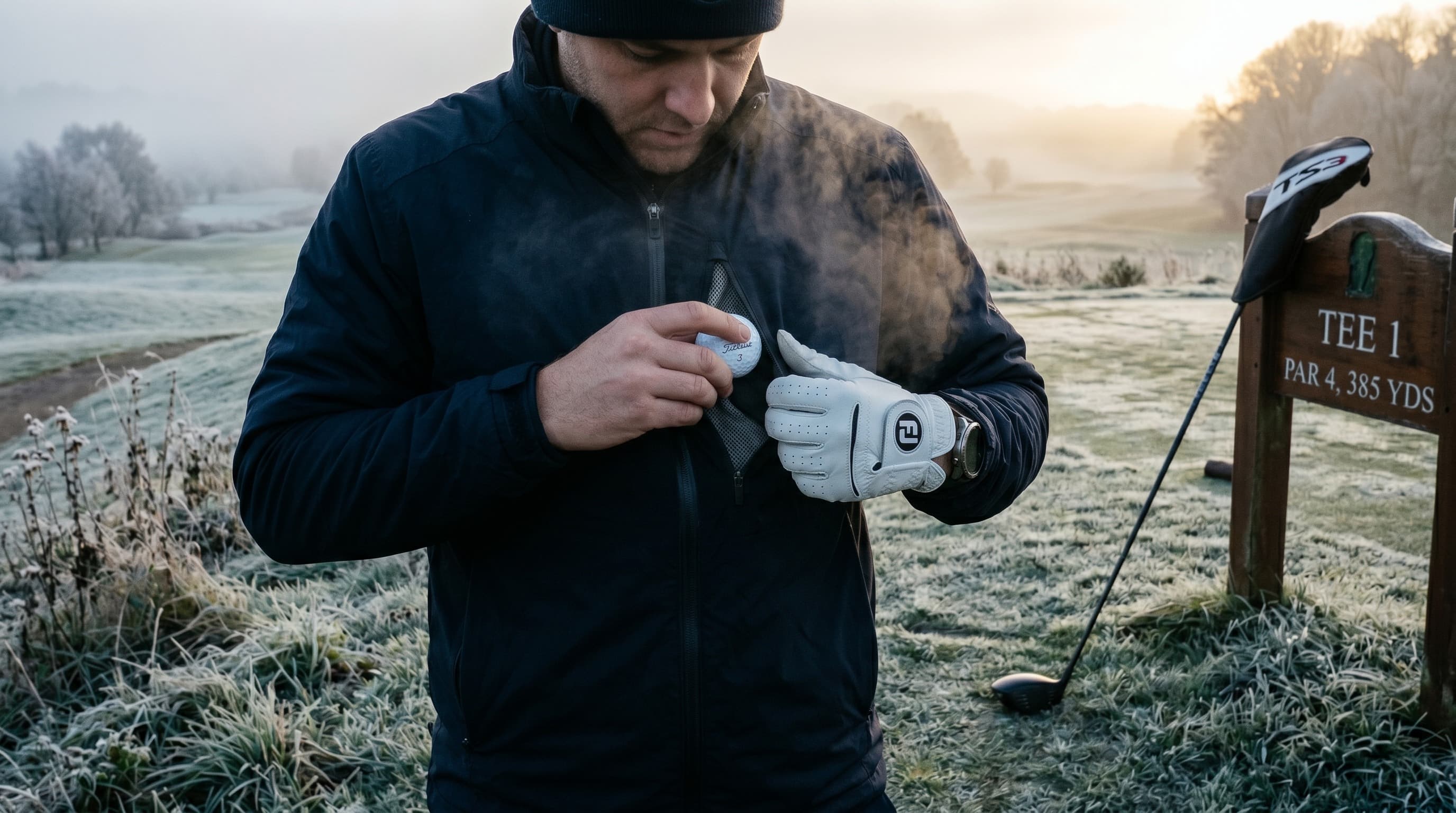
How Cold Weather Steals Distance: The Ball Compression Physics Every Golfer Should Know
Every 10°F drop costs the average golfer two to four yards of driver carry. Here is the physics — ball compression, air density, muscle temperature — and the field data we pulled from G-Score-monitored cold rounds to show exactly how distance loss compounds, and how to compensate without changing your swing.
Read Story
The May 2026 G-Score Heatmap: Where American Golf Peaks This Spring
May is the most underrated month on the American golf calendar. Five regions hit their annual peak this spring, three turn quietly hostile, and the data tells a clearer story than the brochures. Here is where to play, where to avoid, and how to time your booking window.
Read StoryMinSu Kim
Founder & Golf Data Analyst
MinSu is a data analyst and golfer with 10+ years on the course. He built Golf Weather Score to answer one question: is today a good day to play? He combines weather data, course intelligence, and the proprietary G-Score algorithm to help golfers make smarter decisions.
Every Friday Morning
When Buffalo Run Golf Course plays best next weekend.
Friday 6am ET: peak G-Score windows for Buffalo Run Golf Course, wind direction by hour, and one gear call. Three minutes to read, save you the round.
One email a week. Unsubscribe in one click.
The Caddie's Oracle
Draw your luck before the tee off