
Caddie's Gear Advisor
Curated for today's 49°F · Clear
Cold-Weather Performance Layers
Thermal mid-layers that move with your swing
Tour Hand Warmers
Rechargeable warmers trusted by caddies
Thermal Base Layers
Lightweight compression that traps heat
Winter Golf Headwear
Beanies and ear warmers built for the links
Your Golf Trip, Handled
The Ultimate Golf Trip Planner
Everything you need to play Bull's Eye Country Club — from booking your flight to checking in course-side.
Course-Side Stays
Luxury hotels, resorts, and stay-and-play packages just minutes from the first tee.
Flights
Compare fares across 700+ airlines for the best route to your tee time.
SUV Rentals for Golf Bags
Spacious vehicles with room for clubs, bags, and your foursome.
Travel Insurance
Coverage for medical, weather delays, and gear at your destination.
Bull's Eye Country Club: Course Intelligence
Signature Setup
Bull's Eye Country Club sits in Wisconsin Rapids, in central Wisconsin, on ground tied to the Wisconsin River that runs through the city. The club traces back to the early 1920s, which makes it one of the older private layouts in the region — a classic parkland routing rather than a modern resort build. I'll be straight with you: I haven't carded a round here. I've played central Wisconsin parkland courses through the short northern season, and I've pulled the NOAA historical records for Wood County, so the reads below come from regional weather patterns and cool-season course behavior, not from a scorecard in my pocket. What is not in question is the setting: river-corridor land, mature trees, and a season that runs roughly mid-April to late October before the snow shuts it down.
Hole-by-Hole Wind & Playing Lines
Central Wisconsin's summer flow runs predominantly south to southwest, and on a river-corridor property that wind funnels along the water. On the holes playing back into that S/SW breeze, a 150-yard approach can stretch to 165 yards — club up and accept the longer number rather than swinging harder. The harder holes here reward the low, controlled ball over the high carry; into the wind, a stinger that lands short and releases beats a wedge that balloons and drops short. By contrast, the holes turning downwind off the river can add 10–15 yards of run you didn't plan for, so on those greens land it shorter than your eye wants. In autumn the wind backs to the northwest, and the same holes that played downwind in July suddenly play dead into a 15–20 mph cold flow.
Green & Fairway Characteristics
Expect bentgrass greens and bluegrass/ryegrass fairways — the cool-season turf standard across this latitude, not the paspalum or Bermuda you'd find in the South. The practical consequence is a daily firmness swing: a green that holds a full wedge at 7 a.m. dew will stiffen toward the low-11s on a dry afternoon and release a mid-iron that lands hot. Plan your approach landing zones below the hole, especially after 1 p.m. on a dry, breezy day. Spring rounds play the opposite — snowmelt and April rain leave soft, receptive surfaces that take a ball-mark on every approach.
Seasonal Weather Pattern
This is short-season cold-continental golf, and the calendar is the real hazard. July and August are the prime window — daytime highs around 80–82°F, overnight lows near 58°F, and the longest playable daylight. June and September are excellent but carry a frost risk on the shoulders: by late September, overnight lows dip into the 30s–40s°F and morning frost delays are routine. May rounds are wet and soft from snowmelt; the ground doesn't firm up until the longer days of June. November through March, the course is effectively closed under snow and frozen turf — central Wisconsin winters are not a maybe.
Local Play Tips
The single most useful local read here is frost timing, not a swing thought. In the shoulder months — roughly May and again September into October — a clear, calm overnight sky drops the temperature fast on this river-bottom ground, and frost settles on the fairways well after sunrise. Walk-on golfers who show up at 7 a.m. expecting to tee straight off are often held by the starter until the frost burns clear, usually around 8 a.m. The fix is simple: in those months, either book the genuine first wave and confirm the frost status when you call, or aim for a mid-morning time and skip the parking-lot wait entirely.
Pre-Round Weather Workflow
Use the 7-day G-Score on the course page as your booking filter, not just a forecast glance. For Bull's Eye, three signals matter most. First, the wind direction and the windExposure rating — a S/SW day means the river-corridor holes play long, while an autumn NW day flips the whole routing into the wind, so club selection should shift before you tee off. Second, the overnight low in May, September, and October: anything in the 30s°F means assume a frost delay and back your tee time up. Third, the afternoon firmness trend — on a dry, breezy day the G-Score will be several points higher in the early morning window, when the greens are soft and the wind is calmest, than it is after noon. Book the morning, check the frost, and let the weather pick your clubs.
Related Reading
Before you tee off at Bull's Eye Country Club
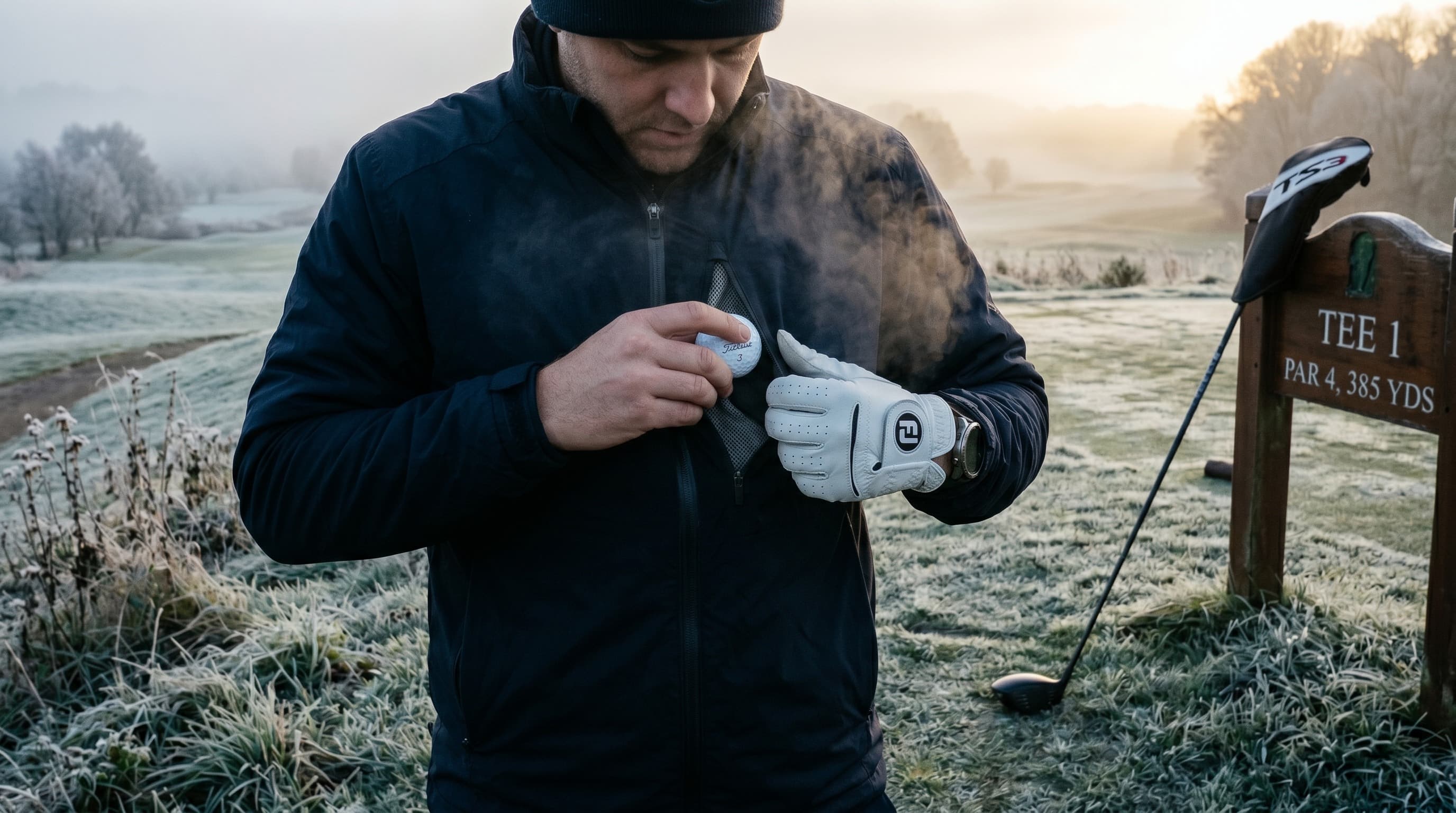
How Cold Weather Steals Distance: The Ball Compression Physics Every Golfer Should Know
Every 10°F drop costs the average golfer two to four yards of driver carry. Here is the physics — ball compression, air density, muscle temperature — and the field data we pulled from G-Score-monitored cold rounds to show exactly how distance loss compounds, and how to compensate without changing your swing.
Read Story
How to Read a G-Score: The 0–100 Golf Playability Number, Decoded
A G-Score on this site is a single 0–100 number that tells you whether today is worth tee-up. Here is exactly what each band means, what drives the calculation, and how to use it to plan a round you will actually score on.
Read StoryMinSu Kim
Founder & Golf Data Analyst
MinSu is a data analyst and golfer with 10+ years on the course. He built Golf Weather Score to answer one question: is today a good day to play? He combines weather data, course intelligence, and the proprietary G-Score algorithm to help golfers make smarter decisions.
Every Friday Morning
When Bull's Eye Country Club plays best next weekend.
Friday 6am ET: peak G-Score windows for Bull's Eye Country Club, wind direction by hour, and one gear call. Three minutes to read, save you the round.
One email a week. Unsubscribe in one click.
The Caddie's Oracle
Draw your luck before the tee off