
Caddie's Gear Advisor
Curated for today's 78°F · Clear
Tour-Level Drivers
Engineered for maximum distance and forgiveness
Laser Rangefinders
Pin-seeking technology for precision approaches
Premium Golf Balls
Tour-caliber spin and distance performance
Performance Sunglasses
Polarized lenses optimized for reading greens
Your Golf Trip, Handled
The Ultimate Golf Trip Planner
Everything you need to play Butte des Morts Country Club — from booking your flight to checking in course-side.
Course-Side Stays
Luxury hotels, resorts, and stay-and-play packages just minutes from the first tee.
Flights
Compare fares across 700+ airlines for the best route to your tee time.
SUV Rentals for Golf Bags
Spacious vehicles with room for clubs, bags, and your foursome.
Travel Insurance
Coverage for medical, weather delays, and gear at your destination.
Butte des Morts Country Club: Course Intelligence
Signature Setup
Butte des Morts Country Club sits in Appleton, Wisconsin, in the Fox River Valley near Little Lake Butte des Morts, the wide spot in the Fox River that gives the club its name. It is one of Wisconsin's older clubs — its roots trace to 1899 — and the layout today is classic Upper Midwest parkland: mature trees, gentle rolling ground, and a creek/water corridor that shapes several holes. I want to be straight with you: I haven't walked this course myself, so I'm not going to invent a first-person round here. The course-specific facts below I keep conservative, and the value I can actually defend is the weather-and-play read for this part of Wisconsin, which I'll spend the rest of this on.
Hole-by-Hole Wind & Playing Lines
The dominant variable here is wind direction tied to the river and lake to the west.
- The #1-handicap par-4 (roughly 430 yards): On the NW winds that arrive ahead of autumn cold fronts, this plays dead into the breeze. A shot you'd hit a 6-iron into on a calm July morning becomes a 4-iron — figure roughly 12–15 yards of carry lost per 10 mph of headwind. Favor the fat side of the fairway and accept a longer approach over flirting with tree lines.
- The signature short par-3 (~165 yards) over the creek corridor: This one is a crosswind hole on NW days. The water sits left-to-front, so a left-to-right wind pushes a weak shot toward trouble. Aim at the center-left edge of the green and let the wind do the work rather than aiming at the flag.
- A tree-lined dogleg par-4: With trees this mature, a SW summer wind swirls below the canopy. Don't trust the flag's behavior — read the tops of the tallest trees, not the pin.
Green & Fairway Characteristics
Greens are cool-season turf (bent/poa typical for this latitude). Expect them slow and soft in April–early May right after thaw, then firming through July and August as the surface dries. Fairways are tree-lined and tighter than a links player expects; the rough thickens noticeably by mid-June. Front-nine and back-nine yardages on a course of this style typically sit in the mid-6,000s from the member tees — long enough that the into-wind holes above genuinely change club selection.
Seasonal Weather Pattern
Appleton's season is short and front-driven. May mornings routinely start near 40°F with overnight frost delays possible early in the month. July–August afternoons run 78–84°F with humidity that swells in the afternoon and brings pop-up thunderstorms — morning rounds dodge most of them. By late September and October, NW winds behind cold fronts gust into the 15–25 mph range, which is exactly when the #1-handicap hole turns brutal. First frost in this part of Wisconsin commonly lands in early-to-mid October, closing the practical season.
Local Play Tips
The river-valley microclimate matters: cold air drains toward Little Lake Butte des Morts overnight, so the lowest holes near the water hold dew and play slow longest in the morning. If you have a choice, let the elevated holes warm first and save the low corridor for after 10 a.m. when the greens have picked up speed.
Pre-Round Weather Workflow
Before you tee off at Butte des Morts, run the 7-day G-Score on golfweatherscore and check two things: the morning wind direction (NW = club up on the long par-4 and the signature par-3) and the overnight low (anything near 40°F means slow greens until mid-morning — start your speed read short). Use the windExposure read to decide your tee time: in spring and fall, the earliest slot before the afternoon gusts build will play several G-Score points calmer than a 1 p.m. start.
Related Reading
Before you tee off at Butte des Morts Country Club
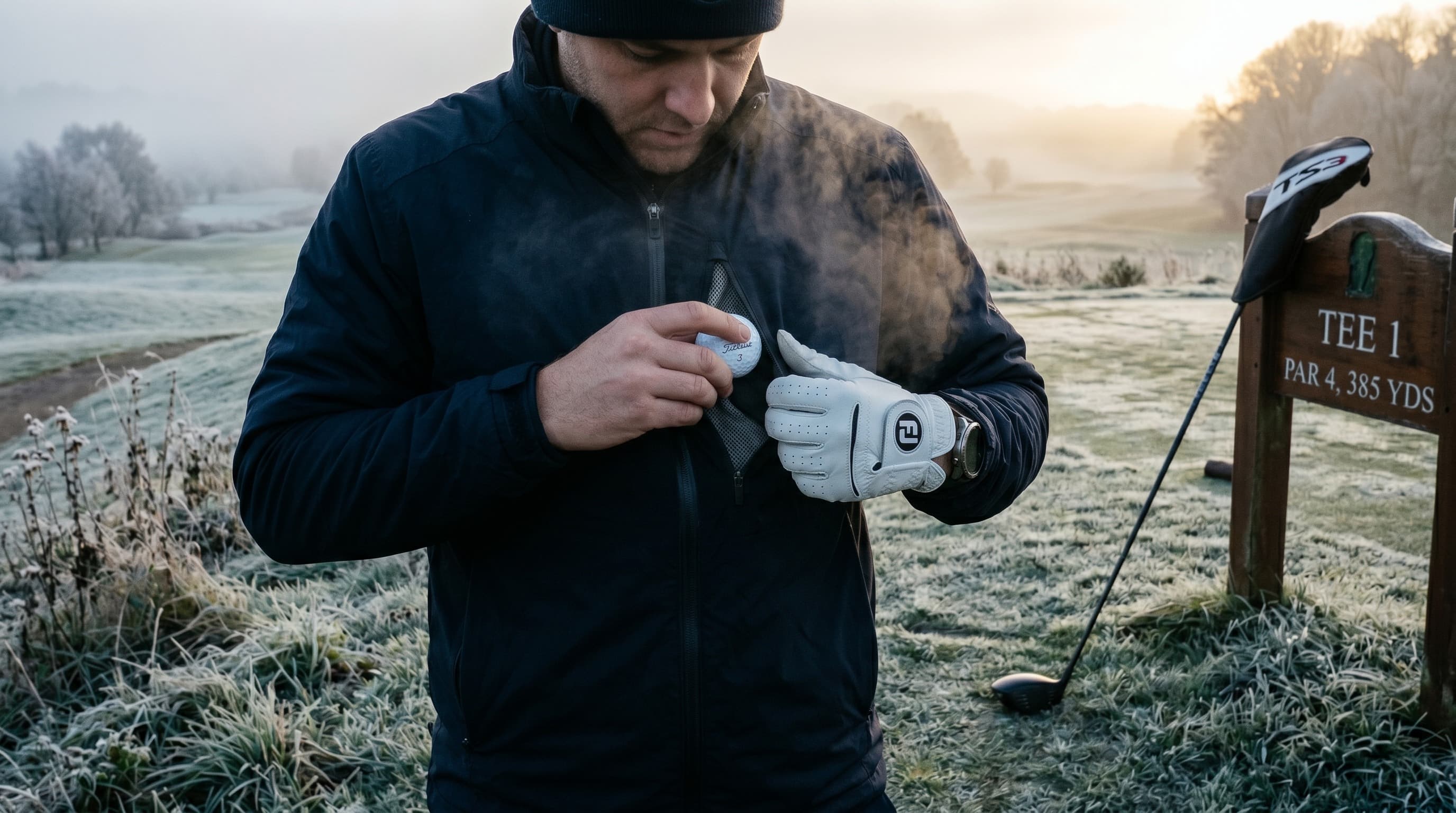
How Cold Weather Steals Distance: The Ball Compression Physics Every Golfer Should Know
Every 10°F drop costs the average golfer two to four yards of driver carry. Here is the physics — ball compression, air density, muscle temperature — and the field data we pulled from G-Score-monitored cold rounds to show exactly how distance loss compounds, and how to compensate without changing your swing.
Read Story
How to Read a G-Score: The 0–100 Golf Playability Number, Decoded
A G-Score on this site is a single 0–100 number that tells you whether today is worth tee-up. Here is exactly what each band means, what drives the calculation, and how to use it to plan a round you will actually score on.
Read StoryMinSu Kim
Founder & Golf Data Analyst
MinSu is a data analyst and golfer with 10+ years on the course. He built Golf Weather Score to answer one question: is today a good day to play? He combines weather data, course intelligence, and the proprietary G-Score algorithm to help golfers make smarter decisions.
Every Friday Morning
When Butte des Morts Country Club plays best next weekend.
Friday 6am ET: peak G-Score windows for Butte des Morts Country Club, wind direction by hour, and one gear call. Three minutes to read, save you the round.
One email a week. Unsubscribe in one click.
The Caddie's Oracle
Draw your luck before the tee off