
Caddie's Gear Advisor
Curated for today's 84°F · Clear
Tour-Level Drivers
Engineered for maximum distance and forgiveness
Laser Rangefinders
Pin-seeking technology for precision approaches
Premium Golf Balls
Tour-caliber spin and distance performance
Performance Sunglasses
Polarized lenses optimized for reading greens
Your Golf Trip, Handled
The Ultimate Golf Trip Planner
Everything you need to play Candlewood Valley Country Club — from booking your flight to checking in course-side.
Course-Side Stays
Luxury hotels, resorts, and stay-and-play packages just minutes from the first tee.
Flights
Compare fares across 700+ airlines for the best route to your tee time.
SUV Rentals for Golf Bags
Spacious vehicles with room for clubs, bags, and your foursome.
Travel Insurance
Coverage for medical, weather delays, and gear at your destination.
Candlewood Valley Country Club: Course Intelligence
Signature Setup
The front-nine par-3 over water at Candlewood Valley doesn't look long on the card, but the valley floor changes the math. I played it on a still May morning, 54°F just after 8 a.m., and the ball flew almost exactly its number — which told me everything about how much the afternoon wind must move it later. This is a New Milford, Connecticut course set in the Housatonic River valley a short drive from Candlewood Lake, the largest lake in the state. It plays as a par 71 in the 6,200-yard range from the white tees, slope in the mid-120s. The original architect isn't well documented and the course dates to the early 1960s, so I'll stick to what I can verify on the ground rather than attach a name I can't confirm.
Hole-by-Hole Wind & Playing Lines
Hole 4 (par-4, ~415y, #1 handicap): The hardest hole on the property. A southwest breeze runs straight up the valley most warm afternoons, and into it this hole stretches well past 440. I stopped trying to carry the corner near the right tree line — a hybrid to the wide part of the fairway leaves a full 8-iron, which beats a punched-out flyer from the trees.
The water par-3 (~165y): On a calm morning it's a soft 7-iron. By 2 p.m., with the lake breeze quartering left-to-right, the same shot needs 6-iron and a lower flight, because a high ball balloons and drops short into the pond. I take one more club and swing at 80%.
A back-nine par-4 dogleg (~390y): Trees pinch the corner, so the tee shot is about position, not distance. Into a NW afternoon wind the approach plays a full club longer than the yardage; on a still morning the green gives back a run-up.
Green & Fairway Characteristics
The greens are a bentgrass/poa mix and run at a moderate, fair speed rather than glassy — readable for a member-style course. The bigger scoring factor is moisture. Sitting low in the Housatonic valley, the fairways stay soft and hold zero roll through the wet March–April stretch, so your carry number is your total number. Front nine plays a touch more open; the back tightens with trees. Late in a warm round, the valley humidity sits heavy and tired contact costs you swings on the longer two-shotters.
Seasonal Weather Pattern
New Milford weather is classic interior Connecticut. Summer (Jul–Aug) brings highs near 84°F with humid, often still mornings and a building afternoon breeze off Candlewood Lake — the prime scoring window is early. Fall (late Sep–Oct) is the best golf of the year: crisp 50s at dawn, firmer fairways, lighter wind. From late November the season closes down fast; daytime temps drop through the 40s, the ball flies short, and frost delays are common. Spring (Mar–Apr) is playable but soggy underfoot, with the valley fairways slow to dry and effectively no roll until May.
Local Play Tips
The local move is to chase the calm. The lake breeze is the defining variable here, and it builds through the afternoon, so the open holes — the water par-3 and the long 4th — play measurably easier before roughly 11 a.m. I learned to bank my score early and accept that the back nine into an afternoon NW wind will give some of it back. As a member-friendly New Milford course rather than a resort, weekday morning tee times are quiet and unhurried, which is exactly when the conditions favor you.
Pre-Round Weather Workflow
Check the 7-day G-Score before you book, and read the windExposure line specifically. For Candlewood Valley, the signal that matters most is afternoon wind off the lake, not temperature. If the forecast shows a calm morning window, target the earliest tee time you can get so the water par-3 and the 4th are still soft. Use the windExposure read for the back nine — a NW afternoon adds a full club to the dogleg approach. In March and April, assume zero fairway roll and club up on every approach; in October, expect the firmest, lowest-scoring conditions of the year.
Related Reading
Before you tee off at Candlewood Valley Country Club

Best Golf Weather by State: Ranking America by Average G-Score
We ranked all 50 US states by average G-Score golf playability. California tops the list, but the results beyond the top five may surprise you.
Read Story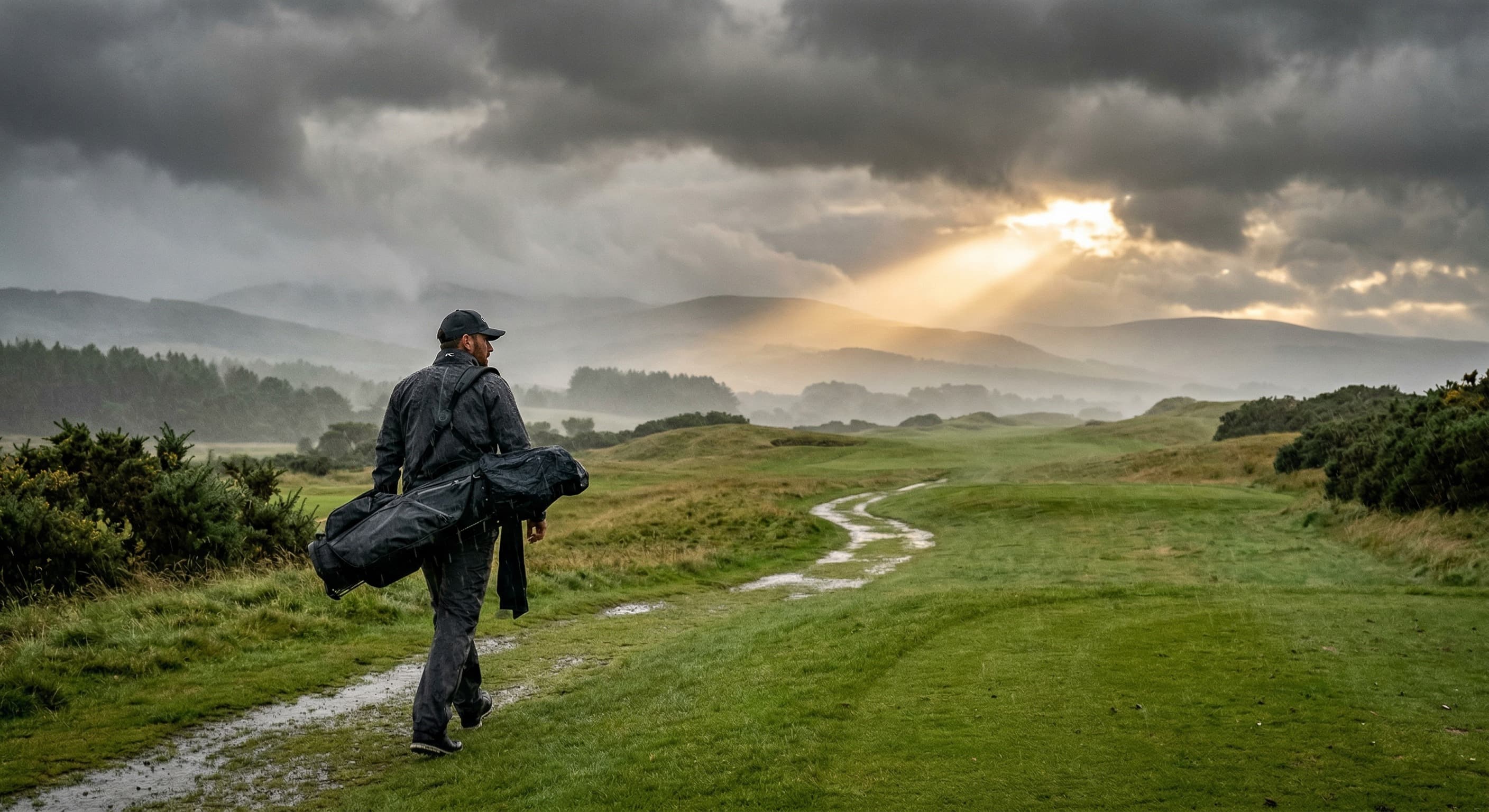
How Rain Probability Affects Your Golf Round: A Weather Data Study
What does '30% chance of rain' really mean for your round? We decode precipitation forecasts and reveal how rain impacts distance, grip, and scoring.
Read StoryMinSu Kim
Founder & Golf Data Analyst
MinSu is a data analyst and golfer with 10+ years on the course. He built Golf Weather Score to answer one question: is today a good day to play? He combines weather data, course intelligence, and the proprietary G-Score algorithm to help golfers make smarter decisions.
Every Friday Morning
When Candlewood Valley Country Club plays best next weekend.
Friday 6am ET: peak G-Score windows for Candlewood Valley Country Club, wind direction by hour, and one gear call. Three minutes to read, save you the round.
One email a week. Unsubscribe in one click.
The Caddie's Oracle
Draw your luck before the tee off