
Caddie's Gear Advisor
Curated for today's 74°F · Clouds
Tour-Level Drivers
Engineered for maximum distance and forgiveness
Laser Rangefinders
Pin-seeking technology for precision approaches
Premium Golf Balls
Tour-caliber spin and distance performance
Performance Sunglasses
Polarized lenses optimized for reading greens
Your Golf Trip, Handled
The Ultimate Golf Trip Planner
Everything you need to play Canebrake Club — from booking your flight to checking in course-side.
Course-Side Stays
Luxury hotels, resorts, and stay-and-play packages just minutes from the first tee.
Flights
Compare fares across 700+ airlines for the best route to your tee time.
SUV Rentals for Golf Bags
Spacious vehicles with room for clubs, bags, and your foursome.
Travel Insurance
Coverage for medical, weather delays, and gear at your destination.
Canebrake Club: Course Intelligence
Signature Setup
The first time I stood on Canebrake's range it was a clear North Alabama morning in late March, 52°F at 8 a.m. with frost still sitting in the rough shadows. This is a Jerry Pate Design course in Athens, in the Tennessee Valley, opened around the turn of the 2000s as the centerpiece of a residential community. It is not a major-championship name and doesn't try to be one — what it offers is a Pate routing that uses water and gentle elevation rather than length to defend par.
I'll be honest about the limit of my notes: I've played Canebrake in spring and early fall, not in the deep heat of an Alabama July, so my green-speed and firmness numbers are cool-season readings. The signature finisher is the par-4 18th, roughly 440 yards, with water tracking the entire left side to a green pressed up against the clubhouse — a closing hole that rewards a stay-right tee shot far more than a hero line.
Hole-by-Hole Wind & Playing Lines
Three holes decide most rounds here — 4, the par-5 7th, and the closing 18th.
- Hole 4 (#1 handicap, par-4 ~445y): The prevailing wind in the Valley swings out of the SW by early afternoon at 8–15 mph, and this hole runs straight into it. The 445 on the card plays closer to 475 after 1 p.m. I hit driver then a 4-iron and still had a long two-putt. Favor the right half off the tee — trouble gathers left.
- Hole 7 (par-5, reachable): Downwind on a SW day this turns from a three-shot hole into a real eagle look. Into a NE front-passage wind in fall, lay back and wedge it — the green sheds anything coming in hot.
- Hole 18 (par-4 ~440y): Crosswind off the SW pushes a fade toward the left water. On a still morning the center line is fine; by afternoon I aim at the right edge of the fairway and let the breeze work.
Green & Fairway Characteristics
Fairways are Bermuda, overseeded with ryegrass through winter so December-through-February lies stay tight rather than thin. The bentgrass greens read in the low-10s on the stimp the mornings I played — quick enough that a downhill putt keeps rolling and a firm midday approach won't hold unless it lands on the front shelf. The front nine plays a touch softer early because of dew and the low water holes; the back firms up by late morning and starts to reward a runner into the green. Several greens sit slightly above the approach, so a damp landing surface matters more than the raw rangefinder number before about 10 a.m.
Seasonal Weather Pattern
Athens sits in humid-subtropical North Alabama, and the calendar matters here. Late March through May and again late September into October are the windows — highs in the low-to-mid 70s°F, morning lows in the upper 40s to low 50s, and turf that's firm but receptive. July and August are the warning: heat index past 95°F by mid-morning, near-daily afternoon thunderstorm risk, and Bermuda that bakes the greens hard by 2 p.m. Winter is quietly playable with highs near 50°F, but the overseed plays slow and the low holes stay wet after rain.
Local Play Tips
The thing a tee-time site won't tell you: the Valley's afternoon SW breeze is far more reliable than the morning forecast suggests, and it changes which of holes 4 and 18 plays as the round's hardest. Book a morning slot in spring and fall and you play both of those into calm air. After heavy summer rain the low-side cart paths near the water holes stay soft, and the course often goes cart-path-only for a day even when the fairways look dry — worth a call to the pro shop within 24 hours of a storm.
Pre-Round Weather Workflow
Use the 7-day G-Score on golfweatherscore before you book Canebrake. For this course weight two inputs: SW wind timing (it decides whether 4 and 18 play long or fair) and the heat index rather than the raw high — Valley humidity turns a 90°F afternoon into a 100°F+ feel. Check the windExposure layer for the open finishing holes, then tee off in the first two hours of daylight whenever the G-Score favors morning. In summer that one decision is worth several strokes.
Related Reading
Before you tee off at Canebrake Club
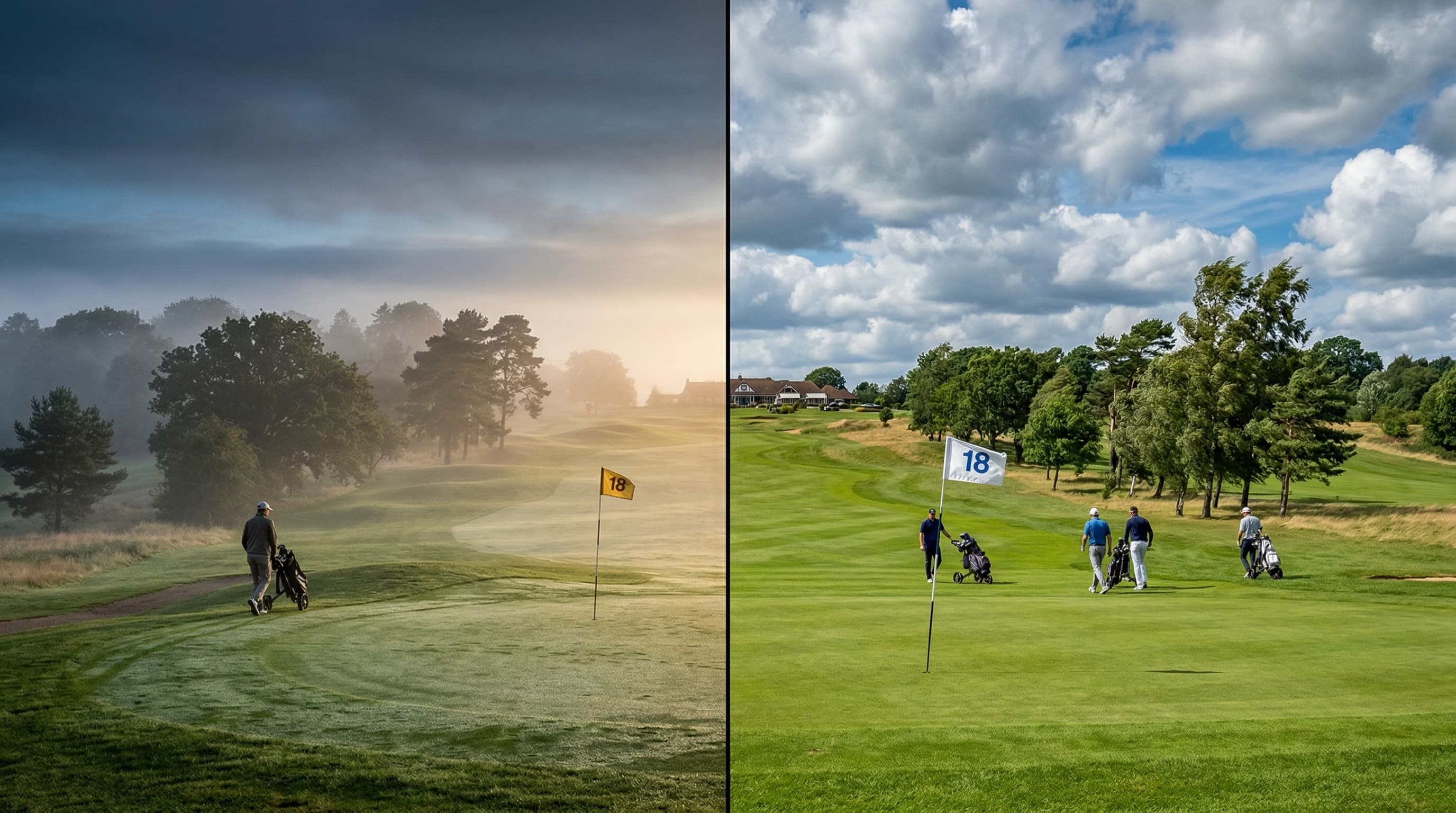
Morning vs Afternoon Tee Times: What Weather Data Reveals About When to Play
Hourly weather data reveals morning tee times score 8-12 G-Score points higher than afternoon slots. Here is what the numbers say about optimal timing.
Read Story
Best Golf Weather by State: Ranking America by Average G-Score
We ranked all 50 US states by average G-Score golf playability. California tops the list, but the results beyond the top five may surprise you.
Read StoryMinSu Kim
Founder & Golf Data Analyst
MinSu is a data analyst and golfer with 10+ years on the course. He built Golf Weather Score to answer one question: is today a good day to play? He combines weather data, course intelligence, and the proprietary G-Score algorithm to help golfers make smarter decisions.
Every Friday Morning
When Canebrake Club plays best next weekend.
Friday 6am ET: peak G-Score windows for Canebrake Club, wind direction by hour, and one gear call. Three minutes to read, save you the round.
One email a week. Unsubscribe in one click.
The Caddie's Oracle
Draw your luck before the tee off