
Caddie's Gear Advisor
Curated for today's 66°F · Clouds
Tour-Level Drivers
Engineered for maximum distance and forgiveness
Laser Rangefinders
Pin-seeking technology for precision approaches
Premium Golf Balls
Tour-caliber spin and distance performance
Performance Sunglasses
Polarized lenses optimized for reading greens
Your Golf Trip, Handled
The Ultimate Golf Trip Planner
Everything you need to play Cannonball Golf Course — from booking your flight to checking in course-side.
Course-Side Stays
Luxury hotels, resorts, and stay-and-play packages just minutes from the first tee.
Flights
Compare fares across 700+ airlines for the best route to your tee time.
SUV Rentals for Golf Bags
Spacious vehicles with room for clubs, bags, and your foursome.
Travel Insurance
Coverage for medical, weather delays, and gear at your destination.
Cannonball Golf Course: Course Intelligence
Signature Setup
The wind is the architect here. I have not carded a round at Cannonball, but I have played enough western-Kansas golf to know what 3,127 yards of par-36 prairie feels like under a 20 mph southerly — and that wind is the whole story at this course. Cannonball Golf Course sits on Highway 54 in Greensburg, Kansas, a nine-hole layout built in 1976 on the kind of flat, treeless high-plains ground where, as Golf Digest once put it, there is "nothing that resembles a hill or trees within miles."
The name carries the town's history. The course honors D.R. "Cannonball" Green, the stagecoach-line operator who helped found Greensburg in 1886. The town itself became a national story on May 4, 2007, when an EF5 tornado leveled roughly 95 percent of it and killed twelve people. Greensburg rebuilt as one of the greenest small towns in America, and the golf facility was part of that recovery. You are not playing a resort showpiece — you are playing a piece of a town that came back.
Hole-by-Hole Wind & Playing Lines
I'll be straight: the hole-by-hole reads below come from the scorecard, the routing, and how the southwest-Kansas wind behaves on open ground — not from my own green-reading notes here.
The defining wind is the prevailing summer southerly, which on a typical June–August afternoon climbs from a calm dawn to a steady 15–25 mph out of the south, often gusting past 30. With no trees and no terrain to shelter behind, every exposed hole takes the full load.
- The #1 handicap par-4 (playing into the south wind): a 150-yard approach plays closer to 180. Take two extra clubs, hit the knockdown to keep the ball under the wind, and aim for the front of the green rather than chasing a back pin.
- The downwind par-4 (the reciprocal): the same wind that punished you now adds 20–30 yards. Club down, expect the ball to release hard, and respect that a downwind approach won't hold a firm prairie green.
- The par-3s: a crosswind on a treeless tee is steady, not swirling — so you can trust it. Pick a side, allow the full drift, and commit to the line.
Green & Fairway Characteristics
This is honest western-Kansas golf: nine holes, par 36, 3,127 yards from the longest tees. The corridors are framed by tall native-grass rough rather than oaks or water, which means the penalty for a wild tee shot isn't a hazard carry — it's a lost ball in the prairie grass and a hack-out. The ground runs firm through the dry plains summer, so fairways give you meaningful roll and approaches tend to bounce and release rather than stop on a dime. Plan to land the ball short and let the firm surface carry it forward, especially downwind.
Seasonal Weather Pattern
Greensburg's golf year is shaped by two plains realities: wind and storms. Spring (April–June) is the most volatile stretch — this is peak severe-weather season for southwest Kansas, the same atmospheric setup that produced the 2007 tornado, and afternoons can turn from sunshine to a supercell warning quickly. Summer (July–August) brings highs in the low-to-mid 90s°F, low humidity, and that relentless south wind that rarely fully quits. Autumn (September–October) is the sweet spot: highs settling into the 70s, lighter mornings, and the most stable air of the year. Winters are cold and windy with the occasional hard freeze, but it's the dry, open exposure — not the temperature — that defines play on this prairie nearly year-round.
Local Play Tips
Make it a half-day trip. Greensburg is home to the Big Well, billed as the world's largest hand-dug well at 109 feet deep and 32 feet wide — it survived the tornado and anchors the town's museum. A nine-hole round at Cannonball plus the Big Well museum is a genuine western-Kansas detour worth the stop off Highway 54. And because it's nine holes on firm ground, it's a fast, walkable loop — play it twice from different tees if the wind hasn't beaten you down.
Pre-Round Weather Workflow
Before you drive out to Greensburg, run the 7-day G-Score for Cannonball and read it through a high-plains lens:
- Check the wind speed AND direction first — it's the single biggest factor here. A 20+ mph southerly turns the into-wind holes into a different course. Plan your club selection around it before you arrive.
- Watch the spring storm timing. In April–June, a clear morning can give way to a severe-weather afternoon. Get the early tee time and be off the course by midday.
- Use windExposure on every hole — on a treeless layout, exposure is total, so the forecast wind is the actual wind you'll play in.
- Tee off at dawn. The southerly is lightest in the first two hours after sunrise and builds through the morning. Early rounds grade 8–12 G-Score points higher than afternoon ones.
On the plains, the forecast isn't background information — it's your scorecard before you've hit a shot.
Related Reading
Before you tee off at Cannonball Golf Course
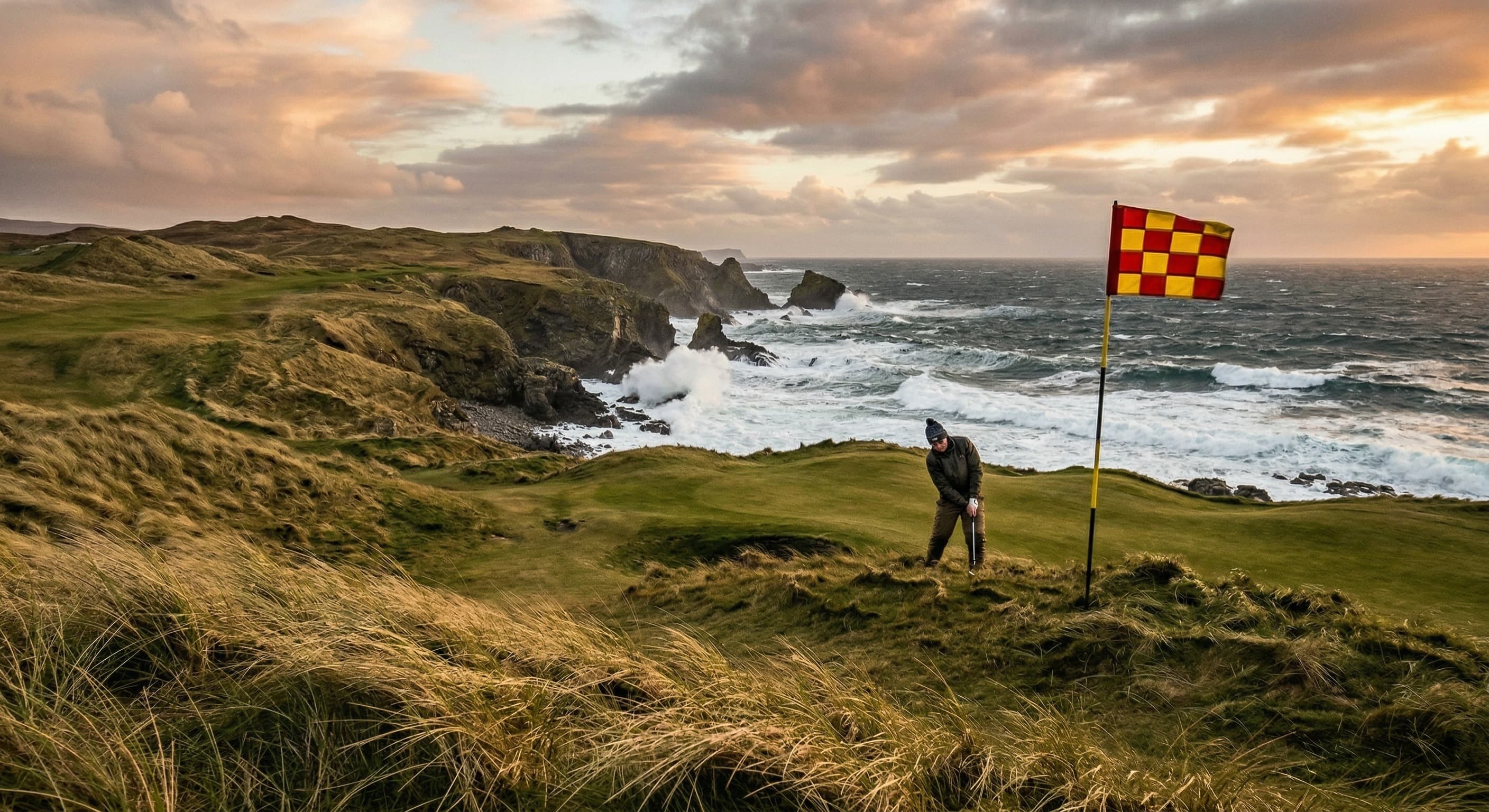
America's 20 Windiest Golf Courses: A G-Score Wind Analysis
We ranked America's 20 windiest golf courses using G-Score wind penalty data. See how coastal gusts and prairie gales reshape playability scores.
Read Story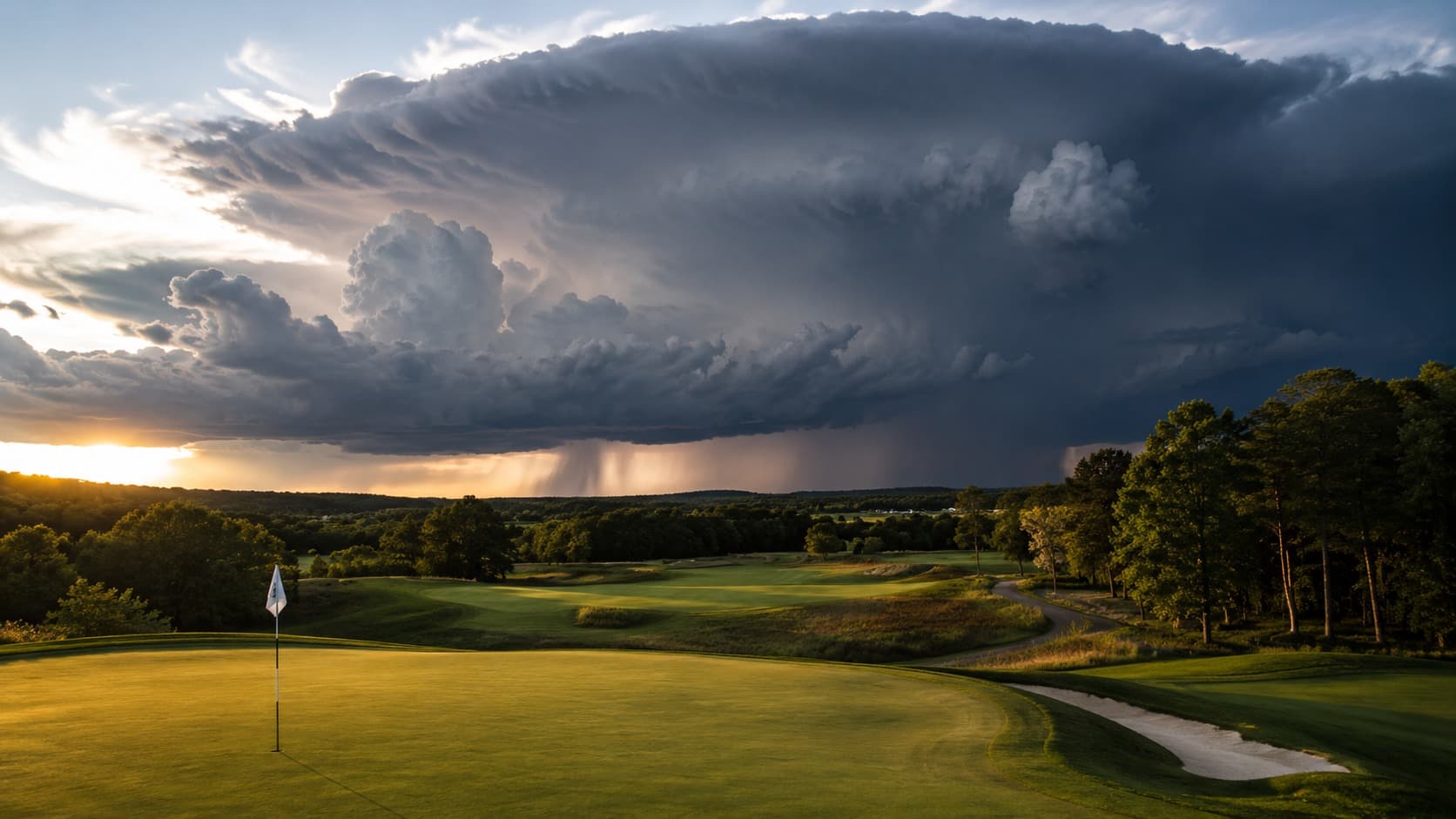
The Three O’Clock Storm: Reading Summer’s Convective Cycle to Protect Your Round
A 40% chance of afternoon thunderstorms does not mean a 40% chance of getting rained on. In the summer convective season it means the morning is nearly clear and the afternoon carries a fast-building, high-energy storm risk driven by a daily heating cycle. Here is the meteorology behind the pattern, the G-Score data on how the storm cycle punishes afternoon tee times across the Southeast, Midwest, and desert Southwest, the lightning-safety decision tree that actually matters, and the workflow that gets you off the course before the first bolt.
Read StoryMinSu Kim
Founder & Golf Data Analyst
MinSu is a data analyst and golfer with 10+ years on the course. He built Golf Weather Score to answer one question: is today a good day to play? He combines weather data, course intelligence, and the proprietary G-Score algorithm to help golfers make smarter decisions.
Every Friday Morning
When Cannonball Golf Course plays best next weekend.
Friday 6am ET: peak G-Score windows for Cannonball Golf Course, wind direction by hour, and one gear call. Three minutes to read, save you the round.
One email a week. Unsubscribe in one click.
The Caddie's Oracle
Draw your luck before the tee off