
Caddie's Gear Advisor
Curated for today's 56°F · Clouds
Tour-Level Drivers
Engineered for maximum distance and forgiveness
Laser Rangefinders
Pin-seeking technology for precision approaches
Premium Golf Balls
Tour-caliber spin and distance performance
Performance Sunglasses
Polarized lenses optimized for reading greens
Your Golf Trip, Handled
The Ultimate Golf Trip Planner
Everything you need to play Canyons Golf Course — from booking your flight to checking in course-side.
Course-Side Stays
Luxury hotels, resorts, and stay-and-play packages just minutes from the first tee.
Flights
Compare fares across 700+ airlines for the best route to your tee time.
SUV Rentals for Golf Bags
Spacious vehicles with room for clubs, bags, and your foursome.
Travel Insurance
Coverage for medical, weather delays, and gear at your destination.
Canyons Golf Course: Course Intelligence
Signature Setup
Canyons Golf Course climbs the slopes at Park City Mountain in Utah, ringed by the Wasatch and Uinta ranges, and the routing — designed by Gene Bates, opened in 2015 — does not fight the mountain so much as fall down it. The course gives up more than 550 feet of elevation change over 18 holes, plays to roughly 6,069 yards and par 69 from the back, and sits at 7,000 feet above sea level, which is the single most important number on the card. The 4th, a 405-yard downhill par-4 that becomes driveable in the thin air, is the hole everyone talks about; the 10th drops nearly 300 feet from tee to green.
I'll be honest: I have not carded a round here. My mountain golf has mostly been in the Sierra and Arizona high country, not the Wasatch, so the lines below come from the published routing, the altitude math every golfer feels above 6,000 feet, and Intermountain West weather I've tracked through NOAA — not from my own yardage book on these greens. Where I'm guessing, I'll say so.
What I can say with confidence: at 7,000 feet, the air is your real opponent before the wind ever is.
Hole-by-Hole Wind & Playing Lines
The governing fact here is thin air. At 7,000 feet the ball carries roughly 10–14% farther than at sea level — a stock 150-yard club flies closer to 135, and a downhill drop hole stacks gravity on top of altitude.
- The 4th (405-yard downhill par-4, the signature): the combination of a steep drop and thin air makes this genuinely driveable. Into a calm morning, take the swing. But the same canyon corridors that funnel a Wasatch breeze can turn a "driveable" hole back into a two-shotter — confirm the wind before you pull driver.
- The 10th (≈297-foot drop): the most extreme elevation change on the course. Club selection here is pure feel, not yardage — a downhill mountain shot in thin air can fly two clubs long. Trust less club than the number tells you.
- The exposed mid-iron par-3s: on a ridge the wind doesn't behave like it does on a flat course; it swirls off the slopes. Aim center, trust the pin over the treetops, and never trust a yardage in a gusty afternoon crosswind on the high ground.
Green & Fairway Characteristics
The turf is mountain bentgrass, kept tight through a short high-altitude growing season, and the greens run firm and quick — slopes here matter more than speed because the whole property tilts. Downhill putts on a dry afternoon get away from you fast. From the tips the course is 6,069 yards, par 69, slope in the low 120s; from the Black tees it stretches the math to a 135 slope despite a similar length, because the elevation changes and forced carries punish the wrong angle far more than raw distance does. This is not a bomber's course in the usual sense — the altitude already adds your length for you, so the premium is on controlling spin and landing angle into firm, sloped greens. Fairways drain well on the mountain base and firm up quickly once the morning dew burns off, giving real release by midday.
Seasonal Weather Pattern
Park City golf lives and dies by a short mountain season. Late May into June is the open — cool, often soft, with lingering snowmelt feeding the creek beds and the occasional frost delay pushing tee times back an hour. July–August is peak: warm, dry afternoons in the 80s with brilliant high-country sun, but this is also monsoon season, when convective thunderstorms build over the Wasatch by early-to-mid afternoon and bring lightning, sharp wind shifts, and brief downpours. The mornings stay calm and gorgeous; the storms are an afternoon problem. September into mid-October is the sweet spot — stable air, cool nights, firm turf, and the aspens turning gold across the ranges — before the season closes ahead of the first real snow. Year-round the diurnal swing is large: a 45°F dawn can become an 80°F afternoon, and the ball flies a little farther as the air warms.
Local Play Tips
The thing flatland golfers underestimate here is not the wind — it's the altitude plus the afternoon storm clock. Two adjustments matter. First, recalibrate every club the moment you arrive: at 7,000 feet your distances are simply not your home distances, and the downhill holes compound it, so spend the range session learning your new carry numbers rather than trusting muscle memory. Second, respect the monsoon rhythm in July and August — the mornings are the best golf of the day, calm and clear, while lightning risk climbs sharply after about 1 p.m. Book the earliest slot you can get after the frost lifts. And don't over-club into the firm greens; in thin air a touch of extra spin and a softer landing angle hold far better than a flighted bullet that bounces over the back.
Pre-Round Weather Workflow
Before you tee off at Canyons, run the 7-day G-Score and read it through a high-altitude mountain lens:
1. Check the afternoon storm window first. In summer, lightning and gusts build over the Wasatch after midday — a clean morning forecast can turn dangerous by 2 p.m. Play early. 2. Adjust for altitude, not just wind. At 7,000 feet your carry is up 10%+; let the G-Score confirm calm air before you trust those longer numbers. 3. Use windExposure on the ridge and canyon-corridor holes to judge which approaches lose protection once you clear the tree lines. 4. Watch the morning low. A 40s-degree dawn means cold-ball distance loss early and a frost delay risk — the ball flies farther as the day warms, so your morning and afternoon club selection won't match.
From July through August, mornings here grade 10–15 G-Score points higher than stormy afternoons. Tee off into the cool mountain calm, learn the thin-air numbers early, and beat the monsoon clock.
Related Reading
Before you tee off at Canyons Golf Course

The May 2026 G-Score Heatmap: Where American Golf Peaks This Spring
May is the most underrated month on the American golf calendar. Five regions hit their annual peak this spring, three turn quietly hostile, and the data tells a clearer story than the brochures. Here is where to play, where to avoid, and how to time your booking window.
Read Story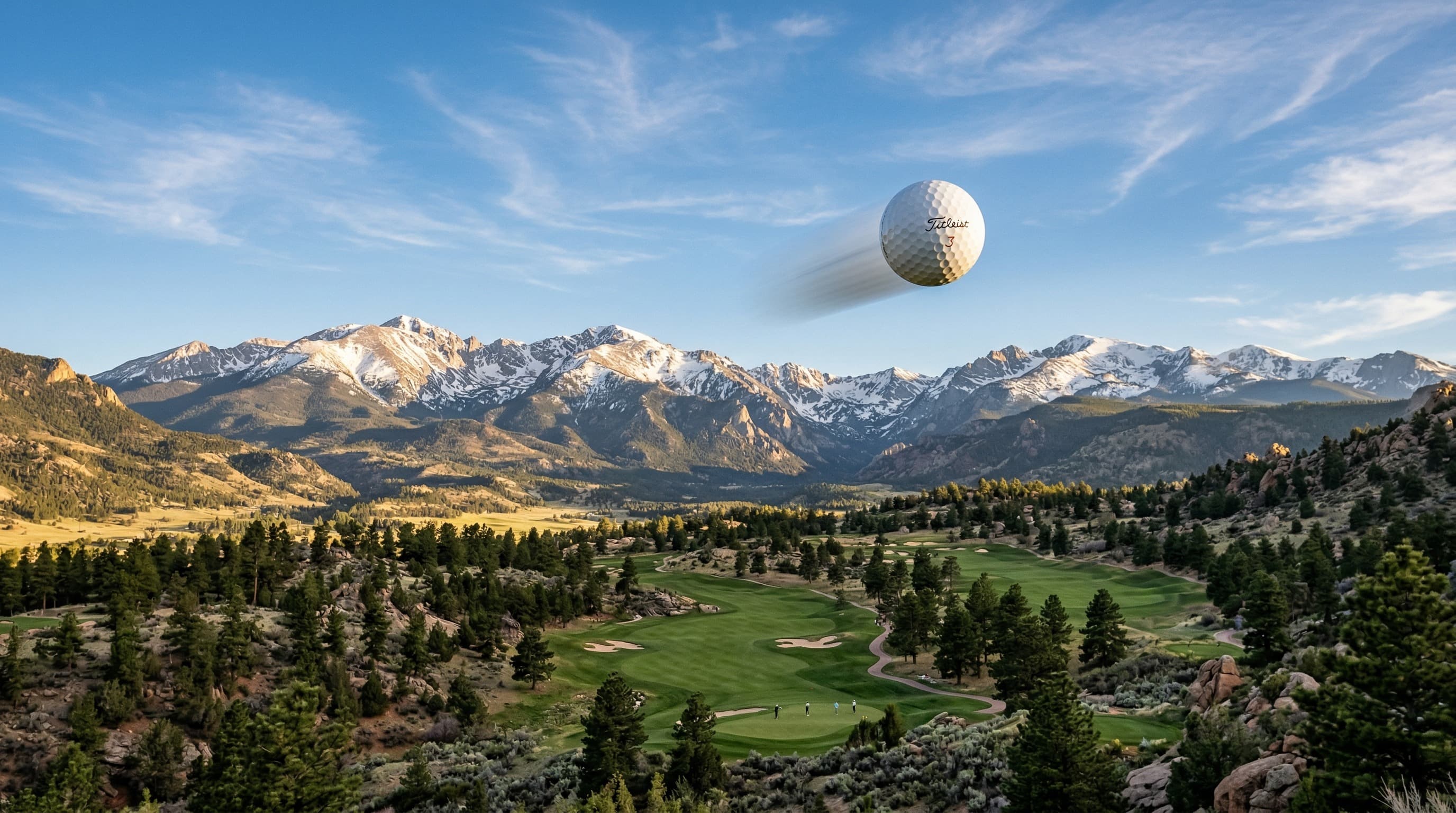
How Altitude Affects Golf Ball Distance: The Science Behind Every Extra Yard
At elevation, your golf ball flies farther than you expect. We break down exactly how altitude changes carry distance, spin rates, and club selection using real data from high-altitude courses across America.
Read StoryMinSu Kim
Founder & Golf Data Analyst
MinSu is a data analyst and golfer with 10+ years on the course. He built Golf Weather Score to answer one question: is today a good day to play? He combines weather data, course intelligence, and the proprietary G-Score algorithm to help golfers make smarter decisions.
Every Friday Morning
When Canyons Golf Course plays best next weekend.
Friday 6am ET: peak G-Score windows for Canyons Golf Course, wind direction by hour, and one gear call. Three minutes to read, save you the round.
One email a week. Unsubscribe in one click.
The Caddie's Oracle
Draw your luck before the tee off