
Caddie's Gear Advisor
Curated for today's 95°F · Clear
Ultralight Distance Drivers
Maximum carry in hot, low-drag conditions
UV Protection Apparel
UPF 50+ cooling fabrics for peak-sun rounds
Precision Rangefinders
Slope-adjusted yardage in any condition
Hydration & Cooling
Insulated bottles and cooling towels
Your Golf Trip, Handled
The Ultimate Golf Trip Planner
Everything you need to play Cape Fear Country Club Golf Course — from booking your flight to checking in course-side.
Course-Side Stays
Luxury hotels, resorts, and stay-and-play packages just minutes from the first tee.
Flights
Compare fares across 700+ airlines for the best route to your tee time.
SUV Rentals for Golf Bags
Spacious vehicles with room for clubs, bags, and your foursome.
Travel Insurance
Coverage for medical, weather delays, and gear at your destination.
Cape Fear Country Club Golf Course: Course Intelligence
Signature Setup
Cape Fear Country Club sits in Wilmington, North Carolina, a few miles inland from where the Cape Fear River meets the Atlantic, and it is one of the oldest golf clubs in the state — the club traces to 1896, with Donald Ross brought in to redesign the course in 1926. That lineage matters here: this is not a long, modern bomber's track but a classic Ross layout of around 6,800 yards at par 71, where the defense is the green complex, not the scorecard yardage. Ross's crowned greens shed anything that lands long or to the side, and the routing rewards angle and position over raw power. I haven't teed it up at Cape Fear myself — it's a private club — so the playing notes below lean on Ross's documented design signatures and on what coastal Carolina sea-breeze golf consistently does to a round.
Hole-by-Hole Wind & Playing Lines
Wilmington's dominant warm-season pattern is a southwest-to-south sea breeze that fills in off the river and ocean as the land heats, usually after late morning. On the longer par-4s, a midday SW breeze turns a comfortable 150-yard approach into a 160–165-yard club — take one extra and aim for the front-center of the green rather than chasing a back pin you can't hold. The classic short Ross two-shotters are the trap: into a freshening breeze, a wedge that lands even a step long releases off the crown and trickles into a collection area, so I'd land it short and let it feed up rather than fly the flag. On crosswind holes, bail to the fat side of the green, never short-side yourself against a run-off slope. On a calm dawn, the same holes give a stroke or two back, which is the whole argument for an early tee time.
Green & Fairway Characteristics
The fairways are bermuda and the putting surfaces are ultradwarf bermuda — the standard conversion across coastal Carolina clubs over the past two decades for heat tolerance and summer green speed. The Ross crowns are the story: they fall away on most sides, so approaches that land firm and roll out are punished, and the smart miss is short-and-center. In summer the bermuda greens bake fast and firm through the afternoon, so morning rounds hold approaches far better than 2 p.m. ones. Expect subtle, not dramatic, elevation — this is low coastal-plain terrain — but the green-side contours do the heavy lifting. Chipping from the tight bermuda collars around these crowns is its own test; a putter or bump-and-run is usually safer than a lofted flop.
Seasonal Weather Pattern
Coastal Wilmington is humid subtropical, and the golf calendar reflects it. Spring (March–May) is the prime window: highs in the 70s, lower humidity, and the sea breeze not yet at full strength. Summer (June–August) brings highs in the upper 80s to low 90s with heavy humidity and near-daily afternoon thunderstorm risk that builds after about 2–3 p.m. — the ball flies a touch farther in the warm, moist air, but the firm greens give it back. Hurricane and tropical-storm season runs roughly August into October, so late-summer travel rounds carry real weather risk worth checking days out. Fall (late September–November) is the underrated stretch: stable, warm, low wind. Winter is mild — highs in the 50s — with cold-morning starts that cost 5–8 yards of carry off chilled contact until it warms.
Local Play Tips
Two things the booking sites won't tell you. First, the sea breeze here is a two-source system — river and ocean — so it can fill in earlier and swing more southerly than a simple inland forecast suggests; treat any midday tee time in summer as a windy, firm-greens round and plan your approach landing spots short of the pins accordingly. Second, because the greens are crowned Ross surfaces, the right miss is almost always front-center: I'd rather face a 30-foot uphill putt from the front of the green than a delicate downhill chip from a run-off, and on these contours that conservative target saves more strokes than attacking flags ever will.
Pre-Round Weather Workflow
Use the 7-day G-Score on this course page to set your tee time. Two checks before you book: (1) wind direction and speed — a SW or S reading above ~12 mph means add a club on every approach and land short of the crowns; (2) the afternoon storm and tropical-risk window in summer, when convective cells and the sea breeze both peak after midday. The windExposure flag here trends higher on warm-season afternoons, so a dawn G-Score will typically run several points better than the same day's afternoon slot. Bottom line: at a Ross course defended by crowned greens and a coastal sea breeze, the right tee time is worth more strokes than the right club.
Related Reading
Before you tee off at Cape Fear Country Club Golf Course
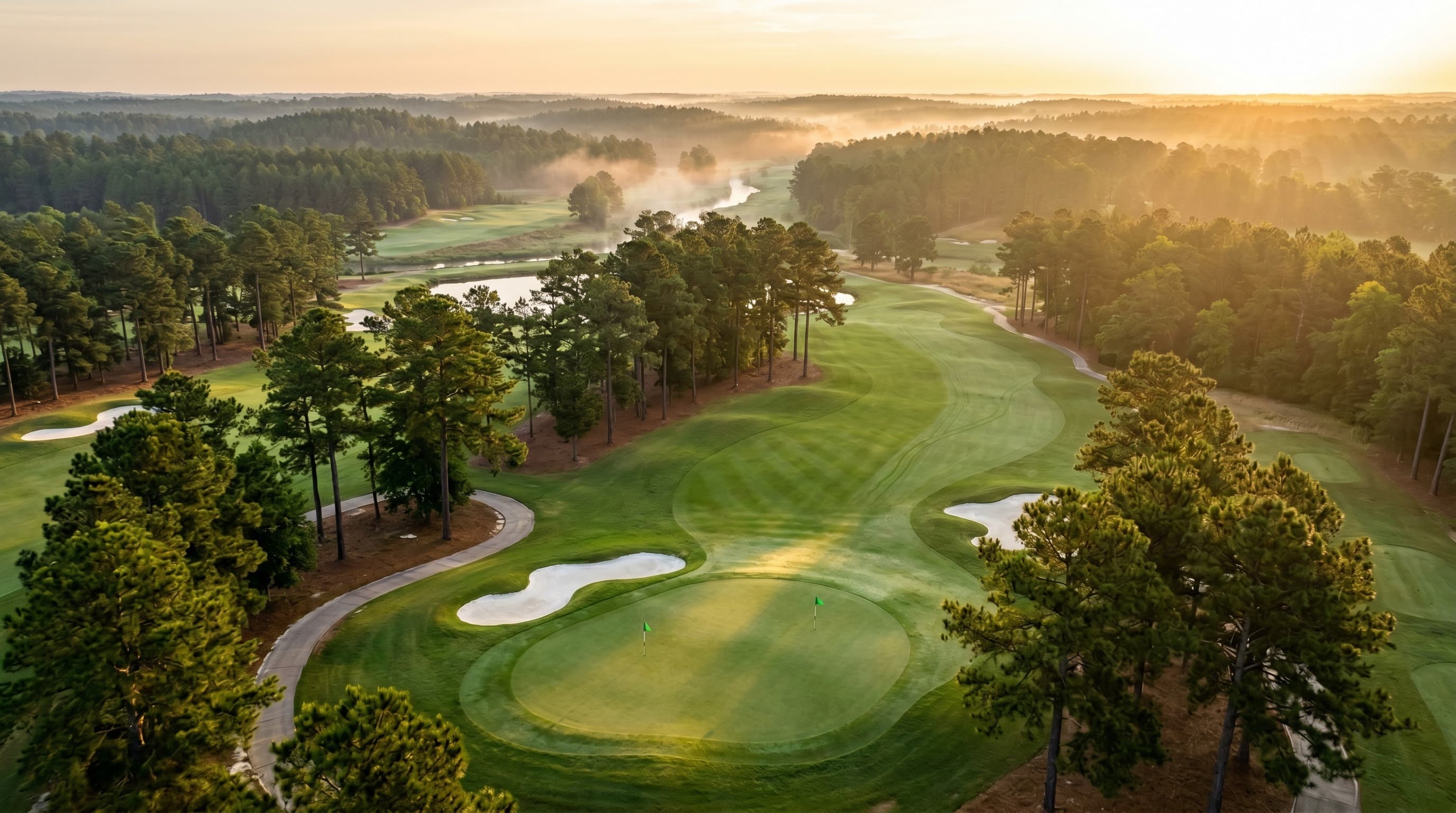
The May 2026 G-Score Heatmap: Where American Golf Peaks This Spring
May is the most underrated month on the American golf calendar. Five regions hit their annual peak this spring, three turn quietly hostile, and the data tells a clearer story than the brochures. Here is where to play, where to avoid, and how to time your booking window.
Read Story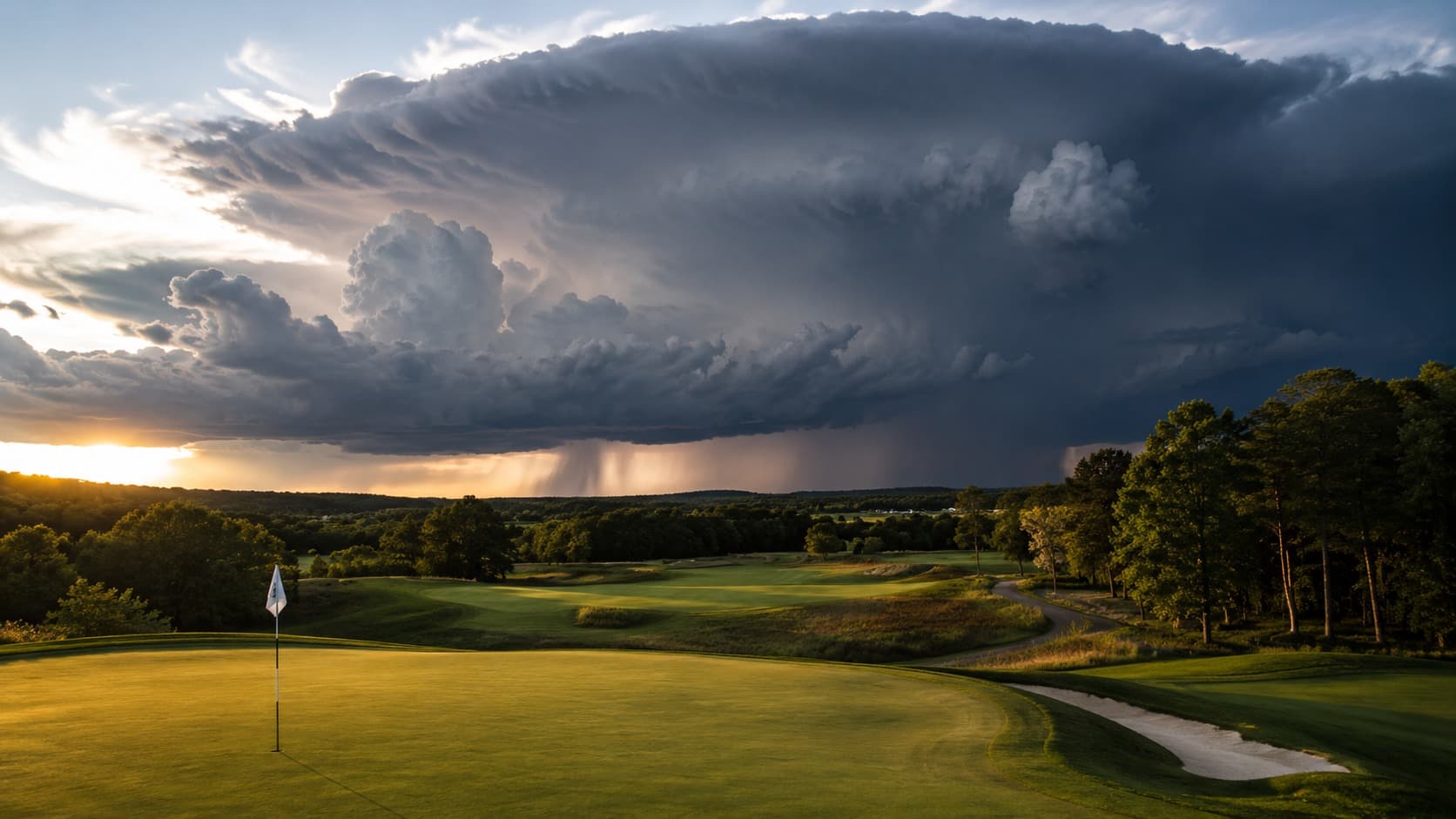
The Three O’Clock Storm: Reading Summer’s Convective Cycle to Protect Your Round
A 40% chance of afternoon thunderstorms does not mean a 40% chance of getting rained on. In the summer convective season it means the morning is nearly clear and the afternoon carries a fast-building, high-energy storm risk driven by a daily heating cycle. Here is the meteorology behind the pattern, the G-Score data on how the storm cycle punishes afternoon tee times across the Southeast, Midwest, and desert Southwest, the lightning-safety decision tree that actually matters, and the workflow that gets you off the course before the first bolt.
Read StoryMinSu Kim
Founder & Golf Data Analyst
MinSu is a data analyst and golfer with 10+ years on the course. He built Golf Weather Score to answer one question: is today a good day to play? He combines weather data, course intelligence, and the proprietary G-Score algorithm to help golfers make smarter decisions.
Every Friday Morning
When Cape Fear Country Club Golf Course plays best next weekend.
Friday 6am ET: peak G-Score windows for Cape Fear Country Club Golf Course, wind direction by hour, and one gear call. Three minutes to read, save you the round.
One email a week. Unsubscribe in one click.
The Caddie's Oracle
Draw your luck before the tee off