
Caddie's Gear Advisor
Curated for today's 84°F · Thunderstorm
Storm-Ready Outerwear
Waterproof layers built for 18 holes in the rain
Tour-Grade Umbrellas
68" double-canopy wind-resistant coverage
Wet-Weather Gloves
All-weather grip that performs in the rain
Waterproof Golf Shoes
Keep your feet dry through every fairway
Your Golf Trip, Handled
The Ultimate Golf Trip Planner
Everything you need to play Card Sound Golf Club — from booking your flight to checking in course-side.
Course-Side Stays
Luxury hotels, resorts, and stay-and-play packages just minutes from the first tee.
Flights
Compare fares across 700+ airlines for the best route to your tee time.
SUV Rentals for Golf Bags
Spacious vehicles with room for clubs, bags, and your foursome.
Travel Insurance
Coverage for medical, weather delays, and gear at your destination.
Card Sound Golf Club: Course Intelligence
Signature Setup
I played Card Sound as an Ocean Reef guest one October morning, 74°F at 8 a.m. with the sound dead flat — and an hour later the wind had completely changed the course. This is a private layout at the northern tip of Key Largo, designed by Robert von Hagge and Bruce Devlin in 1974 and reworked by Brian Silva in 1999. It plays to a par of 71 over 6,578 yards from the back tees, with a slope of 140 and a rating of 72.6 — numbers that tell you the trouble here is positional, not length. The course takes its name from Card Sound itself, the shallow body of water separating Key Largo from the mainland, and that water sits in your sightline on more holes than the yardage book lets on.
Hole-by-Hole Wind & Playing Lines
The three holes that decide your card are all wind-dependent, and the wind in the Upper Keys is seasonal and predictable.
- The #1-handicap par-4: In winter, post-frontal NNE wind (Nov–Feb, roughly 12–18 mph on a typical morning) blows straight into this approach. A stock 150-yard shot plays closer to 170. Take one extra club, favor the short-right bailout, and never go long — long is dead.
- The par-3 over the sound: On ESE summer trade winds (May–Sep), the ball rides; on a NNE winter morning the same tee shot needs two more clubs and a lower flight. I watched a playing partner fly the green by 15 yards in October simply because he clubbed for the calm he saw on the first tee.
- A back-nine par-5 along the water: Crosswind off the sound pushes everything toward the hazard on the right. Aim down the left tree line and let the wind work — fighting it is how you reload.
Green & Fairway Characteristics
The greens are Bermuda and run firm in the dry season; in my October round they were quick and grainy, releasing toward the water on the holes that sit lowest. Silva's 1999 renovation kept the von Hagge-Devlin bunkering tight to the putting surfaces, so short-siding yourself leaves a genuinely hard up-and-down. Fairways are firm tropical Bermuda that give you roll in winter and almost none after a summer storm cell passes through. The front nine sets up slightly more open; the back nine tightens as the water comes more into play. With a 140 slope, the penalty for missing on the wrong side compounds fast — plot to the fat side of every green.
Seasonal Weather Pattern
The Upper Keys split cleanly into two seasons. The dry season (Nov–Apr) brings 75–82°F afternoons, lower humidity, and those NNE-to-N winds behind cold fronts that stall over the Florida Straits. The wet season (May–Oct) runs 85–90°F with high dewpoints, prevailing ESE trade winds, and near-daily afternoon convection — pop-up thunderstorms that build around 2–3 p.m. June through September overlaps Atlantic hurricane season, so multi-day wind events are a real planning factor, not a footnote. I haven't played Card Sound in peak July, so I rely on NOAA Key Largo historicals for the summer numbers rather than my own scorecard.
Local Play Tips
Mornings are the entire game here. The sea breeze fills in around 10–11 a.m. as the land heats faster than the sound, and once it does, every water-carry hole gets a full club harder. Book the earliest tee time Ocean Reef will give a guest, and putt the low greens before the wind starts pushing the grain — late-morning the same eight-footer that broke an inch breaks three. If a winter front is forecast, play the day *before* it arrives: the pre-frontal southerly is softer than the raw NNE that follows.
Pre-Round Weather Workflow
Use the 7-day G-Score on golfweatherscore as your tee-time selector, not just a forecast glance. For Card Sound, pull the windExposure reading the night before: if the morning shows NNE above 12 mph, club up on the #1-handicap par-4 and the sound par-3 and accept it. If the G-Score peaks early and drops after 10 a.m., that's your sea-breeze signal — get out at first light. Check the afternoon convection risk May–Oct and finish before 1 p.m. A round timed to the calm window plays 8–12 G-Score points better than the same course after the breeze fills.
Related Reading
Before you tee off at Card Sound Golf Club
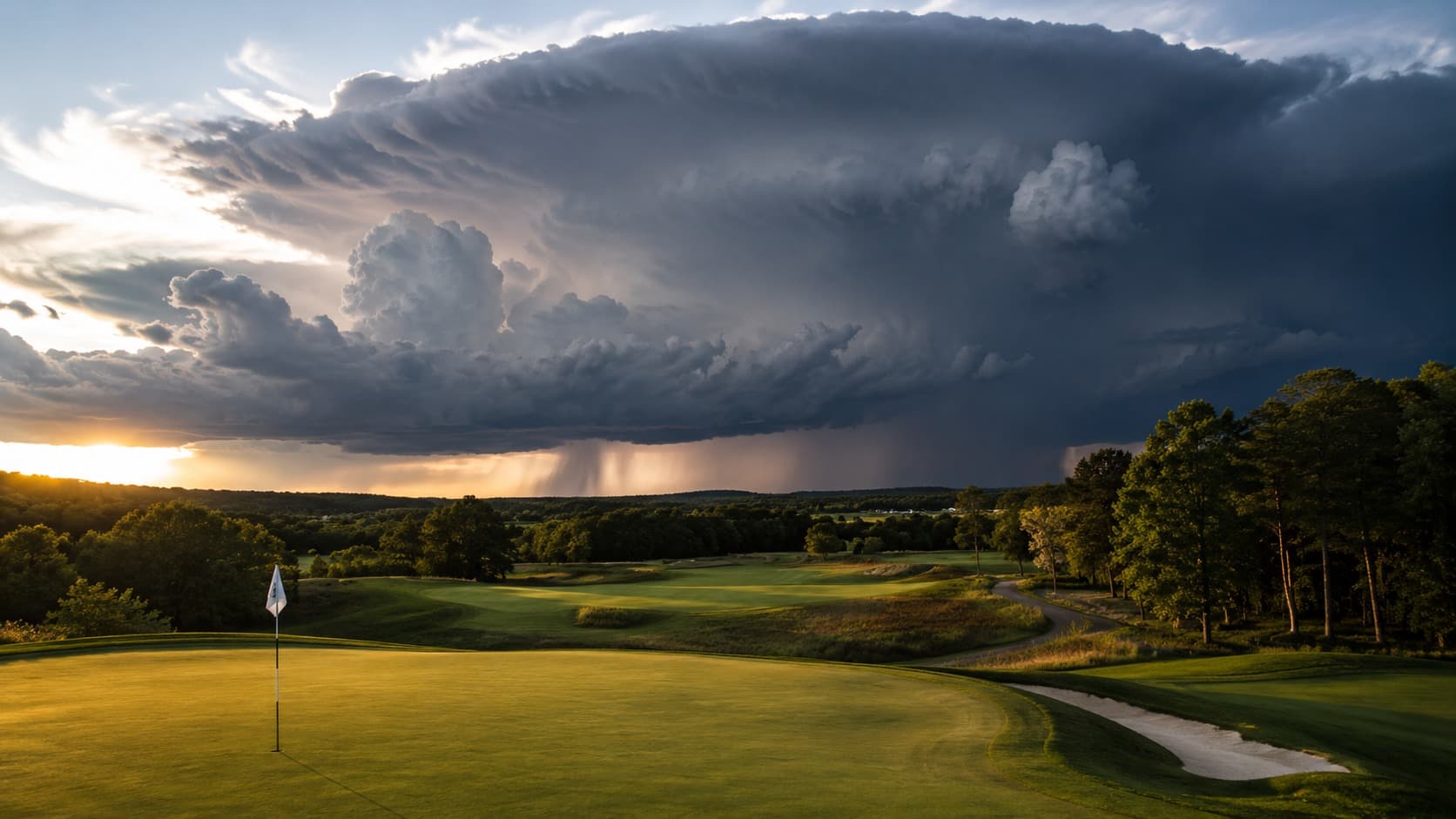
The Three O’Clock Storm: Reading Summer’s Convective Cycle to Protect Your Round
A 40% chance of afternoon thunderstorms does not mean a 40% chance of getting rained on. In the summer convective season it means the morning is nearly clear and the afternoon carries a fast-building, high-energy storm risk driven by a daily heating cycle. Here is the meteorology behind the pattern, the G-Score data on how the storm cycle punishes afternoon tee times across the Southeast, Midwest, and desert Southwest, the lightning-safety decision tree that actually matters, and the workflow that gets you off the course before the first bolt.
Read Story
Saturday Morning Tee Time Decision Tree: How to Pick the Right Window in Six Minutes
You have Saturday open. Three courses on the shortlist, the weather is mixed, and your tee-time window is 6am to 4pm. Here is the six-minute decision tree we use to pick the right round, the right course, and the right hour — without overthinking.
Read StoryMinSu Kim
Founder & Golf Data Analyst
MinSu is a data analyst and golfer with 10+ years on the course. He built Golf Weather Score to answer one question: is today a good day to play? He combines weather data, course intelligence, and the proprietary G-Score algorithm to help golfers make smarter decisions.
Every Friday Morning
When Card Sound Golf Club plays best next weekend.
Friday 6am ET: peak G-Score windows for Card Sound Golf Club, wind direction by hour, and one gear call. Three minutes to read, save you the round.
One email a week. Unsubscribe in one click.
The Caddie's Oracle
Draw your luck before the tee off