
Caddie's Gear Advisor
Curated for today's 82°F · Thunderstorm
Storm-Ready Outerwear
Waterproof layers built for 18 holes in the rain
Tour-Grade Umbrellas
68" double-canopy wind-resistant coverage
Wet-Weather Gloves
All-weather grip that performs in the rain
Waterproof Golf Shoes
Keep your feet dry through every fairway
Your Golf Trip, Handled
The Ultimate Golf Trip Planner
Everything you need to play Cardinal Creek Golf Course — from booking your flight to checking in course-side.
Course-Side Stays
Luxury hotels, resorts, and stay-and-play packages just minutes from the first tee.
Flights
Compare fares across 700+ airlines for the best route to your tee time.
SUV Rentals for Golf Bags
Spacious vehicles with room for clubs, bags, and your foursome.
Travel Insurance
Coverage for medical, weather delays, and gear at your destination.
Cardinal Creek Golf Course: Course Intelligence
Signature Setup
Cardinal Creek runs across flat-to-gently-rolling prairie ground in Beecher, Illinois, about 45 minutes south of Chicago in Will County farm country. The original eighteen opened in 1971 to a routing credited to Roy Albert Anderson, and the facility grew into a 27-hole layout — three regulation nines (North, South, and Center) that pair into any 18 — with later design work attributed to Chicago-area architect Bob Lohmann. The North/South combination plays to a par of 72 at roughly 6,345 yards from the back tees, which is short by modern standards but honest: this is a course defended by water and wind, not length.
The namesake creek is the defining feature. Cardinal Creek and its associated ponds thread through the property and come into play on a cluster of holes, most memorably a mid-length par-4 on the South nine where the water crosses directly in front of the green and turns a wedge approach into a commitment test. There are no mountains here and no tricked-up elevation — what you get is open sky, prairie wind, and water you have to respect.
Hole-by-Hole Wind & Playing Lines
The three holes I'd plan around on the North–South eighteen, and how the wind rewrites them:
- North/South #1 handicap par-4 (~430y): In summer the prevailing flow is out of the southwest, and on the holes that run into it this 430-yard par-4 plays closer to 455. Drive down the left side to take the water and bunkering out of the second shot, then club up — a stock 5-iron becomes a 4-iron — and favor below the hole. Short and dry beats long and short-sided every time on these greens.
- South nine creek par-4: The Cardinal Creek carry in front of the green is the whole hole. Downwind it's a non-issue; into a 12 mph SW breeze the layup number gets awkward, and the smart play is to take one more club off the tee, leave a full wedge, and fly the water with spin rather than trickling a long iron toward the bank.
- A North-nine into-the-wind par-3: On the open back stretch the wind is unobstructed across the farmland. A mid-iron par-3 into a stiff SW push can jump two clubs; trust the windExposure read over the yardage plate and aim for the center of the green, not the flag.
Green & Fairway Characteristics
Fairways are the cool-season mix you'd expect this far north — bluegrass and ryegrass — and they stay receptive in spring and fall, then firm up and run faster through July and August. The greens are a bentgrass-Poa surface, mid-sized and mostly approachable along the ground, which suits the prairie setting; expect a Stimp in the 9–10 range on a normal day, a touch quicker when the summer bakes them out. Grain and afternoon footprinting on the Poa make the late-day greens slower and bumpier than the morning surface.
Because the land is flat, the trouble is lateral, not vertical: water, fairway bunkering, and the occasional tree line rather than blind elevation changes. The back-tee yardage of about 6,345 across North/South means most players are hitting short irons and wedges into greens — so the premium is on approach control and staying dry, not on raw distance.
Seasonal Weather Pattern
Northeastern Illinois golf is a calendar shaped by extremes on both ends. July and August highs run 85–92°F with humid, hazy afternoons and dew points in the low 70s, which softens morning turf and then lets it firm fast once the sun is up. The genuine sweet spot is May through mid-June and again in September: highs in the 70s, firm prairie fairways, and the steadiest morning air. Winters shut things down — January highs sit in the mid-20s°F and the course closes for the season — and the shoulder weeks of late March and November can hand you a raw, 40°F round with the wind doing all the damage. Afternoon thunderstorms are a June-through-August planning factor, and on open farmland the lightning exposure is real, not theoretical.
Local Play Tips
Here's the thing the scorecard won't tell you: the defining variable at Cardinal Creek isn't the water, it's the open Will County wind, and it has a daily rhythm. Mornings are usually calm; by early afternoon the southwest prairie flow builds and there is nothing — no ridge, no forest — to break it across the back holes. I haven't walked the Center nine, so I'll only speak to the North–South pairing, but on flat, exposed prairie golf like this my own habit is to take the earliest tee I can get and let the calm morning air do the scoring for me. The other detail: the Poa in the greens means the surface you putt at 7 a.m. is not the surface you putt at 2 p.m. — early rounds get the truer roll before the day's foot traffic. Walking is easy here given the flat ground, which makes an early, fast morning loop very doable.
Pre-Round Weather Workflow
Use the 7-day G-Score and windExposure read to time this course, because on open prairie the wind swings conditions more than anything else:
1. Book the earliest morning tee you can. The calm early window on this exposed layout routinely scores 6–8 G-Score points higher than the windy afternoon in summer. Morning is when the course is gettable. 2. Read wind direction, not just speed. A SW flow loads the into-the-wind par-4s and the par-3 on the open back stretch. Let the windExposure flag drive club selection on those holes, not the yardage plate. 3. Watch the afternoon storm line June–August. The farmland setting leaves you exposed — if the 7-day shows building afternoon convection, finish your eighteen before 1 p.m. rather than risk a lightning hold. 4. In the shoulder season, check the overnight low. A 40°F late-fall or early-spring morning firms the greens and shortens carry; give yourself an extra half-club until the surface softens, and respect that the creek carries play longer when the ball isn't flying.
Related Reading
Before you tee off at Cardinal Creek Golf Course
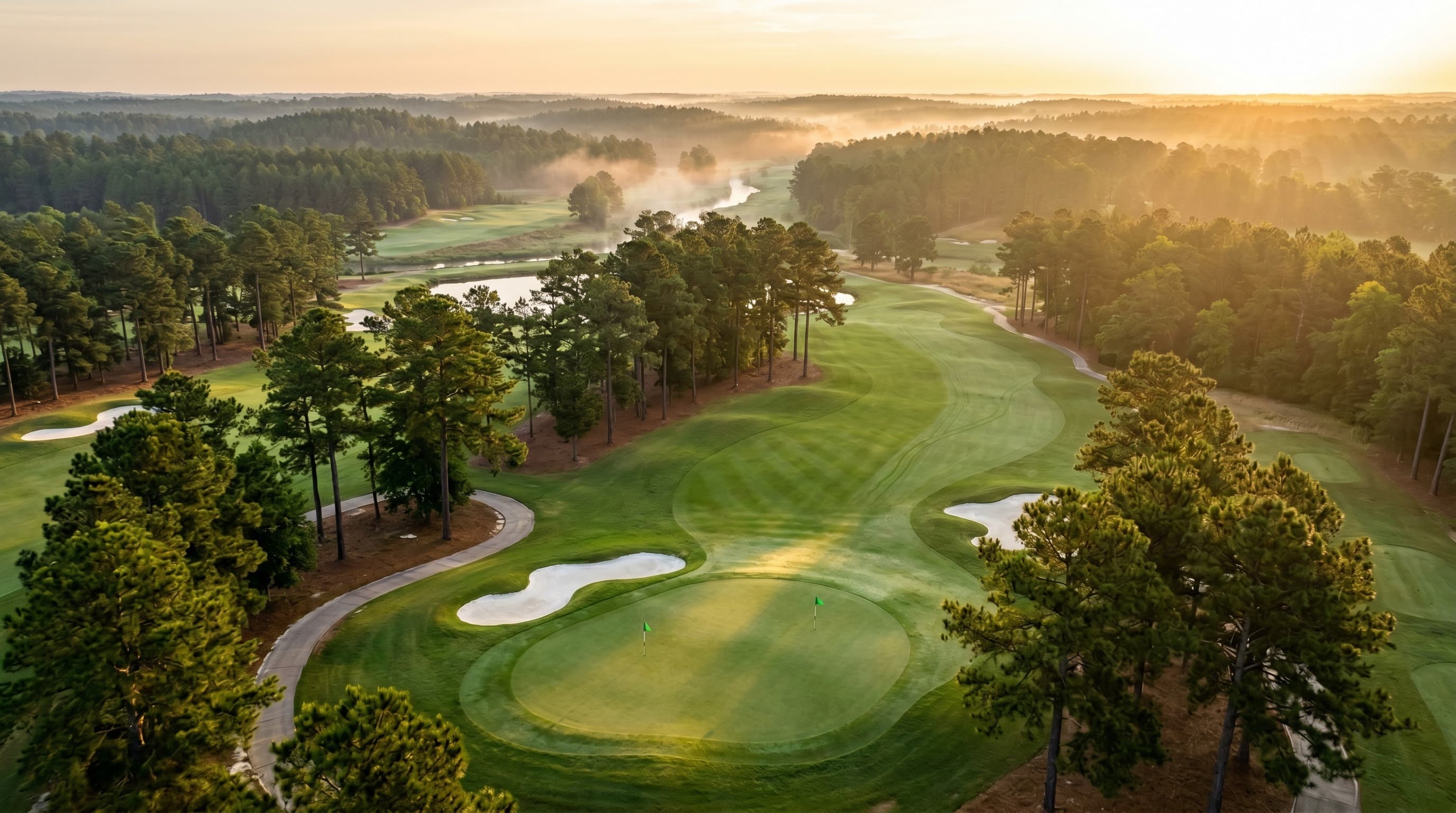
The May 2026 G-Score Heatmap: Where American Golf Peaks This Spring
May is the most underrated month on the American golf calendar. Five regions hit their annual peak this spring, three turn quietly hostile, and the data tells a clearer story than the brochures. Here is where to play, where to avoid, and how to time your booking window.
Read Story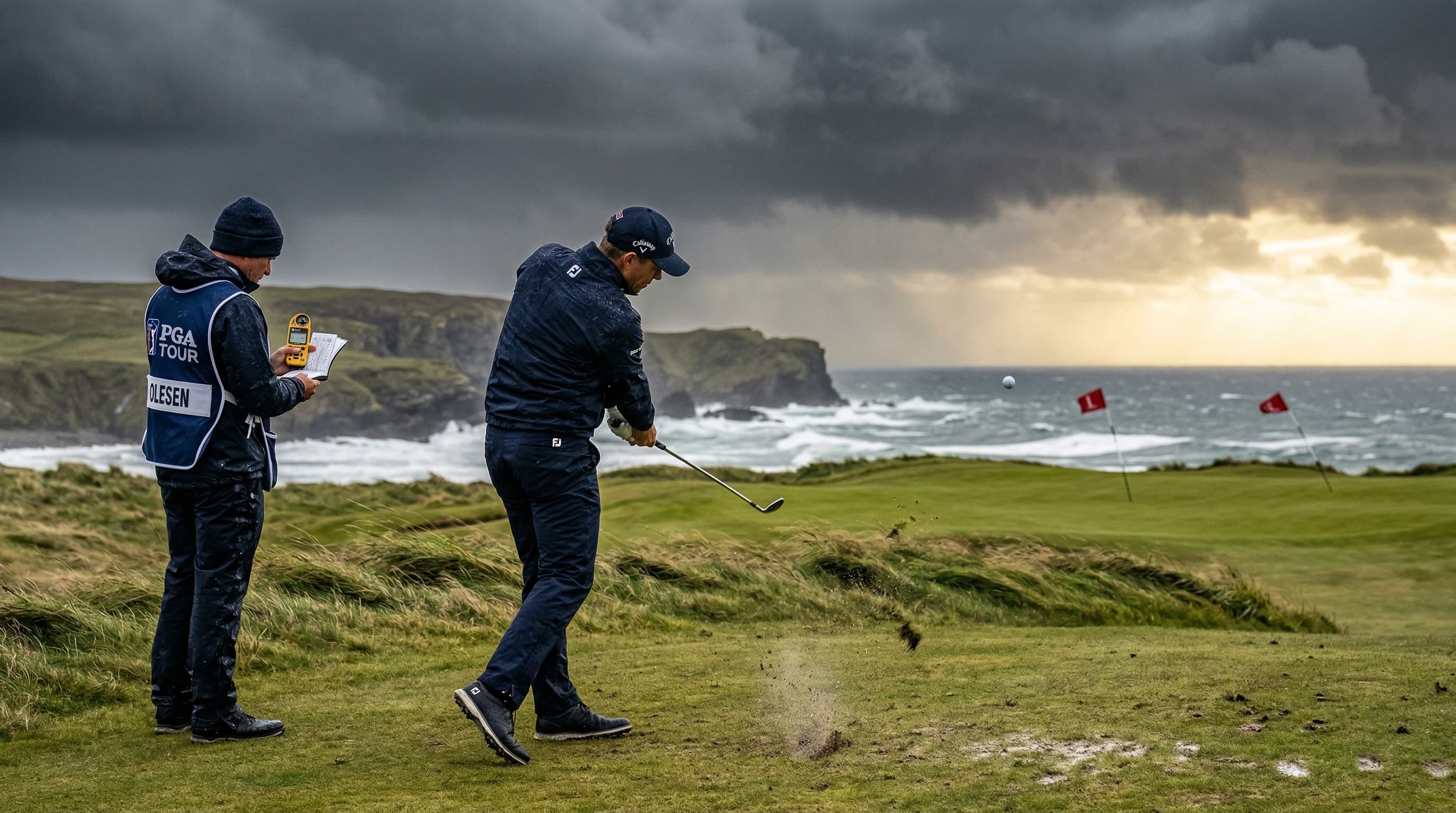
Golf Weather Physics: How Temperature, Altitude, and Humidity Change Ball Flight
Real physics data on how temperature, altitude, humidity, and wind change your golf ball flight — with specific yard adjustments, named course examples, and measured G-Score data from courses we track daily.
Read StoryMinSu Kim
Founder & Golf Data Analyst
MinSu is a data analyst and golfer with 10+ years on the course. He built Golf Weather Score to answer one question: is today a good day to play? He combines weather data, course intelligence, and the proprietary G-Score algorithm to help golfers make smarter decisions.
Every Friday Morning
When Cardinal Creek Golf Course plays best next weekend.
Friday 6am ET: peak G-Score windows for Cardinal Creek Golf Course, wind direction by hour, and one gear call. Three minutes to read, save you the round.
One email a week. Unsubscribe in one click.
The Caddie's Oracle
Draw your luck before the tee off